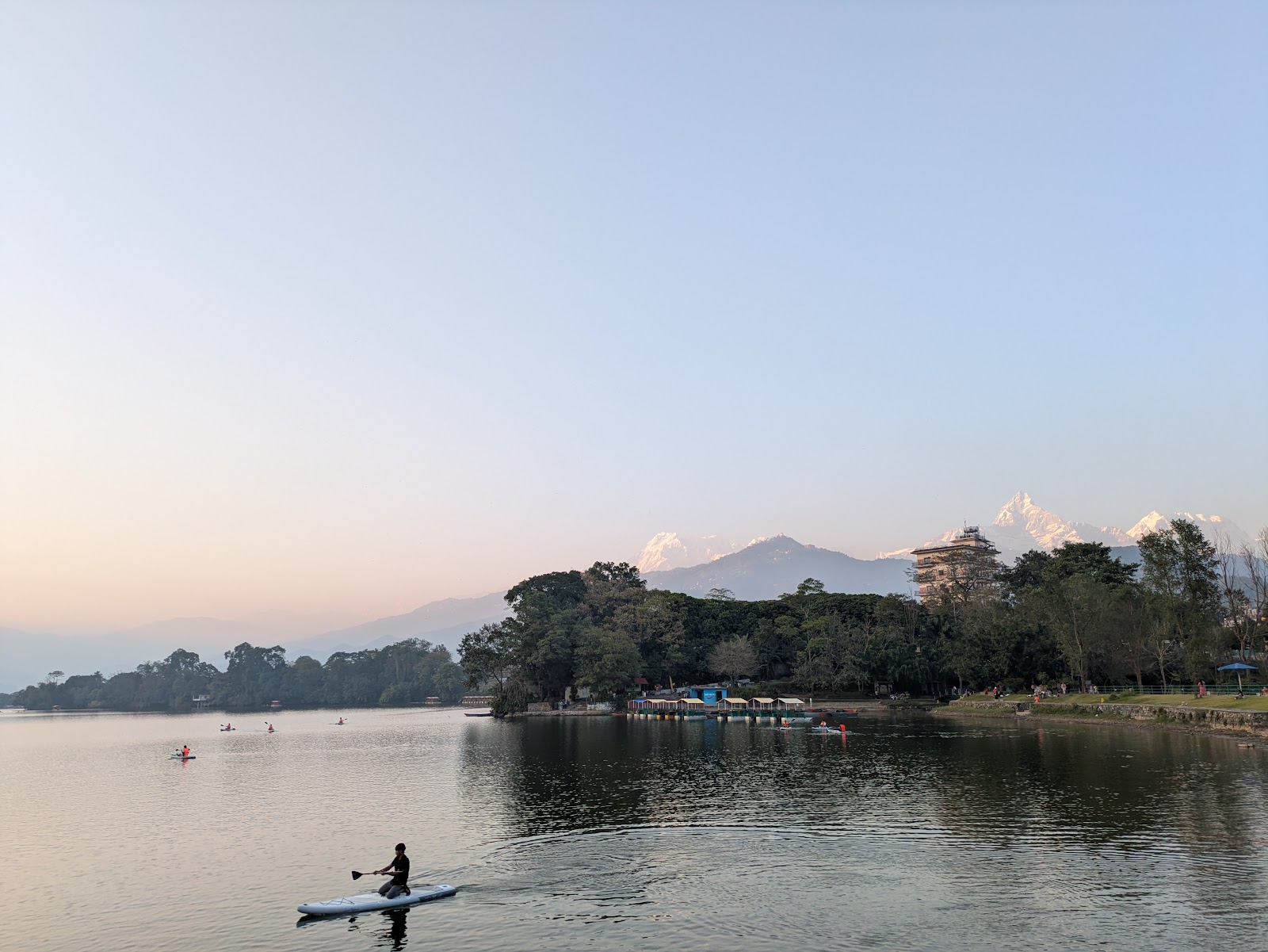

Kathmandu to Pokhara is the journey almost everyone makes in Nepal. Pokhara is the gateway to the Annapurna treks, and around 200km of mountain road (or a 25-minute flight) separates it from the capital.
We made the trip in November 2026 by private jeep from Bhaktapur, on our way to start the Khopra Danda ridge trek, and booked a flight for the return. It took eight hours and ten minutes, cost more than it needed to, and taught us a few things we wish we’d known before we set off.
This guide covers every way to get from Kathmandu to Pokhara (tourist bus, private car or jeep, and flying) with honest costs, journey times and tips, so you can pick the right one for you.
Kathmandu to Pokhara: The Quick Answer
If you’re on a budget, take a tourist bus. If you want flexibility, hire a private car (a jeep isn’t necessary in dry weather). If you’re short on time, or the weather is wet, fly.
| Option | Journey time | Cost (November 2026) | Best for |
|---|---|---|---|
| Tourist bus | 7 to 8 hours, often longer | Around NPR 1,000 to 1,600 a seat (roughly US$10 to US$15) | Budget travellers who don’t mind a long day |
| Private car | 6 to 8 hours | US$120 for the car (what we were quoted) | Couples and small groups who want to stop when they like |
| Private jeep | 6 to 8 hours (ours took 8 hours 10 minutes) | US$167 for the jeep (what we paid) | Bigger groups, lots of luggage, or rough conditions |
| Flight | About 25 minutes in the air (about 5.5 hours door to door for us) | Around US$115 to US$123 one way (we paid US$229 for two) | Anyone short on time, or travelling in wet weather |
The distance from Kathmandu to Pokhara is roughly 200km by road, along the Prithvi Highway. Six hours is about the best you’ll manage, and only if everything goes right. Seven to eight hours is not uncommon.
In a Rush? Our Favourite Hotels in Pokhara
Mingtang Boutique Cottage
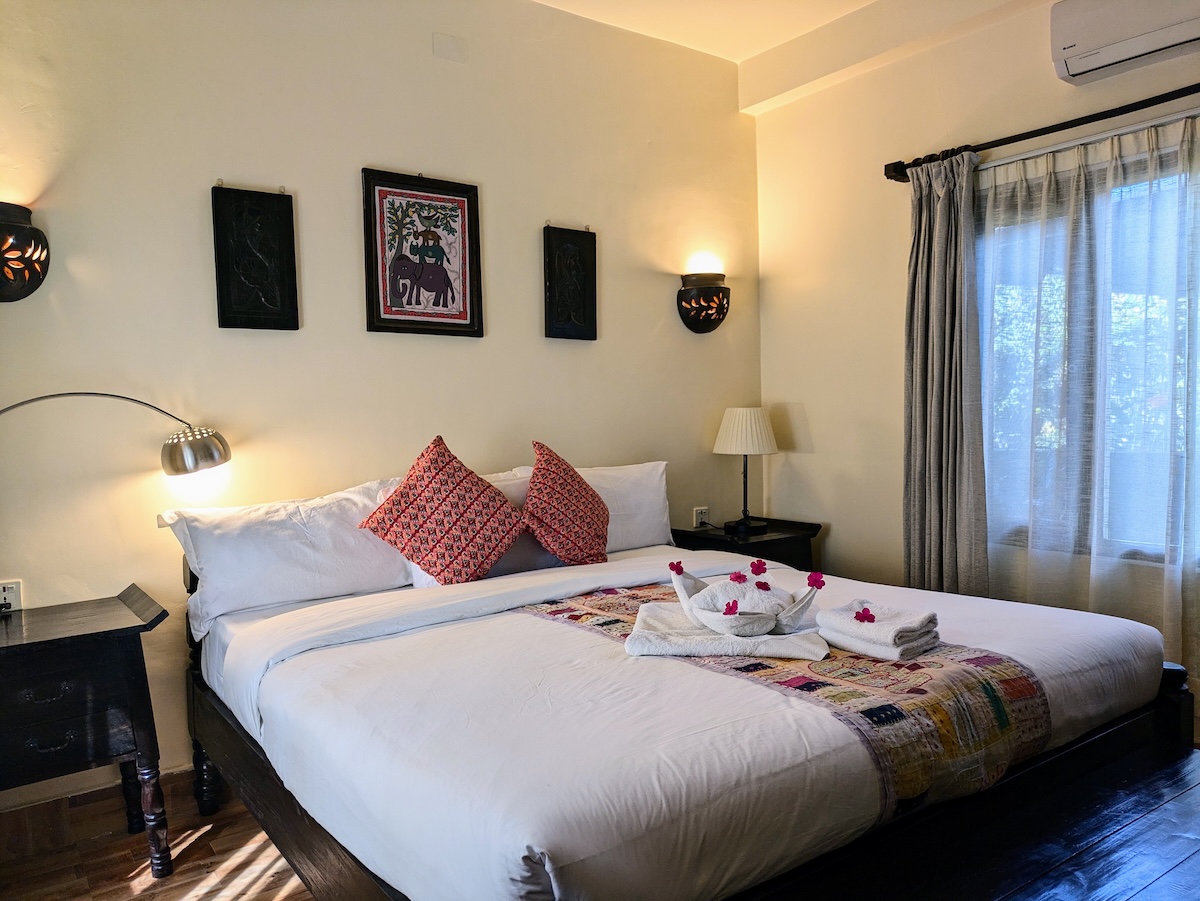
Where we stayed. A calm, spotless, family-run guesthouse around a garden courtyard in Lakeside, with free luggage storage while you trek. Around £45 a night with breakfast.
Check ratesHotel Blossom
We looked at it but didn’t stay. Simpler, cheaper rooms above a café known locally for its cheesecake. Adults only, and rated over 9 on Booking.com.
Check ratesSarangkot Mountain Lodge
The splurge, though we didn’t stay. Up on the hill at 1,600m, with Annapurna views from every room, a rooftop pool and a spa.
Check ratesOur Journey: Kathmandu to Pokhara by Private Jeep
We booked a private jeep for the two of us at short notice through Nepal Wilderness Trekking, the Kathmandu company that organised our trek, and paid US$167. We’d have preferred to share a jeep with other travellers and split the cost, but we needed to reach Pokhara in time for our trek start date, so we took what we could get.
In hindsight, we didn’t need a jeep at all. We were quoted US$120 for a private car, which would have saved us US$47. We were working from old advice, and the roads are a lot better now than they were ten years ago.
We set off from Bhaktapur at 10am and pulled into Pokhara at 6:10pm: eight hours and ten minutes on the road. Bhaktapur is on the eastern side of the Kathmandu Valley, so we had to cross the whole city before we even reached the highway. A horrendous traffic jam didn’t help, and neither did the constant stops for our driver, who was a chain smoker! Still, eight hours isn’t unusual for this journey.
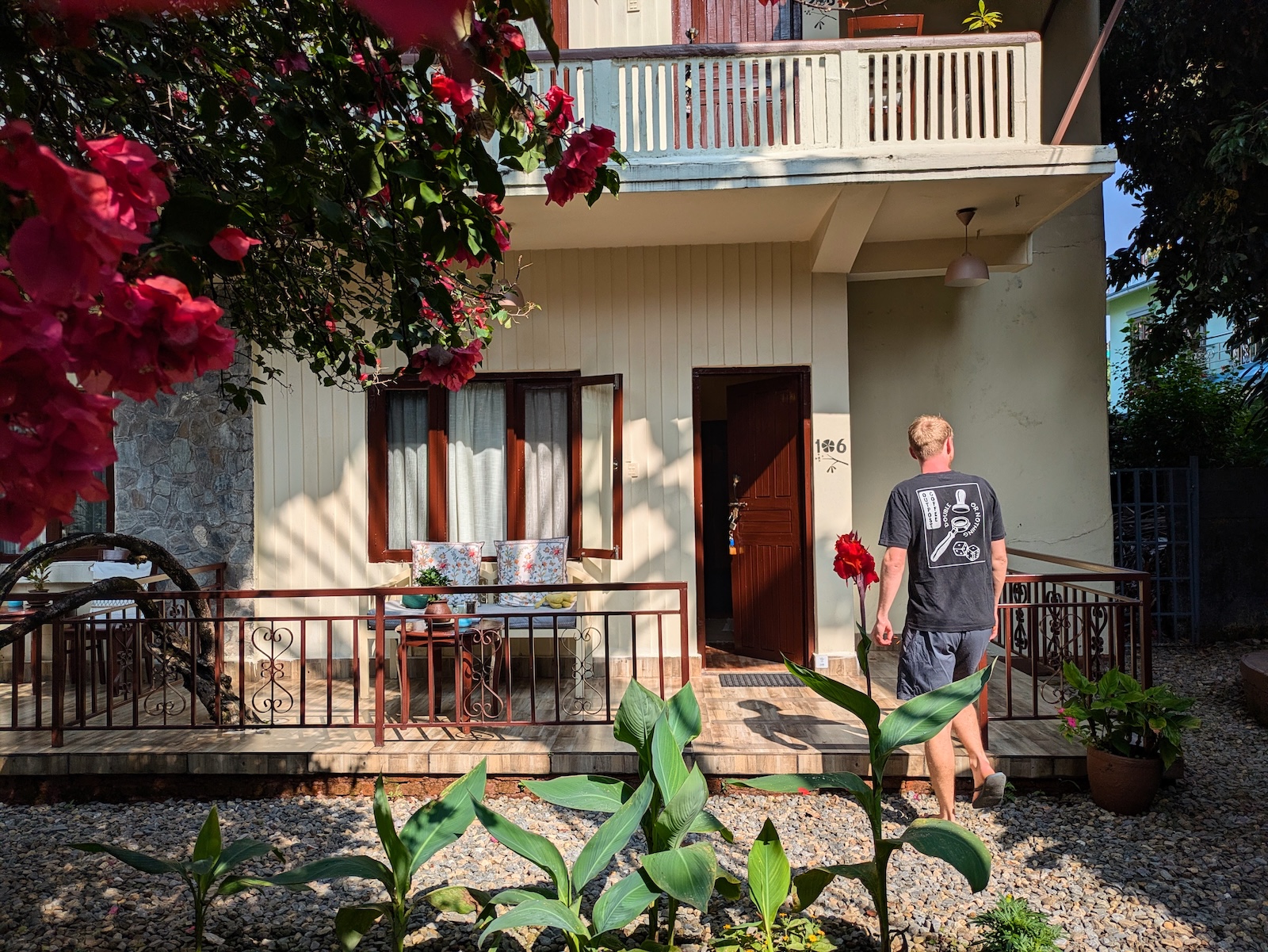
The drive itself is beautiful. The road follows river valleys for most of the way, including the Trishuli. Some stretches are dusty, and you can see where floods have destroyed bridges, but others are all green, rolling mountains. We arrived tired but happy, and checked straight into Mingtang Boutique Cottage, ready for our trek the next morning.
The Kathmandu to Pokhara Road: Route, Conditions and Safety
Every road option uses the Prithvi Highway, which links Kathmandu and Pokhara. It was completed in 1974 and is one of the busiest roads in Nepal.
The route. You drop out of the Kathmandu Valley and follow the river down towards Mugling, the junction town where traffic for Chitwan splits off. Then the road climbs west to Pokhara. Common stops on the way include 20 Kilo near Malekhu and the riverside lunch spots at Kurintar.
Road conditions. In our experience, the stretches at the Kathmandu end and the Pokhara end were very good, with lots of bumpy, broken sections in the middle. The 80km Mugling to Pokhara section has been widened and upgraded over the past few years, and travel on it got noticeably easier in 2026. There are still roadworks in places, so expect delays.
Landslides and floods. This is the big one. In August 2026, floods on the Trishuli River washed away part of the highway at Krishnabhir in Dhading, closing the road for 18 days. It reopened on 17 September on a new track, but that’s an emergency fix rather than a permanent one.
How safe did it feel? Mostly fine, but not always relaxing. Some of the worst landslide patches, where the road has simply been destroyed, are a little unnerving, and some of the driving is horrendous. We had clear, dry weather the whole way. If it had been wet, we would definitely have considered flying instead.
Check before you go. Landslides are most common during the monsoon (roughly June to September), but they can close the road at any time. Ask your hotel or driver about the latest conditions the day before you travel.
Kathmandu to Pokhara by Private Car or Jeep
A private car or jeep is the most flexible way to do the journey. You leave when you want, stop when you want, and get dropped at your hotel door.
Cost. We paid US$167 for a private jeep for two and were quoted US$120 for a private car. Sharing a jeep with other travellers is cheaper again, but it needs a bit of notice to arrange.
Car or jeep? In dry weather, a car is absolutely fine. The road is in reasonable shape, just bumpy in places. A jeep makes more sense in wet conditions, for bigger groups, or if you’re carrying a lot of luggage.
Booking. Your guesthouse, a local travel agent or your trekking company can arrange a driver. We booked ours through Nepal Wilderness Trekking, who also organised our trek, so everything was in one place. Agree the full price upfront, including any planned stops, and confirm exactly where you’ll be dropped in Pokhara.
Choose your own lunch stop. This was our biggest lesson. Our driver was doing his best, but he headed for the restaurants that gave him a discount, and a couple of the roadside places didn’t look clean. The last thing you want is to get sick right before a trek. Look up a well-reviewed place along the route before you leave (the riverside restaurants at Kurintar are a popular choice) and ask your driver to stop there.
Agree on breaks. If you want to keep the journey short, it’s worth agreeing on stops at the start. Ours added a lot of time with smoking breaks!
Bring cash. Many roadside stops don’t take cards, so carry rupees for food, drinks and toilets.
Kathmandu to Pokhara by Tourist Bus
The tourist bus is the cheapest comfortable option, and it’s how most travellers make the trip. Around 150 tourist buses run between the two cities.
Where and when. Most tourist buses leave from Sorakhutte, on the edge of Thamel, at about 7am. Aim to be there by 6:30am. They arrive at the Tourist Bus Park in Pokhara, usually a short taxi ride from Lakeside.
How long. Expect 7 to 8 hours, sometimes longer with traffic, landslides or long stops. Buses usually stop for breakfast at 20 Kilo, about an hour and a half in, then for lunch at Kurintar.
Which bus and how much. There are a few classes, and prices vary by operator and where you book:
| Bus type | Seats | Rough price |
|---|---|---|
| Standard or deluxe | 2×2 | NPR 1,000 to 1,200 |
| VIP sofa | 2×1, more legroom | NPR 1,600, or about US$12 to US$15 |
For the return trip, a Lakeside hotel noticeboard listed sofa seats to Kathmandu at 1,600 NPR in November 2026, plus 400 NPR for a taxi to the bus park.
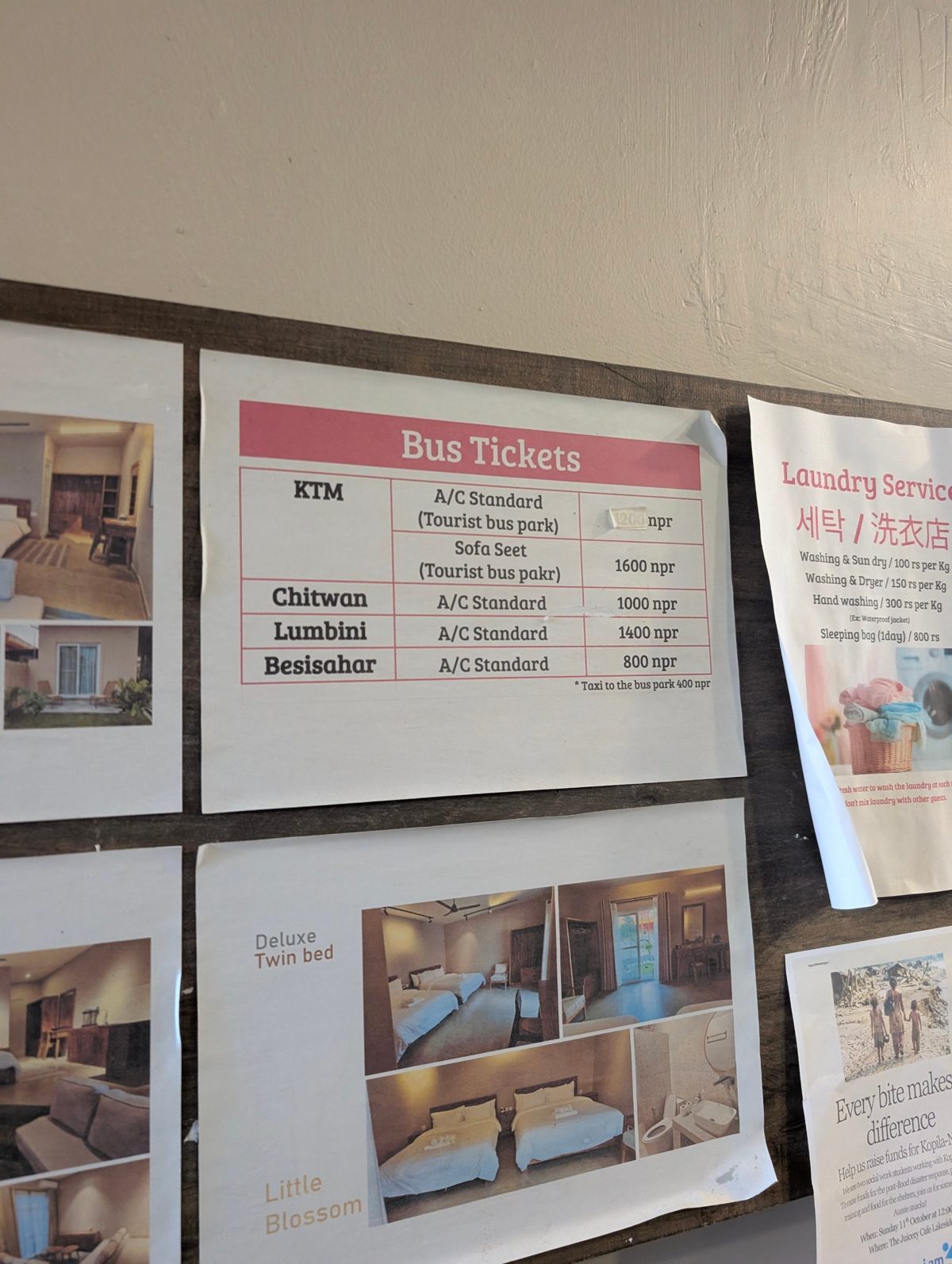
You’ll see older guides recommend Greenline’s luxury bus at around US$25, but recent reports say it no longer runs this route, so don’t plan around it. Night buses also run, but you’ll miss all the scenery.
Bus tips.
- Book a few days ahead in peak season (October to November and March to April).
- Pay a bit extra for a VIP sofa seat. Over 7 or 8 hours, the extra space is worth it.
- Sit on the right-hand side for better views on the way to Pokhara.
- Carry cash for the food stops, as they often don’t take cards.
- Don’t plan anything big for the afternoon you arrive.
Kathmandu to Pokhara Flights
Flying turns a full day on the road into about 25 minutes in the air. Buddha Air and Yeti Airlines run the most flights between Kathmandu and Pokhara International Airport, and Shree Airlines flies the route too.
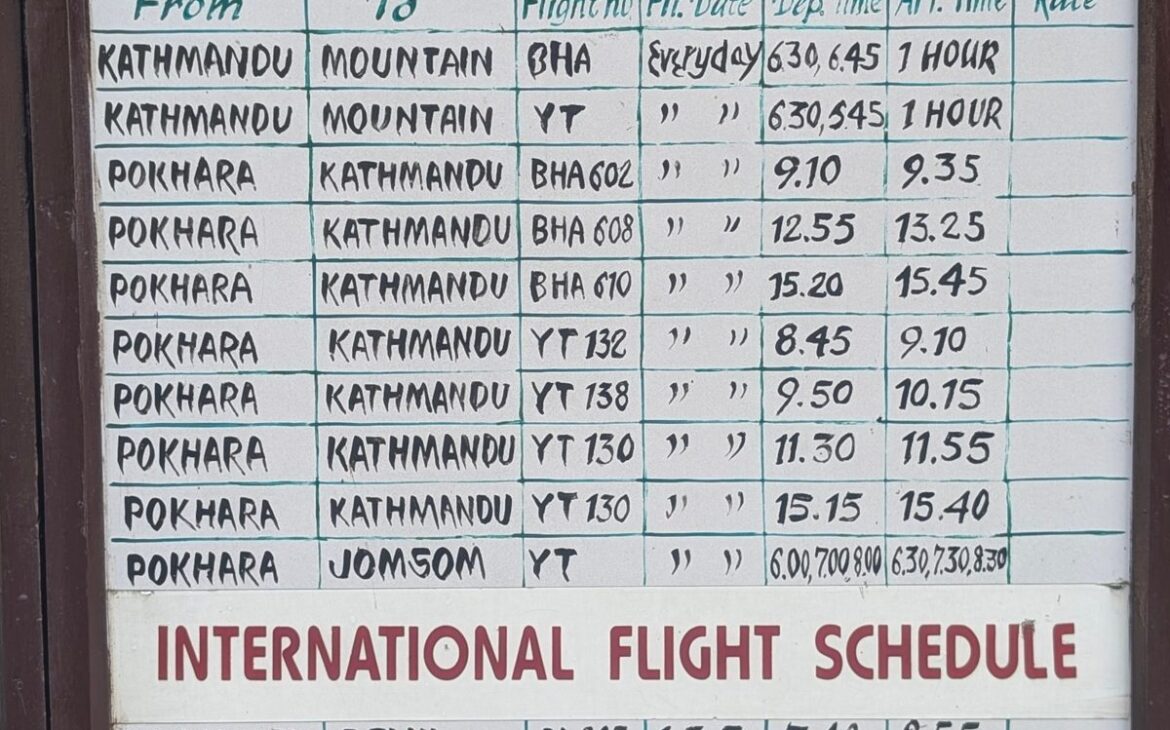
Schedules. There are several flights a day in each direction. A Lakeside travel desk board in November 2026 listed departures from Pokhara to Kathmandu between 8:45am and 3:20pm.
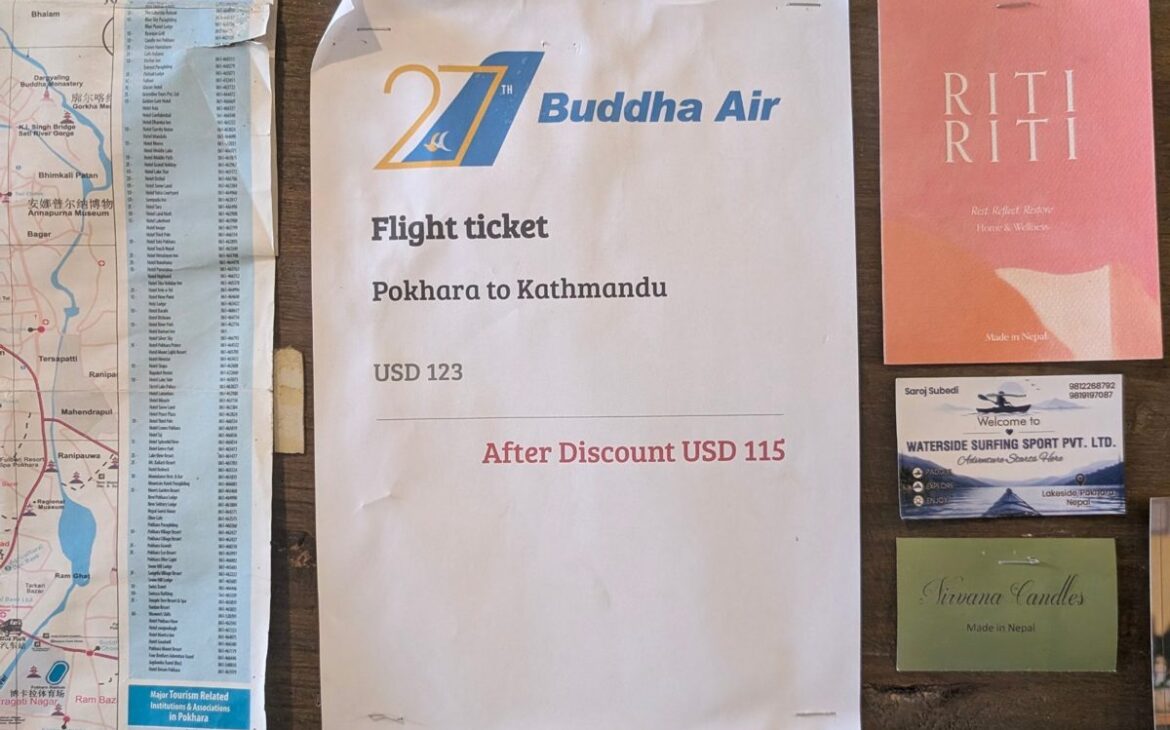
Fares. The same travel desk was advertising Buddha Air tickets from Pokhara to Kathmandu at US$123, or US$115 after discount. For our own return to Kathmandu, we booked Buddha Air and paid US$229 for the two of us, so about US$115 each. That’s roughly the price of a private car, but per person.
When it’s worth it.
- You’re short on time and don’t want to lose a whole day.
- The weather is wet. We’d fly rather than drive the road in heavy rain.
- The road is closed. When the highway shut for 18 days in 2026, flights between the two cities nearly tripled.
Things to know. Flights can be delayed or cancelled in bad weather, so leave some slack in your plans. Nepal’s aviation safety record has been criticised in the past (a Yeti Airlines flight crashed on approach to Pokhara in 2023), so it’s worth checking recent news and making the call that feels right for you.
Our flight back. We flew Buddha Air from Pokhara to Kathmandu, and the 25-minute flight time is misleading. We left our hotel at 10am, paid 800 rupees for a taxi to the airport and got there two hours early, only to find that bag check-in doesn’t open until an hour before the flight. There’s almost nothing at Pokhara airport either: no proper food, just bags of crisps, so bring something to eat.
Our flight was then delayed by just over an hour. Flights to Kathmandu leave roughly every 20 minutes, so the delay had a knock-on effect, and every flight for the rest of the day was running late too. We reached our hotel in Bhaktapur at about 4pm, around five and a half hours door to door. That’s still a few hours quicker than driving, but it’s a big travel day either way. Next time we’d book an early flight, which we think is less likely to get caught up in the day’s delays.
Which Option Should You Choose?
- Travelling solo or on a budget: take a tourist bus, and pay the bit extra for a VIP sofa seat.
- A couple or small group: a private car. Split between two to four people, it’s not much more than the bus, and you control the stops (including lunch).
- A bigger group, lots of kit, or wet weather: a private jeep.
- Short on time, nervous on mountain roads, or the road is closed: fly.
If we did it again, we’d book a private car rather than a jeep and pick our own lunch stop.
Tips for the Kathmandu to Pokhara Journey
- Check the road the day before. Landslides and roadworks can change things overnight. Your hotel or driver will know the latest.
- Book ahead around festivals. Demand peaks around Dashain and Tihar (we travelled during Tihar), and in the October to November trekking season.
- Carry cash in small notes. Most roadside stops are cash only.
- Pack snacks and water. Useful if you hit a long traffic jam, and it means you’re not relying on roadside food.
- Bring a buff or face mask. Some stretches are very dusty, especially with the windows down.
- Don’t plan much for arrival day. Even if all goes well, it’s a long day. We arrived after 6pm and started our trek the next morning.
Where to Stay in Pokhara When You Arrive
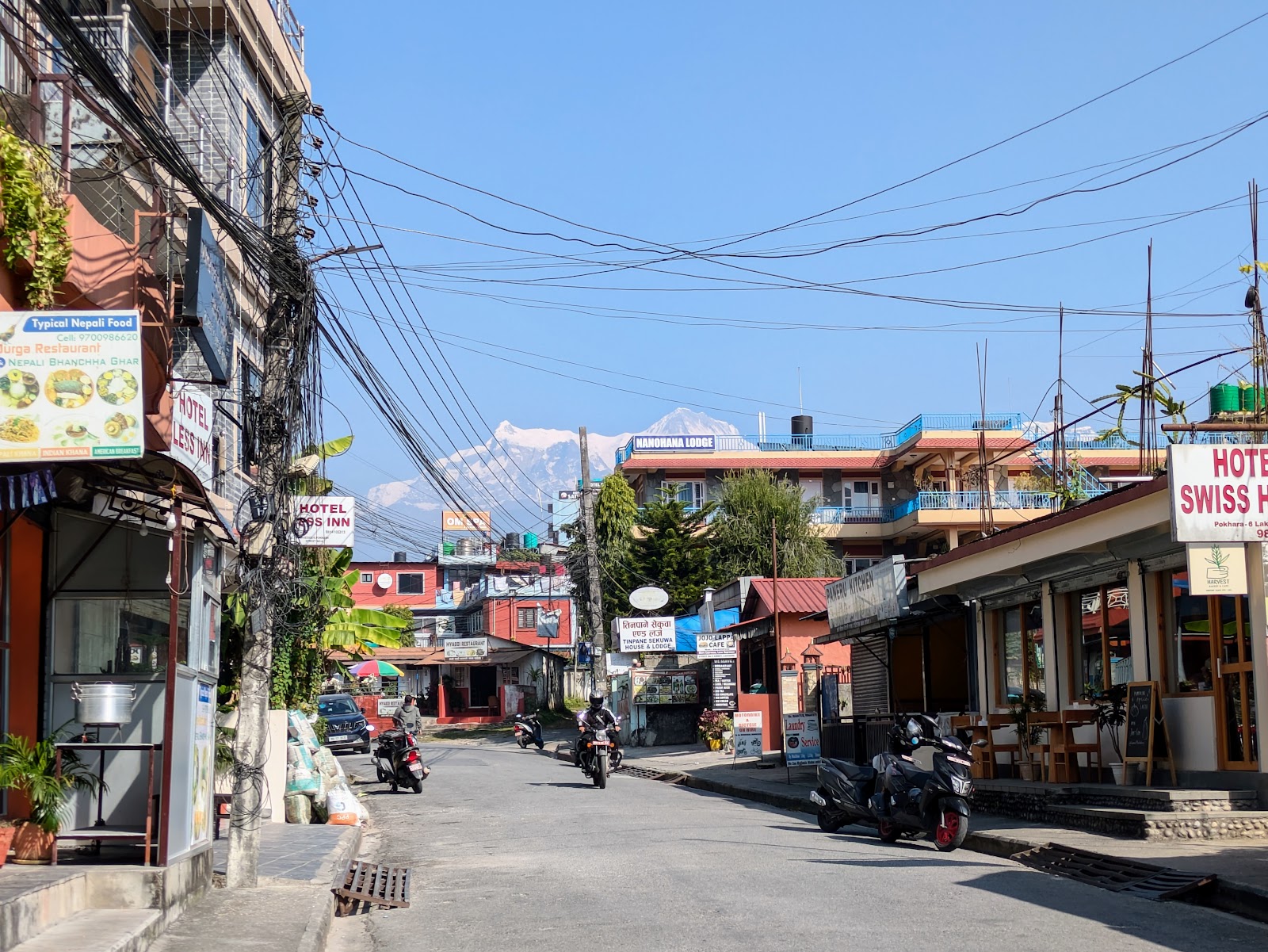
After a full day on the road, you’ll want somewhere easy to land. For most travellers that means Lakeside, where nearly all of Pokhara’s hotels, cafes and gear shops are. We checked into Mingtang Boutique Cottage and would happily book it again.
These are the three places we’d point you to. There’s much more detail on each in our guide to where to stay in Pokhara.
Mingtang Boutique Cottage
Where we stayed. A calm, spotless, family-run guesthouse around a garden courtyard in Lakeside, with free luggage storage while you trek. Around £45 a night with breakfast.
Check ratesHotel Blossom
We looked at it but didn’t stay. Simpler, cheaper rooms above a café known locally for its cheesecake. Adults only, and rated over 9 on Booking.com.
Check ratesSarangkot Mountain Lodge
The splurge, though we didn’t stay. Up on the hill at 1,600m, with Annapurna views from every room, a rooftop pool and a spa.
Check ratesStill deciding where to stay? Here’s everything bookable around Lakeside and Sarangkot on one map, so you can see what sits where before you book:
Final Thoughts: Is the Kathmandu to Pokhara Road Trip Worth It?
There’s no perfect way to get from Kathmandu to Pokhara, just a trade-off between time, money and comfort. For most people, a tourist bus or a shared private car is the sweet spot. Fly if the weather turns or you’re short on time.
Whichever you choose, give yourself a soft landing at the other end. Our Where to Stay in Pokhara guide covers the best areas and the guesthouse we loved, and our Khopra Ridge Trek Guide takes you through the trek we set off on the very next morning.
Keep Exploring
- Flying into Kathmandu? Our Bhaktapur travel guide covers the medieval town on the airport side of the city, where we set off on this drive.
- Still choosing a trek? Five destinations perfect for trekking adventures, Nepal included.
- Want more walks? Our favourite hikes from around the world.
- Adding India to the trip? Everything to know before you see the Taj Mahal at sunrise.
- Heading south afterwards? Our Kerala travel guide, with a two-week itinerary and costs.
FAQ: Kathmandu to Pokhara
There is no train from Kathmandu to Pokhara. No railway links the two cities, so the only ways to make the journey are by road (tourist bus, local bus, private car or jeep) or by air.
You can take a local bus or microbus from Kathmandu to Pokhara, and it’s the cheapest option of all. They leave through the day, mainly from Gongabu New Bus Park rather than Thamel, and stop far more often than the tourist buses. We didn’t use one, but expect a slower, more crowded and less comfortable ride for the saving.
Flights from Kathmandu to Pokhara leave from the domestic terminal at Tribhuvan International Airport, which is next to the international terminal. Take your passport, as foreign travellers need it to check in for domestic flights in Nepal.
The right-hand side of the plane has the best mountain views when you fly from Kathmandu to Pokhara, because the Himalayas are to the north. Flying back from Pokhara to Kathmandu, sit on the left.
Bandipur is the most popular place to break the journey between Kathmandu and Pokhara. It’s a hilltop Newari town about 8km above Dumre, a little over halfway along the Prithvi Highway, and buses will drop you at Dumre on request. We drove straight through, so we can’t vouch for it ourselves.