

We skipped Kathmandu on arrival to Nepal and went straight to Bhaktapur, a small town with a UNESCO UNESCO World Heritage listed Durbar square.
It was the best decision of our Nepal trip. Bhaktapur is a medieval Newari town about 20 minutes from Kathmandu airport, with brick lanes, temple squares and almost no traffic in the old centre. After ten days running around India we wanted somewhere quiet to rest, and Bhaktapur was just that.
We arrived on the first day of Tihar, Nepal’s festival of light, and stayed three nights. This guide covers whether Bhaktapur is worth visiting (spoiler: it is), how to get there, the best things to do, where to stay and where to eat, and how Bhaktapur compares to Kathmandu.
In a Rush? Our Favourite Bhaktapur Hotels
The Nanee — Where We Stayed
The splurge. A boutique hotel minutes from Durbar Square, with a roof terrace, a lovely restaurant and the warmest staff of our trip.
Check ratesPeacock Guest House
The mid-range pick. Eight rooms in a 14th-century pilgrims’ rest house, right on Dattatreya Square.
Check ratesManju Baha Hotel — Where We Stayed
A converted monastery run as a training hotel for hospitality students. Small rooms, narrow wooden stairs and very kind staff, from around £7 a night.
Check ratesBhaktapur at a Glance
- Where It Is: In the Kathmandu Valley, on the airport side of Kathmandu. Our Uber from the airport took about 20 minutes and was under £5.
- Entry Ticket: 2,000 rupees per person for foreigners (about £10 or $15). You pay once, not daily, for the duration of your stay.
- Don’t Miss: The temple squares after dark, and juju dhau, the local yoghurt.
- How Long: Two nights is enough to see Bhaktapur, but we loved it so much that we stayed for three.
Is Bhaktapur Worth Visiting?
Yes, Bhaktapur is 1000% worth visiting. We would recommend staying in Bhaktapur, instead of taking a day-trip if you have the option.
Most people base themselves in Kathmandu and come out to Bhaktapur for a few hours. We did it the other way round. We slept in Bhaktapur and took one trip into Kathmandu to organise our trek, and we were so glad to be coming back to Bhaktapur at the end of it.
Kathmandu’s trekking district is busy and backpackery. It’s useful if you need to buy kit and get things organised, but it isn’t a restful place to stay. Bhaktapur is calmer and in evenings the day-trippers have gone and the squares belong to local families, marigold sellers and a lot of very eye-catching temples.
How to Get to Bhaktapur
From Kathmandu Airport: Bhaktapur is on the airport side of Kathmandu, so you don’t have to cross the city to reach it. Our Uber took about 20 minutes and under £5.
Kathmandu airport is small and getting out is easy. Turn left out of the terminal and keep walking until you’re out of the car park, then order an Uber from there. There’s also a prepaid taxi desk inside the terminal if you’d rather sort it before you step outside.
Two things caught us out:
- Uber is cash only in Nepal. The app switched our ride to cash automatically. We’d had trouble getting money out of the airport ATMs on Mastercard, so this was nearly a problem but our hotel kindly helped us out until we were able to withdraw.
- Bring US dollars. Our driver was happy to take them, and they’re useful all over Nepal.
From Kathmandu: Bhaktapur into central Kathmandu, and vice versa, is a longer ride. Our Uber to the trekking shops took about 40 minutes and cost 1,000 rupees, because you pass the airport and then cross the city.
The Bhaktapur Entry Ticket: 2,000 Rupees, Paid Once
The whole of Bhaktapur old town is a UNESCO site and foreigners pay to enter. In November 2026, it was 2,000 rupees per person, about $15.
You only pay once. If your hotel is inside Bhaktapur, tell the ticket office how long you’re staying and they write your dates on the ticket. Keep it on you. We were asked to show ours a lot, which is’t ideal but the money goes towards looking after the town.
Where to Stay in Bhaktapur
We split our three nights between two hotels and liked them both:
The Nanee: The Best Place We Stayed
The Nanee is a boutique hotel in the historic centre, a few minutes’ walk from Durbar Square. We paid $143 a night (£106), which is a lot for Nepal, but we booked it on purpose. We wanted somewhere really nice to unwind and be taken care of after India, and it was the best place we stayed on our trip.
The staff are what make it. Our flight landed late and the in-house restaurant, Community, usually closes at 10pm. They texted us the menu as we left the airport so that dinner was ready when we walked in. We arrived to a traditional welcome: an orange tika on the forehead, a black cap for Luke and a white shawl with a red trim for me, and two plates of steaming vegetable momos.
Breakfast is very good. There’s juju dhau, fruit and real coffee, then hot dishes to order. We had aloo chop, which is a herby potato cake a bit like a hash brown, with homemade beans, plus toast. There’s also a roof terrace and a coffee bar to sit in.
It’s worth noting that there are a lot of stairs. The building is in the protected old town, so there are no lifts and our queen room had its own steep staircase inside it as well. No problem for us, but not one for dodgy knees.
Book here: The Nanee, Bhaktapur
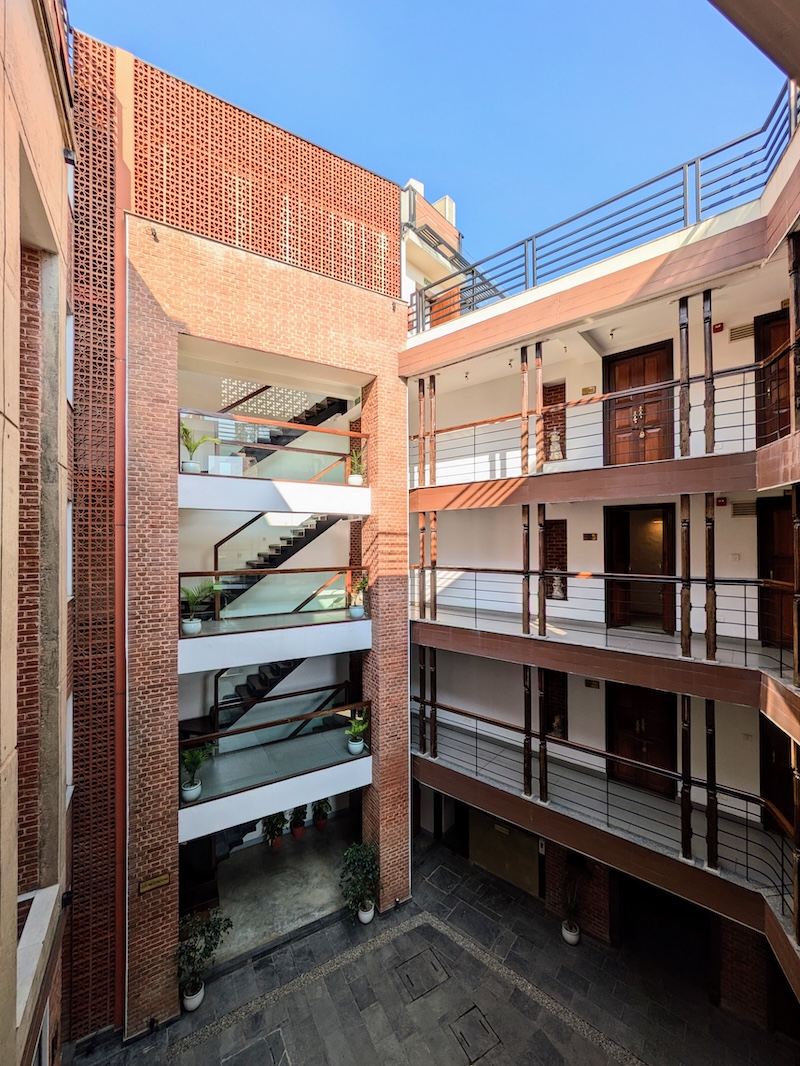
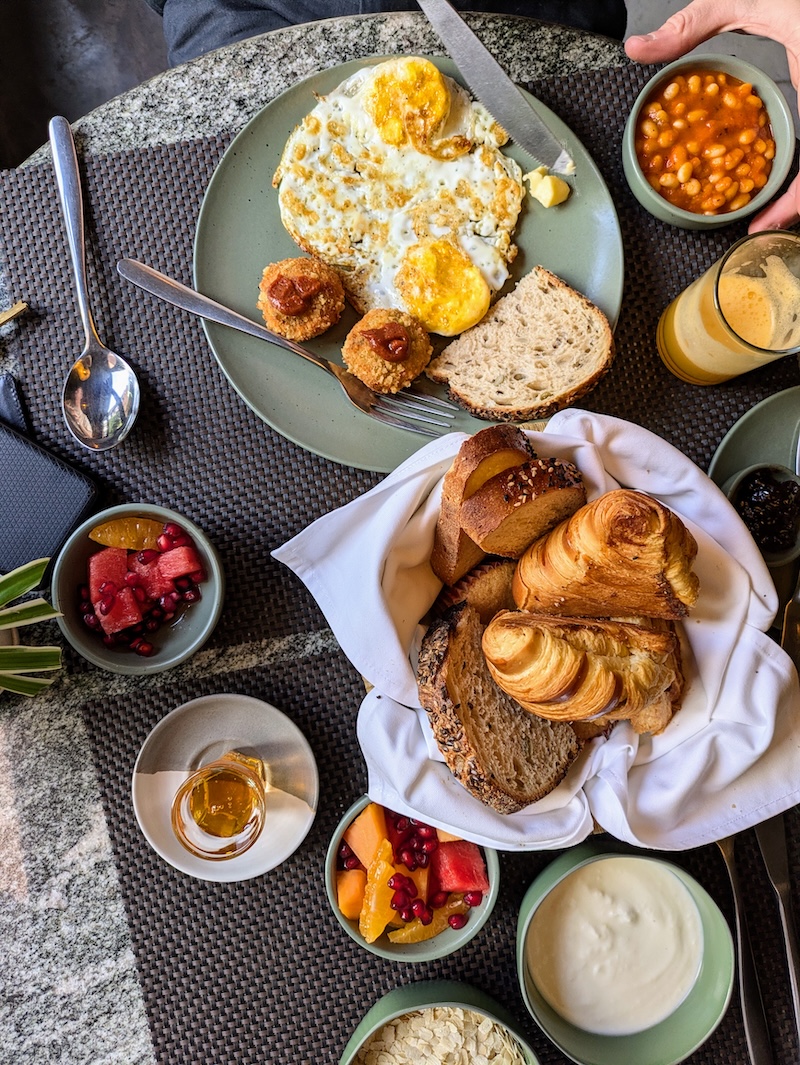
Manju Baha Hotel: A Converted Monastery from £7 a Night
For our last night we moved to Manju Baha Hotel. We paid £20 for a standard room, though there were rooms going for £7 if you don’t mind climbing a few more stairs.
It’s an old monastery, converted and renovated, in a very traditional building. You go up a narrow wooden staircase and the rooms are small. Ours had what I’d call a very small double bed. Generous for one monk. Less so for two people.
What makes it special is that it’s a training hotel. The staff are students learning how to run a hotel, which is one of the reasons it’s so affordable. They were softly spoken, a little bit shy, and very kind. The masala chai was atrocious, as you’d expect from a teenage boy. Still, we’d stay again because it’s a lovely cause to support and an easy walk from all the main squares.
Book here: Manju Baha Hotel, Bhaktapur
Peacock Guest House: The Mid-Range Pick
We didn’t stay here, as it was booked out on our dates, but we loved the look of it. It sits neatly between our two hotels on price. Peacock Guest House is right on Dattatreya Square, in a building that started life as a 14th-century pilgrims’ rest house. It’s small, with eight rooms, and it has its own restaurant, Mayur, plus a bakery for coffee and waffles.
It’s also next door to Peaceful Korean, where we had dinner, and which we’d also recommend. If The Nanee is over budget, this is the one we’d book.
Book here: Peacock Guest House, Bhaktapur
Things to Do in Bhaktapur: The Four Squares
Bhaktapur is a town for wandering. The old centre is a run of temple squares joined by brick lanes, and you can walk between all of them. We had a slow breakfast and spent the morning doing exactly that.
Bhaktapur Durbar Square
The old royal square, and the one closest to The Nanee. The building that stops you first is the 55 Window Palace, built by King Bhupatindra Malla, with a long row of carved wooden windows running across its upper floor.
Next to it is the Golden Gate, finished in 1754, which is the entrance to the Taleju temple. Look for the statue of Bhupatindra Malla too. He sits on top of a stone column in the middle of the square, and the statue still has a bullet hole in it from a battle in 1769.
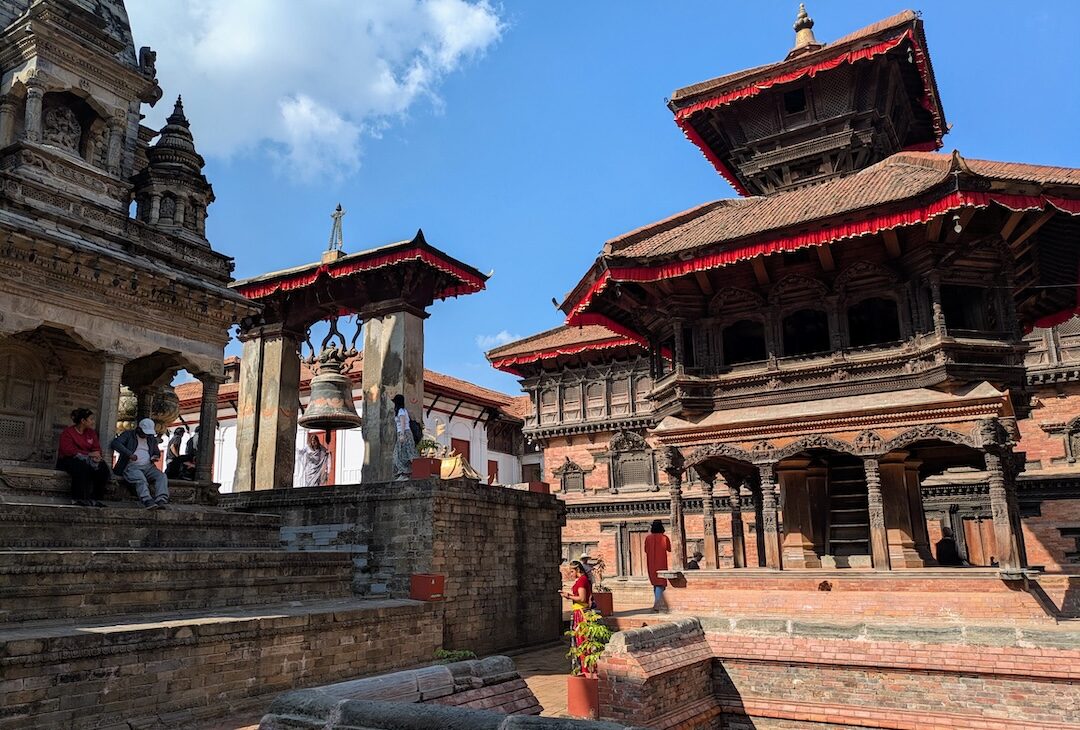
Taumadhi Square and Nyatapola Temple
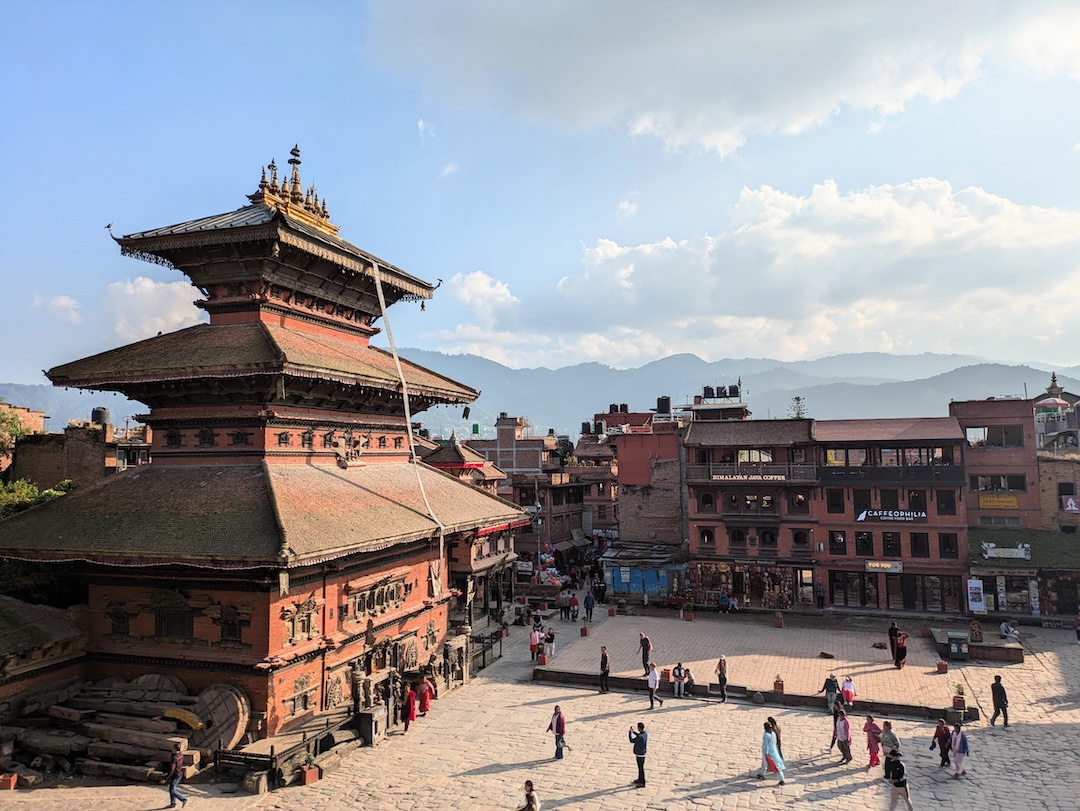
Nyatapola is the five-storey pagoda that features in almost every photo of Bhaktapur. It was finished in 1702, stands just over 33 metres tall, and came through both the 1934 and 2015 earthquakes.
The staircase is the best bit. It’s guarded by five pairs of statues, starting with two wrestlers at the bottom, then elephants, lions, griffins and finally two goddesses at the top. You can’t go inside. Only the priests can.
This is also the square where we watched Tihar from the Himalayan Java coffee shop. Even if you’re not visiting during Tihar, the cafe terrace is an amazing place to sit as you can enjoy a view of the square and it’s goings on from above.
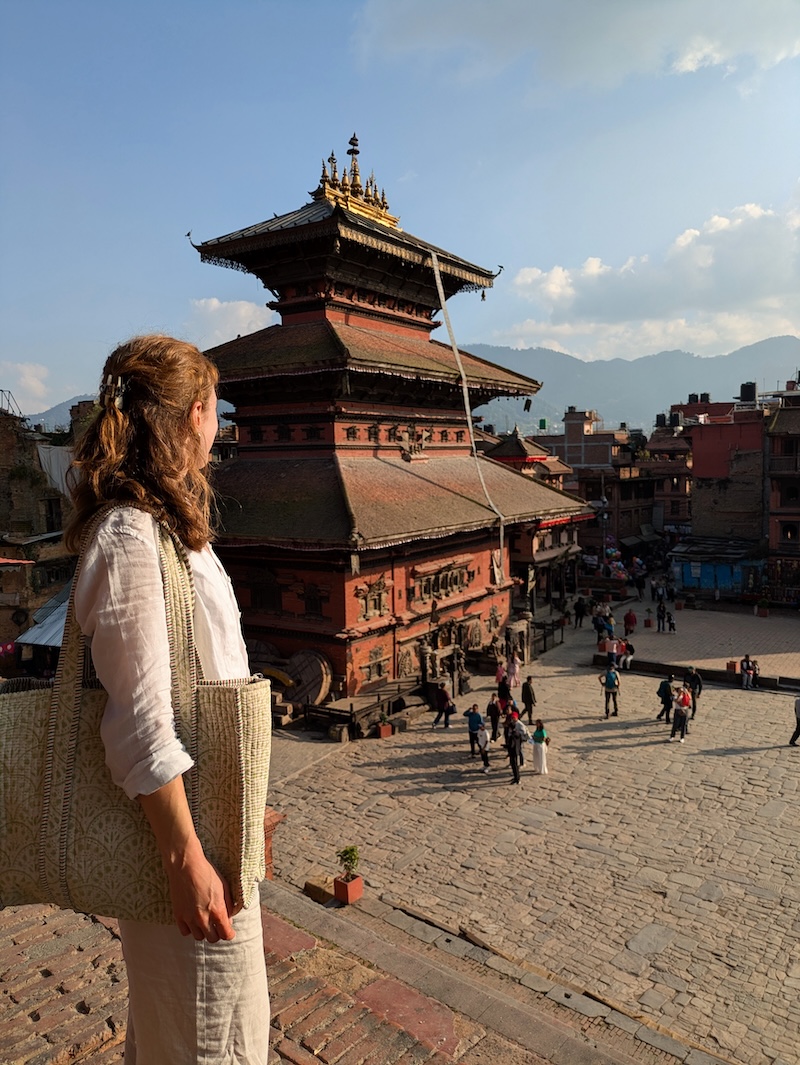
Pottery Square
A few minutes’ walk south of Durbar Square is Pottery Square. Potters work at their wheels under the shelters around the edge, rows of pots sit drying in the sun, and the kilns at the back are covered in straw. Lots of the workshops now have signs up offering to let you have a go on the wheel yourself.
The pottery is amazing, but this was one of our less favourite experiences as we were called over by many different vendors trying to sell their pottery.
Dattatreya Square
Dattatreya Square is the oldest square in Bhaktapur, and we came here in the evening to have dinner. The three-storey Dattatreya Temple at one end is said to have been built from the trunk of a single tree.
The Peacock Guest House is on this square, and the carved Peacock Window that Bhaktapur is famous for is on a lane just off it.
Bhaktapur During Tihar
We arrived on the first day of Tihar, which is Nepal’s version of Diwali. The dates don’t quite match. Tihar started in Nepal two days before Diwali began in India.
The hotel had all its decorations out, and on our second evening we walked to Taumadhi Square to see it in its glory. Multi-coloured banners were fluttering between the temples. People had climbed up onto the temple steps, and lots of women were dressed up and taking photos of each other in front of them, which seems to be something of a national hobby. Oil lamps were lit outside the temples.
The festival is loud. The soundtrack is firecrackers, drumming and a lot of festive clanging. What surprised us was how concentrated it was. The noise and the crowds were all in Taumadhi Square, and the rest of town was calm, with marigold and flower sellers on every corner.
Our Tip: Get a table at Himalayan Java, which is right on the square. We ordered a pot of lemongrass tea and a slice of cheesecake and watched the chaos without being in the middle of it.
Where to Eat in Bhaktapur
Community at The Nanee
The Nanee’s ground-floor restaurant. We had vegetable momos on our first night and they were excellent. On our second night, we had their homemade noodles, which were also delicious.
Both nights we had dessert, which is unlike us, but we loved the juju dhau. Juju dhau is a thick, sweet yoghurt that Bhaktapur is known for. It’s a local speciality here, not a Kathmandu one. At the Nanee, it comes in a sundae glass with pomegranate.
Peaceful Korean Restaurant
Peaceful Korean is on Dattatreya Square, directly next to the Peacock Guest House, and it’s easy to miss. The sign wasn’t lit when we went, and you go through a plain doorway in one of the old stone buildings. Inside is a courtyard where you honestly can’t hear the noise outside.
We both had vegetarian bibimbap, which came with five small dishes of kimchi, potato and turnip, plus chilli chips and a Nepali beer. Dishes were around £2 to £3 each.
The courtyard is a bit rough around the edges. The tap by the toilets was hanging off the wall. I didn’t mind at all, but you do need to like Korean food to eat here, and there are plenty of good Nepali places nearby if you don’t.
Bhaktapur FAQ
Bhaktapur means “City of Devotees”. Locals also call the town Bhadgaon or Khwopa.
Bhaktapur Durbar Square was listed by UNESCO in 1979, as one of the seven monument zones that make up the Kathmandu Valley World Heritage Site.
Bhaktapur was badly damaged in the 2015 earthquake and several temples collapsed. Restoration work has been under way ever since.