
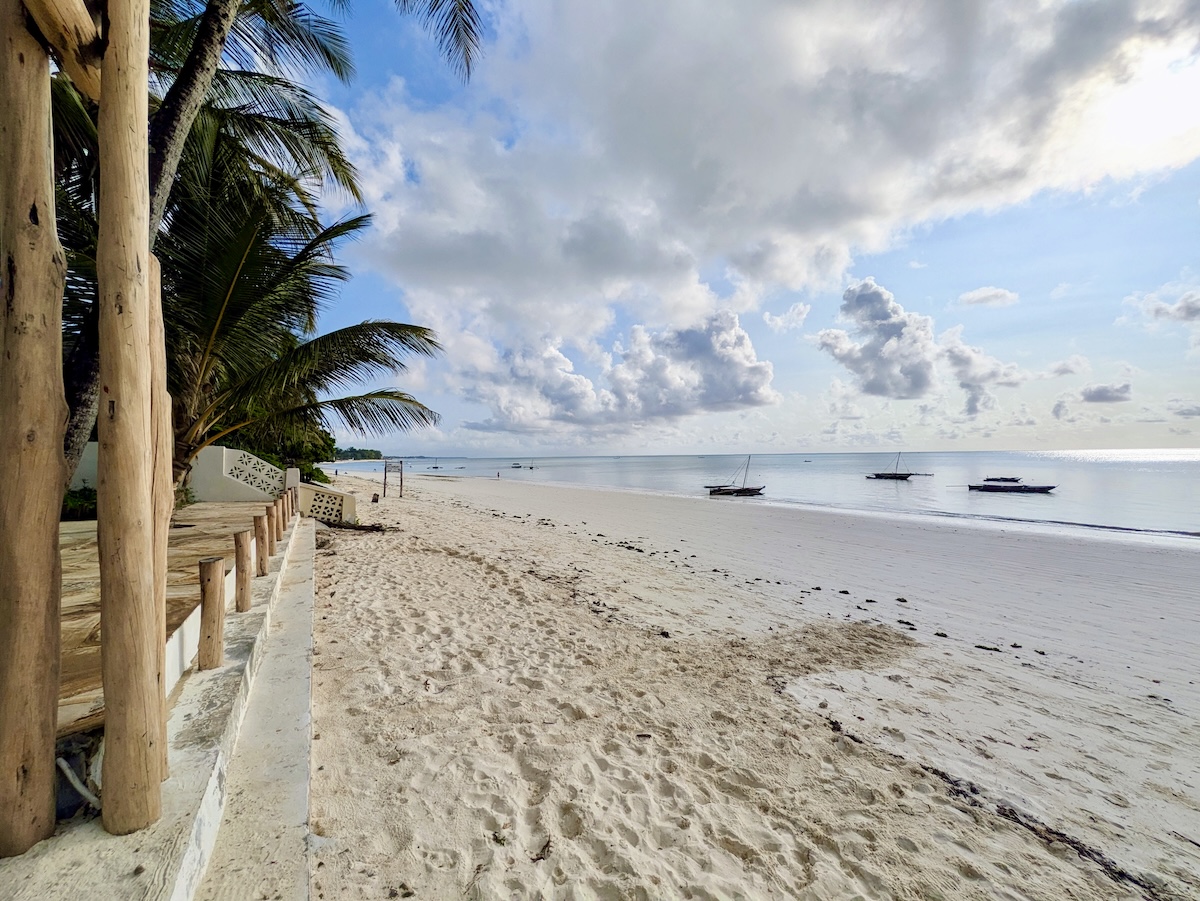

After five amazing (and tiring) days on safari in Tanzania, exploring Tarangire, Ngorongoro Crater and the Serengeti, we flew straight from Kilimanjaro to Zanzibar. What followed was six blissful nights of white sand, warm breezes and slow mornings, five on the beach in Jambiani and a final night in historic Stone Town before flying home.
This is our honest, first-hand Zanzibar itinerary: where we stayed, what we did, what we would do differently, and everything you need to plan your own trip, including the best time to visit, how to combine Zanzibar with a safari, and safety info.
In a Rush? Our Favourite Hotels in Zanzibar
Savera Beach Houses
Private beach houses right on the Jambiani sand, with room to spread out by the sea. The spacious pick.
Check ratesBelvedere Resort Zanzibar
Well-rated resort with tropical gardens, direct beach access and a pool. The comfortable resort pick.
Check ratesBoutique Hotel Matlai
Upmarket beachfront boutique hotel on quieter Pingwe, with a lovely beachside restaurant. The relaxed splurge pick.
Check ratesKudos Beach Apartments
Modern, minimalist apartments right on the sand. The stylish self-catering pick (no pool).
Check ratesZanzibar at a Glance
| Quick Facts | |
|---|---|
| Where is it? | A semi-autonomous archipelago belonging to Tanzania, in the Indian Ocean off the East African coast. The main island is often called Unguja. |
| How to get there | Fly into Zanzibar International Airport, or fly in from a mainland safari as we did from Kilimanjaro. |
| Best time to visit | The dry seasons, roughly June to October and December to February. Long rains fall March to May. |
| How many days | We had six nights (five in Jambiani, one in Stone Town), a lovely length for a relaxed beach week. |
| Is it expensive? | It suits most budgets. We travelled mid-range and found good value, for example a scooter for $15 a day and affordable local food, with pricier resort and luxury options if you want them. |
| Getting around | Tuk-tuks for short hops and scooter hire (around $15 a day) to explore at your own pace. Taxis for longer transfers like the airport. |
Zanzibar is the Rest Part of the Trip (and that is the point)
We arrived full of plans. We were going to visit spice farms, explore all over the island, do everything. But in reality, we barely did half of what we planned! Zanzibar is a big island, and after a five-day safari you are exhausted. A lot of the joy of Zanzibar is taking it easy.
Zanzibar is a tropical beach paradise, white sand, crystal-clear water, the kind of exceptional beach you dream of for a truly relaxing holiday. We went in July, when it is very warm, and in the middle of the day it is too hot to do anything too active beyond swimming or a gentle walk. We did play padel and get out and about, but those are not the ideal midday conditions.
The best advice we have: treat Zanzibar as the restful half of your trip rather than a packed sightseeing tour, and you will love it all the more.
Best Time to Visit Zanzibar (and How it Lines Up with Safari)
The best time to visit Zanzibar is during the dry seasons, roughly June to October and December to February, when you get sunshine, calmer seas and lower humidity. The long rains fall from March to May.
If you are combining Zanzibar with a Tanzania safari, the timing works beautifully. June to October is both peak safari season, when the wildebeest are crossing in the northern Serengeti, and glorious on the coast. A single trip in those months gives you the best of both. We went in July and had wonderful weather, just be ready for the midday heat.
Fly In for Safari, Fly Out of Zanzibar (avoid backtracking)
A useful planning tip: you do not need to fly back to Kilimanjaro at the end of your trip. Fly into Kilimanjaro for your safari, then fly out of Zanzibar directly at the end. We flew straight from Zanzibar to Istanbul and connected home to London, which made the whole itinerary far more efficient. We always start our flight search on Skyscanner, where the flexible-date view makes it easy to spot cheaper days.
Our Zanzibar Itinerary: 6 Nights from Jambiani Beach to Stone Town
We had a simple itinerary with a restful beach stay for the most of our Zanzibar trip:
- Day 1, Arrival: We landed into Stone Town at around 10 PM and took a taxi straight to Jambiani (about 90 minutes), falling into bed by midnight, ready to wake up on the beach.
- Days 2 to 5, Jambiani: Slow beach mornings, swimming at high tide, kitesurfing lessons for Luke, a scooter day trip to Pingwe, a dhow cruise and a day trip to Paje, with plenty of reading and pool swimming in between.
- Day 6, Stone Town: We took a taxi back for our final night, exploring the old town, the Slave Museum and the markets before flying home the next morning.
Why We Loved Jambiani
We stayed in Jambiani and absolutely loved it. Along the beachfront there is a good spread of hotels and guesthouses, so there are lovely places to stay (my picks are below).
You can walk for hours along the beach in either direction at low tide. We mostly swam in the mornings, as by the late morning the tide goes very far out and by the evening the waters get choppy.
What made it special is that just behind the beach, on the back roads, you step straight into local life. That is where the village runs along the road, where locals have their homes, where you will find a few little local restaurants and bars, and the small stores for water and fresh coconuts.
That mix gave Jambiani a really lovely feel. The locals were welcoming. People would happily strike up a conversation as they went about their day, which was so nice. Yes, they would try to sell you a coconut, but only in a friendly way.
Jambiani is also really long, so you can find the stretch that suits you best, and it is easy to rent a scooter or grab a tuk-tuk on the back road to get wherever you want to go.
A Word on Paje (nice to visit, we would not stay)
We took a day trip to Paje and it is the total opposite of Jambiani: tourist mayhem, extremely busy, and very much a party town full of younger backpackers.
There are plenty of nice cafes, restaurants and hotels, so it is worth a visit, but I would not recommend staying there simply because of the busyness.
For us, so much of the quintessential Zanzibar experience is being away from that, with a peaceful spot on a beautiful beachfront. Paje is about 10-15 minutes by tuk-tuk from Jambiani, or a sweaty two-hour beach walk at low tide.

What To Expect in Zanzibar
After early safari starts and long drives, Jambiani was the perfect antidote. We slowed down and let the days unfold.
The most unforgettable aspect of Zanzibar was how incredibly friendly the people are. Locals often sing a playful tune called Jambo Bwana (meaning “hello, sir”) and it became an infectious soundtrack wherever we went.
We met several Maasai on the beaches, many of them young guys visiting from the mainland to sell handmade crafts during the tourist season. They were chatty and huge Premier League fans, keen to talk football or have a kick-around with anyone willing.

Things to Do in Zanzibar
We spent plenty of time relaxing, swimming and sitting in the shade, but we did a few activities we would happily recommend:
Kitesurfing in Jambiani
Jambiani is one of Zanzibar’s best kitesurfing spots thanks to consistent winds, shallow lagoons and wide-open beach. Luke took beginner lessons over several days at Zanzi Kite, a friendly local school, and absolutely loved it. Beginners are well looked after, and confident kiters can just hire gear and head out.


A Scooter Day Trip to Pingwe
One of our trip highlights was renting a scooter for the day, just $15 (around GBP 12), and riding up the coast to Pingwe, a quieter, more upmarket stretch of sand. We parked at Boutique Hotel Matlai and ate at the Vietnamese restaurant on their grounds. They serve excellent vegetarian dishes right on the beach.


A Sunrise Dhow Cruise (learn from our mistake)
We booked a traditional dhow sunset cruise, captained by the memorable Captain Cappuccino. We expected a romantic sail, but the evening sea was rough and it turned into more of an adrenaline ride. If you want the calm, magical version, go at sunrise instead, when the sea is much calmer.

Padel and a Day in Paje
There is a well-kept padel court a short tuk-tuk ride from Jambiani. Book early or late, because the midday sun is brutal. Pair it with a wander around Paje’s cafes and restaurants, and we highly recommend the coconut iced coffee at Hanoi Cafe on a hot day.
Sightseeing in Stone Town
Save a day for Stone Town‘s winding alleyways, spice stores and history. We stayed in Stone Town for our final night simply because it was more convenient for our flight out. It is lovely, but one day is plenty to see it.
Stone Town is at its best for history, shopping and atmosphere. The Slave Museum at the Anglican Cathedral, built on the site of East Africa’s largest former slave market, was a moving and important experience and a real window into local history. Beyond that, it is the perfect place to wander cobbled streets, shop for souvenirs and finish with a rooftop lunch overlooking the sea.
Food & Drink Highlights
Offline Wine Garden (Jambiani) – A garden wine bar in Jambiani with a relaxed vibe and a great selection of bottles. They have good dinner options, including great tofu options which is rare in Tanzania.
@Home Cafe (Jambiani) – Our favourite cafe in Jambiani. The Spanish iced coffee with condensed milk is rich, sweet and a little addictive. Despite growing their own coffee, it isn’t easy to find good, freshly ground coffee, so this was a real treat. They also do great weekend brunch bagels and toasts.
- Hanoi House Cafe (Paje) – I promise you the coconut iced coffee here will be the best iced coffee you’ve ever had. Definitely stop by just for that if you’re near Paje.
Duyen – Vietnamese Homecook by Kim (Pingwe) – A beach-side gem serving fantastic Vietnamese dishes on the sand.
- Breadfruit Restaurant and Café (Stone Town) – We had an upmarket lunch on a rooftop terrace in Stone Town. It was more upmarket than we’d initially expected but we loved it, and it was a highlight of our day in the city.

Where to Stay in Zanzibar
Jambiani (our pick for a relaxed beach base)
Jambiani was our base for the week and we would happily return.
Ha Beach Boutique (where we stayed) — Beachfront, with a spacious, nicely decorated room opening straight onto the sand. We had a few teething issues (a generator and hot water wobble, and a repetitive breakfast), but the staff worked hard to put things right. Worth considering, with those caveats.
Kudos Beach Apartments — Modern, minimalist apartments right on the sand, great if you want to self-cater. Note there is no pool.
Belvedere Resort Zanzibar — A charming, well-rated resort with tropical gardens, direct beach access and a pool, ideal if you want a balance of ocean swims and long, uninterrupted pool sessions.
Savera Beach Houses (Jambiani) — Luxury beachfront bungalows with air-con and an infinity pool on a beautiful stretch of Jambiani beach.
Ha Beach Boutique
Beachfront boutique hotel opening right onto the sand, with spacious rooms and friendly staff. The one we stayed in.
Check ratesKudos Beach Apartments
Modern, minimalist apartments right on the sand. The stylish self-catering pick (no pool).
Check ratesBelvedere Resort Zanzibar
Well-rated resort with tropical gardens, direct beach access and a pool. The comfortable resort pick.
Check ratesSavera Beach Houses
Private beach houses right on the Jambiani sand, with room to spread out by the sea. The spacious pick.
Check ratesStone Town
One thing to know before you book: Stone Town‘s hotels are mostly set in traditional buildings, and they feel it. Stone Town is a UNESCO World Heritage Site, and its houses are mainly 19th-century, built from local coral stone and lime mortar, a style brought by Omani traders. The thick coral-stone walls keep interiors cool but are naturally porous, absorbing the tropical humidity, which is why so many of the historic hotels feel a little damp and musty.
There is something special about staying inside that history, but it is a real contrast to a modern beachfront hotel, so go in with the right expectations. There are some beautiful luxury hotels in Stone Town too, but they cost an arm and a leg.
Mizingani Seafront Hotel — A convenient seafront base, walkable into town, and they arranged our 2am airport transfer. Beautiful architecture and high-ceiling rooms.
Dhow Palace Hotel — Luke’s parents visited Zanzibar the year before us and enjoyed their stay at Dhow Palace. Another traditional hotel in the area with beautiful architecture.
The Neela Boutique Hotel Stone Town — We had lunch at the wonderful, upmarket hotel. If you want to splurge and avoid the musky rooms of standard Stone Town hotels, then we would recommend this beautiful boutique stay.
The Neela Boutique Hotel
Stylish boutique stay in a restored Stone Town building, blending historic character with modern comfort. The boutique pick.
Check ratesMizingani Seafront Hotel
Convenient seafront base, walkable into town, and happy to arrange early airport transfers. Where we stayed.
Check ratesDhow Palace Hotel
Atmospheric heritage hotel in a 19th-century Stone Town mansion, with carved details and a courtyard pool. The historic charm pick.
Check ratesLuxury and Honeymoon Stays
Zanzibar is a classic ‘bush and beach’ honeymoon finish after a safari, and there are some stunning luxury lodges and resorts if you want to treat yourselves. Whilst Jambiani has a handful of luxury hotels, Pingwe is an excellent secluded beach area for more romantic luxury stays.
Boutique Hotel Matlai (Pingwe) — Located on the beach, these air-conditioned villas have infinity pools with terraces and panoramic views of the Indian Ocean.
Is Zanzibar Safe?
Yes, we felt very safe in Zanzibar. The people were among the friendliest we have met anywhere, and Jambiani in particular felt relaxed and welcoming. As anywhere, take the usual sensible precautions with valuables, and cover up away from the beach out of respect for local, largely Muslim, culture. With that in mind, it is a wonderfully easy place to unwind.
Combining a Tanzania Safari with Zanzibar
If you are already planning a safari, adding Zanzibar is easy and very much worth it. After days of early starts and long game drives, the beach is the perfect way to end the trip, and flying straight from the mainland (we went Kilimanjaro to Zanzibar) means no backtracking. For the safari half, and exactly what we paid, see our guide: How Much Does a Safari in Tanzania Cost.
If you want to book a safari and Zanzibar trip together:
Compare operators and packages: Compare safaris and prices from lots of operators in one place to get an overview. Almost all operators offer Zanzibar add-ons to your safari. Just double check your Zanzibar accommodation is located where you want to stay on the island.
Book direct with a local operator: we booked our safari directly with See Endless Adventures, who also offer Zanzibar beach extensions. We organised our own Zanzibar trip and booked through Booking.com.
Zanzibar FAQ
Zanzibar is a semi-autonomous archipelago belonging to Tanzania, in the Indian Ocean just off the East African coast. The main island is often called Unguja.
Around five to seven days is ideal. We had six nights (five in Jambiani, one in Stone Town), which gave us time to relax, do a few activities and see Stone Town without rushing. If you’re coming only to Zanzibar and not going on safari, you could easily enjoy 2 weeks or more here.
Zanzibar has areas affordable for most budgets, and for most UK tourists it is relatively cheap. We travelled mid-range and found good value, for example a scooter for $15 a day and affordable local food, though luxury resorts and Stone Town’s boutique hotels can be pricey.
Yes, and we recommend it. Fly into Kilimanjaro for your safari and out of Zanzibar at the end, so you finish an active trip on the beach without backtracking.
This guide contains affiliate links. If you book through them we may earn a small commission at no extra cost to you. We only ever recommend places we have stayed or would happily book ourselves.