

When I first started planning our Tanzania safari, I had no idea just how much prices could vary. I assumed I would get a few quotes, compare them and pick the best one. But wow, the range in costs was huge, from a $25,000 quote for two down to the $6,114 we eventually paid.
If you are trying to work out how much a safari in Tanzania should cost, here is a full, honest breakdown of what we learned booking our July 2025 trip: exactly what we paid, what was included, the different styles of safari and where they differ in price, and plenty of first-hand tips to help you save.
A quick word on why you can trust this guide: Luke and I have been on safari in both Tanzania and South Africa, and we booked our Tanzania trip directly with a local operator rather than through a middleman. Luke’s parents also did a budget camping safari in Tanzania the year before us, so between us we have seen the full range, from single-skin tents in the wild to comfortable lodges. Everything below comes from real experience, not a brochure.
Tanzania Safari Cost at a Glance
We received a range of quotes when we first researched safari costs in Tanzania, right from budget campaign to premium luxury tents. These prices reflect a 5-6 day safari in Tanzania during July, which is the beginning of the peak season.
| Safari Style | Typical Cost for 2 People | What to Expect |
| Budget / camping | $2,000-$5,000 | Private campaign safaris with private jeep and cook, public campsites, fewer frills. Only for those happy roughing it and with a big sense of adventure. |
| Mid-range (what we did) | $5,000 – $10,000 | Private driver-guide, private jeep, comfortable lodges and tented camps, three meals a day. The sweet spot for value and comfort. |
| Luxury (sky is the limit here) | $12,000+ | Premium lodges, exclusive-use vehicles, fly-in options and top guides. |
Who We Booked With and What We Paid
Our all-in trip: $6,114 for two people for 5 days and 4 nights in July 2025, which works out at $3,057 per person, including a private guide, private jeep, all meals, lodges and a hot air balloon ride. That was less than a third of what some international operators quoted us.
After a lot of research, we booked directly with See Endless Adventures, a Tanzanian-based tour company. Their pricing was significantly lower than every international quote we’d received.
Our total safari cost was $6,114 for two people, for 5 days and 4 nights in July 2025. That is $3,057 per person all-in. You can read our full safari itinerary here.
What Was Included in 5D/4N Our Safari
- Airport transfer from Kilimanjaro to our lodge in Arusha.
- Private driver and guide.
- Private jeep.
- Three national parks: Tarangire, Ngorongoro Crater and the Central Serengeti.
- Four nights of accommodation (see where we stayed below).
- Three meals a day: breakfast, packed lunches and dinner.
- A hot air balloon ride over the Serengeti.
- Internal flight from Kilimanjaro to Zanzibar and airport transfer at the end of the safari.
Our base package worked out at around $2,330 per person, with the hot air balloon and a few extras taking us to $3,057 per person all-in.
My First Safari Quotes
My initial quotes came in much higher than expected. We wanted to see Ngorongoro Crater, the Serengeti and the Mara River crossing (where the wildebeest migration happens) and then fly across for a week at the beach in Zanzibar. I requested itineraries with mid-range accommodation from several well-known safari companies.
One of my first quotes: $25,000 USD for two people
Most others: $10,000-$12,000 USD
Duration: 6–7 days safari and 7 days in Zanzibar
Many included: internal flights across the Serengeti
I’d sent requests to some of the big names you’ll find at the top of Google like Tanzania Specialists and other well-known international operators. While the itineraries looked good, I just couldn’t justify spending that much for a week-long safari.
In hindsight, I should have used safari comparison websites to get a better idea of base prices before sending enquiries to individual tour operators. This would have saved me some time initially.
Why Prices Vary So Much
Then inspiration struck and I realised that booking through international tour agents might be driving the costs up.
Most of my early quotes came from foreign tour operators based in the UK, the Netherlands or other European countries. These companies aren’t the ones actually running your safari. They’re middlemen — subcontracting local Tanzanian safari providers, adding their margin on top, and passing the cost onto you.
Once I figured this out, I started looking for Tanzanian-based safari agencies instead and that’s when the quotes became more reasonable.
On average, an international operator quoted us $10,000 to $12,000 for two, while our Tanzanian-based operator came in at $6,000 for a similar mid-range itinerary. Booking directly with a local, licensed operator was the biggest saving we made.
The Three Types of Tanzania Safari (and What Each Costs)
Before you compare quotes, it helps to understand the three broad styles of safari, because the style you choose affects both the price and how wild the experience feels.
Budget Camping Safari
The cheapest way to safari in Tanzania is a budget camping trip, staying in basic public campsites in simple, single-skin tents. Luke’s parents did exactly this the year before us, in July 2024, paying around $4,000 to $5,000 in total for two across a mix of a couple of lodges and a couple of rustic campsites. They found the campsites and tents very basic, and wished they were in lodges.
The important thing to understand is that the parks are unfenced. There is nothing between the campsite and the wild, which means lions and other animals can and do wander through. Incidents involving tourists are very rare, but not unheard of, so budget camping really suits confident, adventurous travellers only.
Mid-Range Safari (what we chose)
Mid-range is what we chose because we did not want to camp, and the luxury price tag escalates quickly. You stay in a mix of comfortable lodges and semi-permanent, glamping-style safari tents with proper beds and bathrooms. Our all-in mid-range trip came to $6,114 for two.
One thing worth knowing: mid-range is not a single standard. Lodges and camps vary enormously in size, style and how wild they feel, and that matters as much as the nightly price. Check your specific lodges and camps on the itinerary before agreeing, as you’ll want to make sure the places you stay have the feel you want.
Luxury Safari
At the top end you have luxury lodges and fly-in tented camps, exclusive-use vehicles, often in the most private corners of the parks. If you are ready to splurge, there are some incredible and beautiful experiences to be had and lodges to stay at.
Safari Accommodation: Camping vs Tented Camp vs Lodge
Choosing your accommodation is about more than comfort. It shapes how safe and relaxed you feel on safari, and whether you get a good night’s rest between long game drives. Here is the honest difference between the three, based on our mid-range safari trip and Luke’s parents’ camping trip the year before.
Camping: wild, cheap and not for the faint-hearted
Single-skin tents in unfenced public campsites, right out in the wild. It is the most affordable and arguably the most adventurous option, but with animals able to walk through camp at night, you need to be a relaxed (and brave) soul to sleep soundly.
Tented Camps: our mid-range middle ground
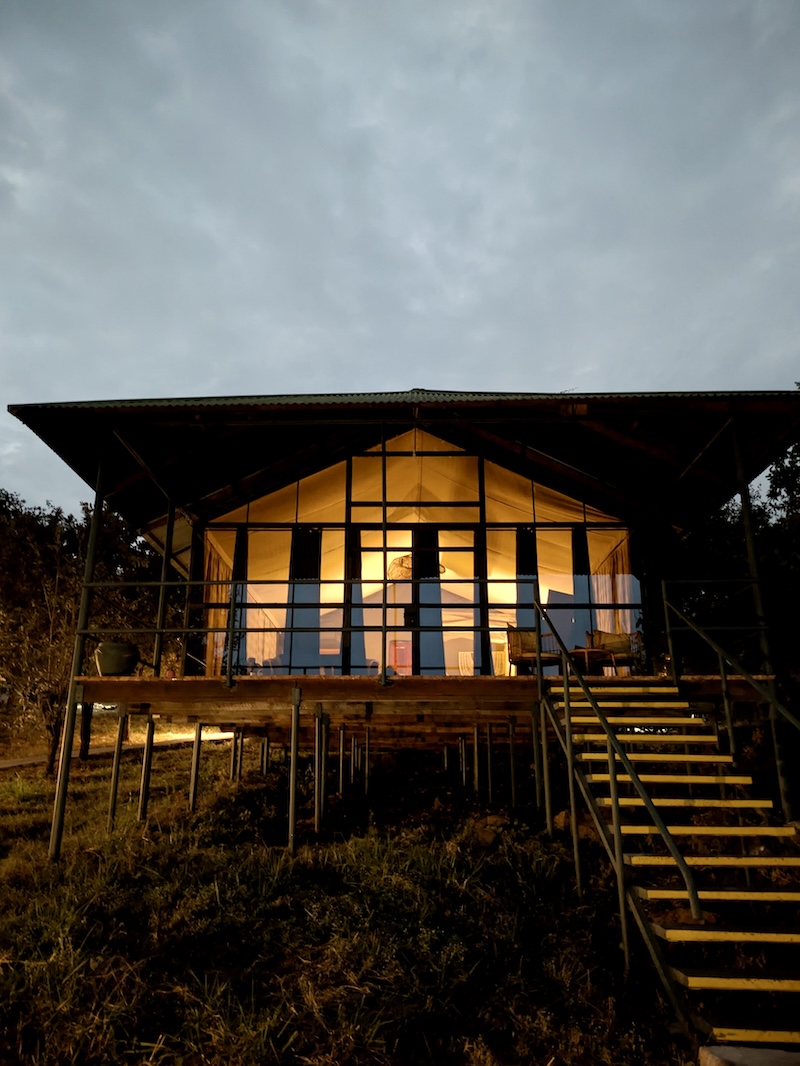
Mid-range tented camps put you in large, comfortable safari tents, a world away from a two-man tent, but you are still close to the wildlife. On one night at our camp in the Serengeti we had lions pass right through, and lying there listening to them breathing just outside the canvas was nerve-wracking enough! It was overall a wonderful to be out in a camp like this, but not for everyone.
Lodges: the choice I would make for a family
Lodges are solid-walled buildings, often with pools and more of a hotel feel. If I were travelling with children, or if being that close to animals overnight would spoil the holiday for you, I would strongly consider staying in lodges only. The extra sense of security is worth it, and for mid-range it is not always more expensive, as lodges come in all sorts of styles and price points. We enjoyed having a mix of tented camps and lodges.
Where We Stayed (and What We Thought)
Kutoka Lodge (1 night): We booked and paid for our first night in Arusha ourselves. This is because we specifically wanted to stay at the lovely Kutoka Lodge, which we highly recommend, and did not like the options that our tour provider had for Arusha hotels. We preferred Kutoka’s quieter location outside central Arusha, and felt it was a 10/10 stay for value, rest and service.
If it’s your honeymoon or you’d prefer to go upmarket, Rivertrees Country Inn by the Usa River in Arusha is the must-stay hotel.
Africa Safari Karatu Lodge (1 night): This lodge is located near Karatu, before reaching Ngorongoro and the Serengeti. It is a very large, touristy lodge. It felt a little like a conveyor belt, almost one tourist in, one tourist out, because it is set up for high volume. Comfortable and convenient for the location, but not intimate.
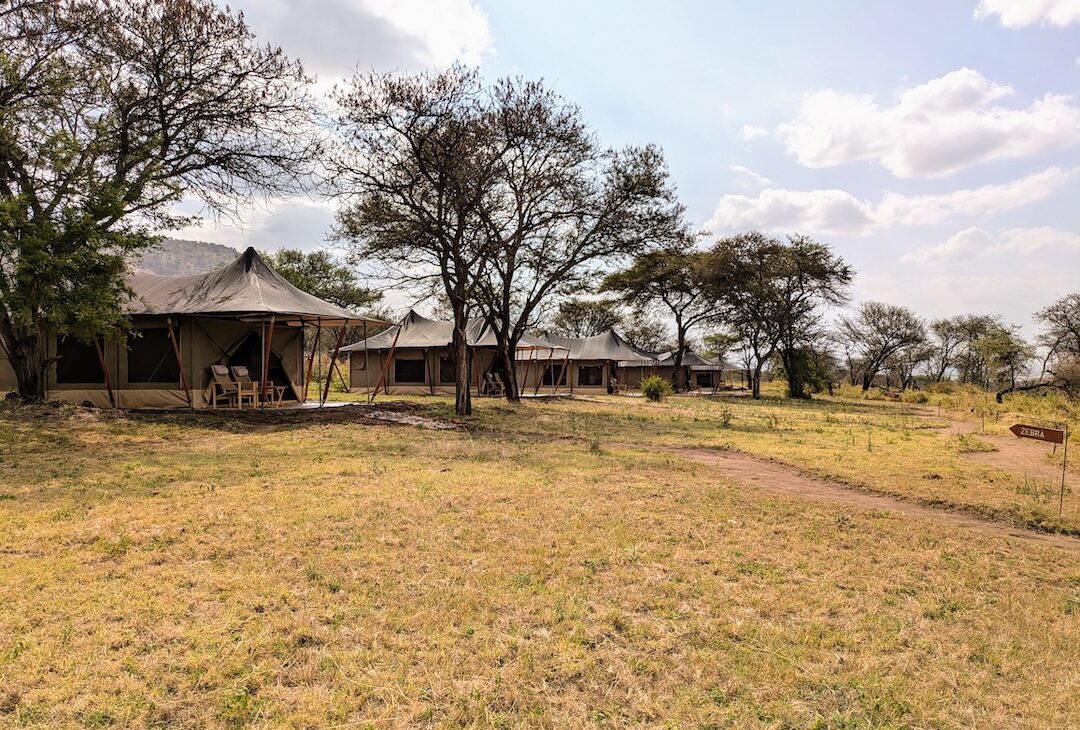
Golden Safari Camps (2 nights): By far our favourite and the accommodation that made the trip. Based in the Central Serengeti, Golden Safari Camps is a small, intimate camp of just a handful of tents, wild but beautifully kept, with really friendly staff. Because it is so small, you are not surrounded by other tourists, so it feels authentic and adventurous without putting you in a tiny tent. This is also where the lions walked through at night. It’s worth noting this is a mobile camp, so it moves depending on wildlife.
Ngorongoro Wild Camp (1 night): A simpler camp near the crater, handy for early starts down into Ngorongoro. A more back-to-basics stay with very spacious raised tents, but the location does the work. Make sure you have a premium room, rather than one of the budget ones at the bottom; it’s nicer without much extra cost.


Best Time To Go: The Great Migration and How Season Affects Price
When you go changes two things: which stage of the Great Migration you see, and how much you pay. The wildebeest and zebra move around the Serengeti ecosystem all year, so there is no single best month, only the best month for what you want to see and your budget.
| When | Where the herds are and what happens |
|---|---|
| Dec to Mar | Calving season on the southern Serengeti and Ndutu plains, near the Ngorongoro Conservation Area, with up to 8,000 calves born a day and plenty of predator action. |
| Apr to Jun | The herds trek north through the central Serengeti and Western Corridor, facing their first big obstacle at the Grumeti River crossings. |
| Jul to Oct | The famous Mara River crossings in the northern Serengeti, before the herds move into Kenya’s Maasai Mara. The headline event, and the busiest, priciest window. |
| Nov to Dec | The short rains push the herds back south through the eastern Serengeti toward the calving grounds. |
How the Season Affects the Price
As a rough guide: July to October (the Mara River crossings) and the festive weeks are peak season, so expect the highest prices and the most jeeps. The calving season around late January and February is popular but a little softer on price.
The long rains of April and May are green season, the cheapest time to go, with fewer crowds and lush scenery, though some camps close and a few roads get tricky. I would hesitate on booking in this season, as it can be unpleasant and affect wildlife sightings.
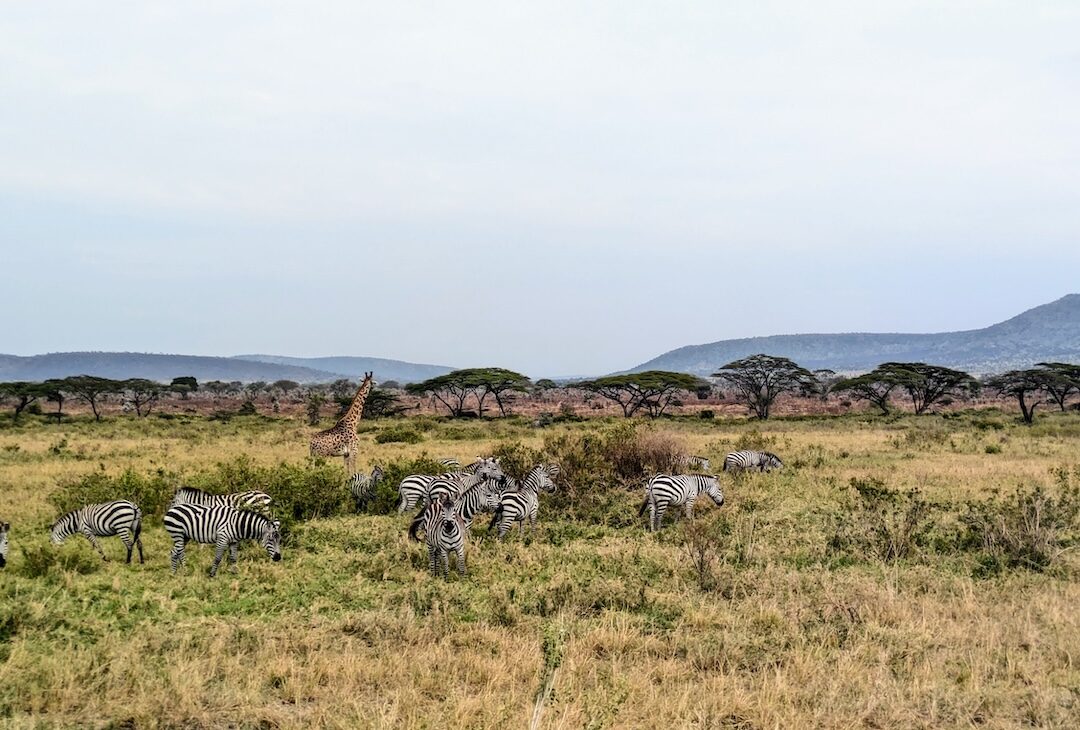
We travelled in July, at the peak, and still saw huge herds of wildebeest in Ngorongoro without doing the Mara crossing. If you want to save, shifting to the shoulder season can bring quotes down noticeably for a similar itinerary.
Why We Skipped the Mara River Wildebeest Crossing
Our quote did not include seeing the wildebeest migration at the Mara River. To reach the crossing you generally need a minimum of 7 days on safari because of the extra driving distance, which also pushes the cost up.
We felt 5 days in a safari jeep was already plenty. The days are long and you cover vast distances. We saw huge herds of wildebeest in Ngorongoro and were happy with that. Since our trip we have seen lots of photos and videos of the Mara crossing, and while it is spectacular, it also looks extremely crowded with tourists and jeeps.
If seeing the wildebeest cross the Mara River is your priority, budget for the longer itinerary and be sure to research this carefully. If you are happy to see huge wildebeest herds without the river drama, a shorter trip like ours keeps the cost down.


Our Hot Air Balloon Splurge
One of our non-negotiable was doing a hot air balloon safari over the Serengeti — something Luke had dreamed of for years.
Cost: $500 USD per person
We downgraded our lodge choices to lower mid-range to balance the budget, and the hot air balloon ride was 1000% worth it and our most magical travel experience to date.

Costs We Booked Separately
See Endless offered package extensions to include five nights in Zanzibar, which was only around $500 more. However, we decided to book Zanzibar separately because their accommodation options didn’t suit what we were looking for. We also booked our first night in Arusha ourselves at Kutoka Lodge, which was a wonderful first night experience.


Most of a Tanzania safari cost is the lodge/camp and the guided game drives, so those are the two things worth comparing carefully. For the gateway nights either side of your safari (Arusha, Moshi, or a Zanzibar add-on), you can compare accommodation prices here:
How Much to Tip on Safari in Tanzania
Our tour operator recommended tipping our driver, who was also our guide, $10 per person per day. We gave a total tip of $100. We also brought plenty of small dollar bills for additional tips. We left contributions in the tip boxes at our accommodations and occasionally tipped staff directly, although this was never expected.
International Flights
Our safari price did not include international flights.
Route: London Gatwick → Kilimanjaro (via Istanbul)
Return: Zanzibar → London Gatwick (via Istanbul)
Cost: £1,000 GBP per person
Tip: Flying into Kilimanjaro and out of Zanzibar saved us from having to loop back, which made the itinerary smoother.
💡 Money-saving tip: We always start our flight search on Skyscanner, where the flexible-date view makes it easy to spot cheaper days for flying into Kilimanjaro.
How to Book a Tanzania Safari
Once you know the length of trip you’re after and have a rough idea of whether you would like to go budget, mid-range or luxury, I would recommend doing to following:
- Compare operators and packages: Compare safaris and prices from lots of operators in one place to get an overview.
- Ask to see specific accommodation: Ask for the specific accommodation breakdown and check these individually. For us, accommodation was a large part of the experience and you can always ask to swap out for alternate options.
- Book direct with a local operator: Find local operators and book directly with them for the best prices after your comparison.
Key Takeaways for Booking a Tanzanian Safari
If you are planning a Tanzania safari, do your homework, get plenty of quotes and do not assume the biggest names on Google are the best value. These are our top tips:
- Book with a Tanzanian-based tour operator. You will save thousands compared with international middlemen.
- Choose your accommodation style carefully. It affects both the price and how safe and relaxed you feel, so consider lodges if you are travelling with children or feel anxious about being close to wild animals.
- Decide your splurges early. For us it was the hot air balloon, so we adjusted our lodges to offset the cost.
- Compare multiple quotes. We got around 7 before deciding.
- Check the accommodation reviews separately, and adjust your itinerary if you are not happy with the included options.
- Check which parks and stops are included, especially if you want to see the wildebeest migration. Ask directly to confirm it is in your itinerary.
- Consider the season. Peak months cost more; the should season can save you a lot.
Tanzania vs South Africa Safari: Which Should You Choose?
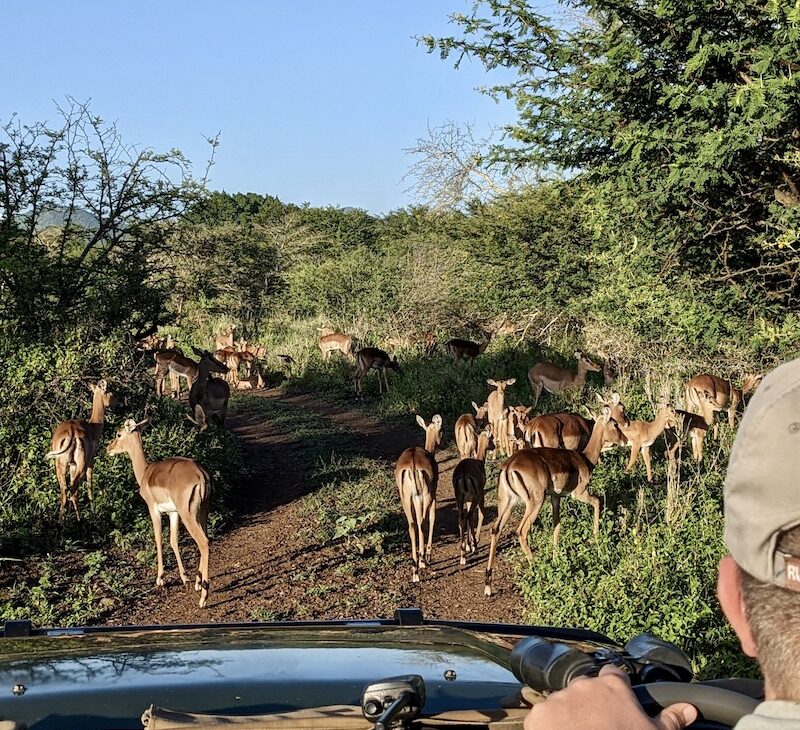
We went on safari in South Africa before Tanzania, at the wonderful Rhino River Lodge in the Manyoni Private Game Reserve. It was a completely different experience, and much cheaper, so it is worth understanding the difference before you commit to Tanzania.
| Tanzania (Serengeti) | South Africa (KwaZulu-Natal) | |
|---|---|---|
| Feel | Vast, endless, the quintessential Lion King wilderness. Truly wild. | More contained and relaxed, still excellent game viewing. |
| Driving | Long days. We drove at least 7 hours daily, up to 10 or 11, because distances are huge. | Short hops within one reserve, two game drives a day from a single lodge. |
| Cost | Higher, driven by distance, park fees and logistics. | Noticeably cheaper by thousands of pounds for a similar or more luxurious stay. |
| Best for | Bucket-list wilderness, the migration, seasoned adventurers. | First safaris, families, shorter trips, comfort seekers. |
The Serengeti is like nothing I have ever seen, endless land as far as the eye can see and the truest ‘you are in The Lion King’ feeling. But it is a big, wild commitment with long days in the jeep. If that is not quite what you are after, or it is your first safari, a South African safari is a brilliant alternative: a 3-day trip at a single lodge, two game drives a day, more luxurious for the money, and you still see fantastic wildlife.
South Africa’s reserves are fenced, mainly to protect against poaching, especially of rhino, so it feels less wild than the Serengeti, but the reserves are still very large and you get the full safari feeling at a lower price.
Tanzania Safari Cost FAQ
A mid-range Tanzania safari typically costs around $2,300 to $3,100 per person for a 5-day trip booked with a local operator. We paid $3,057 per person all-in for 5 days and 4 nights in July 2025, including a private guide, private jeep, lodges, all meals and a hot air balloon ride.
Yes, in our experience it was far cheaper. International operators quoted us $10,000 to $12,000 for two, one as high as $25,000, while a Tanzanian-based operator brought the same style of trip down to $6,114 for two.
Around 5 days is plenty for the northern circuit. You generally need 7 days or more to reach the Mara River crossing.
Roughly $150 to $250 per person per day for budget camping, around $600 for mid-range like ours, and $1,000 to $2,500+ for luxury. Day rates usually fall the longer you travel.
A Tanzania safari is generally very safe, and incidents involving tourists are rare. Your guides are experienced and know exactly how to behave around wildlife. The part that surprises people is the accommodation: because the parks are unfenced, animals can pass through camps, so how safe you feel depends a lot on whether you choose camping, a tented camp or a lodge. We mostly felt safe throughout, even though we were nervous when lions passed our tent. If that idea makes you anxious, book lodges and you will sleep easily.
Our operator recommended about $10 per person per day for your driver-guide. We tipped $100 in total and carried small dollar bills for lodge tip boxes and staff.
This guide contains affiliate links. If you book through them we may earn a small commission at no extra cost to you. We only ever recommend places we have stayed or would happily book ourselves.
sorry. Posted too soon:
Thanks! It has been overwhelming trying to navigate between super-luxury middle people and worrying about which Tanzania-based groups to check with! You have laid it out for us – and now I feel more able to get some quotes, as we are somewhere in the middle given the extended family who will be traveling with us in December!
Glad to hear my post was useful, Krista! Hope you and your family have a wonderful time in December and find the right tour guide for your trip!