

The South Downs Way is a 160-kilometre National Trail along the chalk ridge from Winchester to Eastbourne, usually split into eight stages.
It is one of the few long-distance walks in England you can do without a tent, without a car and without taking a week off work, because the trail crosses railway lines at both ends and at a handful of points in the middle.
The walking is not the hard part. The hard part is beds. Most stages end in a village with one pub and one or two B&Bs, some end in the middle of nowhere, and the official accommodation lists are sorted by type rather than by stage, which is no help when what you need is a bed within a mile of where you stop walking.
Luke and I are walking the South Downs Way in sections rather than back to back. We live in Brighton, so the trail is on our doorstep, and we have two sections left. This guide is the one we wished existed when we started: every stage with distances, where to sleep at each stage end, how to get to and from the trail by train, and everything you need to know.
The South Downs Way at a Glance
| Distance | 160 km / 100 miles |
|---|---|
| Stages | 8 stages (though can be split into more or less) |
| Start and Finish | Winchester City Mill to Eastbourne seafront |
| Time Needed | 7–10 days in one go, or a series of long weekends |
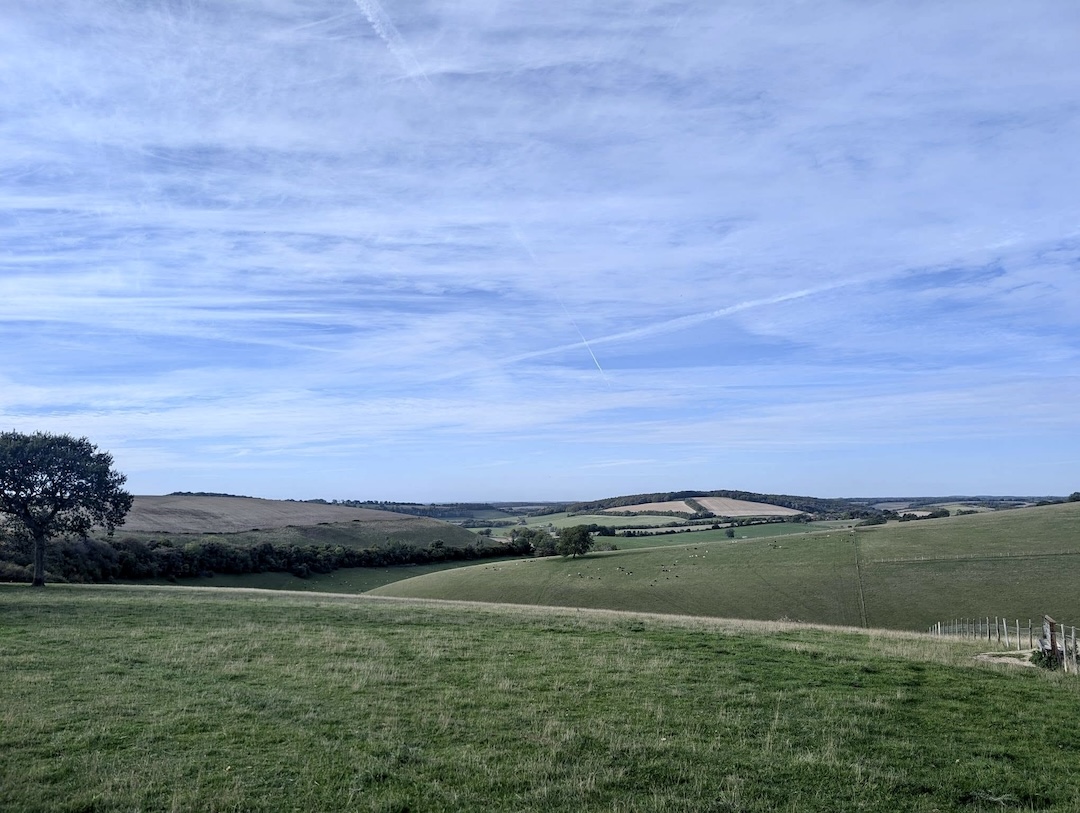
| Terrain | Chalk downland. Stony, uneven, rolling. Nothing technical. |
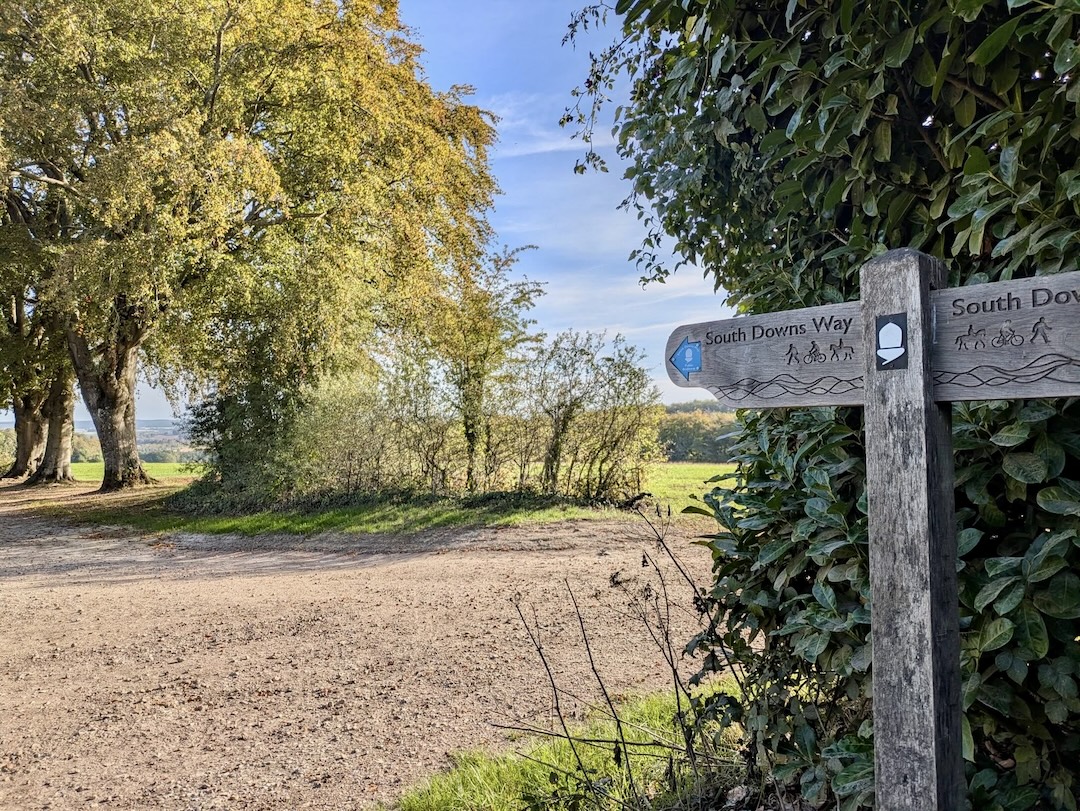
| Waymarking | Excellent. Follow the National Trail acorn. |
| Best Months | April to October. The chalk gets very slippery in winter. |
| Accommodation | Pubs with rooms, B&Bs, two YHA hostels, campsites. Thin on several stages. |
| Railway stations on or near the trail | Winchester, Petersfield (off-route), Amberley, Shoreham-by-Sea (off-route), Lewes (off-route), Southease, Eastbourne |
Is the South Downs Way Hard?
Not technically. There is no scrambling and no exposure, and the highest point (Butser Hill, 270 metres) is not going to trouble anyone. What makes it tiring is the rhythm of it. The trail drops off the ridge into a river valley and climbs straight back up again several times a day, and the surface is stony chalk that is hard on the feet over 20-plus kilometres.
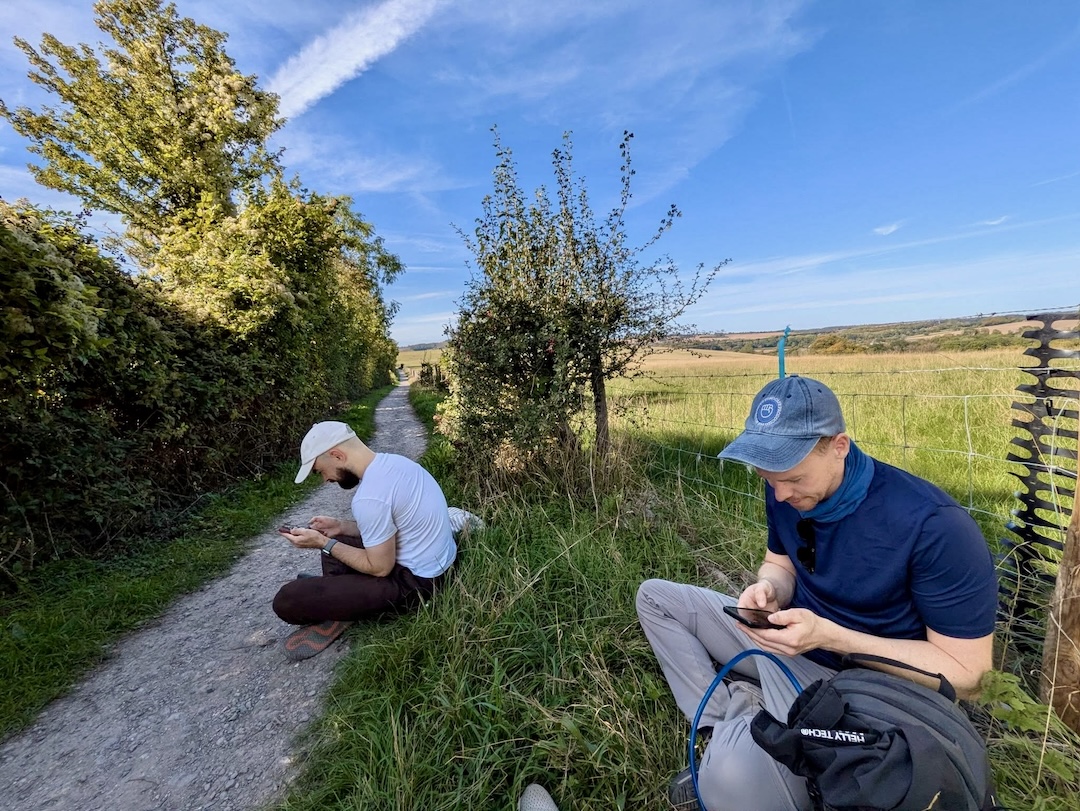
The other thing to prepare for is the lack of facilities up top. Once you are on the ridge there are very few cafés, shops or water taps until you drop down to the next village. On Stage 1 we found exactly one café that was open between Winchester and the Meon Valley. Carry lunch and more water than you think you need.
Walking the South Downs Way in Sections
You do not have to walk it in one go, and we think it is a better trail in pieces. We have been doing it as one- and two-day walks over a couple of years, picking a stage, getting the train to the start and the train home from the end.
This works because of where the railway lines are. Winchester and Eastbourne are both mainline stations. Amberley station is a few minutes from the trail at the end of Stage 4. Southease station is right on the trail between Stages 6 and 7. Lewes, Shoreham-by-Sea, Chichester and Petersfield are all a bus ride or a longish walk off the route. The awkward stages are 2 and 3 through Hampshire and West Sussex, where you are relying on less frequent buses or a lift.
For a two-day section, stay the night before at the start point so you can set off early. Our Winchester to East Meon guide goes into where we stayed and ate on Stage 1.
Where to Stay on the South Downs Way
This is the tricky part. The trail runs along the top of the ridge and the villages with beds are mostly below it. Some stage ends (Amberley, Alfriston, Winchester, Eastbourne) have plenty of choice. Others (Cocking, Exton, the stretch above Lewes) have one or two options, and if they are full you are adding a detour of several kilometres to an already long day.
Book ahead. For May to September weekends, a couple of months is not excessive on the thin stages.
Stage-by-Stage: Distances and Where to Sleep
Distances are approximate and follow the usual eight-stage split. The “Where to Sleep” column lists options at or close to each stage end. Where we have stayed somewhere ourselves, we say so. “Book Ahead” is how far in advance we would book for a summer weekend.
| Stage | Route | Distance | Where to Sleep | Book Ahead |
|---|---|---|---|---|
| Start | Winchester, the night before Stage 1 | – | Stay in Winchester the night before so you can set off early. It is a popular city and rooms are not cheap; we paid £135 for a guest house without breakfast. For something nicer, The Wykeham Arms is a pub with rooms between the cathedral and the college, The Old Vine is opposite the cathedral, The Winchester Hotel & Spa has a pool for the night before, and The King Alfred has cheaper rooms above a pub. Or browse everything in Winchester. | 3–4 weeks, longer for weekends |
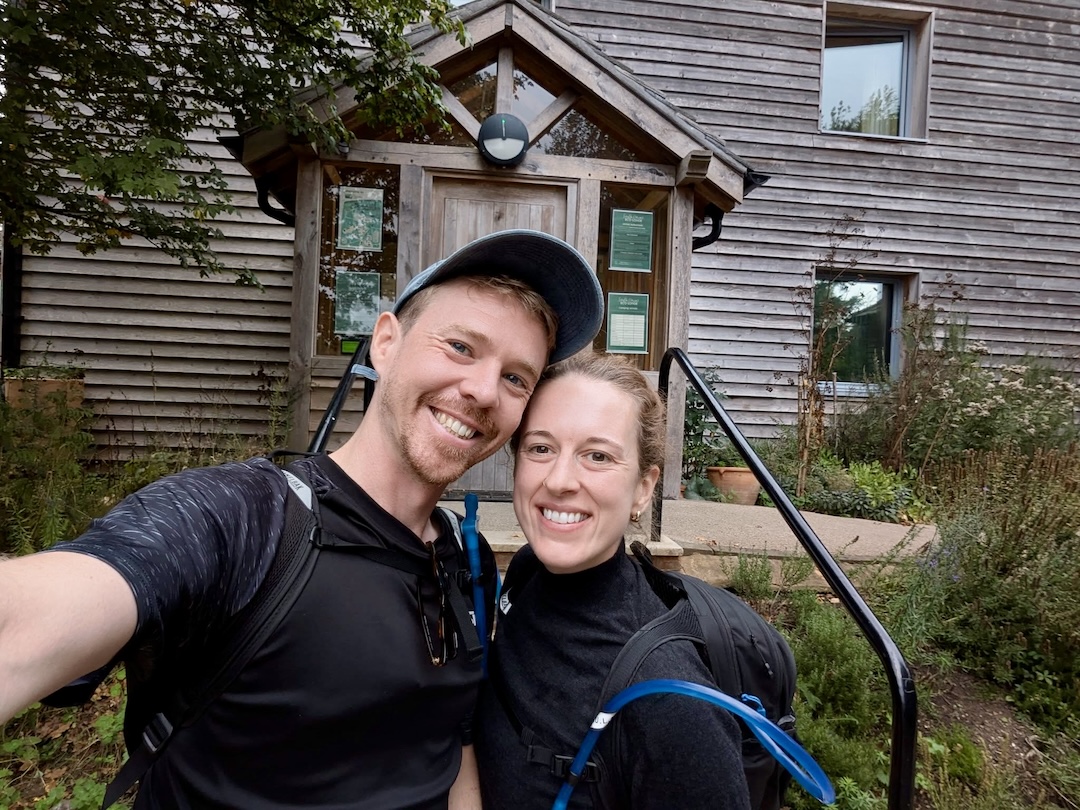
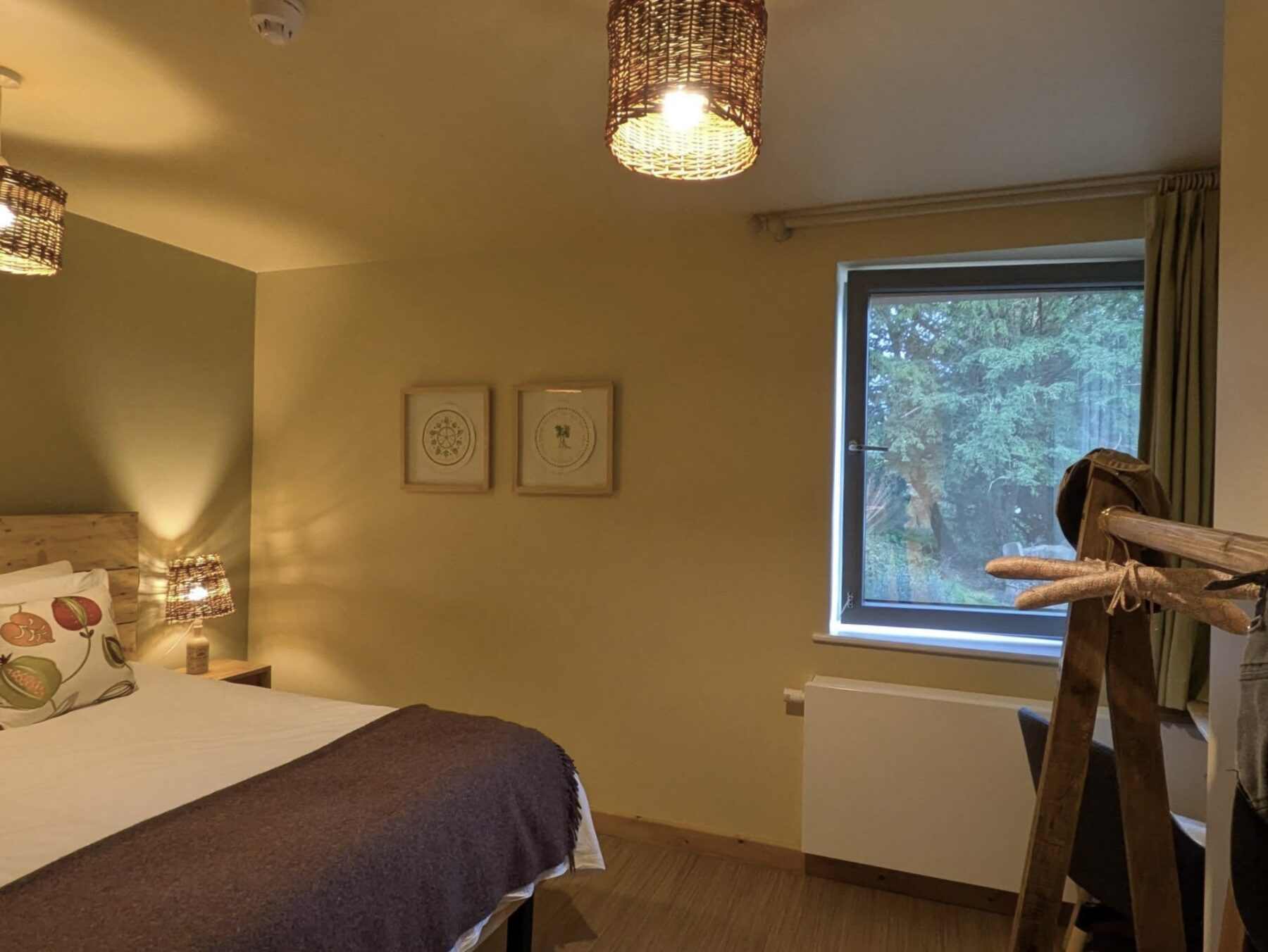
| 1 | Winchester to Exton | 19 km | Exton is small: The Bucks Head Inn (pub with rooms) and Manor House B&B. Otherwise, push on 8km to the South Downs Eco Lodge, which is on the trail near East Meon. We stayed here and would recommend: private en suite room, hostel prices, breakfast available. | 1–2 months |
| 2 | Exton to Buriton | 20 km | The Village Inn at Buriton (rooms), Copper Beeches farmhouse B&B just east of the village, Upper Parsonage Farm campsite. Petersfield is 5 km off the trail with more hotels and a station. | 1–2 months |
| 3 | Buriton to Cocking | 18 km | The thinnest stage. The Blue Bell in Cocking has three rooms, Moonlight Cottage B&B is very close to the trail, Manor Farm has camping. Midhurst is the fallback, 5 km north. | 2–3 months |
| 4 | Cocking to Amberley | 19 km | Plenty of choice. The Black Horse (pub with 11 rooms), The Sportsman Inn just outside the village, Amberley Castle if you want to splurge, South Downs Bunkhouse at Houghton for a budget bed. Amberley has a railway station. | 3–4 weeks |
| 5 | Amberley to Upper Beeding | 21 km | YHA Truleigh Hill is right on the trail above Beeding, with private rooms, dorms and camping. Down in the valley: The Castle Inn at Bramber, and B&Bs in Steyning. Shoreham-by-Sea station is a bus ride away. | 1–2 months (YHA fills fast) |
| 6 | Upper Beeding to Kingston near Lewes | 24 km | The longest stage and the trail ends high above Lewes. Housedean Farm campsite is on the route by the A27, The Newmarket Inn is a stone’s throw from the trail, and Lewes (3–4 km) has hotels and a station. YHA South Downs at Southease is 5km further along. We stayed here and would recommend. | 1–2 months |
| 7 | Kingston to Alfriston | 16 km | Alfriston is the prettiest stage end on the trail (our Cuckmere Haven to Alfriston walk covers the valley below it) and has the most choice: Wingrove House, Ye Olde Smugglers Inne, The Star Inn, Deans Place Hotel, plus Alfriston Camping Park 15 minutes off the trail. | 2–3 months for the nice places |
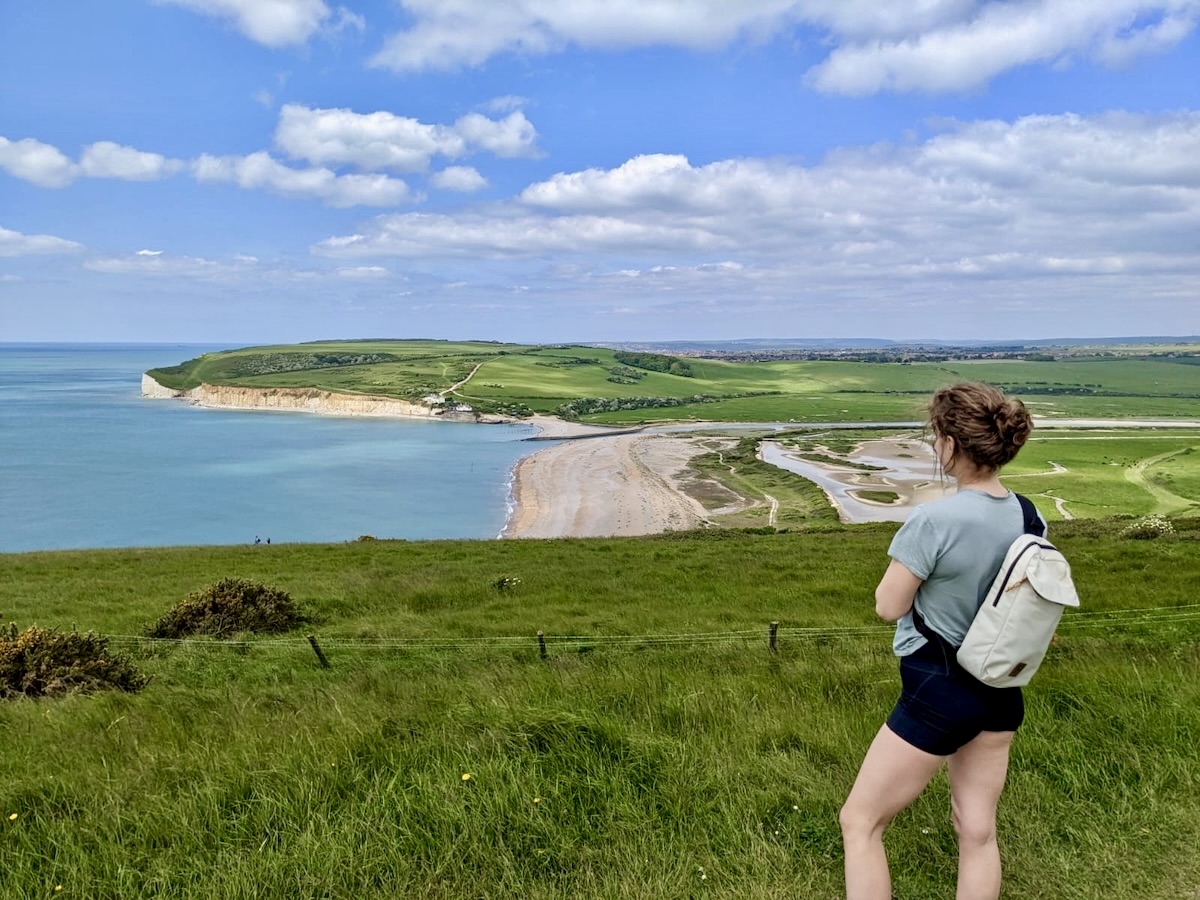
| 8 | Alfriston to Eastbourne via the Seven Sisters | 17 km | Do not assume you will want to get straight on a train after 17km over the Seven Sisters. Our Seven Sisters hike guide has the route options and where to stop along the cliffs. Option to shorten the day and enjoy an overnight at Seven Sisters with a stay at Saltmarsh Farmhouse. Eastbourne has the most choice on the whole trail: The View Hotel on the seafront, The Cherry Tree Guest House for a proper B&B breakfast, YHA Eastbourne on the edge of town for a cheap bed, or browse everything in Eastbourne. If you do head home, the train is about 90 minutes to London and 40 minutes to Brighton. | 2–4 weeks in summer |
Which Direction to Walk
West to east, Winchester to Eastbourne, is the usual direction. The prevailing wind is behind you, the stages build gently, and you finish over the Seven Sisters cliffs and drop down to the sea, which is a far better ending than arriving to Winchester’s roads. The guidebooks are written this way too, which makes the directions easier to follow.
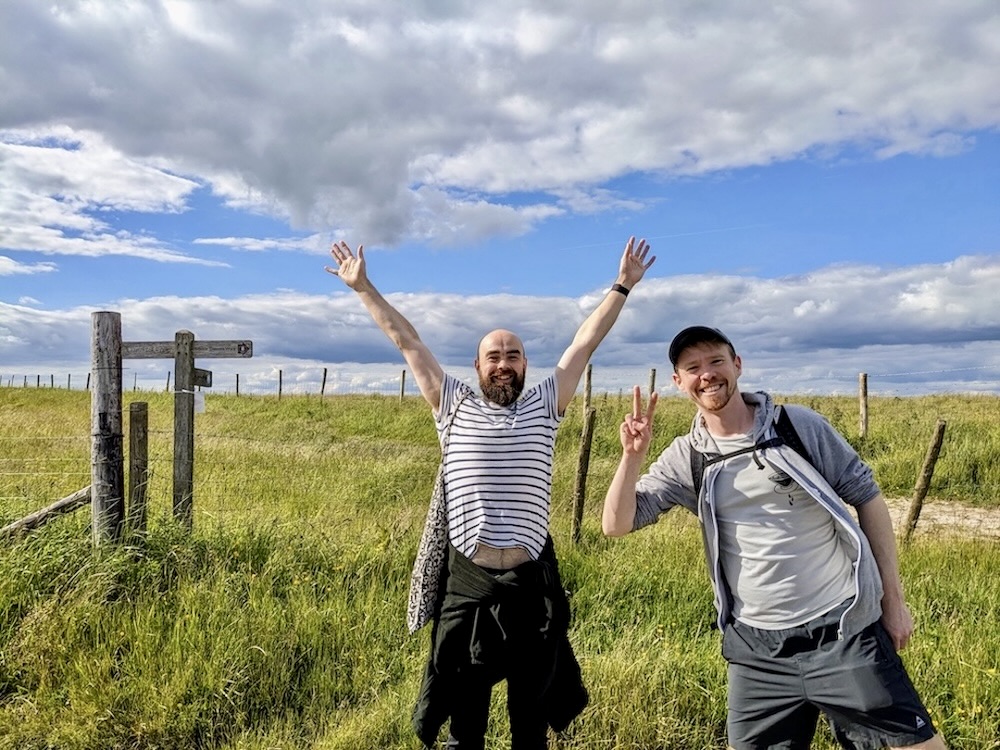
We are rotating walking between different sections due to logistics. Originally, we started in Eastbourne to Winchester direction, as it’s the side closest to home for us as we’re based in Brighton. We recently walked Winchester to Exton and East Meon, which is stage 1 as we had planned to finish the remaining trail and be closer to home by the end, but an injury means we still have two further stages left to go.
Getting To and From the Trail
Winchester is about an hour from London Waterloo by train and the Winchester City Mill is a ten-minute walk from the station. Eastbourne is about 90 minutes from London Victoria and 40 minutes from Brighton, and the trail finishes on the seafront a short walk from the station.
For sections in the middle, Amberley and Southease are the two stations right by the trail. Everywhere else you are looking at a bus from the nearest town (Petersfield, Chichester, Midhurst, Shoreham, Lewes) or a taxi. Check bus times before you go; Sunday services in the villages are patchy at best.
What to Pack for the South Downs Way
- Walking shoes or boots with grip. The chalk is stony and uneven, and slippery when it has rained.
- At least two litres of water per person. Taps on the ridge are rare. Fill up at every café and pub you pass. We prefer to carry a Camelbak backpack which includes a water pouch.
- Lunch. Buy it at breakfast or at the first stop. Don’t assume cafes and pubs will be open.
- Sun protection. There is almost no shade on the ridge.
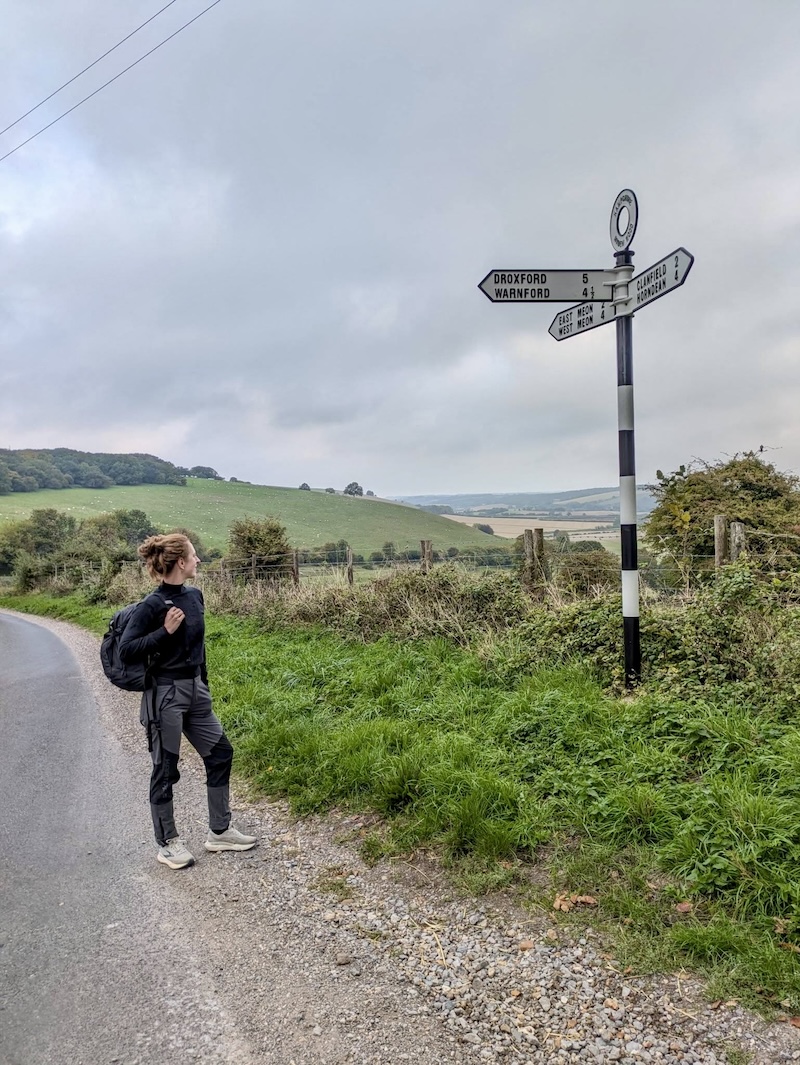
- A downloaded map. The waymarking is excellent but phone signal is not.
- A bit of cash. Not every farm café and honesty box takes cards, though most do.
When to Walk the South Downs Way
May, June and September are the sweet spot. Long days, the downs are green, and the weekend crowds at the honeypots (Devil’s Dyke, the Seven Sisters) are manageable. July and August are fine for walking but the accommodation is at its tightest and it can get very hot.
Autumn is lovely too, but the chalk turns to something close to ice when wet, so from November to March you want good boots, good rain kit and shorter days.
Plan Your South Downs Trip
Start with Stage 1, Winchester to East Meon. If you are based in Brighton or coming down for a weekend, the Seven Sisters section at the eastern end is the one to do first, and it is 40 minutes from us: see our Seven Sisters hike routes, the Cuckmere Haven to Alfriston walk, how to get there from London and the best beaches along the cliffs. We will add the remaining stage guides as we walk them.
South Downs Way FAQs
Wild camping is not permitted on the South Downs Way. The land is privately owned farmland and National Trust estate, so you need a proper campsite or the landowner’s permission. There are walker-friendly campsites near most stage ends, including Holden Farm at Cheriton, YHA Truleigh Hill, Housedean Farm near Lewes and Alfriston Camping Park.
Luggage transfer is available on the South Downs Way. A handful of local baggage companies move bags between stage-end accommodation for a per-day fee, and the self-guided walking holiday companies bundle it into their packages. We carry our own, but we are only ever doing one or two stages at a time.
The South Downs Way can be cycled in full, which makes it unusual among National Trails. The whole route is a bridleway, and where the walkers’ path gets too rough the cycle route diverts onto lanes. Between Alfriston and Eastbourne, bikes take the inland route via Jevington rather than the Seven Sisters. Most people ride it in two to three days.
Dogs are allowed along the whole South Downs Way, but they need to be on a lead around livestock, which is most of the ridge. The bigger issue is beds. Pubs with rooms are usually happy to take dogs, while B&Bs and the YHA hostels vary, so check when you book rather than assuming.