
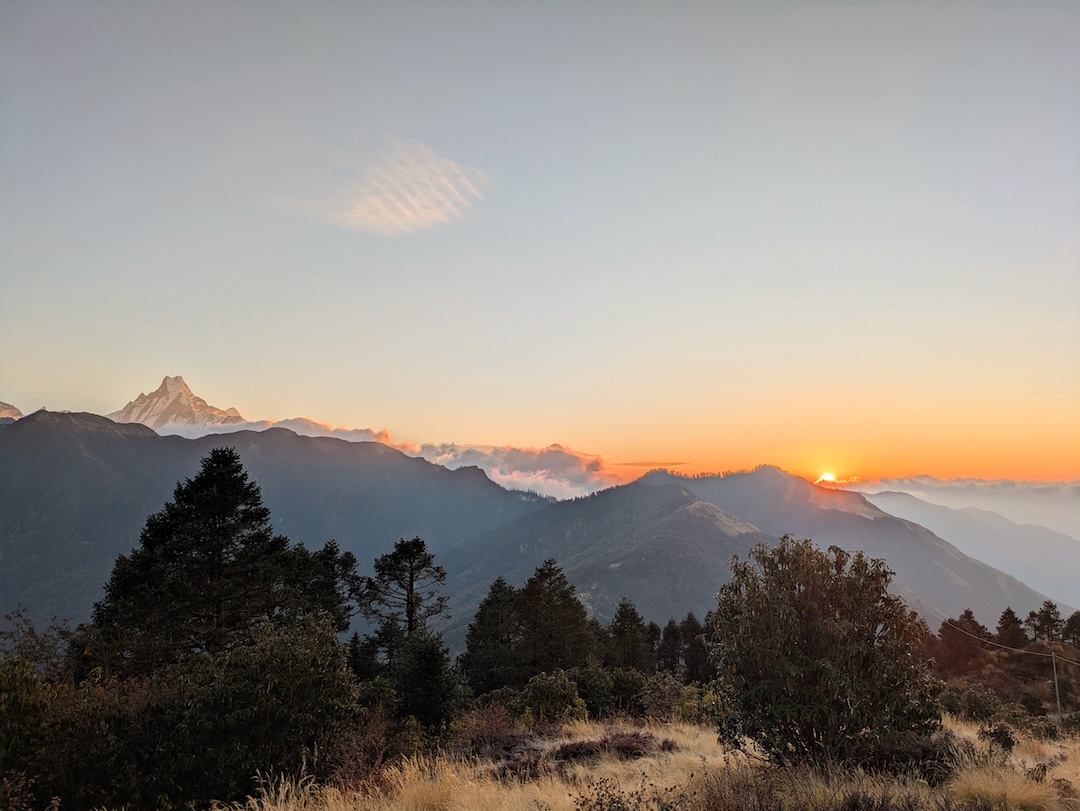

The five best-known Annapurna treks range from a three-day hill walk to a three-week loop over a 5,416 m pass. If you want huge mountain views without the crowds, our pick is the Khopra Danda (Khopra Ridge) trek.
We walked Khopra Danda in November 2026, finishing over Poon Hill, so those two sections come from our own experience. For the other treks (the Annapurna Circuit, Annapurna Base Camp and Mardi Himal), we spoke to other hikers and our guides, and read up on published itineraries and trekking guides.
Everything here assumes you’re starting from Pokhara, the gateway town for all five treks.
New to Nepal? Annapurna vs Everest vs Langtang
If it’s your first time trekking in Nepal, the Annapurna region is the easiest place to start. It has the widest choice of trek lengths, a comfortable gateway town in Pokhara, and no small-plane flight into the mountains. We’ve only trekked in the Annapurnas, so the Everest and Langtang details below come from research.
| Region | Gateway | Classic trek | Highest point on the classic trek | Typical length | Good to know |
|---|---|---|---|---|---|
| Annapurna | Pokhara, a short flight or a long day’s drive from Kathmandu | Five main options, from Poon Hill to the Circuit | Depends on the trek (see the chart below) | 3 days to 3 weeks | Several routes are loops, so you’re often on new ground |
| Everest (Khumbu) | Lukla, by small plane. In peak season flights leave from Ramechhap, 4 to 5 hours’ drive from Kathmandu | Everest Base Camp | 5,364 m at base camp | 12 to 16 days | Higher and longer; weather delays to Lukla flights are routine, so build in spare days |
| Langtang | Syabrubesi, 7 to 8 hours’ drive north of Kathmandu | Langtang Valley | About 3,870 m at Kyanjin Gompa, with optional viewpoints above 4,700 m | 7 to 11 days | Closest to Kathmandu; the trail goes up and back down the same valley |
In short:
- Choose the Annapurnas if you want the most choice, from a three-day taster to a three-week epic, with Pokhara’s lakeside cafes and hotels either side.
- Choose Everest if seeing Everest itself is the point and you have two weeks or more. It’s the highest and most famous of the three, and it starts with a flight.
- Choose Langtang if you’re short on time and starting from Kathmandu. It’s the easiest to reach by road.
One difference worth knowing: Nepal’s rule that foreign trekkers must hire a licensed guide applies in the Annapurnas but not in the Everest region. Also, FWIW: our guide really dislikes the Langtang treks compared to the other two options BUT once saw a red panda there!
Annapurna Treks at a Glance
| Trek | Typical length from Pokhara | Walking distance | Difficulty | Crowds | Best for |
|---|---|---|---|---|---|
| Poon Hill | 3 to 5 days | About 40 to 55 km | Easy to moderate, with lots of stone steps | Busy | A first trek or a short trip |
| Mardi Himal | 4 to 7 days | About 35 to 55 km | Moderate, steep near the top | Quieter than ABC and Poon Hill, but growing | Big close-up views in under a week |
| Khopra Danda (we did this) | 4 to 9 days (ours took 8) | About 80 km on our route | Moderate | Quiet: about 20 people at our best sunrise | Wide views without the crowds |
| Annapurna Base Camp | 7 to 12 days | About 70 to 115 km | Moderate to challenging | Busy | Standing among the big peaks |
| Annapurna Circuit | 10 to 18 days | About 85 to 230 km | Challenging, with a high pass | Busy, with record numbers in 2024 | Experienced trekkers with two to three weeks |
How High Each Annapurna Trek Goes
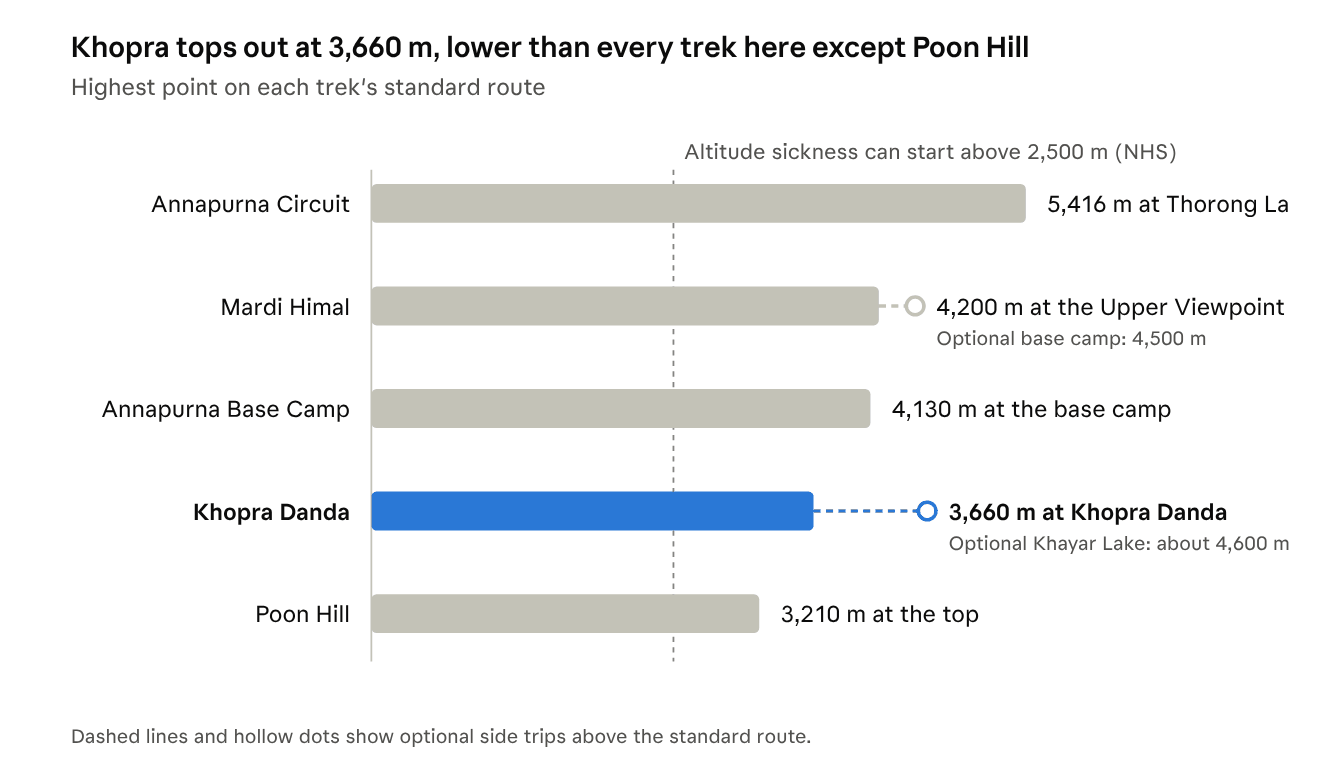
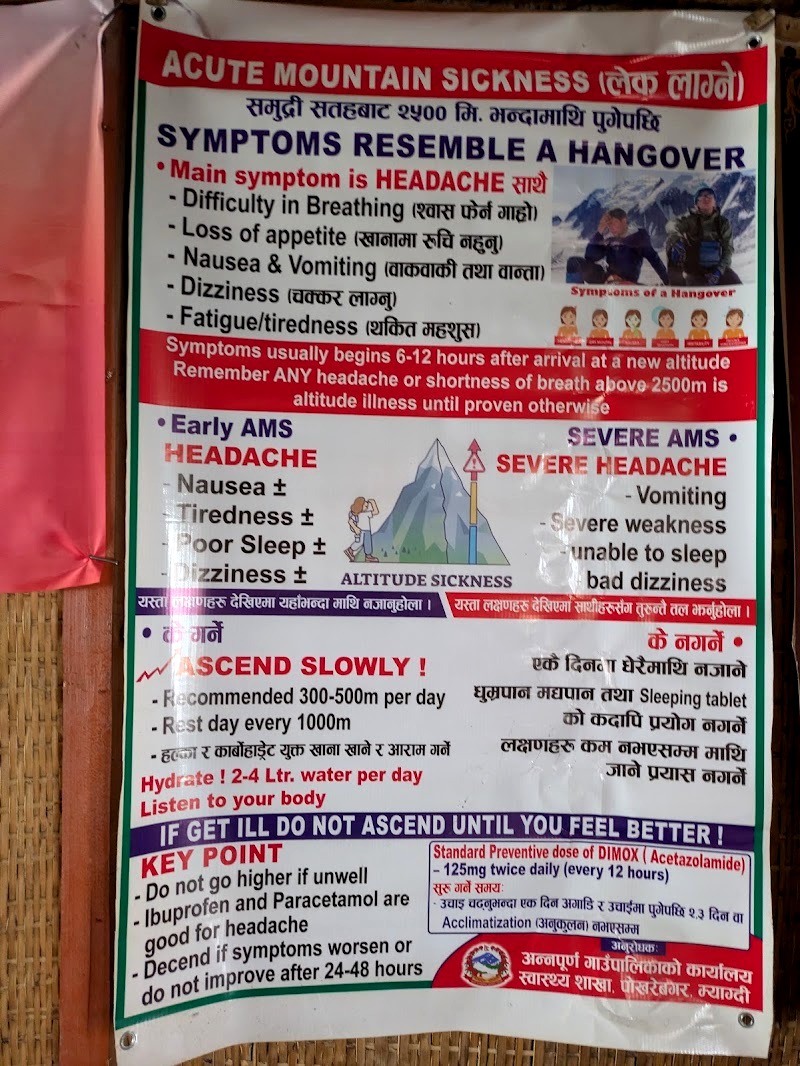
Every one of these treks climbs above 2,500 m, where the NHS says altitude sickness can start, so all of them need a steady pace. (We can speak from experience: altitude is no joke, even at 3,600 m!) The Circuit is in a different league, and the optional side trips on Mardi Himal and Khopra take you well above 4,000 m.
Which Annapurna Trek Is Right for You?
Start with how many days you have, then how you feel about altitude and crowds.
- Three or four days, or your first trek: Poon Hill. Short, well trodden and a superb sunrise.
- Under a week and fit: Mardi Himal. A steep ridge walk that gets you close to the mountains fast.
- About a week and you want quiet trails: Khopra Danda. Our pick, with the best views of our trip and very few people.
- Around ten days and you want to stand among the giants: Annapurna Base Camp.
- Two to three weeks and you want a real challenge: the Annapurna Circuit.
The Annapurna Circuit
The Circuit is the big one: a loop right round the Annapurna massif, from subtropical river valleys up over the Thorong La pass and down into the dry, high desert of Mustang. It’s the longest and highest trek here, and the hardest.
Roads now reach much of the old route, so few people walk the whole thing. The Kathmandu Post reports that road building has shrunk the traditional trek of about 23 days to around a week for many trekkers. Shorter itineraries drive to Chame and start walking there: a typical 10-day version covers about 85 km on foot, against about 170 km for a full 15-day circuit.
It’s also busy and getting busier. The Circuit had a record 30,866 trekkers in 2024, with nearly half of them in October and November, according to the Kathmandu Post.
Best For: Experienced, fit trekkers with two to three weeks who want variety and a high-altitude challenge.
Think Twice If: You’re new to altitude or short on time. Altitude is the main risk, and most itineraries build in a rest day around Manang to acclimatise. Driving straight up to Manang is a bad idea for the same reason. In winter (December to February), Thorong La may close after heavy snow.
If you want a feel for prices and itineraries, you can compare guided Annapurna Circuit treks on GetYourGuide.
Annapurna Base Camp (ABC)
ABC takes you into the Annapurna Sanctuary, a high basin ringed by huge peaks including Annapurna I, Annapurna South, Hiunchuli and Machhapuchhre (Fishtail). Most routes climb through Chhomrong, Bamboo and Deurali, pass Machhapuchhre Base Camp and finish at the base camp itself.
It’s one of the region’s most popular treks. ABC, the Circuit and Upper Mustang are among the most popular of the region’s 18 trekking routes, as reported by Republica.
Of all the treks mentioned, our guides were least positive about ABC. I’m sure you can have a great time, and it’s undoubtedly an achievement to be proud of, but the views aren’t as open as on other hikes and the there-and-back-again route gets a bit samey. Plus, the crowds can be hectic.
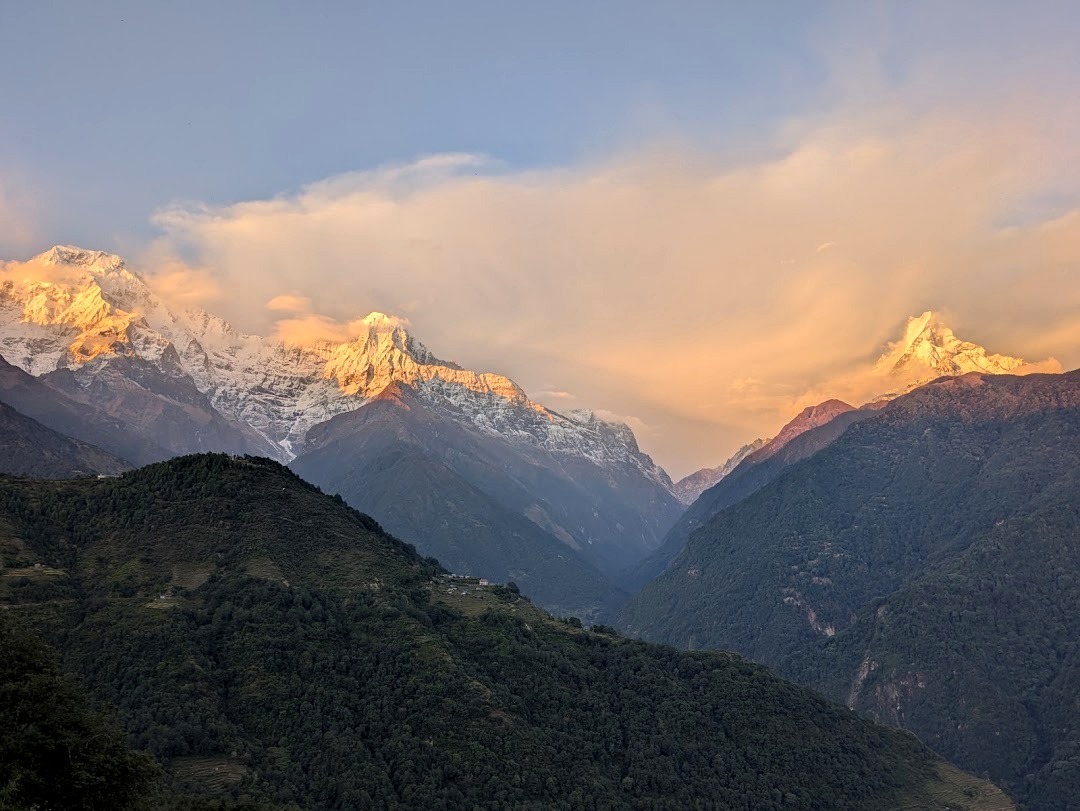
Best For: Anyone who wants to stand right among the big peaks, and doesn’t mind company on the trail.
Think Twice If: You’re going in late winter or early spring. The stretch between Deurali and Machhapuchhre Base Camp is prone to avalanches, especially from about February to March, so check conditions with your guide before you set off.
There are plenty of Annapurna Base Camp treks on GetYourGuide, most of them starting from Pokhara.
Poon Hill (Ghorepani Poon Hill)
Poon Hill is the classic short Annapurna trek. Most versions climb from Nayapul or Birethanti up the stone steps through Ulleri to Ghorepani, then head up Poon Hill before dawn for sunrise. Some come back the same way; others loop round via Tadapani and Ghandruk.
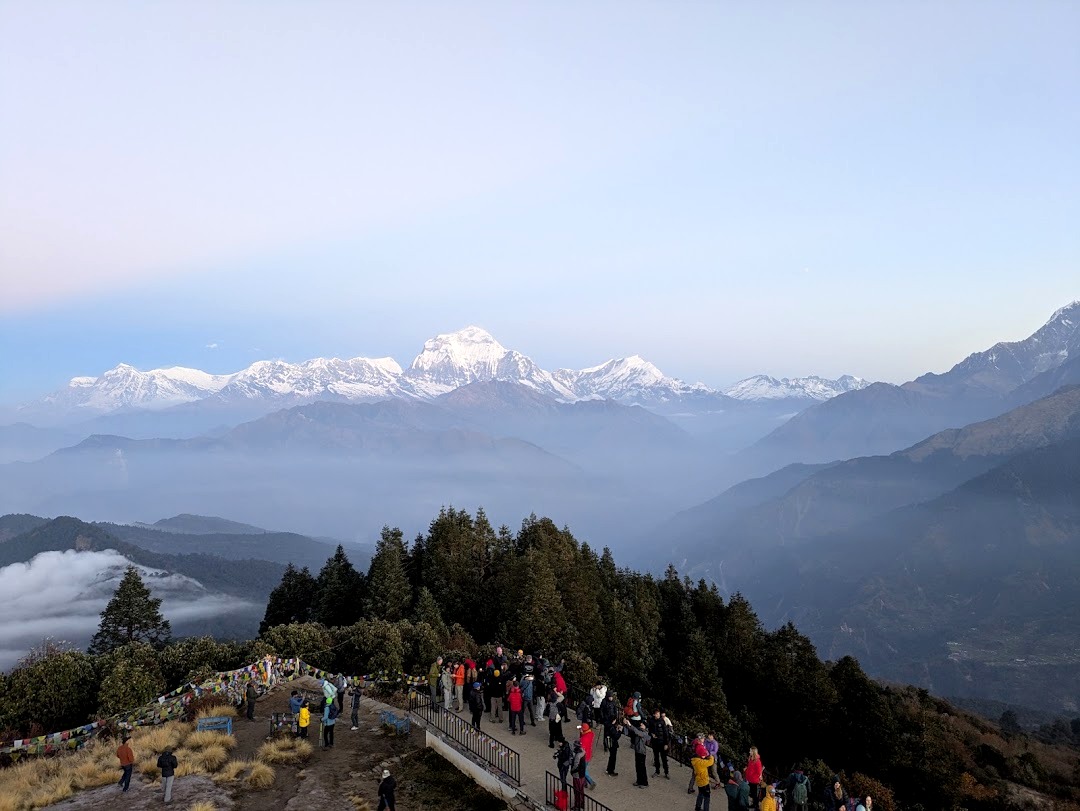
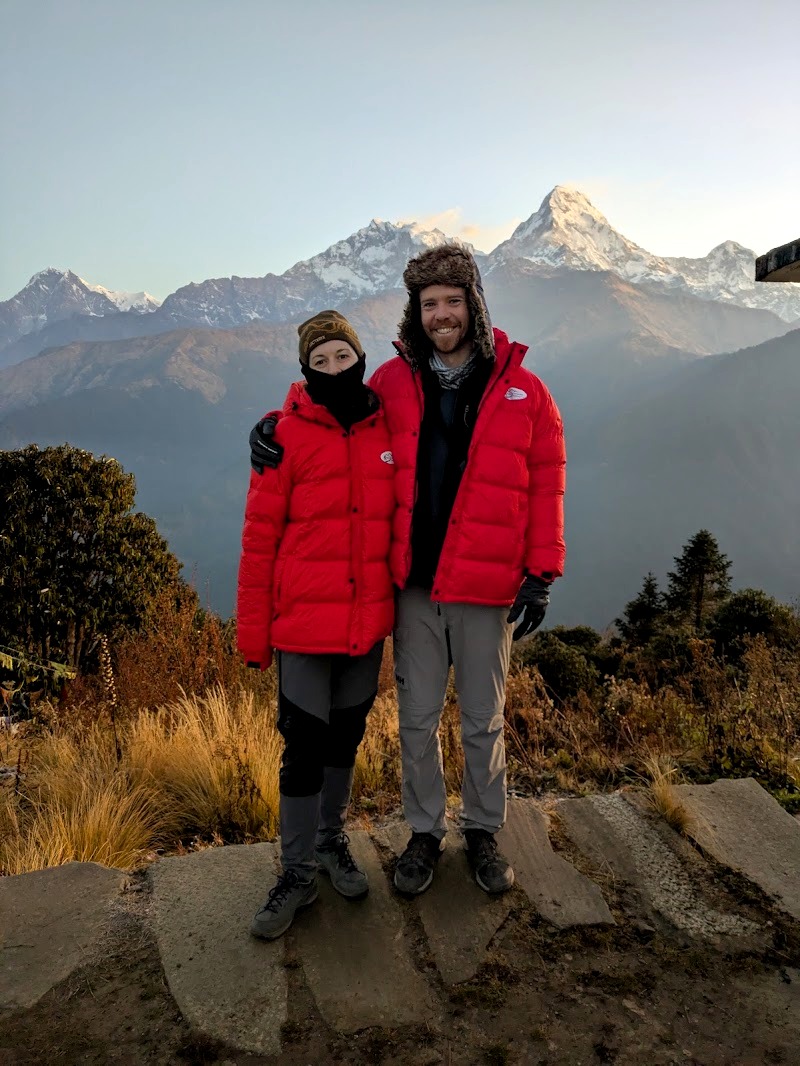
We walked up from Ghorepani in about an hour in the dark. The sunrise over the Dhaulagiri and Annapurna ranges was superb, and you can buy a coffee at the top (bring cash: we paid 150 rupees to get in). It was busier than the other viewpoints we visited, but I was surprised by just how good the views were, despite the relatively short hike. The walk down to Hile was mostly downhill on stone steps and jeep track through farming villages.
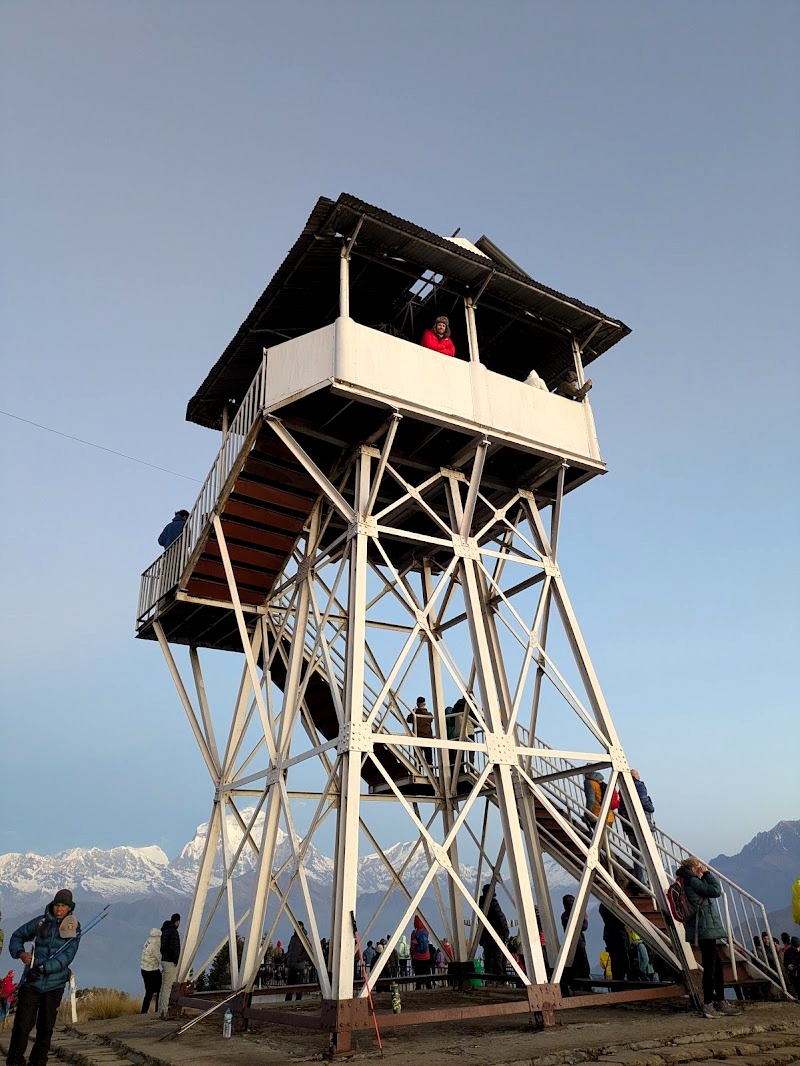
In 2025, a jeep track from Birethanti was finished, so now non-trekkers can take a jeep all the way to Ghorepani. This also means you can take a jeep back if you make it up but can’t face the walk back down; one of the guests we met at the Hungry Eye Hotel took this option and paid US$70.
Best For: A first trek, a short trip, or anyone who wants a Himalayan sunrise without much walking.
Think Twice If: You want peace and quiet. It was the busiest viewpoint we visited, so if you have a few more days, Khopra or Mardi Himal will give you bigger views with fewer people.
Poon Hill is the easiest of the five to book online. You can compare Ghorepani Poon Hill treks on GetYourGuide, from two-day jeep-assisted versions to the four-day loop via Ghandruk.
Mardi Himal
Mardi Himal follows a ridge east of the Modi Khola valley towards Machhapuchhre (Fishtail). Lodges run up to High Camp at about 3,550 m. From there, most people climb before dawn to the Upper Viewpoint, and some carry on to Mardi Himal Base Camp. Mardi Himal is our guide’s second favourite trek, after Khopra Danda. (His second favourite viewpoint, though, is Everest from Pikey Peak, outside the Annapurna region.)
It’s quick to reach. The trail starts at Kande or Phedi, 30 to 45 minutes’ drive from Pokhara, and climbs through rhododendron forest before breaking out onto the open ridge. Most itineraries come down a different way, through Siding village.
Trekking companies describe Mardi Himal as quieter than ABC or Poon Hill, but it’s no secret any more: it now appears alongside ABC and Poon Hill in reports on the region’s main attractions.
Best For: Fit trekkers who want close-up mountain views in under a week.
Think Twice If: You’d rather gain height gently. Short itineraries climb a long way in a few days, the upper ridge is steep and exposed, and the teahouses near the top are simple.
If you’d like to book ahead, this four-day Mardi Himal trek from Pokhara on GetYourGuide is well reviewed.
Khopra Danda: The Quieter Pick (Our Trek)
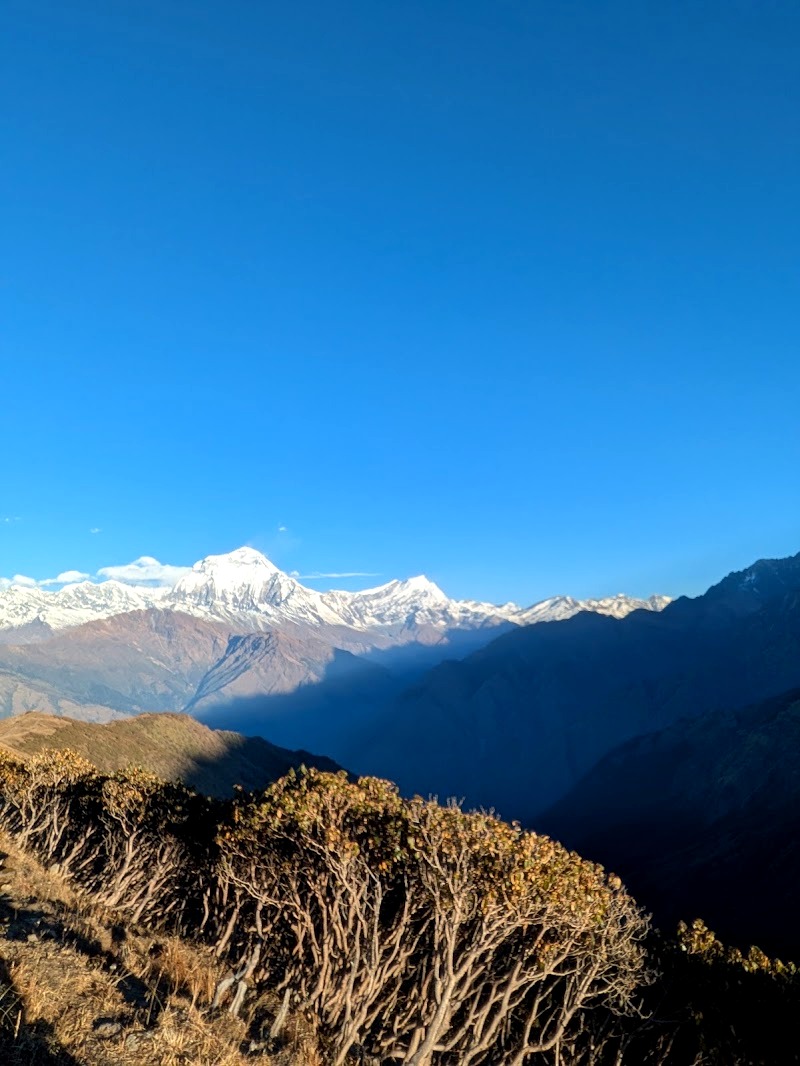
Khopra Danda is a high ridge west of Annapurna South with spectacular views across both the Annapurna and Dhaulagiri ranges. We walked a loop from Birethanti through Ghandruk, Tadapani and Dobato, up to the ridge, then down via Swanta and Ghorepani, finishing over Poon Hill. It took us eight days.
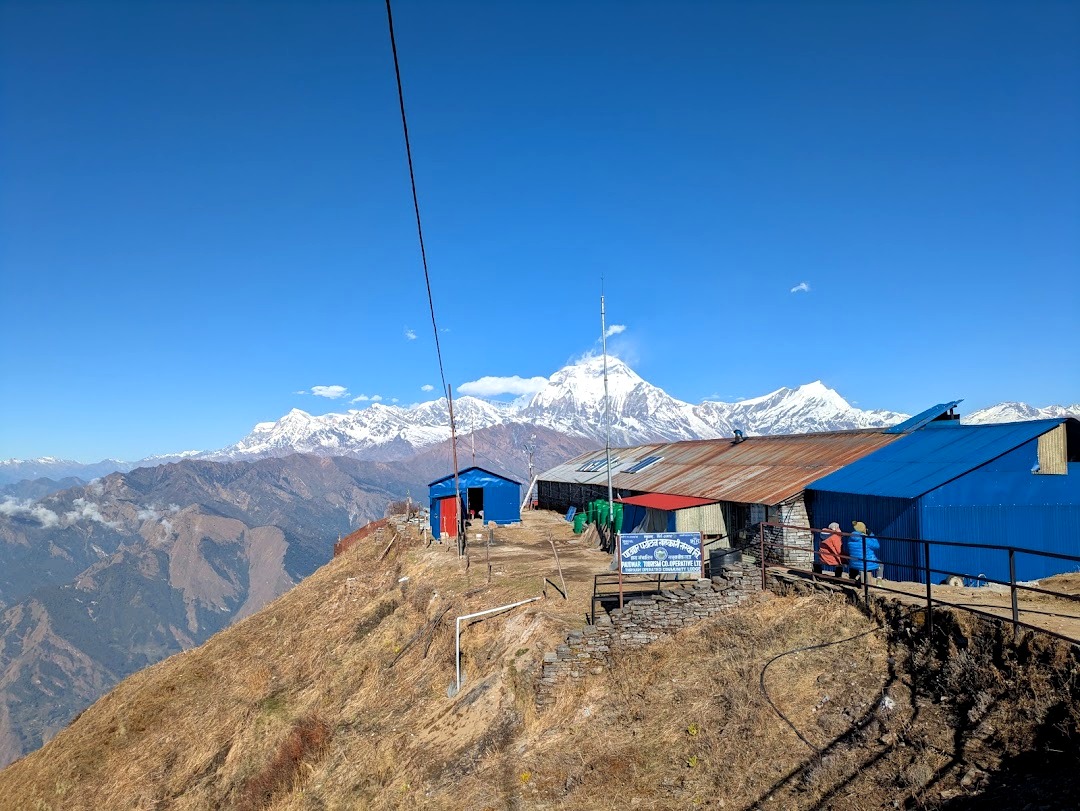
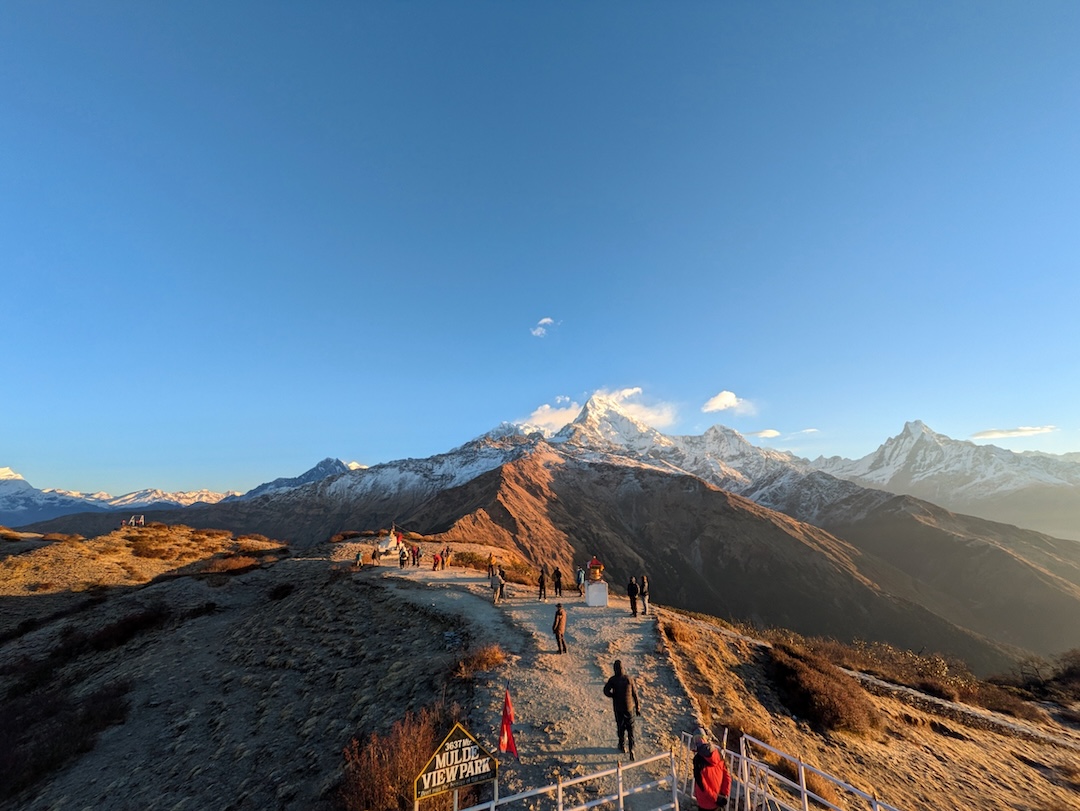
The highlight was sunrise from Muldai Peak, above Dobato. It was the best view of the whole trip, and we shared it with about 20 people. That sums up Khopra: the views are as big as anything on the busier treks, but the trails are quieter, and because it’s a loop you’re almost always on new ground.
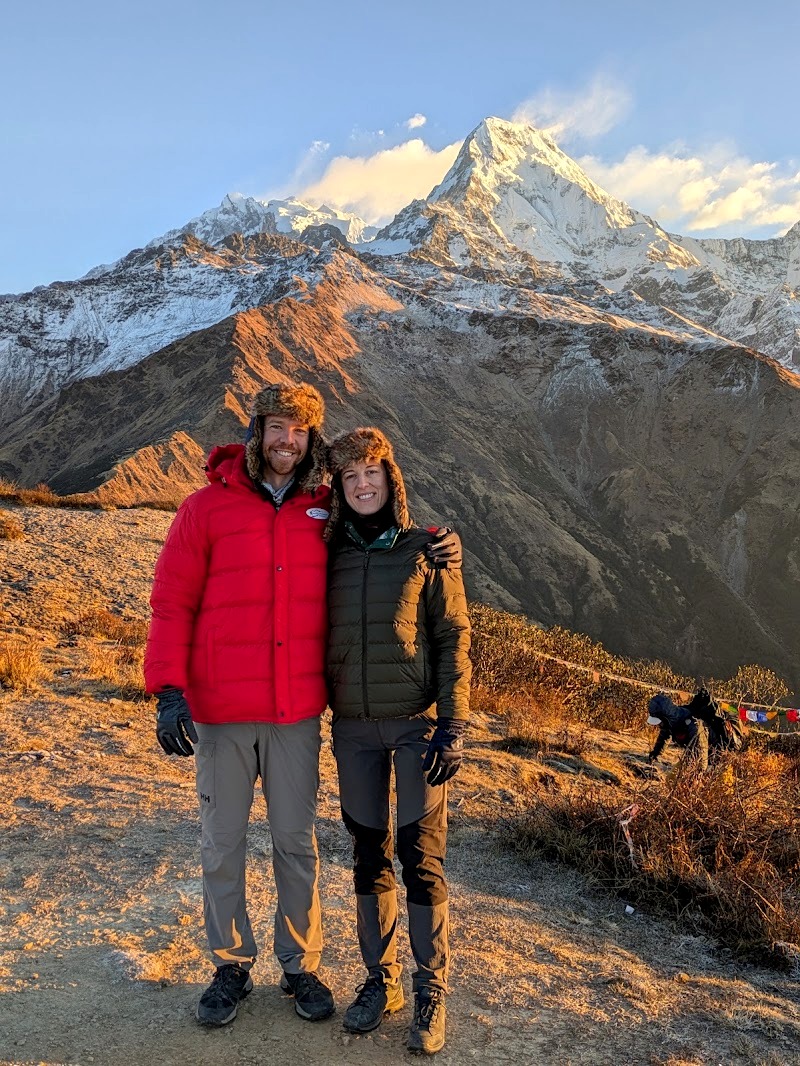
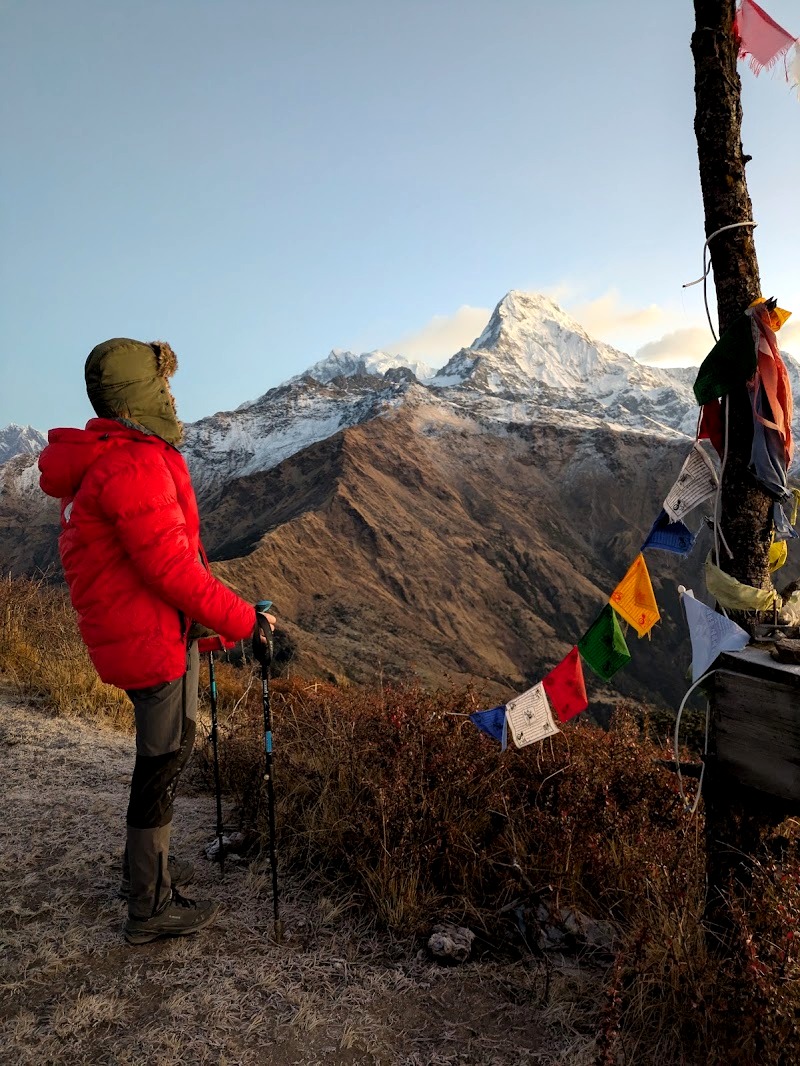
It isn’t luxurious. Teahouses ranged from en-suite doubles lower down to very basic rooms near the top, and we both struggled to sleep up high, which we later realised was the altitude. We paid US$650 each with Nepal Wilderness Trekking, covering our guide, porter, permits, transport and three meals a day. Much of the wisdom in this post comes from our guide, Bhim.
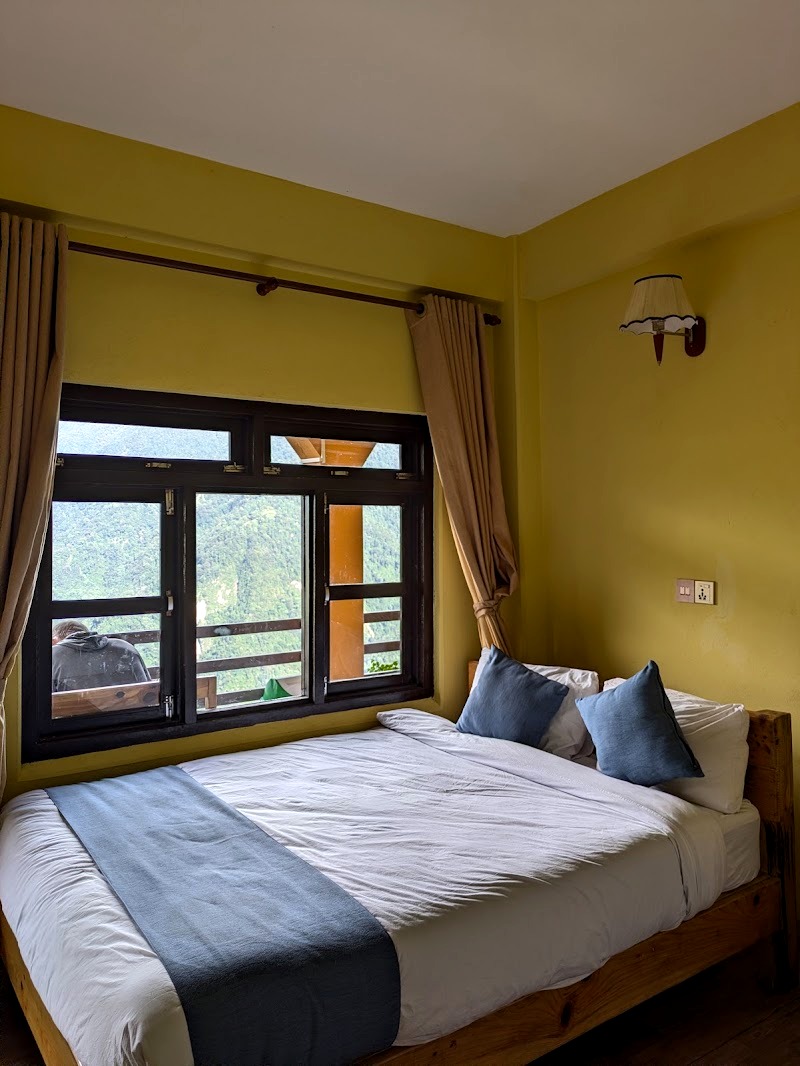
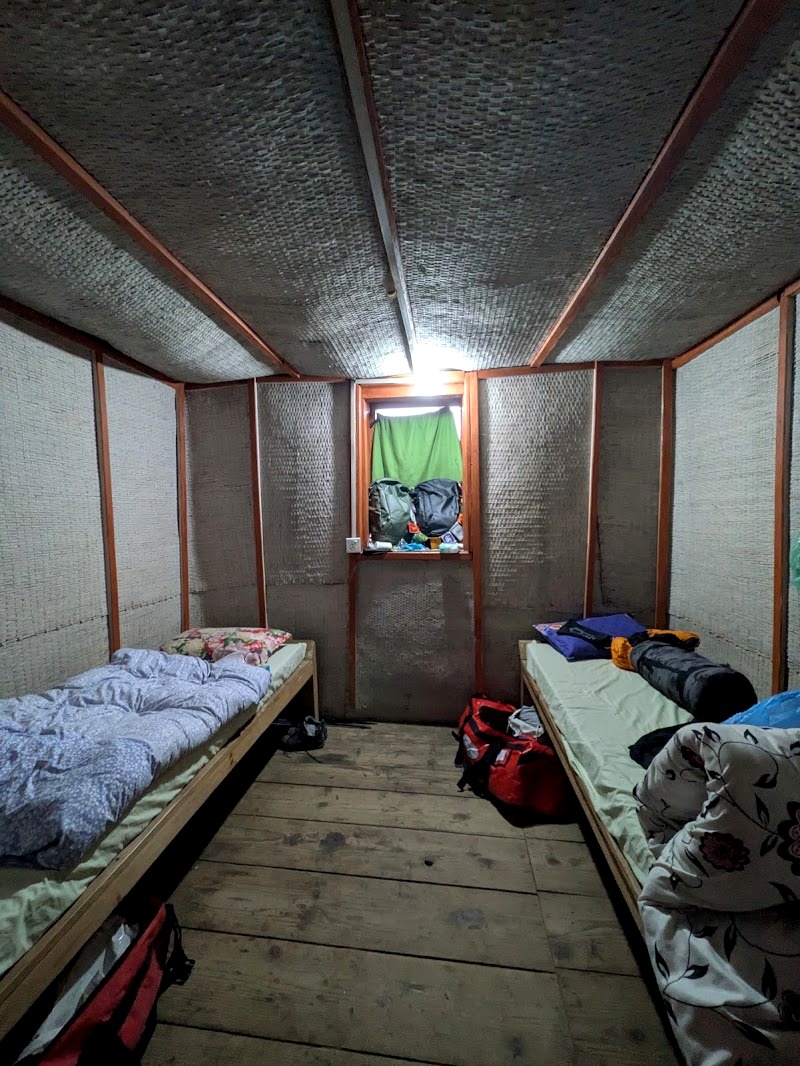
Best For: Anyone with about a week who wants big views without the crowds. Shorter versions using jeeps take four to seven days.
Think Twice If: You need home comforts every night, or want to say you’ve been to a base camp.
We booked directly with our trekking company, but if you’d rather book online there’s a seven-day Khopra Danda trek on GetYourGuide too.
For the full day-by-day route, costs and kit list, read our Khopra Ridge Trek Guide.
Permits, Guides and Costs for Annapurna Treks
The rules are the same for all five treks: you need one main permit and a licensed guide.
- ACAP permit: the Annapurna Conservation Area Permit covers the whole region. It costs NPR 3,000 for foreign nationals and NPR 1,000 for SAARC nationals. Get it before you start: arriving at a checkpoint without one costs double.
- TIMS card: sources disagree on whether you still need one in the Annapurnas in 2026. Some say it’s no longer required, while others still list it at NPR 2,000. Your trekking company will know the current rule.
- A licensed guide: since 1 April 2023, foreign trekkers must hire a guide in the Annapurna region, as the Kathmandu Post reports. Trekking independently isn’t an option on any of these routes.
- Insurance: check that your policy covers trekking to the highest point on your route (see the chart above) and helicopter rescue.
Costs mostly scale with the number of days, because guides, porters, rooms and meals are all paid daily. Our Khopra price, in the section above, included the permit, guide and porter.
Best Time for Annapurna Treks
Autumn (October and November) and spring (March to May) are the main trekking seasons for all five routes.
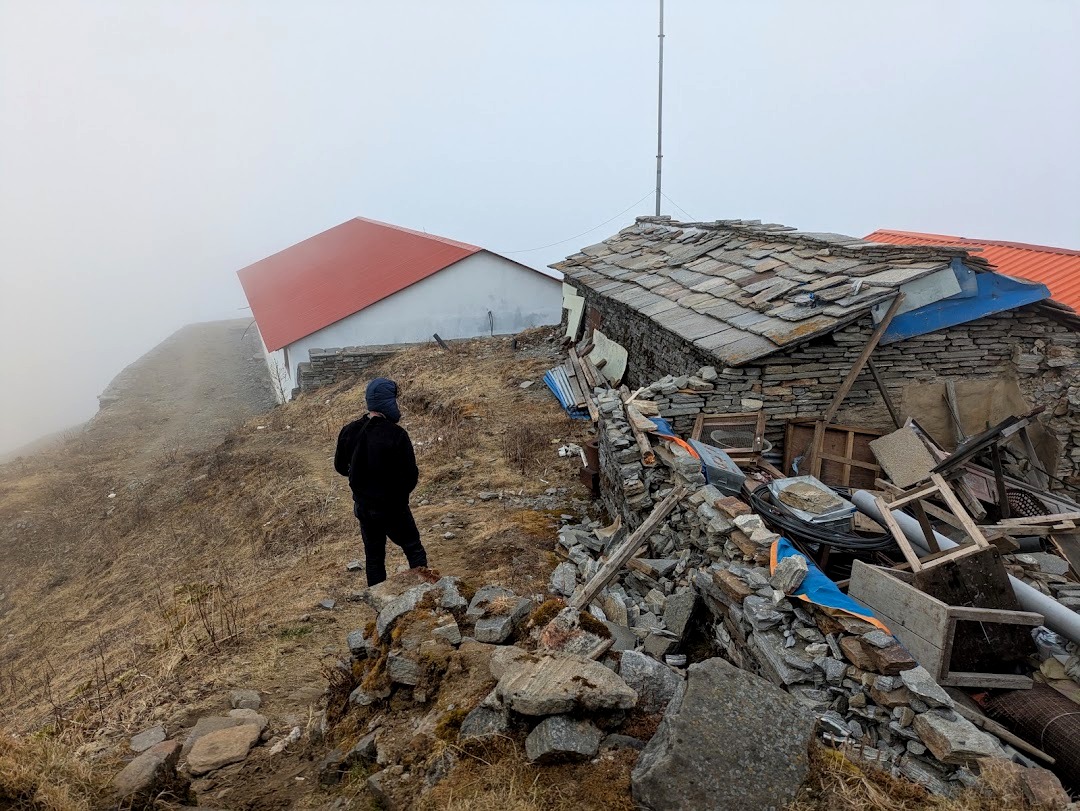
- Autumn: we went in November and had clear skies for every viewpoint, with hot days low down and freezing nights up high. It’s also peak season, so expect the busiest trails. There was a fair amount of cloud too, but luckily it only came in whilst we were lower down. It rained once, after we’d reached our lodge, so be ready for rain.
- Spring: a little warmer, and the rhododendron forests flower in March and April.
- Monsoon (June to September): rain and cloud hide the views, and July and August are best avoided altogether.
- Winter (December to February): lower treks like Poon Hill are quiet and often clear, but it’s very cold up high. Thorong La on the Circuit can close after snow, and the avalanche risk on the ABC route rises towards the end of winter. Our guide said December is actually his favourite time to trek. He thinks climate change has made December weather better than it used to be, and the skies are often clear.
Getting to the Start
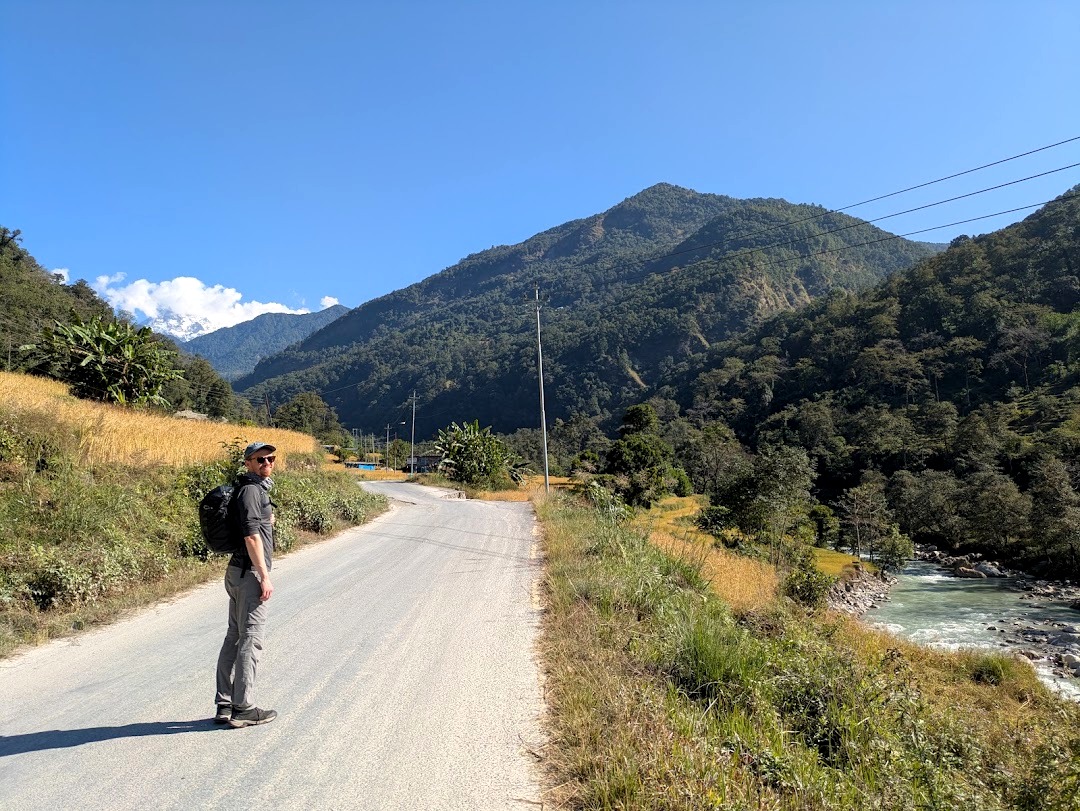
Four of the five treks start within an hour or two of Pokhara. The Circuit is the odd one out, starting on the far, eastern side of the massif.
| Trek | Usual trailhead | Getting there |
|---|---|---|
| Poon Hill, Khopra Danda | Nayapul or Birethanti | 1 to 1.5 hours by taxi from Pokhara (we went to Birethanti) |
| Annapurna Base Camp | Nayapul, Ghandruk or Siwai | By road from Pokhara; jeeps now go as far as Ghandruk |
| Mardi Himal | Kande or Phedi | 30 to 45 minutes by road from Pokhara |
| Annapurna Circuit | Besisahar side, often by jeep to Chame | A long drive from Kathmandu or Pokhara |
You’ll almost certainly spend a night or two in Pokhara either side of your trek. Our How to Get from Kathmandu to Pokhara post covers the journey, and Where to Stay in Pokhara covers where to base yourself. We stayed at Mingtang Boutique Cottage in Lakeside before and after our trek, and they store your bags for free while you’re out walking.
Final Thoughts
There’s no bad choice among the Annapurna treks, just different trade-offs between time, altitude and company. The Circuit and ABC are famous for good reason, Poon Hill is the easy win, and Mardi Himal packs a lot into a few days.
But if you have about a week and want the mountains mostly to yourself, we’d pick Khopra Danda again without hesitation. Read our Khopra Ridge Trek Guide to plan it day by day.
Spending a night or two in Pokhara either side of your trek? We’d recommend Mingtang Boutique Cottage, where we loved it so much we stayed four nights after ours. They store your bags free while you trek, so you only carry what you need. Here’s everything else bookable around Lakeside on one map, so you can see what sits where before you book:
Keep Exploring
- Flying into Kathmandu? Our Bhaktapur travel guide covers the medieval town on the airport side of the city, where we stayed before and after our trek.
- Weighing up other countries? Five destinations perfect for trekking adventures, Nepal included.
- Want more walks? Our favourite hikes from around the world.
- Planning another multi-day trek? Our guide to hiking the Inca Trail to Machu Picchu.
- After a summit next time? How to climb Mount Toubkal, North Africa’s highest mountain.
FAQ: Annapurna Treks
The Annapurna range is in north-central Nepal, inside the Annapurna Conservation Area. Pokhara, around 200 km west of Kathmandu by road, is the gateway town for most Annapurna treks.
Annapurna Base Camp is at 4,130 m, in the Annapurna Sanctuary. The chart above shows how that compares with the highest points on the other four treks.
You can combine Annapurna treks, and plenty of people do. We finished our Khopra trek over Poon Hill, and many ABC itineraries start with Poon Hill and cross to the base camp route via Tadapani.