

The Costa del Sol has a reputation for being a strip of resort towns that could be anywhere and attracts mainly foreign tourists. Estepona is on the Costa del Sol coast, thirty minutes west of Marbella, is an exception.
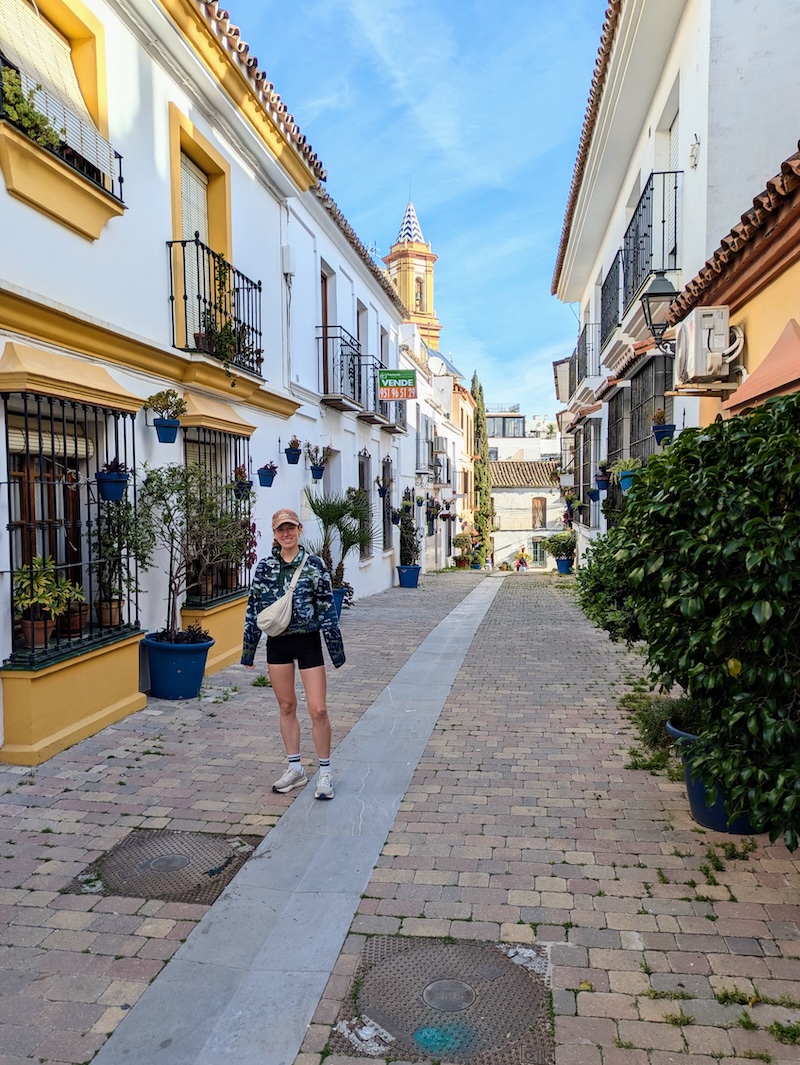
Estepona’s old town is an Andalusian casco antiguo: whitewashed lanes, flowerpots stacked up the walls in blue and terracotta, and hidden little courtyards catching the afternoon sun.
We spent four nights in Estepona in February with Luke’s family, straight after a week in Málaga. Off-season, with a villa, a padel court round the corner and a short walk to the Old Town. This is our experience of staying in Estepona.
Is Estepona Worth Visiting?
Estepona is worth visiting but I have mixed opinions about the town. It’s certainly not a big resort town like other placed on the Costa de Sol, but equally there is a reason that “is Estepona tacky” is a real search people make. Estepona can be split into three different areas, and where you spend your time matters to the type of holiday you’ll have:
- Estepona old town is not tacky at all. It is pretty, Andalusian, and the best reason to visit.
- Estepona’s residential neighbourhoods are not tacky either. We stayed in one and it was ordinary in the good sense: a mix of expats and Spaniards, a sports centre, a beach bar at the bottom of the hill.
- The beachfront is tacky, and so is the Puerto Deportivo marina. The marina has the Irish bars and Brits abroad, and we would avoid it. The seafront itself is busy with package families and the sand at Playa de la Rada is coarse and grey-ish rather than pretty.
If you want to avoid a tacky trip, but want to visit for some of that Costa del Sol sunshine, spend your time in old town, stay slightly out of the centre if you want space, and do not come to Estepona for the beach. If you want a mainly beach holiday there are better stretches of Spanish coast, and I’d recommend looking north towards the Costa Brava.
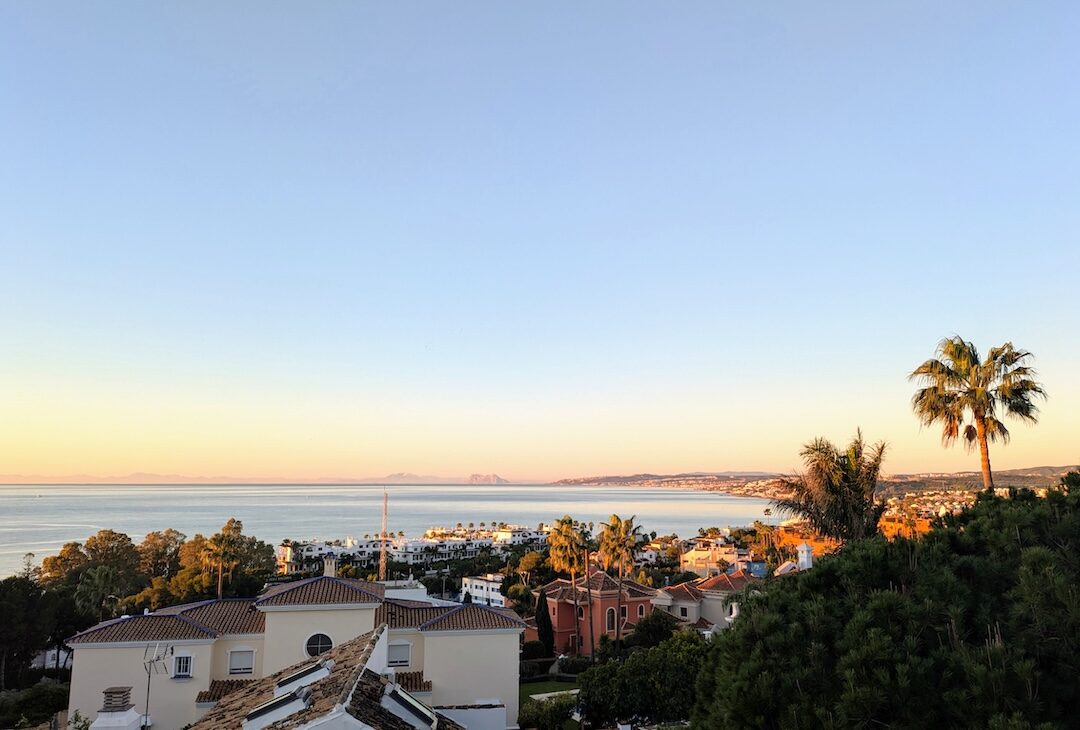
Where Is Estepona?
Estepona is on Spain’s Costa del Sol, in Andalusia, on the southern coast facing Africa. It sits about 80km west of Málaga and its airport, and around 30km west of Marbella, with the Sierra Bermeja mountains rising directly behind it.
Gibraltar is under an hour further west, which makes Estepona one of the easier bases for reaching both the Costa del Sol and the road down to Tarifa and the ferries to Morocco.
The Best Things To Do in Estepona Old Town
1. Get lost in the Casco Antiguo
The old town is small and almost entirely pedestrianised, and the right way to see it is to put the map away for an hour and wander. The lanes are narrow, white and full of plants, and every so often one opens into a small square with a café or tapa bar on it.
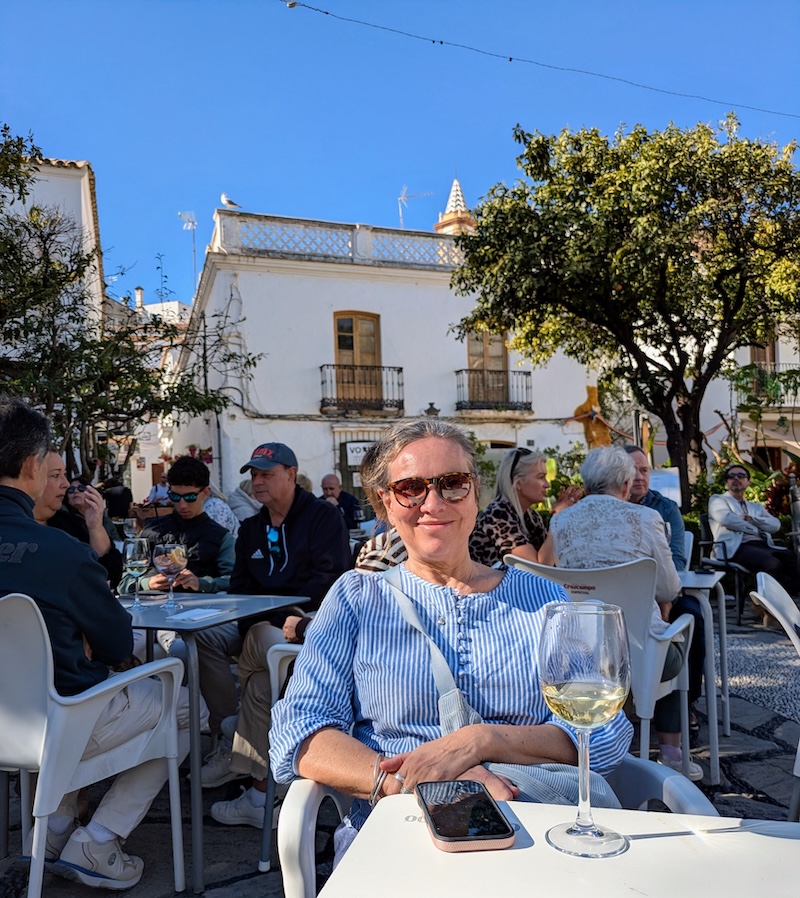
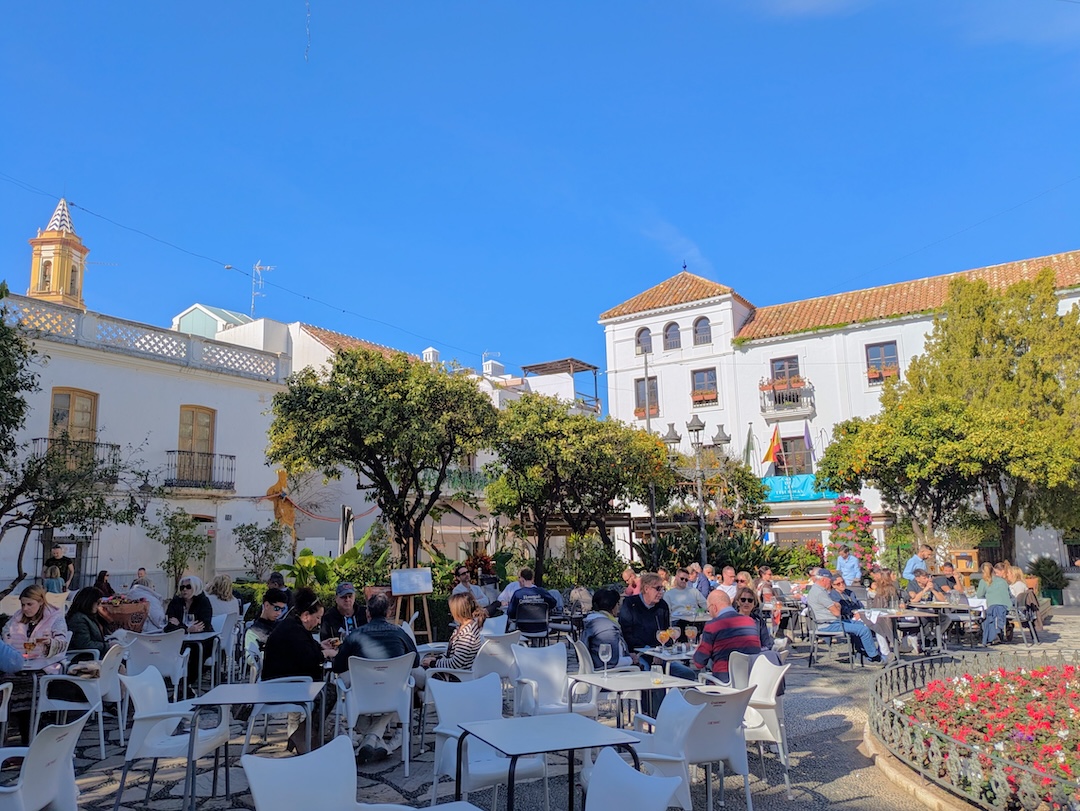
2. Plaza de las Flores
The heart of the old town, and exactly what the name promises: a square of orange trees, flowerbeds and café tables. It is the natural place to start, sit for a coffee and work out which direction to wander in.
3. Walk the Ruta de Murales Artísticos
The mural route takes you out of the pretty lanes and into the residential blocks, which is a more interesting walk than it sounds. The scale of the work is significant, as they cover whole ends of buildings and blocks.
4. Follow the poetry and sculpture routes
Estepona has also scattered poetry on tiles and sculptures through the streets. You do not need to hunt them down systematically. They are a good excuse to walk a street you would otherwise skip.
5. Estepona Orchid House
The Orquidario is a large glass dome in the old town holding a substantial orchid collection, with a waterfall running through the middle of it. It is an odd and rather wonderful thing to find in a small Andalusian town.
6. Castillo de San Luis
The remains of the 16th-century castle sit in the middle of the old town. There is not a great deal left, so treat it as something you walk past and look at rather than a visit in itself.
7. Plaza del Reloj
The clock tower square, built around the surviving tower of the old church. Quieter than Plaza de las Flores and a good spot in the early evening.
8. Iglesia de Nuestra Señora de los Remedios
The old town’s main church, with a striking ochre and white façade on a small square. Worth a look on the way past.
9. Book a treatment at Natural&Mente Urban Spa
I had my nails done at Natural&Mente Urban Spa and it was lovely and calm, and a good use of an afternoon on a family trip when everyone wants an hour to relax.
10. The promenade (but skip the Puerto Deportivo)
The seafront promenade is long, flat and well kept, and an evening walk along it is part of the town’s rhythm. The Playa de la Rada beach it runs alongside is functional rather than beautiful: the sand is coarse and grey-ish, and in season it fills up with package families.
I would skip the Puerto Deportivo, the marina, unless you specifically want a fish dinner and don’t mind a of tackiness. It is the tackiest corner of Estepona, Irish bars and photographs of food on laminated menus, and it is a strange contrast with the old town ten minutes away.
Where to Eat in Estepona Old Town
The old town squares are full of tables, and the marina is where locals go for fish. The usual Andalusian rule applies: the closer you are to the prettiest square, the more you are paying for the view.
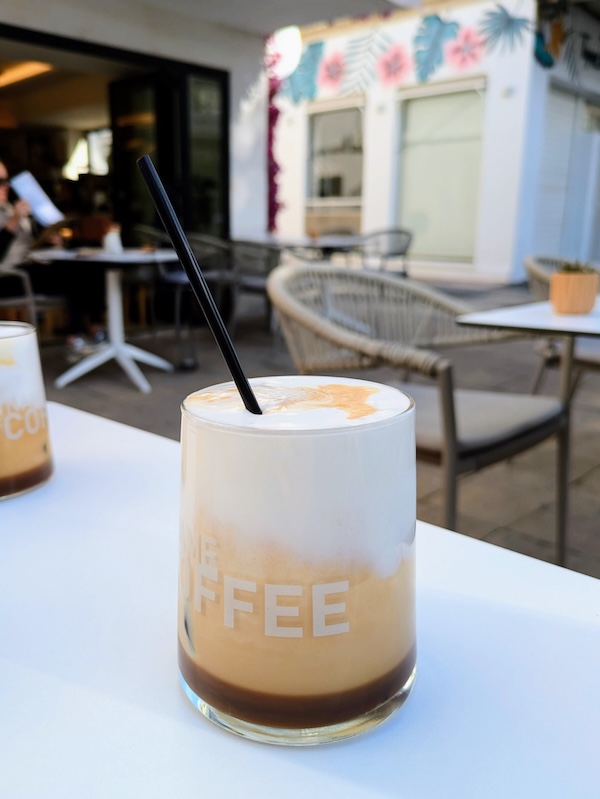
Berries Specialty Coffee — The best coffee we had anywhere across Estepona and Málaga, which is not a small claim after a week of drinking coffee in Málaga. The iced cappuccino freddo is the thing to order and enjoy outside in the sun.
Taquería Échale Manito — The standout meal of the trip, and not remotely what we expected to be recommending in Andalusia. We arrived early when it was quiet and it filled up around us. The waiter lit the outdoor fire for us, found us a bigger table when the rest of the family arrived, and brought blankets out when it got cold. The food is close to authentic Mexican rather than the Tex-Mex you usually get in Europe. We are vegetarian and ate very well: tacos with squash, cheese quesadillas, and totopos with guacamole.
Vinoteca 27 — Luke and I stopped in here and stayed longer than planned. It is Italian wine rather than Spanish, which is admittedly an odd thing to seek out in Spain, but the owners are lovely and the tapas are excellent.
Lolailo Beach Bar — Down on the sand west of the centre, and walkable from the Puerto de Estepona urbanisation. We went down for drinks on the beach in the evening. It is the good kind of beach bar rather than the marina kind.
Where to Stay in Estepona Old Town
Staying in or on the edge of the casco antiguo is our recommendation. It is walkable, it is the prettiest part of town, and you are still only a few minutes from the promenade and the beach. The old town is small, so the choice is limited and it is worth booking early in summer.
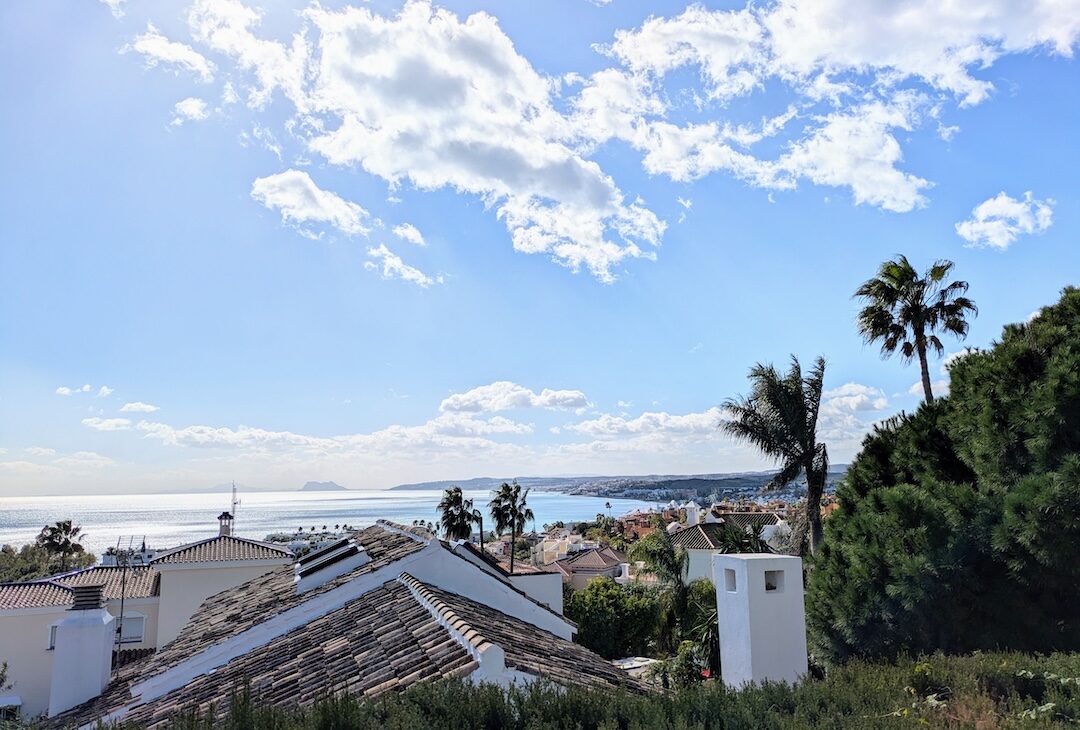
We stayed at the Mikaela Beach House villa as a family in Urbanización Puerto de Estepona, a residential area west of the centre. It worked well for a family holiday, and the villa had beautiful views It is an ordinary Spanish and expat neighbourhood rather than a holiday complex.
If you’re a couple looking for a more upmarket, romantic break, take a look at the stunning Hotel El Pilar Andalucia.
Is Estepona Good for Families?
Estepona is great for families. It is the reason we were there: we went with Luke’s family for four nights, and it works well for a group. The old town is pedestrianised and small enough that children can run ahead. The beach is right there. The promenade is flat, long and buggy-friendly. It is a real town rather than a resort, so restaurants are relaxed about children.
Padel is what we spent much of the trip doing, as it’s a favourite sport of Luke’s family. We played at Centro Deportivo Las Mesas, a municipal sports centre a few minutes from where we were staying. I had a lesson there that noticeably improved my game. We booked our courts ahead, and when we arrived they had no record of the booking and we had to book again on the spot. It worked out and we still got to play, but do not assume a confirmed reservation will be waiting for you.
Best Time to Visit Estepona
Spring and autumn are the best of it: warm, quiet and comfortable for walking the old town and the mural route. July and August are hot and busy with Spanish domestic holidaymakers as well as foreign visitors, and the old town squares are at their liveliest. Winter is mild, very quiet and pleasant if you are there to walk and eat rather than swim.
How to Get to Estepona from Málaga Airport
Málaga Airport is about 80km from Estepona, roughly 50 miles, and there are three sensible ways to cover it.
By Bus
Avanza runs a direct coach, the L-605, from Terminal 3 to Estepona, stopping at Marbella bus station on the way. Tickets start at around €10 and the journey takes roughly an hour and ten to an hour and fifteen.
By Taxi or Private Transfer
Around 55 minutes on the AP-7 toll road. The published airport taxi rate to Estepona is in the region of €106 by day and €125 at night, plus supplements and tolls, so it is worth it for a group or with a lot of luggage and expensive for two people.
By Hire Car
Under an hour on the AP-7. Worth it if you plan to drive up into the Sierra Bermeja or along to Ronda and the white villages, and unnecessary if you are staying in the old town, which is walkable and largely pedestrianised.
More Spain Guides
- The Best Things to Do in Málaga
- Where to Stay in Málaga
- Is Málaga Expensive?
- Spain’s Best Cities
- Things to Do in Girona
- Where to Stay on the Costa Brava
- Granada Travel Guide
- Seville Travel Guide
Estepona Old Town FAQ
Estepona is best known for its flower-filled old town, for the Ruta de Murales Artísticos of large-scale murals painted across its apartment blocks, and for the Orchid House. It has also built a reputation as the quieter, prettier alternative to Marbella.
Yes, you can drink the tap water in Estepona. It is safe throughout this part of Spain, although many people prefer bottled water for the taste.
They are thirty minutes apart and they are not the same holiday.
Choose Estepona if you want a prettier old town, a quieter trip, lower prices and somewhere that still feels like a Spanish town. Its casco antiguo is significantly nicer than Marbella’s.
Choose Marbella if you want more restaurants and nightlife, a bigger choice of hotels, and easy access to Puerto Banús. Marbella also has a lovely old town of its own, it is just smaller and more hemmed in.
You can stay in either and see both, since the Avanza coach and the local buses run along the coast between them. If it were our choice for a week, we would base in Estepona and avoid Marbella.
Estepona is less expensive than Marbella, and broadly in line with the rest of Andalusia away from the tourist strips. As in Málaga, the price you pay depends heavily on whether you sit on the prettiest square or a street back from it, and a weekday menú del día remains the best value meal of the day.