
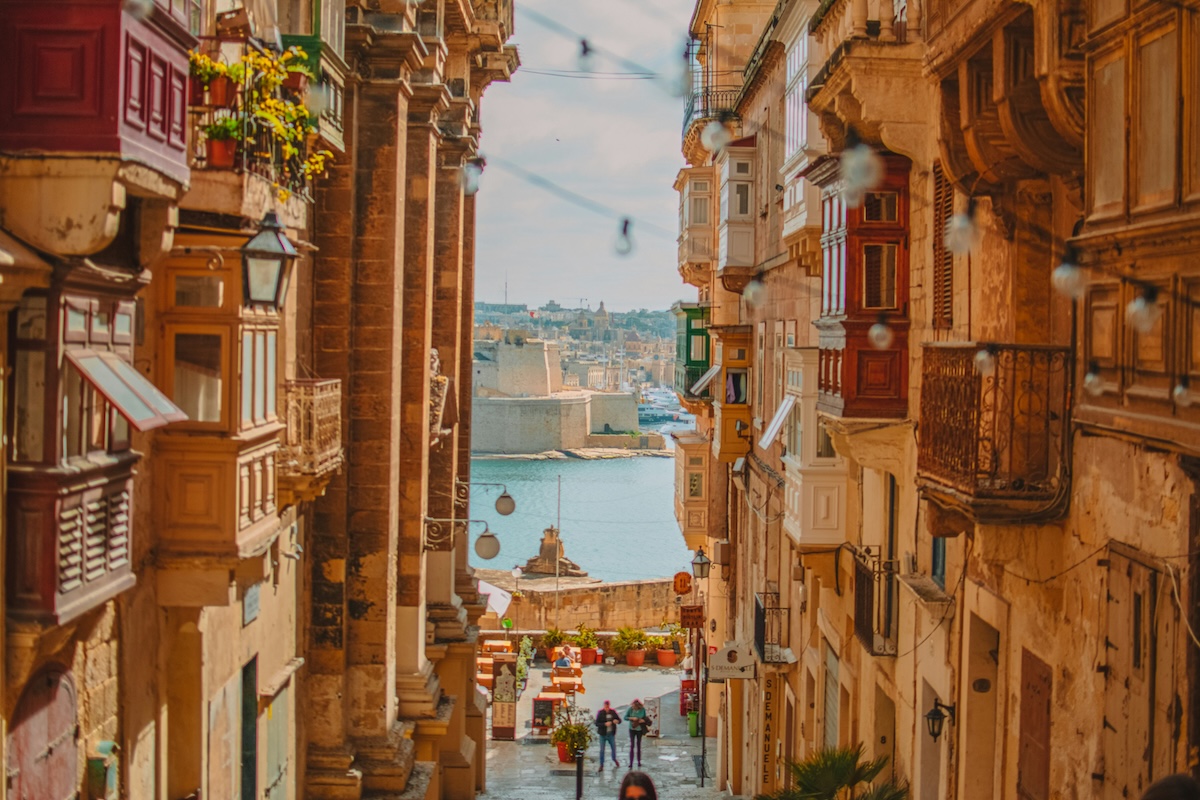

We spent two weeks in Malta in early November, chasing winter sun, and we did the whole trip without renting a car. Buses and the odd ferry took us everywhere, from Valletta’s bastions to the pastizzi counters of Rabat and across the water to Gozo.
This guide includes where we stayed, where we’d stay next time and a run-through of every area worth knowing, including a few we only reached on day trips.
Malta is small. You could pick one town and day-trip to the rest of the island easily. We chose to stay in two towns across our two week trip, and day trip the rest. Each area has its own character, its own price tag and, crucially if you’re not driving, its own bus connections. Get the base right and the whole trip is easier.
In a Rush? Our Favourite Places to Stay in Malta
Valletta — best all-round base (and where we stayed). Walkable, characterful and the best-connected bus hub on the island. This is the best option if you’re a keen explorer.
Gozo — Best for a slower pace. Stone farmhouses, quiet villages and Malta’s prettiest coast. This is the option for the real escapist.
1926 La Galerie Boutique Art Suites
Art-filled boutique suites with a design-led feel, a pool to cool off in and easy access to the seafront promenade.
Check ratesValletta Harbour View Apartment
A self-catering apartment in the heart of Valletta with harbour views, ideal if you like a base of your own within walking distance of the old town.
Check ratesALTANA by Valletta Vintage
A characterful Valletta Vintage apartment blending original features with modern comforts, tucked into the city’s honey-stone streets.
Check ratesBattery House
A boutique stay in Valletta set within a restored historic building, a short walk from the bastions and harbour views.
Check ratesHow We Got Around Malta Without a Car
The car question shapes where you decide to base yourself, so decide this first. We travelled Malta for two weeks by bus and boat only, and it was easy.
Malta’s buses run all over the island and they’re cheap: a single ticket was €1.50 in winter and €2 in summer (summer rates run mid-June to mid-October). A bus ticket is valid for two hours, so you can hop between buses on the same ticket.
If you’re staying a while, a 12-journey Tallinja card works out cheaper at around €15 and more than one person can use it. You buy singles on the bus or cards from the kiosks at the main bus stations.
Almost every bus route funnels through Valletta. That makes the capital the most connected place to stay, with Sliema, St Julian’s and the Bugibba area close behind.
Ferries fill in the gaps beautifully. The Valletta-Sliema and Valletta-Three Cities ferries save you a long loop by road, and the Gozo ferry hops across from Cirkewwa in the north for around €4.65 return (you only pay coming back).
If your accommodation is somewhere rural or not well connected, that’s the one time we’d say think about hiring a car. Otherwise, no need. Base yourself somewhere central and catch the bus without the stress of driving or parking.
Malta at a Glance: Best Areas to Stay
| Area | Best For | Getting Around Without a Car |
|---|---|---|
| Valletta (main place we stayed) | History, first-timers, walkability | Excellent – the island’s main bus hub, plus ferries |
| Sliema | Seafront strolls, shopping, easy transport | Excellent – major bus routes and the Valletta ferry |
| St Julian’s & Paceville | Nightlife, younger crowds | Very good – well served by bus |
| Gozo | Slow travel, nature, farmhouse stays | Fair – bus plus the Gozo ferry; quieter routes |
| Mellieha | Families, sandy beaches | Good – hilltop, but connected; ferry point for Gozo and Comino |
| Bugibba, Qawra & St Paul’s Bay | Budget, resort feel, beaches | Very good – well connected and cheap |
| The Three Cities | Valletta’s charm for less | Good – bus and the Valletta ferry |
| Mdina & Rabat (second place we stayed) | Quiet, historic, atmospheric | Fair – buses run, but it’s slower and more local |
| Marsaskala & Marsaxlokk | Local life, seafood, value | Fair – southern routes, quieter |
| Comino | Day trips only, not staying | Boat only – see the note below |
Valletta vs Sliema vs St Julian’s: Which Should You Pick?
These three come up again and again, and they’re genuinely different trips. Here’s the short version: stay in Valletta. It’s where we based ourselves, it’s what we’d book again tomorrow, and it is our top pick for Malta by a distance.
Valletta is the one we’d tell anyone to book, and especially a first-timer. You wake up inside a UNESCO city, walk to the bastions before the day-trippers arrive, and every bus on the island starts outside your door. It is the most characterful place to sleep in Malta and also the most convenient, which is a combination you almost never get anywhere. It’s the priciest of the three and the quietest after dark, and we’d still choose it every single time.
Sliema is the one to book if you want the sea outside the window. Rock beaches and lidos, cafes and shops along the promenade, major bus routes running through it, and a five-minute ferry across to Valletta that beats the road loop. You trade Valletta’s history and atmosphere for a bit more space and a sea view.
St Julian’s is only worth booking if you’re here to go out. Spinola Bay is lovely and the big hotels and rooftop bars are all here, but Paceville sits inside it and it’s loud until very late. If nightlife isn’t the reason you’re coming, stay well away from it.
Our answer: Valletta. Sliema only if being on the water matters more to you than being in the old city, and St Julian’s only if you want to be able to walk home from a club.
The Best Areas to Stay in Malta
Valletta: The Best All-Round Base (and Where We Stayed)
We based ourselves in Valletta for most of our trip, in a self-catered studio right in the centre for €72 a night, which is about average for the capital outside high season. We’d do it again in a heartbeat.
Valletta is a walkable open-air museum, a whole UNESCO-listed city of honey-coloured stone, Baroque churches, grand harbour views and cafe-lined steps. You can see Fort St Elmo, the Grandmaster’s Palace and the Upper Barrakka Gardens on foot, and roll out of bed into it all each morning. Because nearly every bus route starts or ends here, it’s also the single easiest place to stay if you’re not driving. When we wanted to explore, we just walked to the bus terminus outside the city gate and went. Grab a museum pass if you’re based in Valletta!
It isn’t the cheapest option and it’s busier in summer, but for character and convenience nothing beats it. We self-catered to keep costs down, making sandwiches with ftira bread from the local bakery, and ate out at spots like Margo’s, San Paolo Naufrago on the cobbled steps and The Submarine for made-to-order sandwiches.
Where to stay in Valletta:
- 1926 La Galerie Boutique Art Suites for a design-led feel with a pool
- Valletta Harbour View Apartment for a self-catering base with harbour views
- ALTANA by Valletta Vintage for character in the old streets
- Battery House for a restored historic stay near the bastions
- San Karlu for a special boutique bolthole
- 23 Boutique Hotel for a gorgeous, adults-only hotel
Sliema: Seafront Living and the Easiest Transport
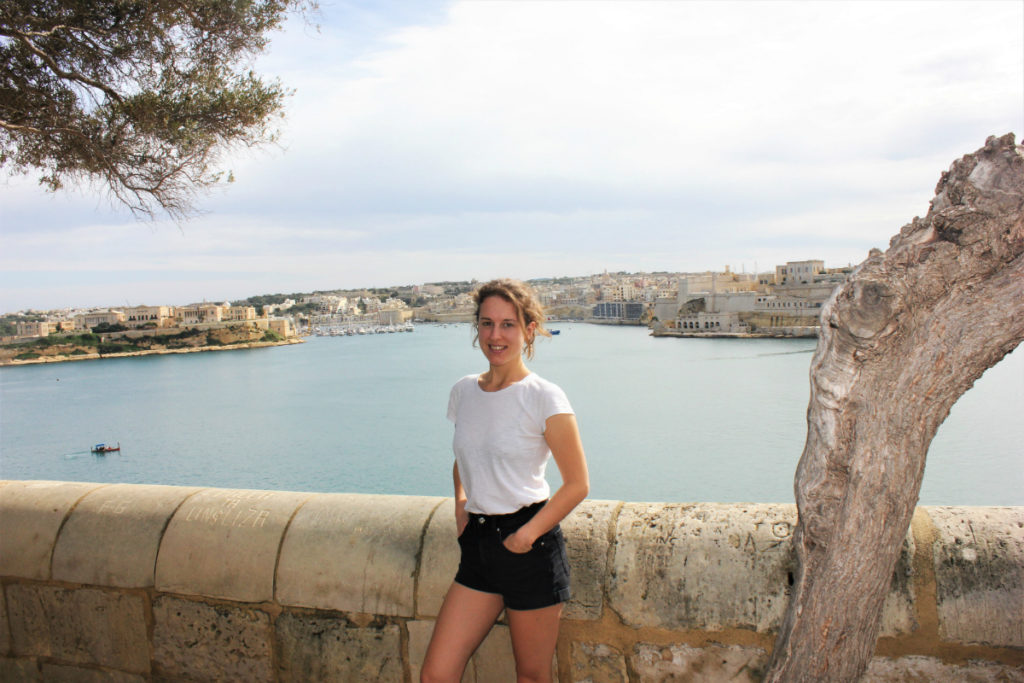
Just across Marsamxett Harbour from Valletta, Sliema is the modern, breezy side of Malta: a long seafront promenade, rock beaches and lidos, high-street shopping and endless cafes. It doesn’t have Valletta’s history, but it makes up for it in convenience.
For car-free travellers, Sliema is arguably the most practical base of all. Major bus routes pass through, and the little ferry zips you across to Valletta in a few minutes, which beats the road loop. It suits couples and first-timers who want to be near the action without staying in the thick of the nightlife.
Amery House is our pick. A design-led little boutique hotel on a quiet residential street, a minute’s walk from the promenade, with breakfast included and terrace suites that come with their own hot tub.
Book here: Amery House
St Julian’s and Paceville: For Nightlife
Next along the coast, St Julian’s is where Malta’s nightlife lives. Spinola Bay is pretty, ringed with restaurants, and the wider area has the big hotels, rooftop bars and the beach clubs. Tucked inside it, Paceville is the compact clubbing district, loud and late.
If you’re here to go out, or you want a lively, resort-style holiday with a beach nearby, this is your area, and it’s well connected by bus. If you’re not, and especially if you’re travelling for the slower, more local side of Malta like we were, then avoid this area. Spinola and Balluta bays give you the setting without being on top of the clubs.
Even though St Julian’s isn’t our vibe, if this is your thing, then the Hyatt here is a proper five-star with an eleventh-floor rooftop pool, a spa and a heated indoor pool, and moments from St George’s Bay if you want the nightlife on your doorstep.
Book here: Hyatt Regency Malta
Gozo: For Slow Travel and Farmhouse Stays
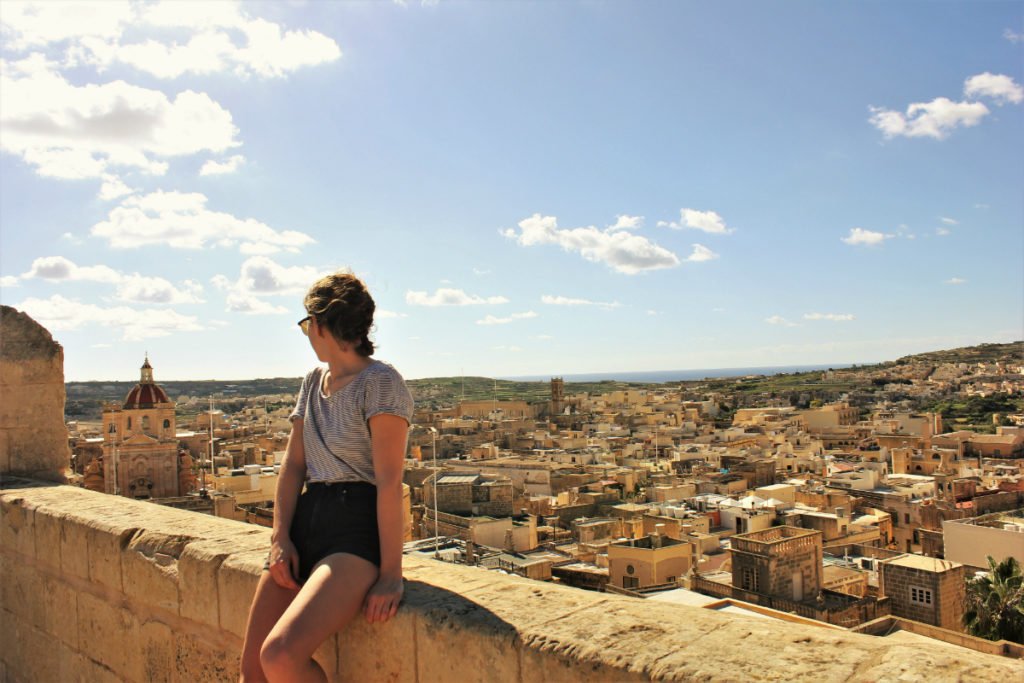
Gozo was our one regret, and only because we didn’t stay longer. We went over for the day and wished we’d given it a couple of nights. It’s Malta’s quieter, greener sister island, a short ferry hop from the north, and it moves at a completely different pace.
This is the place to stay if you want slow mornings, empty coastline and a base to come back to after exploring. The classic Gozo stay is a traditional stone farmhouse, often with its own pool, in villages like Xaghra and Gharb, and they tend to be better value than Valletta. From there you’re close to the Ggantija temples, Ramla Bay’s red sand and the diving around Dwejra. You can get around Gozo on the local bus for the same low fares as the mainland, so you don’t need a car here either.
Rustic, farmhouse stays are the best places to stay in Gozo. Ta’ Matmura Boutique B&B is a six-room farmhouse B&B in sleepy Għarb with a courtyard pool and hosts who feed you well and tell you exactly where to go — the slow Gozo stay we wish we’d booked.
Book here: Ta’ Matmura Boutique B&B
Mellieha: For Families and Sandy Beaches
Up in the north, hilltop Mellieha is the pick for families. It has one of Malta’s best sandy beaches (Ghadira Bay) plus quieter coves, a relaxed village feel and green space, without the crowds of the resort strip. It’s also the jumping-off point for the ferries to Gozo and Comino, so if island-hopping is high on your list, it’s well placed.
The trade-off is the hills and being further from Valletta, but buses still connect it fine. For a calmer, beach-first family holiday, it’s a lovely choice.
Two accommodation options we like here: M31Boutique Suites is smart new boutique stay in the middle of Mellieħa village with a rooftop terrace, a cooked-to-order breakfast and, if you fancy a treat, a suite with its own plunge pool. Lure Hotel & Spa is the adults-only, luxury pick on the village square, with a rooftop infinity pool, a proper spa and the kind of breakfast guests rave about in reviews.
Book here: M31Boutique Suites, or for adults-only book: Lure Hotel & Spa
Bugibba, Qawra and St Paul’s Bay: For Beaches on a Budget
This trio on the northern coast is Malta’s classic package-holiday territory. It’s where the affordable accommodation clusters. You get a lively seafront, easy swimming, the National Aquarium, loads of restaurants and some of the cheapest stays on the island.
It’s not the place for old-world charm, but it’s cheerful, walkable and very well connected by bus, which makes it a strong budget base for car-free travellers who plan to day-trip out. If you’re watching the pennies but still want to be by the sea, start here. If you can afford to be elsewhere, there are better locations to be.
Park Lane Boutique Aparthotel here is a family-run aparthotel with a rooftop sun terrace and pool and a full kitchen in every apartment, a few minutes from the promenade. Good value if you’re self-catering.
Book here: Park Lane Boutique Aparthotel
The Three Cities: Valletta’s Charm for Less
Directly across the Grand Harbour from Valletta, the Three Cities (Vittoriosa/Birgu, Senglea and Cospicua) give you the same honey-stone, waterfront-and-history atmosphere with fewer tourists and lower prices. We flagged this in our Malta budget guide as the value alternative to the capital.
The marina at Birgu is gorgeous of an evening, and you can reach Valletta by a quick ferry across the harbour or a short bus. We spent a good day wandering all around the Three Cities and loved it all. If you love the idea of Valletta but want somewhere quieter and cheaper to sleep, go for this.
Dar Vitorja is a beautifully restored Maltese townhouse on Senglea’s main street, with just three rooms, a shared kitchen and a terrace to sit out on. Quiet, spotless and a short walk from the ferry across to Valletta. It’s new, but reviews are great.
Book here: Dar Vitorja
Mdina and Rabat: For Quiet and History
Inland, the walled “Silent City” of Mdina is one of Malta’s most atmospheric spots, especially once the day-trippers leave and you have the lamplit lanes to yourself. Neighbouring Rabat is where local life spills out, and where we spent two nights and ate very well.
Rabat is home to St Paul’s Catacombs and, more importantly to us, Crystal Palace, which serves the best pastizzi in Malta straight out of the oven for about €0.40 (we also loved the Maltese platter at Ta’ Doni). Staying here is quieter and more local, and buses do run, though it’s a slower, less connected base than the coast.
There are some very special stays in the Mdina area, which are worth it if you love history. The Xara Palace Relais & Châteaux is 17th-century palazzo built right into Mdina’s bastions, with antique-filled rooms and a Michelin-starred rooftop restaurant. A splurge, but the Silent City after dark makes it worth it.
Book here: The Xara Palace Relais & Chateaux
Marsaskala and Marsaxlokk: For Local Life and Seafood
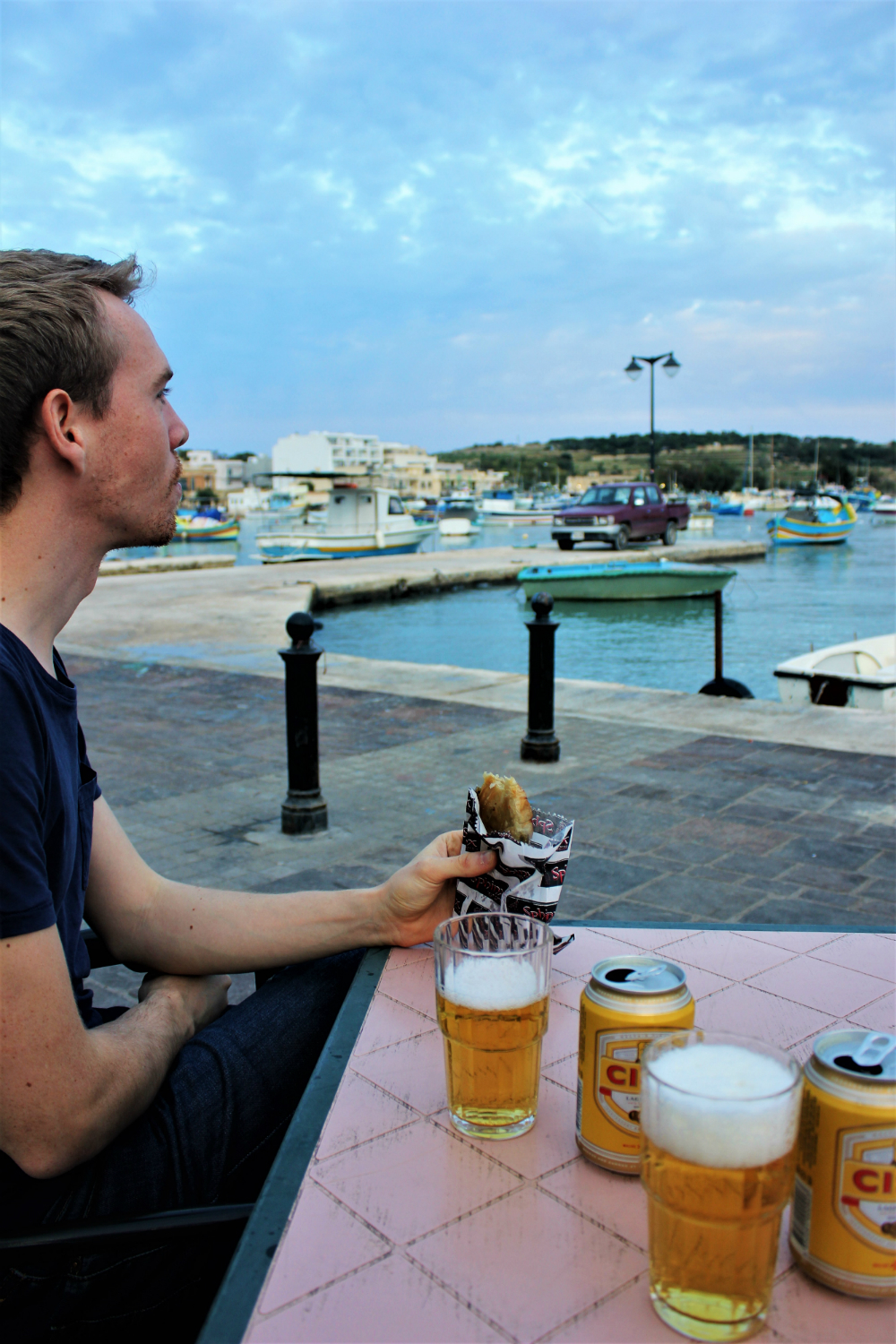
Down in the southeast, these are the areas to feel Malta without the resort gloss. Marsaxlokk is the postcard fishing village, all bobbing blue-and-yellow luzzu boats and a Sunday fish market, with waterfront restaurants serving the day’s catch. Marsaskala nearby is a low-key seaside town where more Maltese than tourists holiday.
Accommodation is often better value here, and it suits travellers who wants a quieter stay and a daily fish dinner in the harbour. Bus routes serve the south but they’re slower.
We did a hiking route around this side of Malta and thought it was pretty to pass through but we personally wouldn’t choose it as a base. If you do fancy the harbour-side spot, there are self-catering apartments right on the Marsaxlokk waterfront, with balconies over the luzzu boats, full kitchens and the fish restaurants a few steps along the quay.
Book here: Quayside Apartments
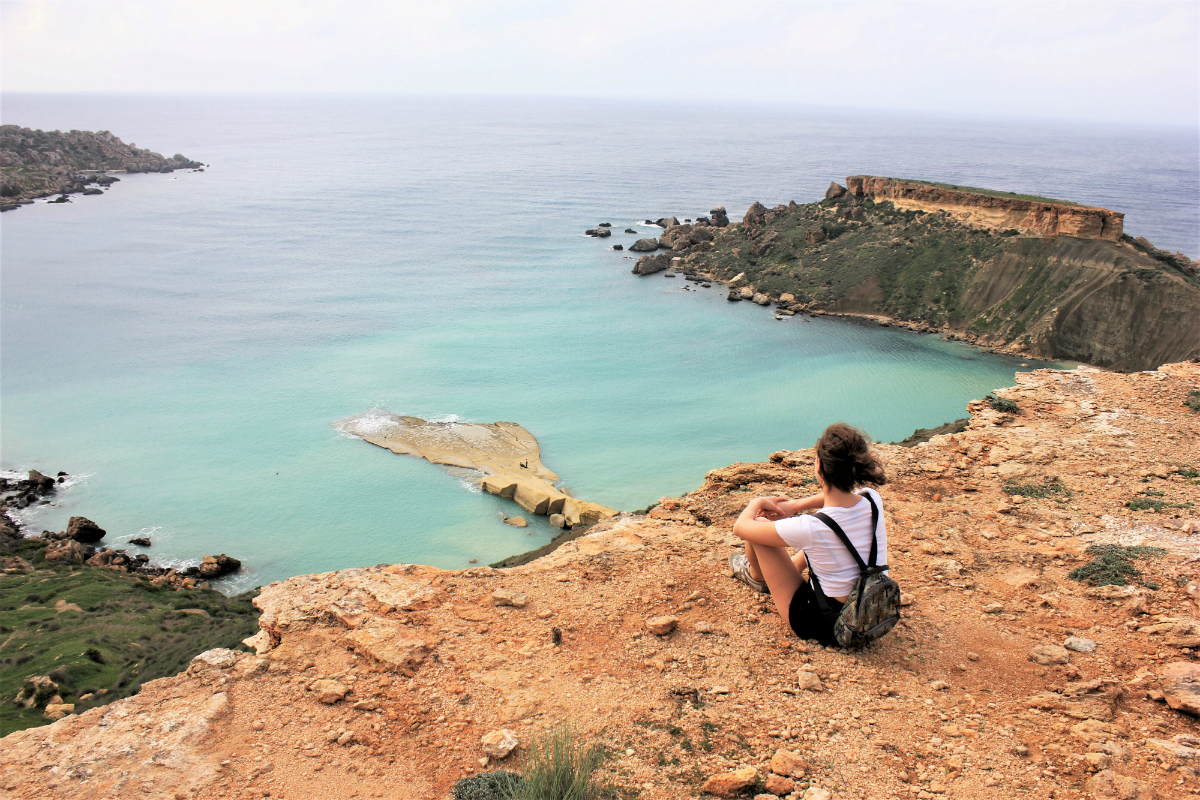
Comino: Beautiful, but Not Somewhere to Stay
Comino, home to the famous Blue Lagoon, is worth a boat trip for the water alone. It’s a nature reserve with essentially no accommodation, so treat it as a day trip rather than a base, ideally early or late in the day to dodge the crowds. Boats run from Mellieha, Sliema, Bugibba and Gozo.
The Best Hotels in Malta: Our Top Places to Stay
1926 La Galerie Boutique Art Suites
Art-filled boutique suites with a design-led feel, a pool to cool off in and easy access to the seafront promenade.
Check ratesValletta Harbour View Apartment
A self-catering apartment in the heart of Valletta with harbour views, ideal if you like a base of your own within walking distance of the old town.
Check ratesALTANA by Valletta Vintage
A characterful Valletta Vintage apartment blending original features with modern comforts, tucked into the city’s honey-stone streets.
Check ratesBattery House
A boutique stay in Valletta set within a restored historic building, a short walk from the bastions and harbour views.
Check ratesWhere NOT to Stay in Malta
Nowhere on this list is a bad choice, but you want to match your base to your travel preferences. Our top tips:
- Don’t book Paceville unless you actively want nightlife on your doorstep; the music runs late and it’s the one area we’d avoid for a quiet trip.
- Don’t base yourself somewhere remote and poorly connected if you’re not renting a car, as you’ll spend your holiday waiting for buses.
- Don’t assume you need to be on a big resort strip to reach the beaches; from a central base like Valletta or Sliema, the whole island is a short, cheap bus ride away.
The Best Area to Stay in Malta for Your Trip
- First time in Malta: Valletta. Central, walkable, packed with history and the best transport links.
- Couples: Valletta or the Three Cities for romance and character; Sliema for seafront ease.
- Families: Mellieha for sandy beaches and space, or Bugibba for budget-friendly, lively convenience.
- Nightlife: St Julian’s and Paceville.
- Beaches: Mellieha, or the Bugibba/Qawra area in the north.
- Budget travellers: Bugibba and St Paul’s Bay, the Three Cities, or the southern towns.
- Slow, local travel: Gozo first, then Rabat or Marsaxlokk.
- No car: Valletta, Sliema or Bugibba, all superb for bus and ferry access.
Malta surprised us. It’s small, easy and far more varied than its size suggests, and you really don’t need a car to enjoy it. Pick a well-connected base, lean on the buses and ferries, and give yourself a night or two on Gozo if you can, which is the one thing we’d do differently. Wherever you land, you’re never more than a short, cheap ride from the next harbour, hilltop or plate of fresh pastizzi.
Planning the budget too? Read our guide to how much a trip to Malta costs next.
Best Time to Visit Malta
Spring and autumn are the sweet spot. We went in early November for winter sun and had warm, sunny days, swimmable sea and winter prices, with almost everything still open. If you’re weighing up an off-season trip, we’ve written up what Malta in November is actually like.
Summer rates run mid-June to mid-October. Outside that window, prices drop.
FAQ: Where to Stay in Malta
It’s the best one. Nearly every bus route runs through Valletta and there are ferries to Sliema and the Three Cities, so you rarely wait long or travel far to reach the rest of the island.
No. We spent two weeks there without one and got everywhere by bus and ferry. Buses are cheap (around €1.50-2 a single) and cover the whole island, with almost every route running through Valletta. The only time we’d suggest a car is if your accommodation is somewhere rural and poorly connected.
Malta is small, so 4 to 5 days covers the highlights comfortably. A week lets you add Gozo and Comino properly, and we happily filled two weeks by slowing right down.
The northern resort towns of Bugibba, Qawra and St Paul’s Bay tend to have the most affordable accommodation, followed by the Three Cities and the southern towns like Marsaskala. Valletta is characterful but pricier.
Valletta, for most first trips. It is walkable end to end, it is the island’s main bus hub, and it is where we based ourselves for most of our two weeks. If you would rather wake up by the water, Sliema gives you a seafront and the little ferry across to the capital. Gozo suits a slower week in a farmhouse, and Mellieha is the one to pick if you want sand rather than a lido.
Our self-catered studio in the centre of Valletta worked out at €72 a night, which was around average for the capital when we visited. Bugibba, Qawra and St Paul’s Bay come in noticeably cheaper, while the Sliema and St Julian’s seafronts and the Gozo farmhouses sit at the top end. Rates move a lot with the season, so use those as a rough guide and check current prices before you book.