
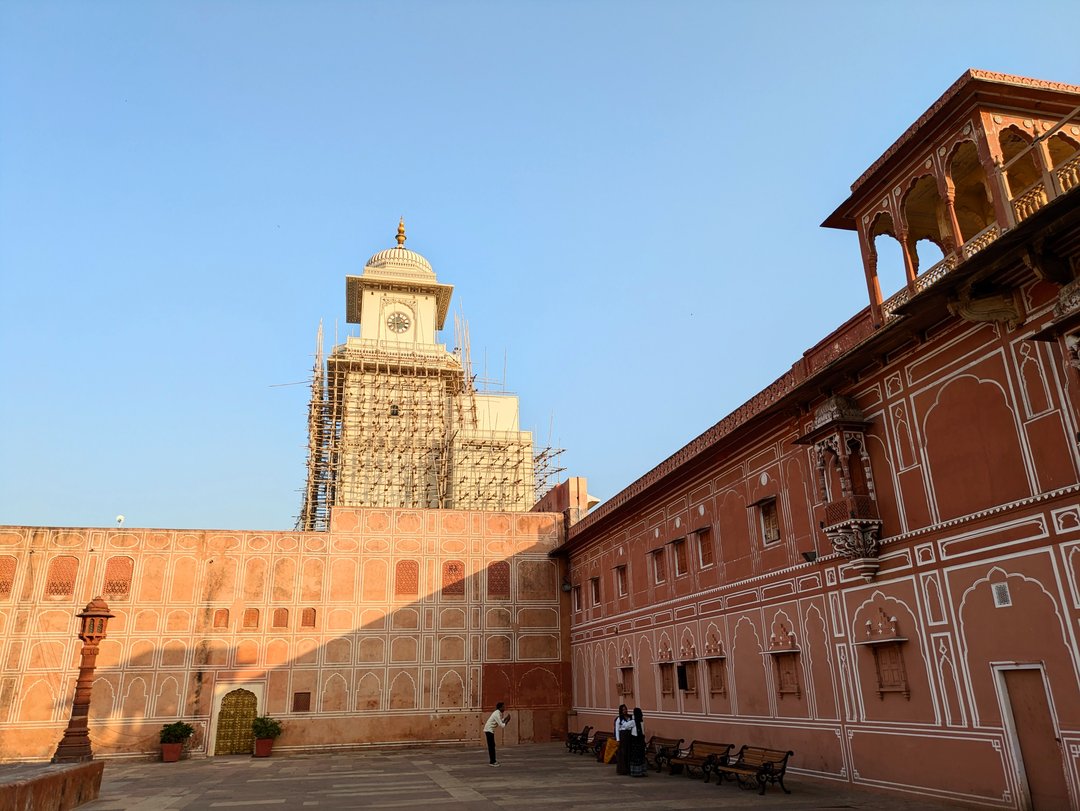

Jaipur is India’s Pink City, known for its beautiful palaces and also known for regularly going way above the safe decibel limits for city noise.
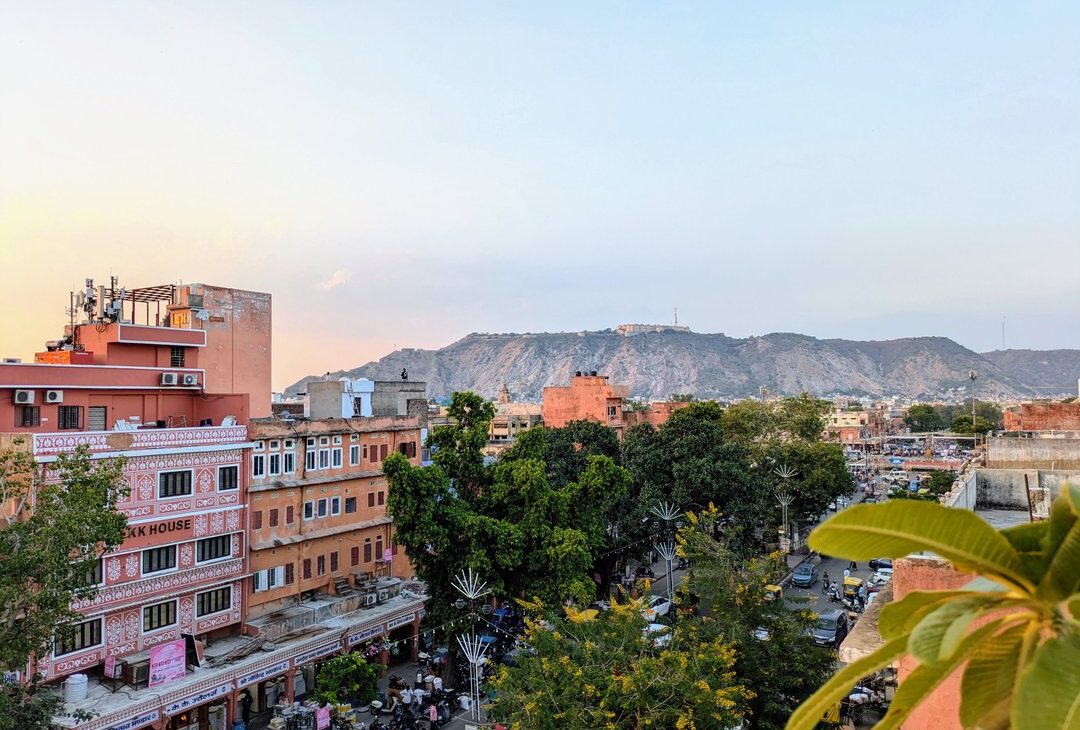
Everybody told us north India would be crazy. One friend said Jaipur was so loud it felt like her ears were bleeding. We arrived expecting chaos, and chaos is exactly what we got.
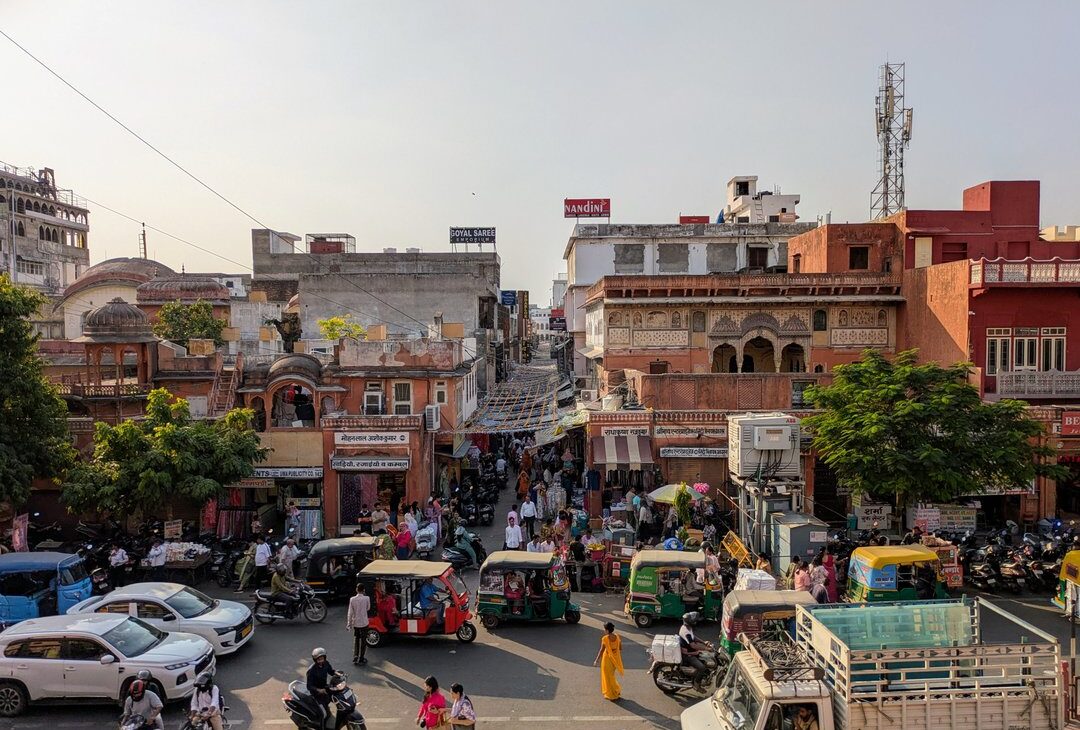
But Jaipur is beautiful chaos. The motorbike and tuktuk driving is alarming, the roads in the centre are near impossible to cross, the hustle is relentless and cows wander about weeing wherever they please (including on our feet). Yet in the middle of it all are some of India’s most beautiful sights, and there are so many things to do in Jaipur that we could easily have stayed longer.
Luke and I spent a week here around a friend’s wedding, with three full days of sightseeing, shopping and a lot of food and coffee. We saw all the main sights, from the Amber Fort and the City Palace to the Hawa Mahal.
This guide shares the best things to do in Jaipur from our trip, with costs, what we’d skip and our three-day Jaipur itinerary.
In a Rush? Our Favourite Hotels in Jaipur
Abode Jaipur — Where We Stayed
Inside the Pink City, a short walk from the City Palace and the bazaars. Best for a short stay.
Check ratesGirisadan — Where We Stayed
A family-run guest house in leafy C-Scheme, near the best coffee in Jaipur. Around £37 a night with breakfast.
Check ratesTaj Devi Ratn — Where We Stayed
A resort and spa 40 minutes out of town, for anyone who wants Jaipur in day trips.
Check ratesJaipur at a Glance
- Don’t Miss: Amber Palace at 8am, the City Palace, and having something made at a tailor.
- Skip If Short on Time: Jantar Mantar. You can see the tallest instruments from the City Palace next door.
- How Long: 2-3 full days.
- Getting Around: Uber for longer journeys, tuk-tuks for short hops at 50 to 100 rupees.
- Entry Fees: Foreigners pay more than locals everywhere. Entry fees vary between sights. We paid between 100 and 1,200 rupees per sight.
Things to Do in Jaipur: Amber Palace and the North
Amber Palace and the sights around it are about 30 minutes north of the city. We visited them all in one early morning and were back in Jaipur before lunch time.
1. Amber Palace (Amber Fort)
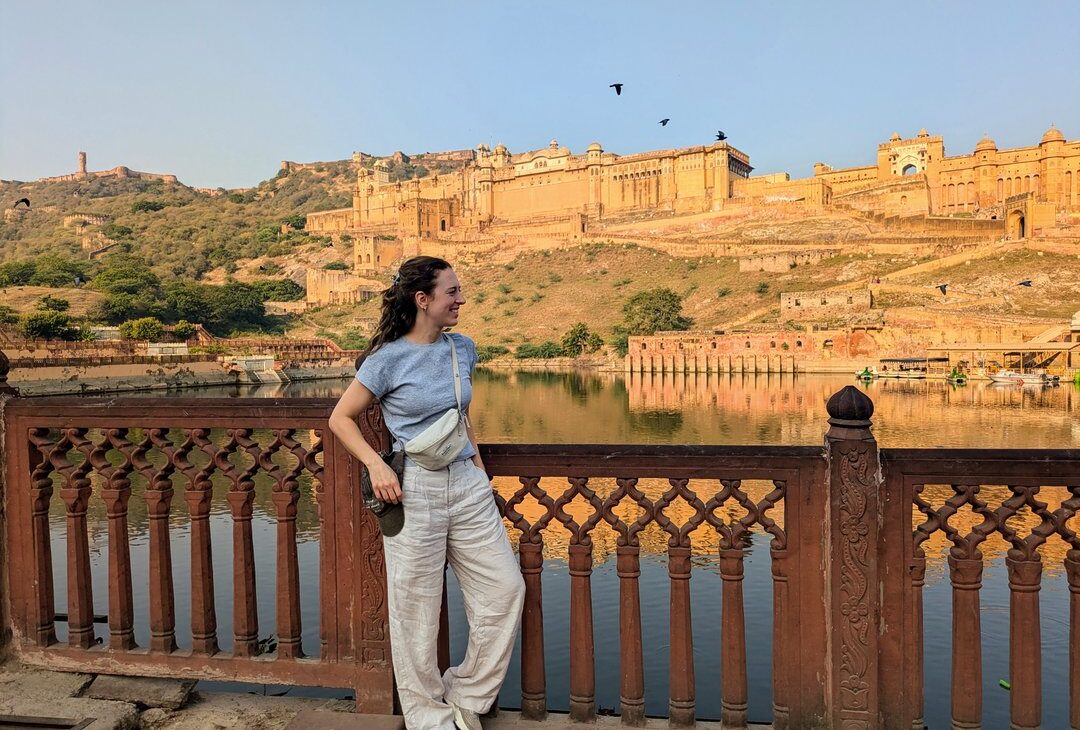
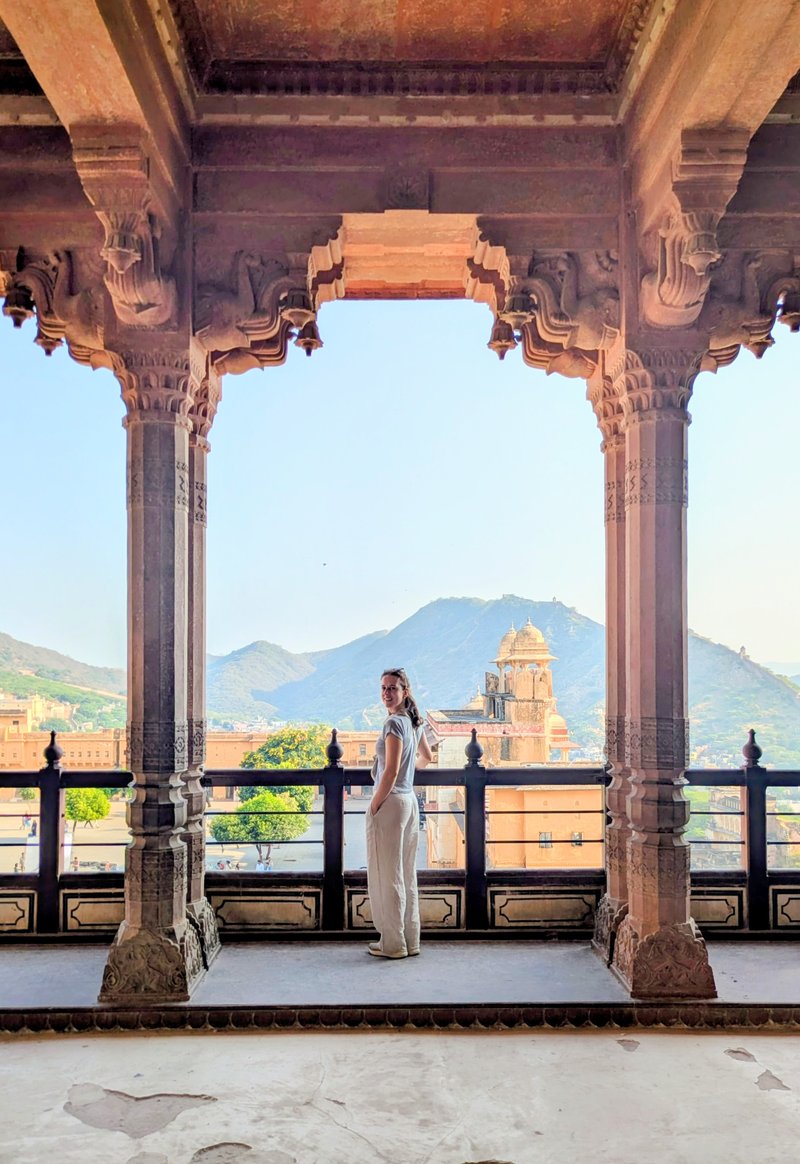
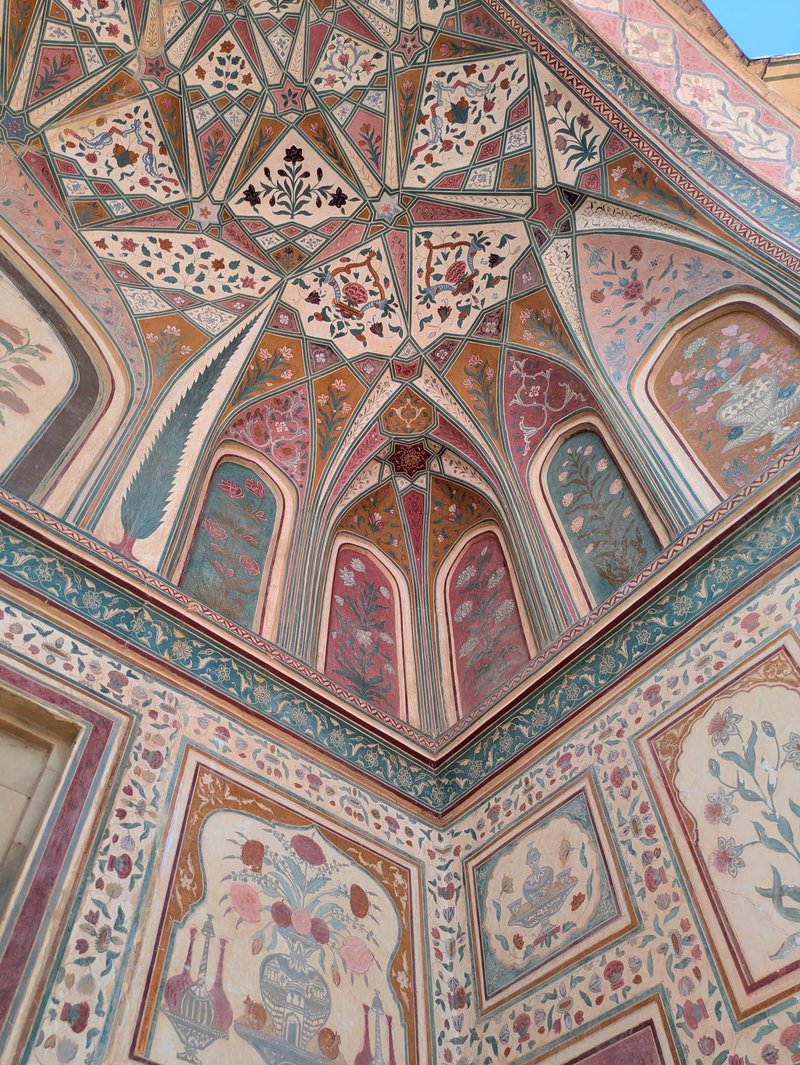
Amber Palace, which most people call Amber Fort, is the big sight to see. It’s a honey-coloured palace on a hillside with courtyards, a temple and mirrored halls, and it reminded us a little of the Alhambra in Granada.
We got there for 8am, when it opens, ahead of the crowds and the heat. I’d highly recommend doing the same. By the time we left at 11:30am, the one-way road up to the fort was a solid queue of traffic.
Ubers and taxis can only take you to the bottom of the hill. If you want to be driven to the top, it’s an extra 650 rupees. Early in the morning it’s cool enough to walk. It took us 10 to 15 minutes to walk up the paved steps, and the walk is part of the experience. You get views of the other hill forts, langur monkeys on the walls and the elephants setting off with their riders. Please don’t ride the elephants, as this is not ethical.
Entry was just over 1,000 rupees each. Official guides wait at the entrance and the price is fixed on signboards: 400 rupees for a group of up to four, for a tour of about 40 minutes. We chose to wander on our own, but the guides we overheard had great English and it’s a good way to support the locals.
Allow an hour and a half. Early on, the palace is full of couples in spectacular outfits having their wedding photos taken. The photographers will wave you out of their shot, which is a bit annoying, but seeing all the outfits was half the fun. We also saw our own friends having their wedding photos taken here!
Our Tip: There’s a Café Coffee Day inside the fort by the exit. The coffee is three out of five, but we had the back terrace to ourselves, with a view across to the next fort.
2. Panna Meena ka Kund
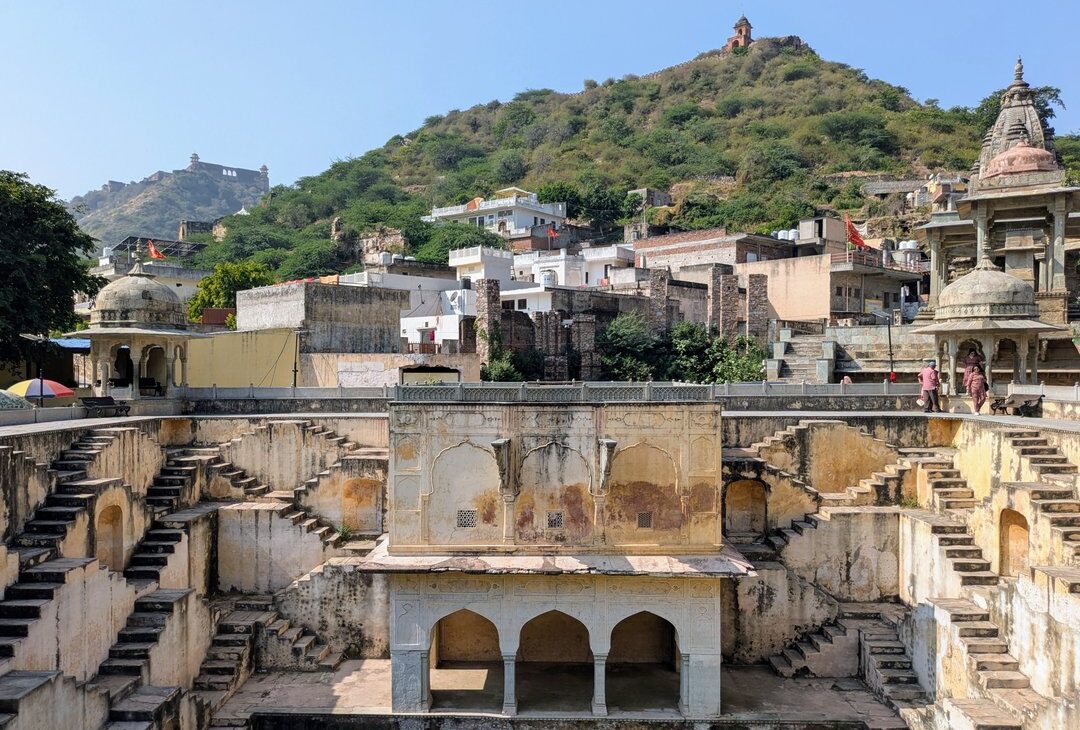
Panna Meena ka Kund is the stepwell you’ve seen in photos of Jaipur, with criss-crossing staircases running down to the water. It’s free to visit and a few minutes’ walk from Amber Palace if you leave by the back exit. People told us we were going the wrong way, but we weren’t as walking out the back is much quicker.
Panna Meena ka Kund is a quick photo stop. Half an hour is plenty. On the way, we passed the Jagat Shiromani Temple with a marble archway guarded by two stone elephants. It was also free, very ornate, and well worth ten minutes.
3. Anokhi Museum of Hand Printing
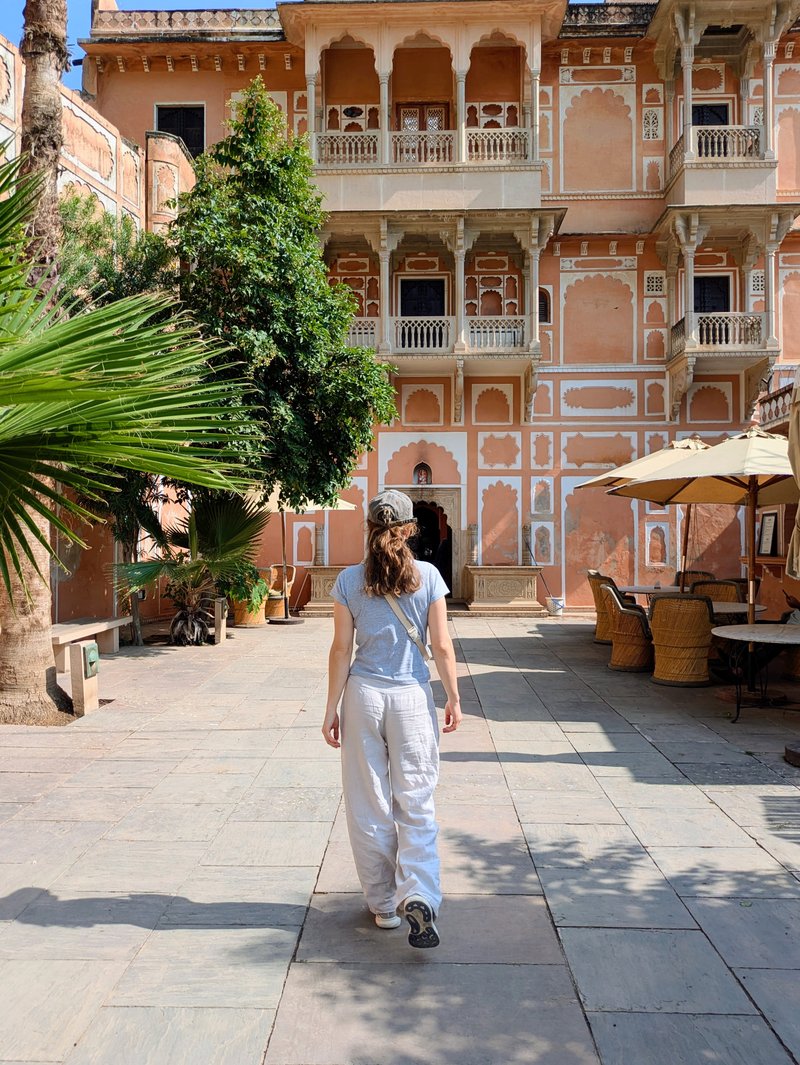
Around the corner from the stepwell is the Anokhi Museum of Hand Printing, in a beautifully restored haveli. Entry is 100 rupees, about 80p, and it’s well worth it.
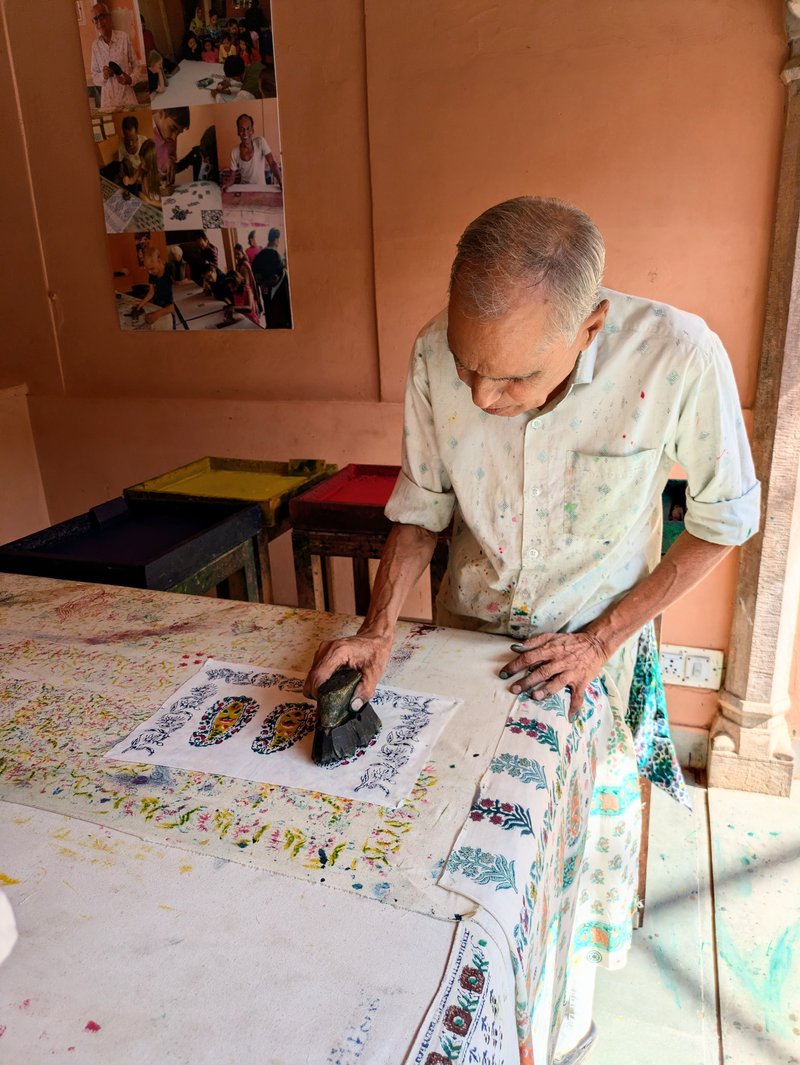
The exhibitions are all about block printing, the craft Jaipur is famous for. My favourite display showed the 14 stages of printing a single waistcoat, from dyeing to the final pattern. A couple of old-timers give live demonstrations of block printing and block carving too.
There’s a small courtyard cafe under a tree, which was one of the nicest places we sat down in Jaipur. We had fig and cardamom biscuits and a homemade lime and ginger soda. They don’t serve coffee. The museum is closed on Mondays.
Our Tip: Walk a little way from the museum before you order your Uber back. Ours got stuck straight away in the one-way queue for the fort.
4. Jal Mahal at Sunrise
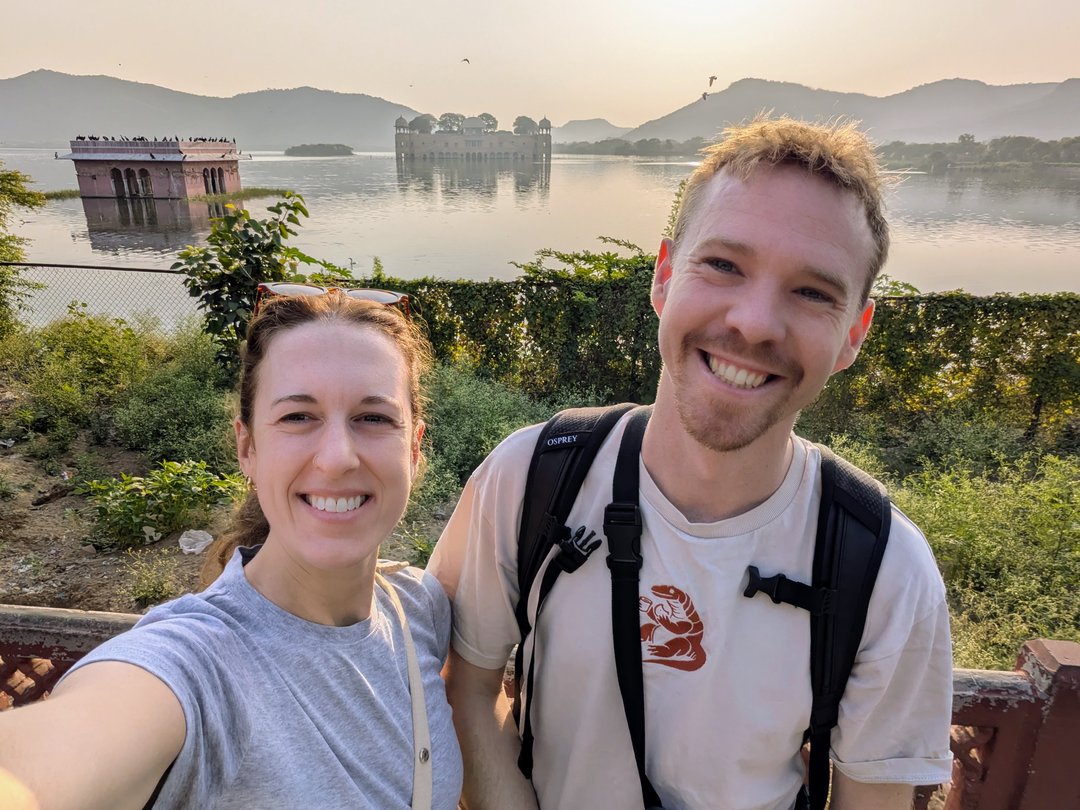
Jal Mahal is the Water Palace, which looks as though it’s floating in the middle of a lake. We stopped here just after 7am on our way to Amber Palace. The early light is bright and hazy and gives the palace a majestic look.
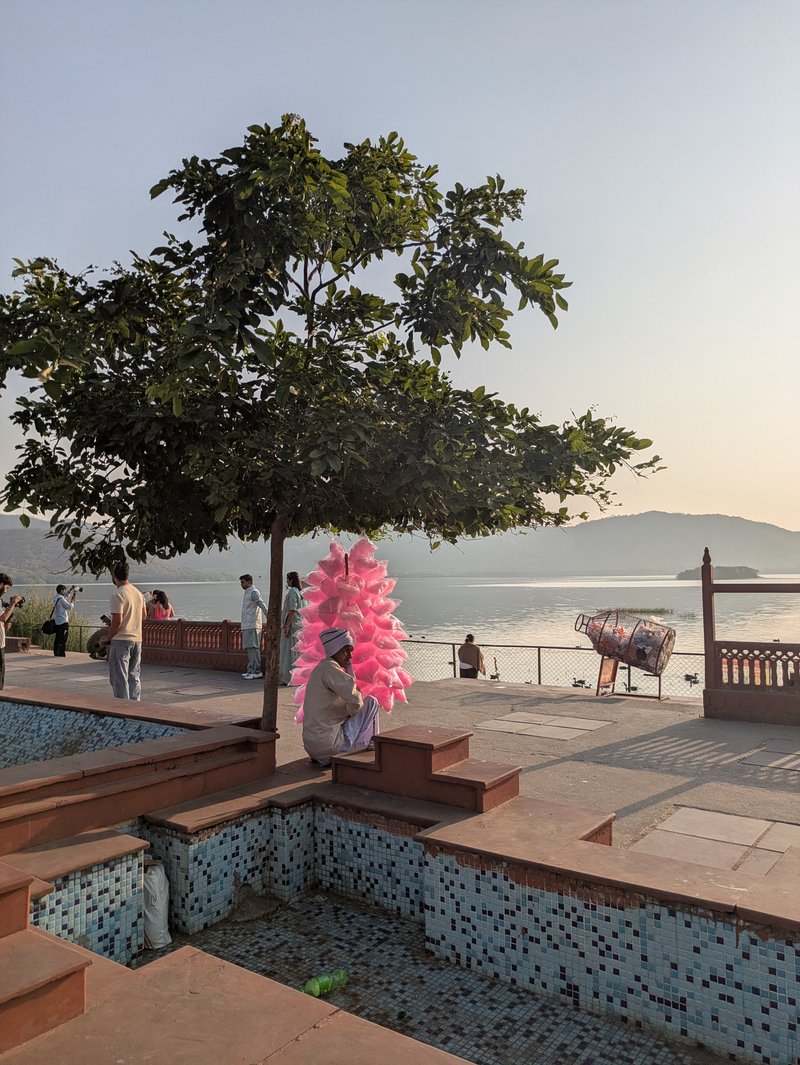
We shared the lakeside with a lot of bridal couples having photo shoots, and a few candy loss sellers. There isn’t much else to do, so treat it as a ten-minute stop on the way to the Amber Palace.
Things to Do in the Pink City
The Pink City is the old walled centre of Jaipur. The main sights are within a ten-minute walk of each other, so you can do them all on foot once you’re there.
5. City Palace, Jaipur
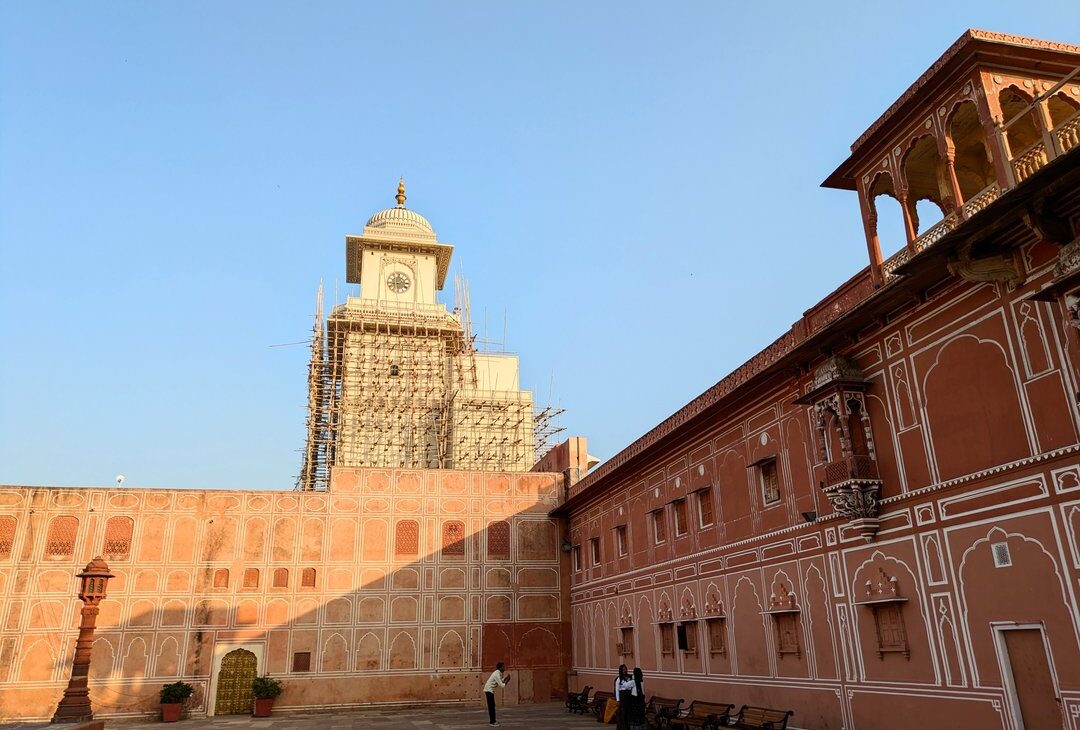
I didn’t have high expectations for the City Palace and I was blown away by it. It’s a palace complex from the 1700s, still partly lived in by the royal family, and every courtyard is prettier than the last.
Entry was 1,200 rupees per foreign adult. It isn’t huge, but you want more than an hour. Look for the courtyard with the four painted gates, including the famous Peacock Gate, and the museum of weapons and armour. There’s also a small hall where artisans sell jewellery, fabrics and paintings. I bought a pair of jhumka earrings there, the ones that look like tiny umbrellas, for 300 rupees.
The cafe is on a low rooftop inside the palace, with a view of the clock tower. The coffee is good and it’s the first place we saw in Jaipur serving gin and tonic.
Visit during the late afternoon and early evening for the best light, less crowds and less heat.
Our Tip: Before you go in, visit The PDKF Store, which is attached to the side of the palace. It’s run by a charitable foundation, prices are fixed and nobody hassles you. We bought a fabric sunglasses case for 600 rupees and a Christmas tree decoration for 300.
6. Hawa Mahal
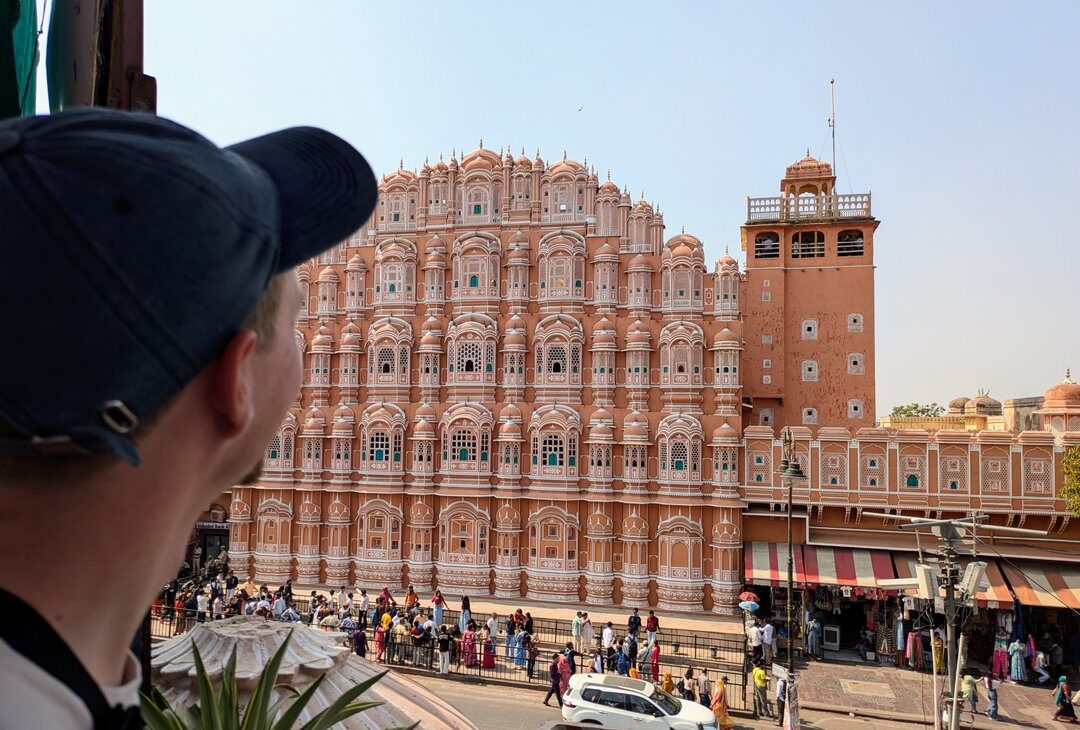
Hawa Mahal, the Palace of Winds, is the pink honeycomb building on every Jaipur postcard. It’s really pretty in person, with tiny stained-glass windows and little blue doors.
We chose to look at it from the outside. The classic photo is taken from the rooftop cafes across the road. We went to Jaipur Vista Cafe, which has a minimum spend of 200 rupees per person. Cafe is a strong word. It’s more of a paid viewing deck where you can order a lassi, and the service is slow and we didn’t particularly like it. However, the terrace is shaded, breezy and high above the noise of the street.
7. Jantar Mantar
Jantar Mantar is a collection of giant astronomical instruments opposite the City Palace, including the largest stone sundial in the world. It’s impressive, and it was packed.
It was also 600 rupees each, which felt steep for the size of it and the lack of information about what you’re looking at. Reviews said to come at midday to see the shadows. We arrived at half twelve and saw only bright sunshine. I personally didn’t think much of it and if you’re short on time, this is the one I’d knock off the list.
8. Tripolia Gate and the Bazaars
Tripolia Gate is one of the entrances to the City Palace, painted with vines and flowers. It’s worth a look on your way past. We happened to arrive as a parade came through Tripolia Bazaar: young men in white shirts and orange turbans, dancing on buses and pulling wheelies on motorbikes. It was quite a spectacle.
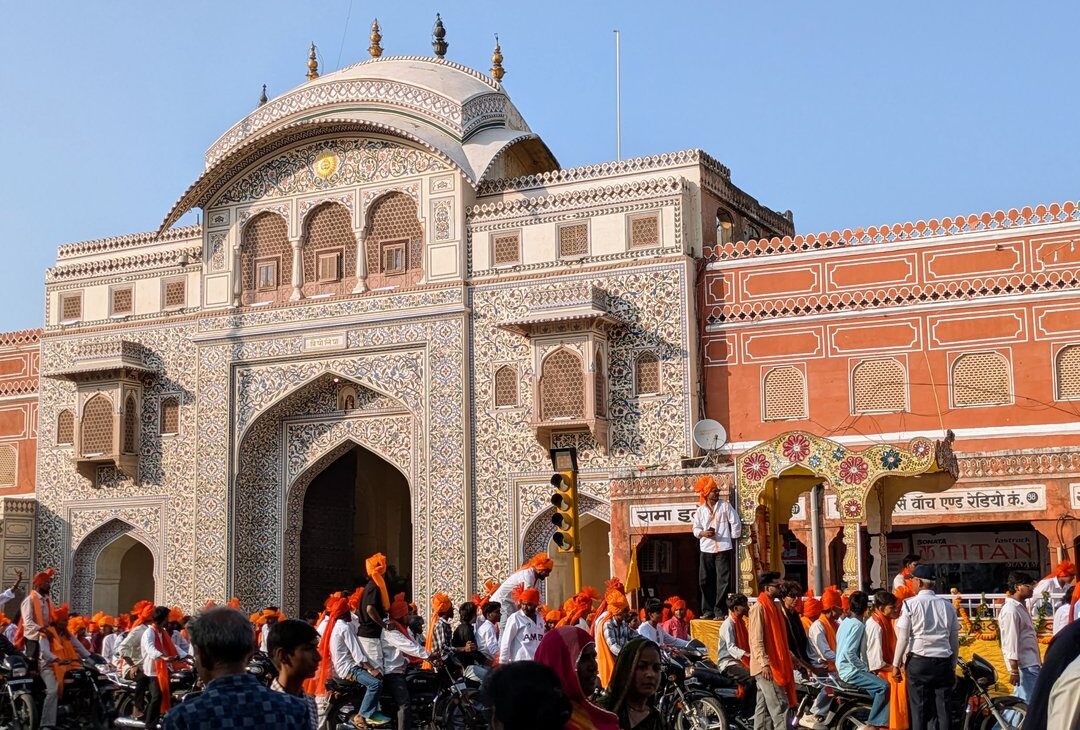
Bapu Bazaar is the main shopping street nearby, with shirts, shoes, jewellery, saris and fabric in every direction. This is the Jaipur I’d imagined. It’s intense and colourful, and everyone wants you to come into their shop. I found it hard to browse because people kept bringing me things. Prices are low by UK standards even if you’re paying the tourist rate.
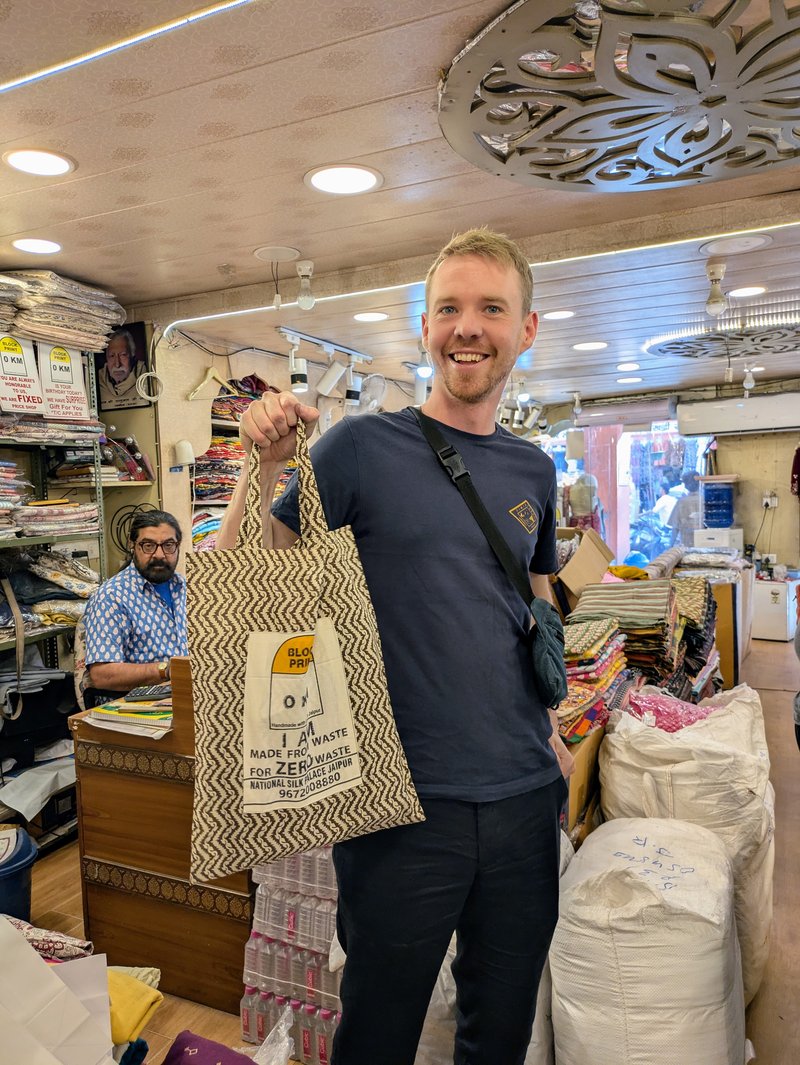
Our Tip: Go to Block Print 0KM in Bapu Bazaar. It’s fixed price and much calmer. Luke paid 2,000 rupees for a block-printed long-sleeved shirt and a waistcoat.
9. Indian Art House
Indian Art House calls itself a museum, but it’s really an antiques shop in somebody’s home. There are dusty brass pots, old miniatures, newspaper clippings and, apparently, a charter from the East India Company.
The owner was very friendly and took us up to the roof, which has a great view of Jaipur, with palaces and forts in every direction. You do climb past his bed and through his kitchen to get there. If you like antiques, you’ll love it. If not, you might wonder why you’re in this man’s house.
Jaipur Shopping: Block Prints and Tailors
10. Have Something Made at Ethnic Textiles
We needed outfits for our friends’ Indian wedding and Ethnic Textiles in C-Scheme was the best shop we went to in Jaipur. It’s a tailor on a residential street, on its own and away from the bazaars, and it was full of foreigners who’d clearly made a special trip.
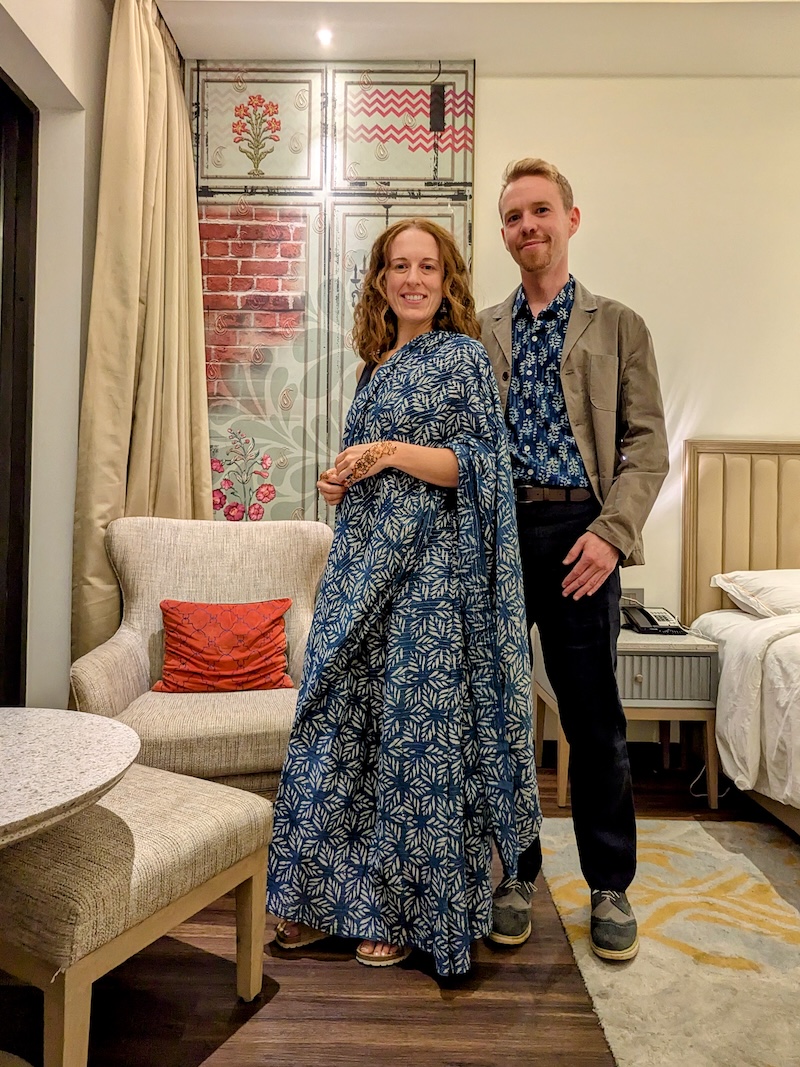
They specialise in block-printed fabrics and can make anything you like from them. I had an indigo sari with silver thread made, plus a matching blouse, for 3,500 rupees. That wasn’t the first price. They started at 5,500 and the haggling was friendly and easy.
The sari was made ‘ready to wear,’ which means it’s pre-stitched with elastic at the back so you step into it like a skirt. If you don’t know how to pin a sari, this is what you want. I ordered at 10:30am and they texted at half four to say it was finished.
Our Tip: Leave time to try it on when you collect. They made a small adjustment while we waited, and there’s always chai on offer.
11. Anokhi and Crossword Bookshop
Anokhi is the high-end version of Jaipur block print, in a building in C-Scheme that doesn’t look like much from outside. It’s a beautoful store and if you’re into clothing, textiles or design, it’s a very pleasant place to browse. On the floor below is Crossword, an air-conditioned bookshop with lots of English-language books.
Where to Eat and Drink in Jaipur
Jaipur was a city where vegetarian options are plentiful, but we were very careful about where we ate. We’d heard many stories from friends and travellers about them getting “Delhi belly” and bad bouts of food poisoning. We may have been overly careful, but we were glad to not get food poisoning on this trip to north India, nor our south India trip the year before. Here’s where we ate in Jaipur:
Chai and Parathas at Chaisa
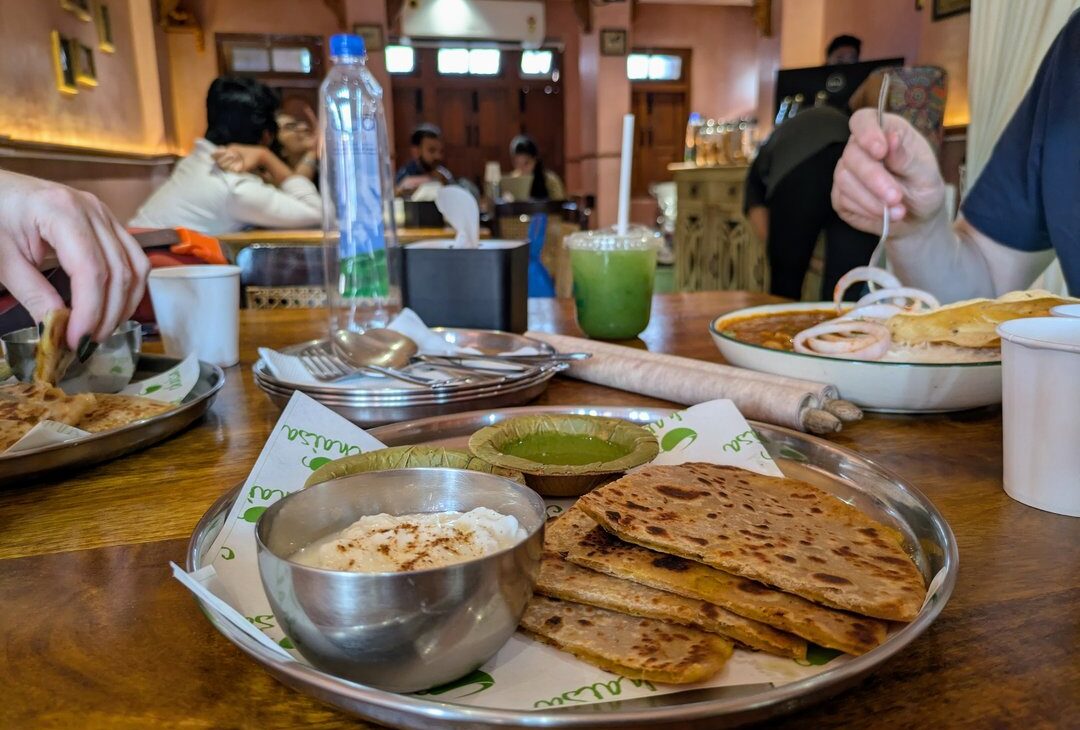
Chaisa is exactly what you need after the bazaars. It’s up a staircase from a doorway on the street, so it’s easy to miss, and inside it’s a calm, pink little cafe.
I had an aloo paratha, cut into quarters and served with a spicy chutney and a cooling coconut one. Ten out of ten. Luke had chole chawal, which is rice with a spicy tomato and chickpea curry, for 220 rupees. We came back a second day for the special chai. There’s no coffee here: it’s a tea place.
A Home-Cooked Rajasthani Thali at Chokhi Thali
Chokhi Thali is a family-run restaurant in what is basically the family’s living room. You sit on cushions on the floor and eat a thali from a big leaf plate. It’s hard to find. Ask the shopkeepers nearby and they’ll point you the right way.
This was our first proper Rajasthani food. You get baati, which are baked dough balls that you break up with your hands, then spoon over dal, a little chilli, pickle and salad, and mix it all together. The teenage son explained how to eat everything, which made it a very relaxed lesson in local food.
A thali is 400 rupees and easily feeds two if you’ve had a big lunch. With three chais and two bottles of water we paid 500 rupees in total. If you want the trappings of a restaurant, it’s not for you. I was initially concerned about the quiet environment essentially sitting on the floor in a family’s home dining room, but it worked out fine. If you want home cooking and aren’t worried about the dining environment, you’ll love it.
South Indian Food at Banana Leaf
For South Indian food, Banana Leaf does good dosa, idli and uttapam in a clean, air-conditioned dining room. One plate each is plenty. We ordered three dosas and an idli platter between three and it was far too much.
North Indian Food at Abode Jaipur
We stayed at Abode Jaipur and ate here one evening too. The restaurant is small but beautiful and serves a simple evening menu of curries, naans and rice. The hotel and restaurant is very clean and a nice, calm atmosphere to enjoy an evening meal.
Momos at Bites of Tibet
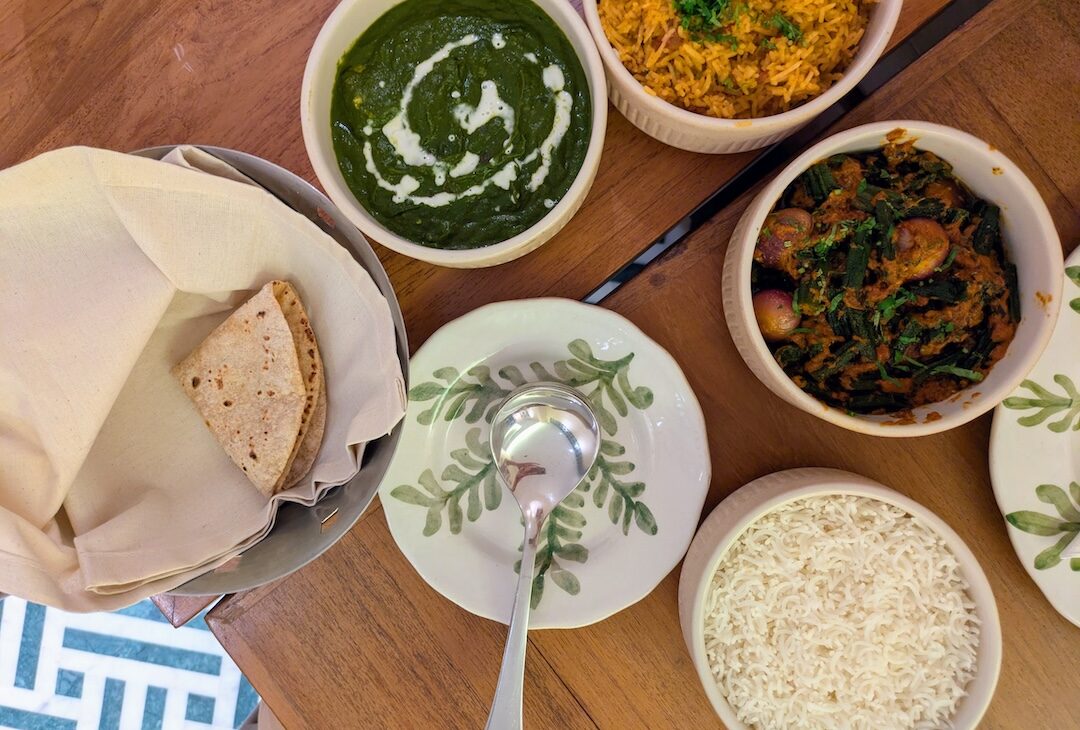
In C-scheme is the fabulous Bites of Tibet, where we had an excellent lunch of vegetarian momos. Luke had the platter of twelve, steamed, fried and paneer, with a pot of curry sauce and a chilli sauce that does not mess around. Lunch for two was 1,050 rupees.
Coffee in C-Scheme
C-Scheme is where Jaipur’s coffee scene is. Oaks and Moks Coffee Roasters was our favourite. It’s small and modern and roasts its own beans, and we went straight there after our flight for an iced Vietnamese coffee. Two coffees were 500 rupees. Our friend used to work for a specialty coffee company in London and she rated it too. It’s just 10 metres across the road from Bites of Tibet.
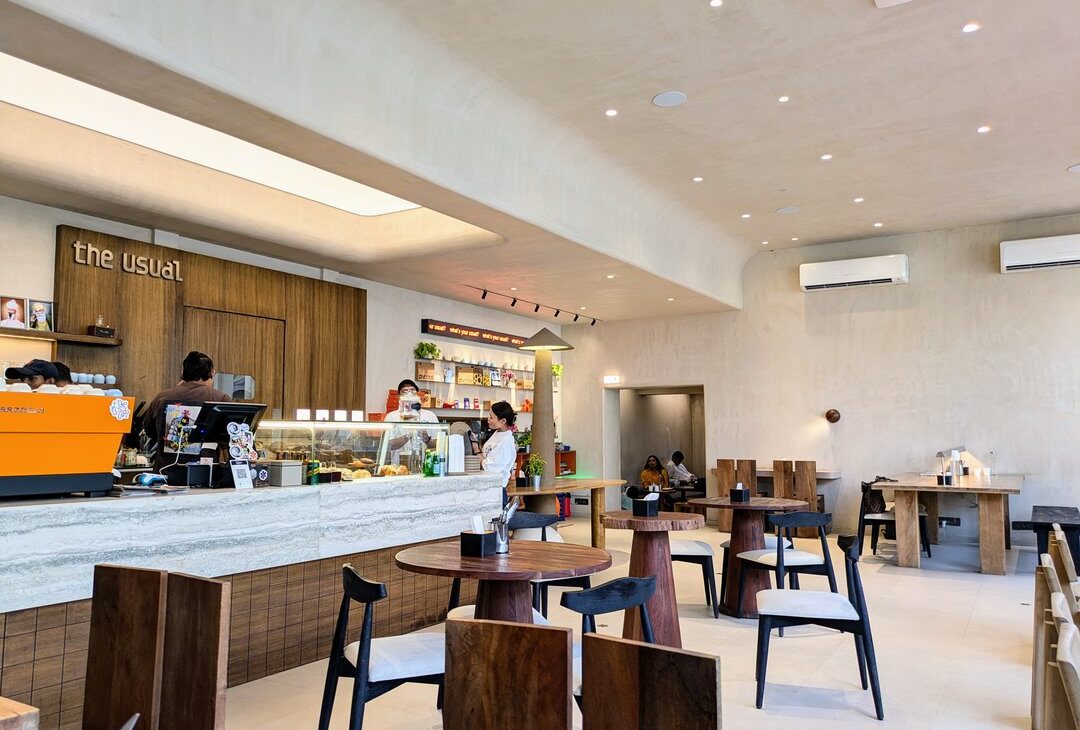
We also liked The Usual, a big, concrete-styled cafe near Ethnic Textiles, where I had a freddo for 350 rupees. It is more hipster than almost everywhere else in Jaipur, and there are also Western food offerings like burgers and fries.
The one we wouldn’t go back to is Roastery Coffee House. It’s very pretty, with a colonial-style house and a pool in the garden, but it was more style than substance. I didn’t finish my coffee because it was so bad, which never happens!
What We Didn’t Get To
We ran out of time for a few things. Patrika Gate is the rainbow-painted gateway you’ll have seen on Instagram. It’s free to visit and it’s near the airport, so it works best on your way in or out. Nahargarh Fort, on the ridge above the city, is the place to go for sunset.
A Three-Day Jaipur Itinerary
This is roughly how we’d arrange our three days if we did it again.
- Day One, C-Scheme: Take it easy after your flight. Coffee at Oaks and Moks, momos at Bites of Tibet, then browse Anokhi and Crossword. Order anything you want tailored at Ethnic Textiles.
- Day Two, the Pink City: Bapu Bazaar and Block Print 0KM in the morning, lunch at Chaisa, then Tripolia Gate, The PDKF Store and the City Palace. Finish with the rooftop at Indian Art House and dinner at Chokhi Thali.
- Day Three, Amber Palace: Leave at 7am for Jal Mahal, be at Amber Palace for 8am, then walk to Panna Meena ka Kund and the Anokhi Museum. Back in the city, see Hawa Mahal from a rooftop cafe and collect your tailoring.
Getting Around Jaipur
Uber worked brilliantly for us in Jaipur and was cheaper than the prices drivers quoted in person.
For tuk-tuks, we paid 50 rupees for very short trips and 100 rupees for 10 to 15 minutes. We once paid 100 rupees for a four-minute ride, which was too much, but the people of Jaipur work hard and we didn’t mind.
The alternative is a private driver. We were quoted 2,500 rupees twice for a full eight-hour day of sightseeing. It worked out cheaper for us to take separate Ubers, but it could be nice to have someone waiting for you with the air conditioning on.
Where to Stay in Jaipur
We stayed in three hotels, at different price points:
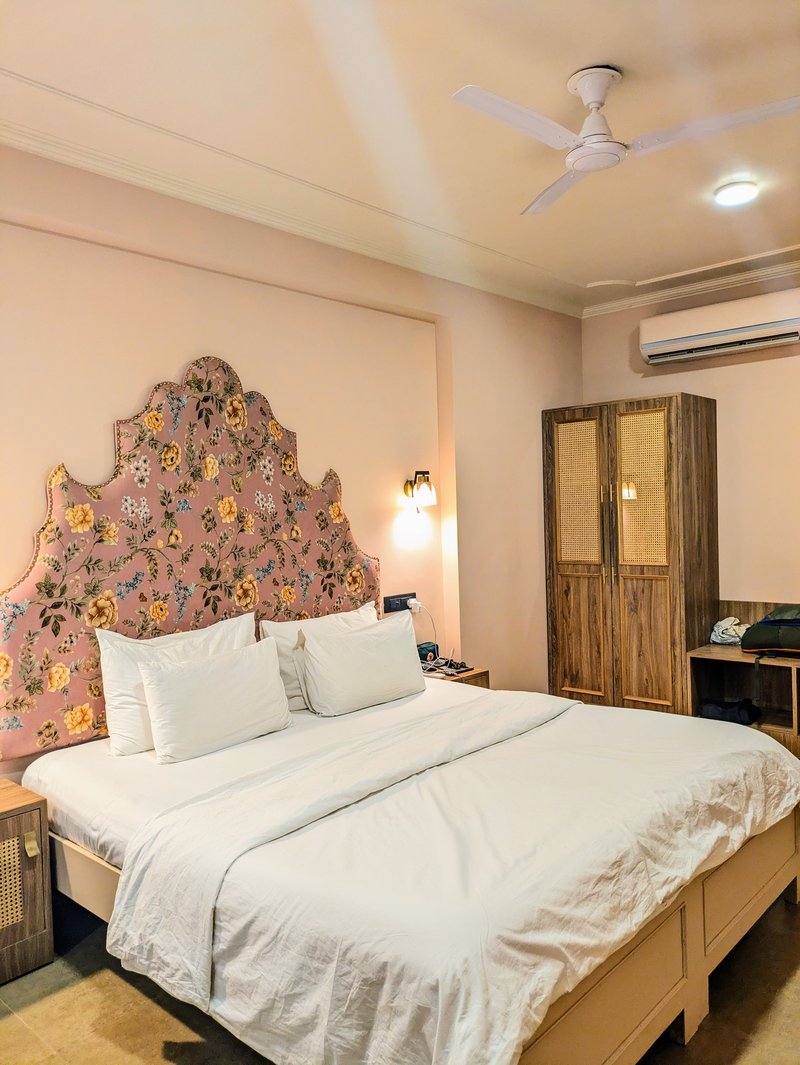
Girisadan is a family-run guest house in C-Scheme and was excellent value at about £37 a night. We had an early check-in after our flight landed at 7am at no extra charge and it made our trip so much better being able to get an hour’s kip straight away.
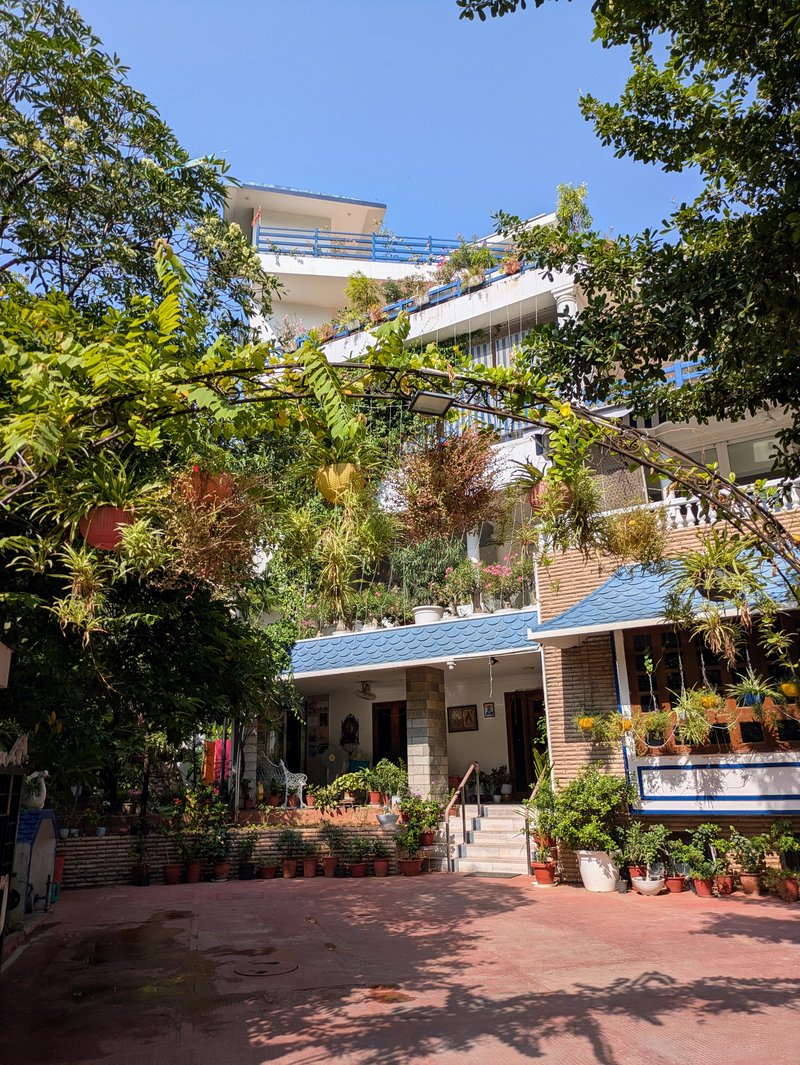
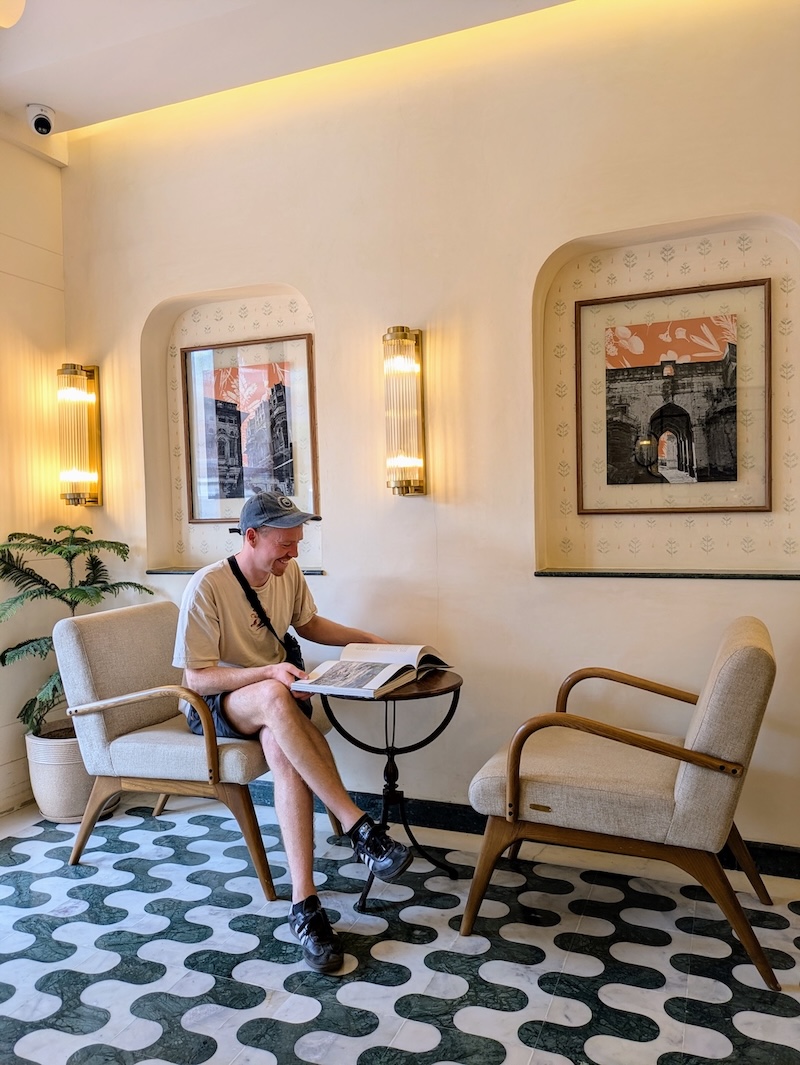
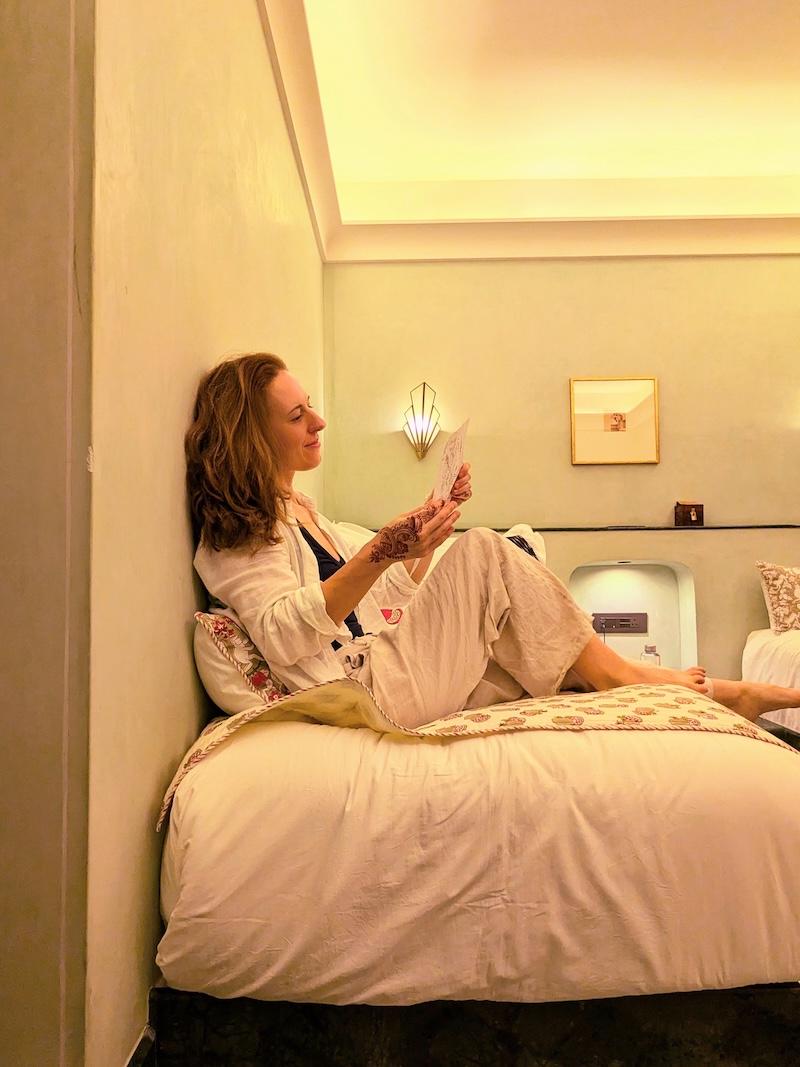
Abode Jaipur is inside the Pink City, between the City Palace and Bapu Bazaar. It’s mid-range, and we paid £75 per night. It’s beautifully decorated and feels like an oasis from the chaos of the centre. It’s the hotel to book if you only have a short time in Jaipur and need to be near the main sights.
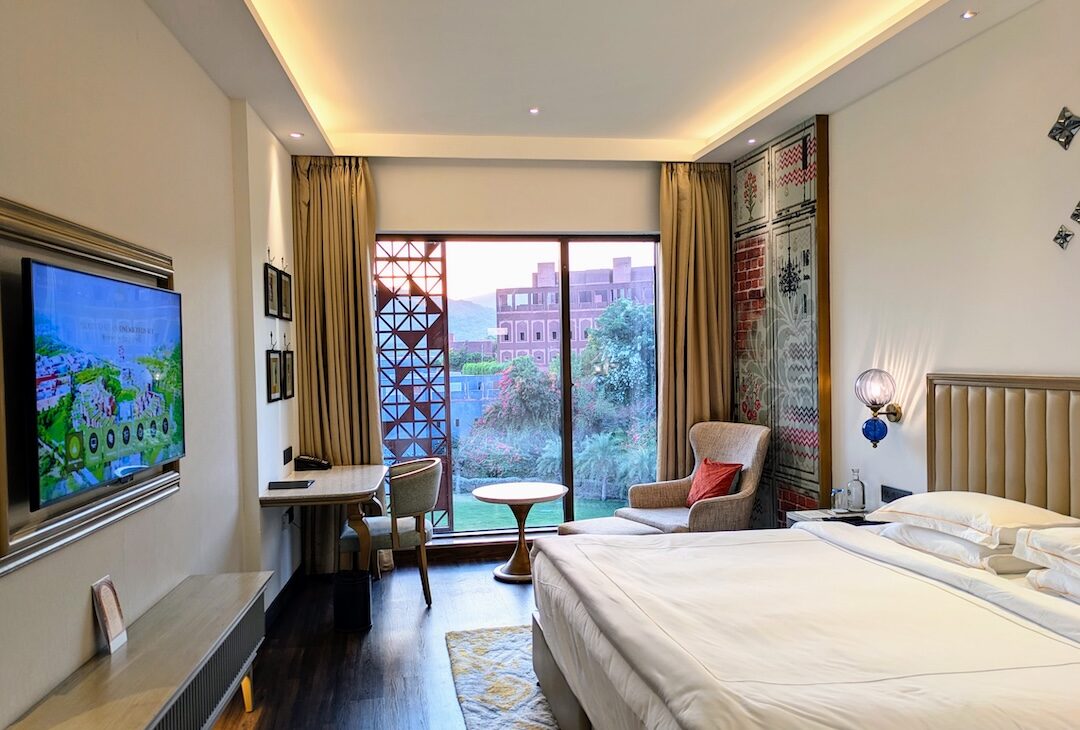
Taj Devi Ratn is a resort 40 minutes out of town, where our friend’s Indian wedding was held. The hotel is high-end at £160 per night. It’s a beautiful resort, completely away from the city’s noise.
We’ve written up all three in more detail in our guide to where to stay in Jaipur.
Things to Do in Jaipur FAQ
Jaipur is called the Pink City because the buildings of the old walled city were painted a terracotta pink in 1876 to welcome the Prince of Wales. The colour has been kept ever since.
The walled city of Jaipur was added to the UNESCO World Heritage list in 2019. Jantar Mantar has its own listing from 2010, and Amber Fort is listed as one of the Hill Forts of Rajasthan.
Two days are enough for the main sights in Jaipur if you start early. Spend one morning at Amber Palace and the sights around it, and one day in the Pink City for the City Palace, Hawa Mahal and the bazaars. A third day gives you time for shopping, tailoring and the cafes in C-Scheme.
Keep Exploring
- Where to Stay in Jaipur: The Best Areas and Hotels (We Tried Three)
- Taj Mahal at Sunrise: Everything You Need to Know Before You Go
- Kerala Travel Guide: 2-Week Itinerary, Things to Do & Costs
- Best Things To Do in Munnar: 10 Tea Country Experiences We Loved
- 12 Things To Do in Varkala: Kerala’s Cliffside Beach Town