
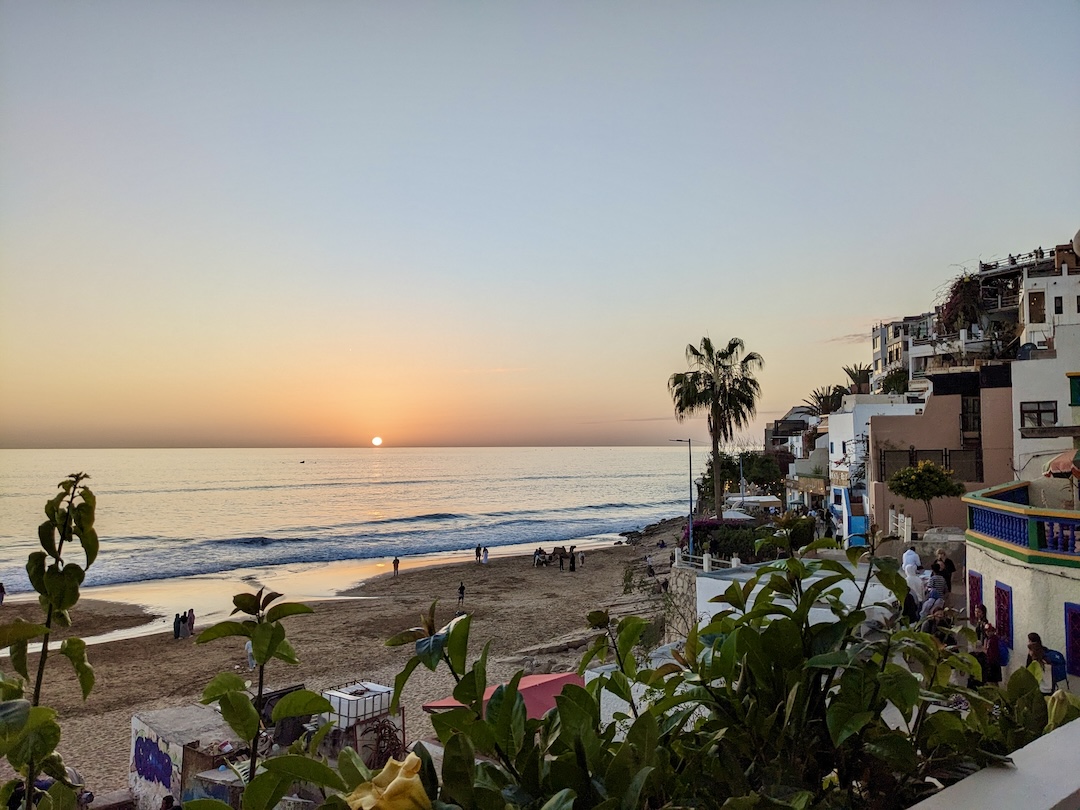

Taghazout’s year-round mild climate makes it a good destination most of the year. For us though, Taghazout is a winter sun destination where we escape the chilly and grey UK weather for 10 days of sun, surf and tagine. The best month for surf also vary too.
We’ve had the pleasure of visiting Taghazout three times: in 2017, 2025 and 2026. In this guide, we share our experience of the weather and the best time to visit this Moroccan beach village. For everything else, see our Taghazout travel guide. If you’re planning the days themselves, we’ve set out a 3, 5 and 10-day Taghazout itinerary.
In a Rush? Best Hotels in Taghazout
Garden Taghazout Bay
Modern beach resort on Taghazout Bay with a big pool and easy access to surf schools. The comfortable family/couple pick.
Check ratesDar Imim Surf House
Laid-back surf house steps from the break, with board storage, a sociable rooftop and easy access to lessons.
Check ratesMunga Guesthouse
Small, friendly guesthouse in the village with simple, comfortable rooms — the homely budget choice.
Check ratesTLDR: Best Time to Visit Taghazout
For surfing: October to April, when the Atlantic swells are at their peak.
For winter sun: December to February, when daytime highs sit around 21°C while the UK is grim.
Our favourite month: January. Taghazout has become our go-to winter sun destination for January, and it’s the trip we look forward to most.
The month to avoid: July and August. Too hot, and the waves are flat.
The fortnight to avoid: Christmas and New Year, unless you actively want the crowds and buzz.
Taghazout Weather Month by Month
There’s no long-term weather station in Taghazout itself, so the figures below are for Agadir, about 20 kilometres south along the same stretch of Atlantic coast. It’s the closest reliable proxy and the coastal conditions are very similar.
| Month | Avg High (°C) | Avg Low (°C) | Sea (°C) | Rain (mm) | Rainy Days |
|---|---|---|---|---|---|
| January | 20.7 | 8.1 | 17.5 | 40 | 5 |
| February | 21.8 | 10.2 | 17.0 | 40 | 6 |
| March | 23.4 | 12.1 | 17.0 | 30 | 5 |
| April | 23.0 | 13.4 | 17.5 | 20 | 4 |
| May | 23.6 | 15.1 | 18.5 | 4 | 1 |
| June | 25.0 | 17.6 | 19.5 | 1 | 1 |
| July | 26.4 | 18.9 | 20.5 | 0 | 0 |
| August | 26.5 | 19.0 | 21.0 | 3 | 0 |
| September | 26.4 | 18.3 | 21.5 | 2 | 2 |
| October | 25.7 | 16.1 | 20.5 | 20 | 4 |
| November | 23.9 | 12.7 | 19.5 | 45 | 5 |
| December | 21.7 | 9.9 | 18.5 | 60 | 5 |
The temperature range is remarkably narrow. Average highs only move between about 21°C and 26.5°C across the entire year. There is no bad-weather season in Taghazout in the way there is in most of Europe.
The nights are cooler than people expect. January and December average lows of 8-10°C catch a lot of visitors out. We’ve always needed a few layers for the evenings, especially if we walk the boardwalk in the evening. We usually bring a good fleece and a light puffer jacket.
The sea is warm-ish. Sea temperature peaks at about 21.5°C in September and it’s low is around 17°C in February and March. Through the main surf season the sea temperature is roughly 17-20°C, so it’s never tropical and you need a wetsuit whenever you come. There are plenty of hire shops in the village.
Rain is concentrated and brief. November and December are the wettest months at 45-60mm, but that still only falls across about 5 days. We had a couple of days of unusually high rainfall when we visited in January 2026, so it does happen, and is a good reason to stay more than a few days.
Best Time to Visit Taghazout for Surfing
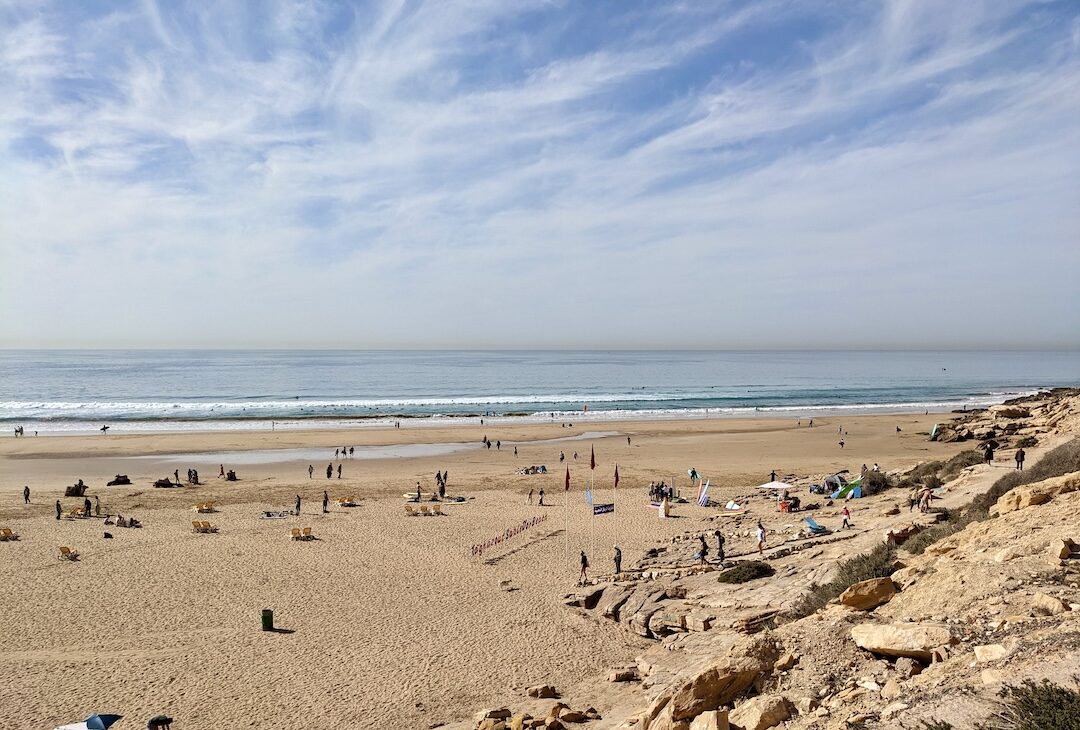
The surf season runs from October to April, when the swells are at their peak and the right-hand point breaks like Anchor Point come alive.
You can surf year-round, but I wouldn’t recommend a summer surf trip, especially not in August. The waves at this time of year are often flat, and combined with the higher heat it’s not the most pleasant. If you’re coming to surf, come in the season.
If you’re learning to surf, smaller shoulder-season surf is no bad thing. The beach breaks at Panorama and Hash Point are forgiving whatever the month, and that’s where we learned to surf for the first time.
Best Time to Visit Taghazout for Winter Sun
This is Taghazout’s real speciality, and it’s why the village fills with escapees from the UK, Germany and other chilly corners of Europe from December onwards.
With average highs of 20.7°C in January and 21.7°C in December, and direct flights from London Gatwick and Manchester to Agadir taking around four hours, it’s about as efficient a winter escape as you can get from Britain. Rain does pick up in December, but only across about 5 days of the month.
When to Avoid Taghazout
August
It’s the hottest month, the waves are flat, and you get neither good surf nor comfortable beach weather. Rates are lower for a reason. A friend of ours visited during this month and hated his trip, thanks in part to getting some terrible sunburn.
Christmas and New Year
Not bad weather, just busy. We found that fortnight too crowded for our liking. The village is small, feels packed and it’s hard to get tables at restaurants. It is, however, not a party place, so expect a fairly tame New Year’s Eve.
If you’re after a more relaxed trip, go either side of the holidays. Early December and mid-to-late January give you the same weather and the same waves with a fraction of the people. Just book early because the winter season sells out months ahead.
What to Pack for Taghazout
Bring sunscreen, hand sanitiser, comfortable shoes, flip-flops, swimwear and a few layers for cooler evenings. Taghazout is more relaxed than other parts of Morocco, but it’s still a conservative country, so dressing modestly is a sign of respect. Swimwear is normal on the beach and relaxed beachwear is fine around the village, but it’s good practice to cover your shoulders and knees in shops, restaurants and cafes.
Taghazout Weather FAQ
January is our pick for the best month to visit Taghazout. The surf is working, average highs are around 21°C, and it is a genuine escape from a British winter. If you want the same conditions with fewer people, avoid the Christmas and New Year fortnight specifically.
Taghazout is warm in winter during the day, with average highs of 20.7°C in January and 21.7°C in December. Evenings are a different story, with average lows of 8 to 10°C, so you should pack layers. The mild daytime weather is one of the reasons Taghazout has become a popular winter sun spot for northern Europeans.
The surf season runs from October to April, when the Atlantic swells are at their peak. We would avoid August, which is the hottest month and the one when the waves are flattest.
The sea ranges from about 17°C in February and March to 21.5°C in September. Through the main surf season you can expect roughly 17 to 20°C, so you will want a wetsuit whenever you visit.
It doesn’t rain much in Taghazout, and what rain there is falls in concentrated bursts. Annual rainfall nearby is around 255mm, most of it between October and April. December is the wettest month at about 60mm, but that falls across only around five days, and July and August are effectively rain-free.
Taghazout is warmer in summer than you might want for a surf trip. July and August average highs of around 26.5°C sound pleasant, but the Atlantic coast can also catch hot air from inland and the waves are flat, so we wouldn’t plan a Taghazout trip for August.
Disclaimer: This guide contains affiliate links. If you book through them we may earn a small commission at no extra cost to you. We only ever recommend places we have stayed or would happily book ourselves.