

Madrid is the most underrated big city in Spain, and I say that as someone who loves Barcelona. Whilst everyone flocks to Barcelona, I’d suggest taking a weekend city break trip to Spain’s capital city instead.
We’ve spent many long weekends exploring Madrid. We have the brilliant benefit of first-hand info on all the best, newest and trendiest spots from Luke’s brother, a local expat to Madrid since he moved there in 2019. We’ve seen all the major sights, have opinions on which of the big galleries to spend an afternoon in, and spent many an evening chatting and drinking cañas in the city’s courtyard bars.
This guide covers the best things to do in Madrid, things to do for free, where to base yourself, when to go and the handful of things I’d skip.
In a Rush? Top Hotel Picks in Madrid
UMusic Hotel Madrid
Universal Music’s music-themed flagship hotel in central Madrid — design-led rooms and a curated soundtrack throughout.
Check ratesNH Collection Madrid Palacio de Tepa
Upscale 5-star inside a restored 18th-century palace in Madrid’s literary quarter — a few minutes from Puerta del Sol.
Check ratesGran Hotel Inglés
Madrid’s oldest hotel, restored into a stylish 5-star in the heart of Barrio de las Letras. The grand splurge.
Check ratesMadrid’s Big Sights
1. Do the Prado Properly, Or Not At All
Luke loves the Prado and I find it long-winded. It’s one of the great galleries in the world and it’s also room after room of largely religious European painting in an enormous building, and by hour two I am done.
If you go, and you probably should, go with a plan. Velázquez’s Las Meninas, Goya’s Black Paintings in rooms 66 and 67 on the ground floor, and Bosch’s Garden of Earthly Delights. Three rooms, ninety minutes. That’s the version of the Prado I’d recommend unless you love this sort of stuff.
Cost: €15 / around £13. Free: Mon–Sat 18:00–20:00, Sun and holidays 17:00–19:00. Free entry is first come, first served at the ticket office with no booking, so allow forty-five minutes of queueing.
2. See Guernica at the Reina Sofía
The Reina Sofía is the most underrated of Madrid’s big three. Picasso’s Guernica is here and no reproduction prepares you for the scale of it. It takes up an entire wall, and the room is usually quiet enough that you can stand there for a while.
The rest is twentieth-century Spanish art: Dalí, Miró, Juan Gris, a great deal about the Civil War. It’s a fraction of the size of the Prado. You can do it properly in two hours.
Cost: €12 / around £10. Free: Mon and Wed–Sat 19:00–21:00, Sun 12:30–14:30. Closed Tuesdays. Free evening tickets can be booked online and they go quickly.
⚠️ Worth knowing: The museum’s Palacio de Cristal in Retiro is closed for renovation until 2027. The Palacio de Velázquez next door reopened in June 2026 and is worth the detour.
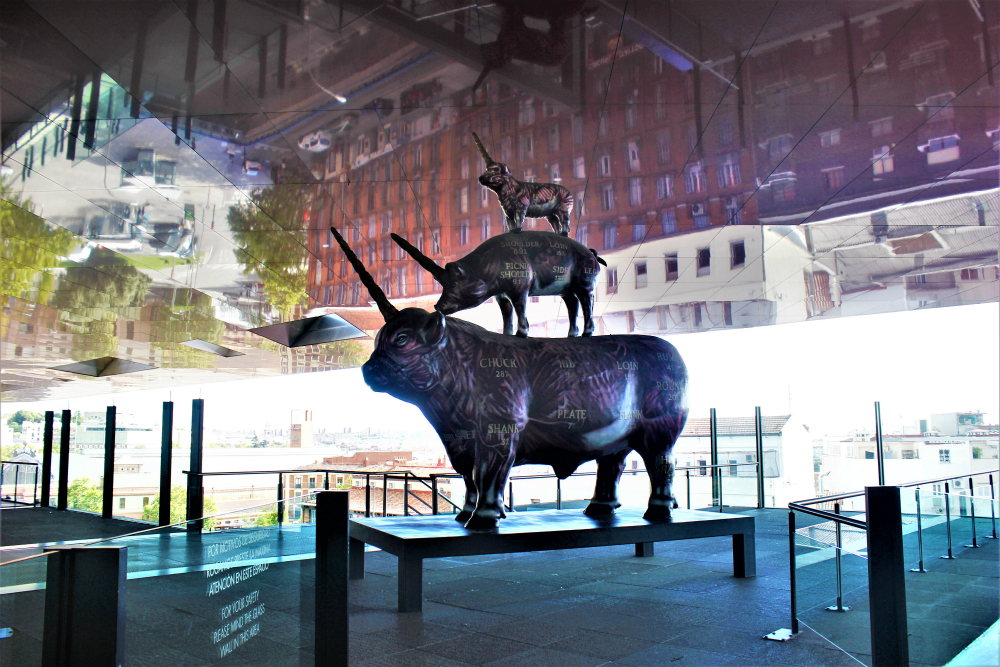
3. Fill In the Gaps at the Museo Thyssen-Bornemisza
The third of the Paseo del Arte trio and the easiest to love. It was a private family collection bought across eight centuries and sold to Spain in 1993, so it runs chronologically from medieval panels through to Hopper and Rothko in a way that feels like a very good greatest-hits album.
If you’ve only got time for one gallery and you’re not sure what you like, make it this one.
Cost: €14 / around £12. Free: Mondays 12:00–16:00, and you don’t need a ticket — the box office is simply shut and you walk in. Also free on Saturdays 21:00–23:00 for the ground floor and level -1.
Madrid’s Free Museum Hours
Madrid gives away an extraordinary amount of art if you’re willing to eat dinner at Spanish hours. Doing all three big galleries in their free windows saves you €41, or around £35 a head.
| Museum | Standard ticket | Free entry |
|---|---|---|
| Museo del Prado | €15 / ~£13 | Mon–Sat 18:00–20:00 · Sun & holidays 17:00–19:00 |
| Museo Reina Sofía | €12 / ~£10 | Mon & Wed–Sat 19:00–21:00 · Sun 12:30–14:30 (closed Tue) |
| Museo Thyssen-Bornemisza | €14 / ~£12 | Mon 12:00–16:00 (whole museum) · Sat 21:00–23:00 (part) |
| Galería de las Colecciones Reales | €14 / ~£12 | Mon–Thu 18:00–20:00 · restricted, see below |
| Royal Palace of Madrid | €18 / ~£15.50 | Mon–Thu 17:00–19:00 summer, 16:00–18:00 winter · restricted, see below |
💡 A post-Brexit catch. The bottom two are Patrimonio Nacional sites rather than museums, and their free windows are only open to EU citizens, anyone with Spanish residency or a work permit, and Ibero-American citizens, all with ID. It’s self-guided only and handed out first come, first served at the window. A British passport holder without Spanish residency pays full price. The three galleries above them are free to everyone, whatever your passport.
🎟️ If you’d rather not build your trip around opening hours, the Paseo del Arte combined ticket covers all three big galleries for €32.80, around £28.
4. Take in the Royal Palace from the Sabatini Gardens
The Royal Palace is the largest working royal palace in Europe and it’s an impressive thing to stand in front of. Whether you go inside is a question of appetite. It’s €18 and a lot of gilt.
The Sabatini Gardens, directly in front of the palace’s north façade, are free, open 09:00–21:00 and until 22:00 from May to September. Neoclassical, geometric, a fountain in the middle, and a view west towards Casa de Campo that’s excellent at sunset. It’s the best view of the palace and it’s free.
Next door, the Galería de las Colecciones Reales opened in 2023: works from the Habsburg and Bourbon royal collections including El Greco, Velázquez and Goya, in a spectacular modern building cut into the hillside. €14, with the same restricted free window as the palace.
5. Look Inside the Catedral de la Almudena
Straight opposite the palace and free to walk into, with a suggested €1 donation at the door. It’s an odd, striking cathedral: only finished in 1993, so the inside is startlingly modern and brightly coloured under a neo-Gothic shell. It divides people. I like it.
The bit worth paying for is the museum and dome, €8 or around £7, which takes you seventy metres up for a panorama over the Royal Palace and Plaza de Oriente. Just watch the hours: Mon–Sat 10:00–14:30 only, closed Sundays.
Open (cathedral): daily 10:30–20:00, or 10:00–21:00 in July and August.
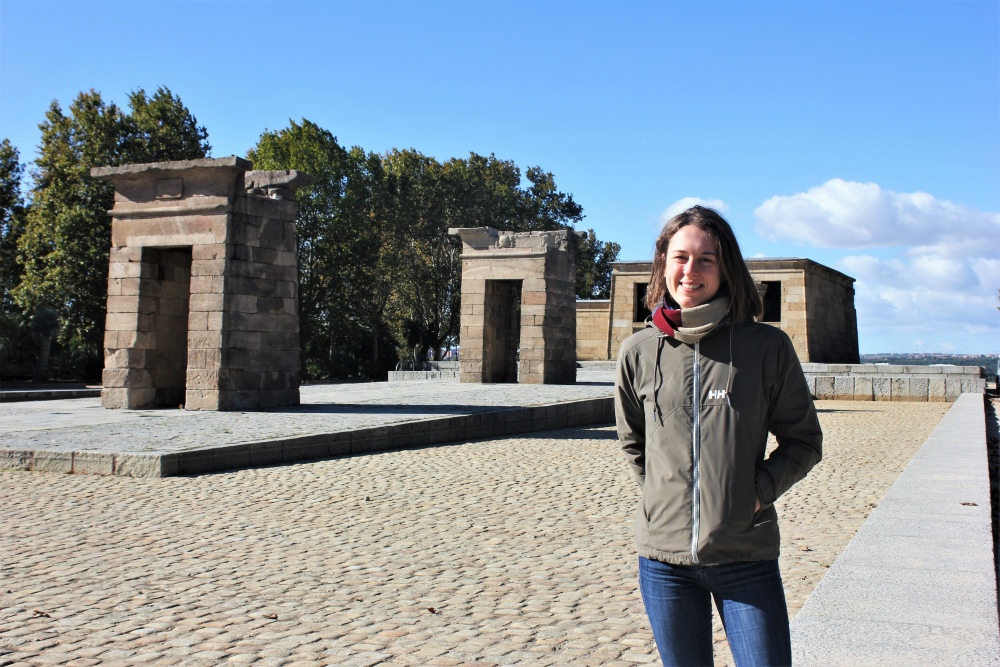
6. Watch the Sunset from the Temple of Debod
A second-century BC Egyptian temple, dismantled and shipped to Madrid in the 1960s after Egypt gave it to Spain for helping rescue monuments from the Aswan Dam flooding. It sits in a park west of the centre now, reflected in a shallow pool, facing straight into the sunset.
Everyone in Madrid knows this and turns up for it. Go anyway.
⚠️ Going inside the temple is still free but now needs a free timed ticket. Slots for each month are released on the fifteenth of the month before, and walk-ups aren’t guaranteed. The park and the sunset view need no ticket at all.
Open: Tue–Sun 10:00–20:00, or 10:00–19:00 between 15 June and 15 September. Closed Mondays.
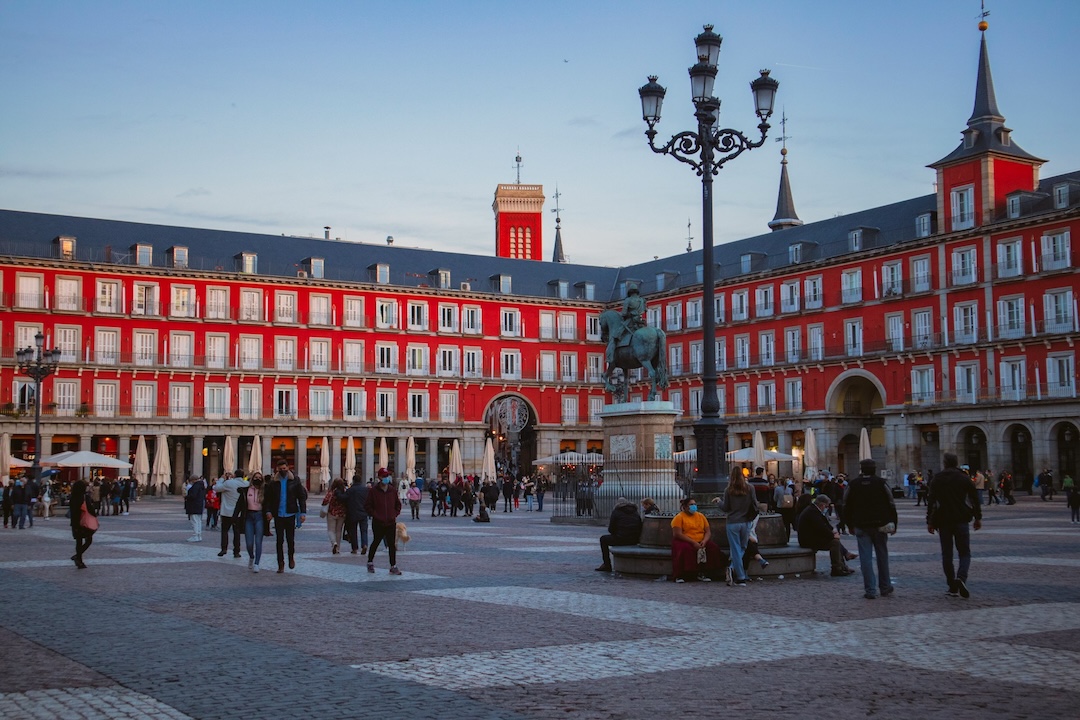
7. Wander Plaza Mayor and the Old Centre
Madrid is a great walking city: the centre is compact, the pavements are wide, the plazas are made for sitting in, and most of the pleasure of the place is in tiled bar fronts and old shop signs and drinks you didn’t plan.
Give yourself one afternoon with nothing booked. Start in Plaza Mayor, drift down through La Latina and up into Malasaña or Barrio de las Letras, and let the city do the rest. Give Retiro Park an hour of it too: 290 acres of formal gardens and a boating lake in the middle of the city, and the single most popular thing to do in Madrid for good reason.
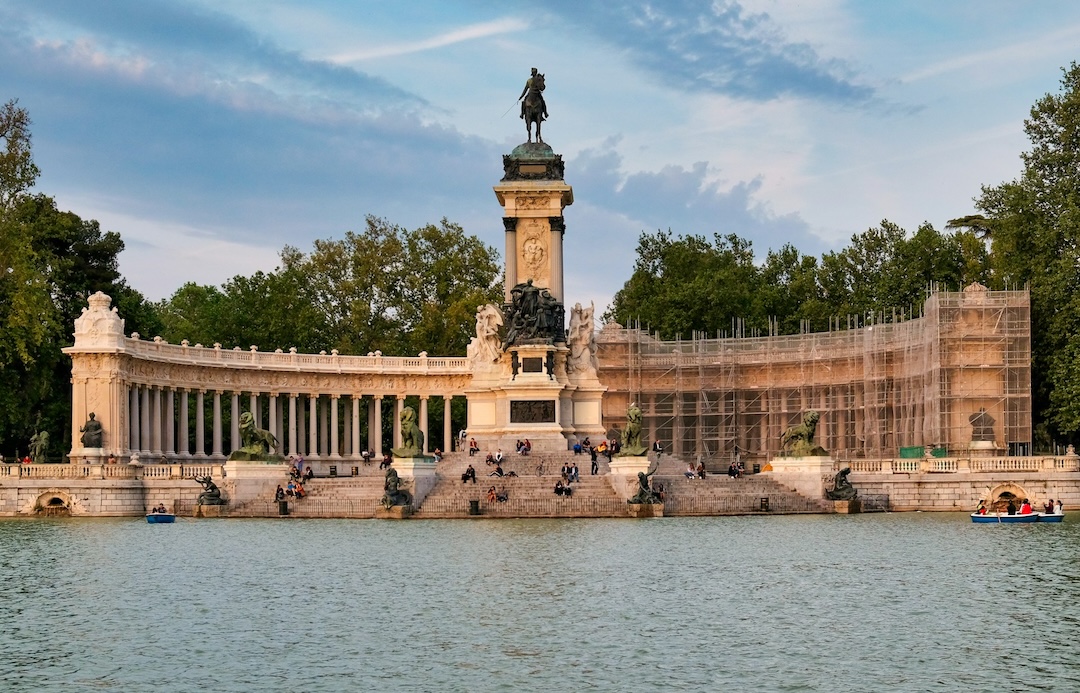
8. Spend an Hour in Retiro Park
290 acres of formal gardens, tree-lined avenues and a boating lake, right in the middle of the city. The Rosaleda rose garden is at its best in May and June, and the whole park is the obvious place to escape the hottest part of the afternoon. We also love an autumn stroll when the vibrant oranges leaves are falling.
Cuesta de Moyano runs along the southern edge by the Botanical Gardens, a permanent row of second-hand bookstalls and a lovely twenty minutes even if you can’t read a word of Spanish.
Retiro Park works great paired with the Prado or Museo Thyssen-Bornemisza, and a coffee stop at Etual Café.
Our Favourite Things to Do in Madrid
9. Explore Lavapiés, Madrid’s Most Underrated Neighbourhood
Lavapiés is the part of Madrid we know best, and where we like to spend our time.
It’s the old working-class quarter just south of the centre, and it’s now the most multicultural neighbourhood in the city: Bangladeshi, Senegalese, Indian, Lebanese and Latin American restaurants sitting alongside old Spanish tabernas, galleries, a lot of street art, and the corralas, the courtyard tenement buildings the area is known for. It’s about a 10-minute walk to Puerta del Sol and ten the other way to Atocha, with its own stop on Metro Line 3.
Terrace drinks along Calle de Argumosa, which is the loveliest street in the neighbourhood and where we’ve had our best evenings in Madrid. Lunch inside Mercado de San Fernando, a proper neighbourhood market rather than a food court for tourists, with plenty for veggies. An exhibition at La Casa Encendida, which is free. A film at the Cine Doré, the 1923 modernista cinema that houses Spain’s national film archive, where tickets cost a few euros.
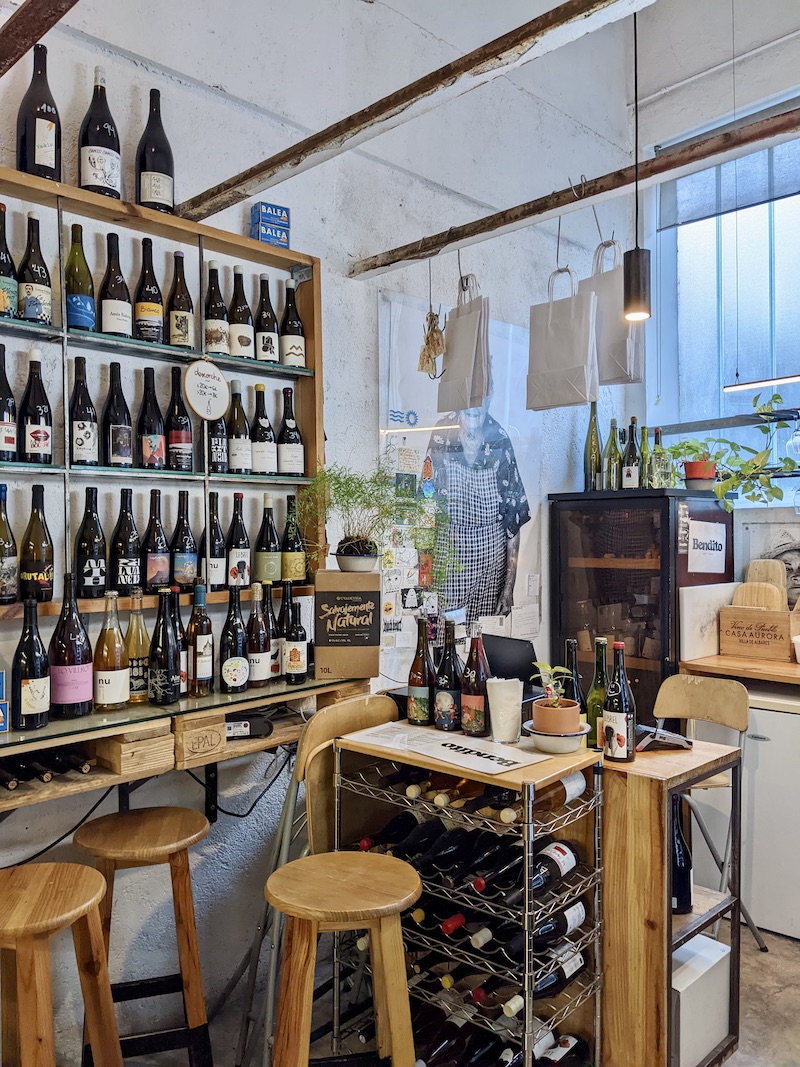
🍷 Local tip: Bendito’s natural wine bar in the market is our go-to.

10. Have a Drink at Sala Equis, an Old Cinema Turned Bar
Luke’s brother took us here on our first trip and we’ve been back many times since. Sala Equis on Calle del Duque de Alba occupies the old Cine Alba, which was one of the last X-rated cinemas in Madrid. Hence the name: equis is the Spanish letter X.
It’s four spaces in one building now, and the one everybody falls for is La Plaza, a big indoor courtyard with a bar, hammocks and swings to sit in, street food and a huge screen playing films silently against the back wall. There’s also a proper 55-seat cinema at the back showing films in their original language with subtitles, plus concerts, theatre and the occasional director Q&A.
Go early, because it fills up fast.
Open: Mon–Wed 17:30–01:00, Thu 17:30–01:30, Fri 17:30–02:00, Sat 12:30–02:00, Sun 12:30–01:00. Metro La Latina (L5) or Tirso de Molina (L1).
11. Sweat It Out at Hammam Al Ándalus
One of our favourite things to do in Madrid is a hammam. It’s an underground bath house on Calle de Atocha, a few minutes from both Sol and Plaza Mayor, with candlelit pools at different temperatures, a steam room and mint tea afterwards.
This isn’t a surviving Islamic bathhouse. It’s a modern build from the 2000s, sitting on the remains of a medieval cistern. That doesn’t make it any less lovely. It’s dark, it’s quiet, phones are gone, and it’s the perfect thing to do on your one grey afternoon.
Hammam booking is essential. Sessions are timed and run roughly 10:00–22:00. The standard experience is ninety minutes including a short massage. Bring swimwear; towels and toiletries are provided. They don’t publish prices anywhere, which is annoying, but expect somewhere around €60–70 per person.
12. Spend a Sunday at El Rastro, Then Go for Vermut
If your trip includes a Sunday, this is the morning. El Rastro is Madrid’s enormous open-air flea market, running down from Plaza de Cascorro through La Latina every Sunday and public holiday from around 9am to 3pm. It’s mostly junk, occasionally brilliant, and the crowds are half the fun.
The important bit is what happens afterwards. Around 1pm the stalls start packing up and everyone spills into the bars around Cava Baja and Calle de Argumosa for vermut: sweet Spanish vermouth over ice with an olive in it, drunk standing up, before a very late lunch.
This is the most Madrid thing there is and I’ve never once seen a guidebook tell you to do it.
13. Eat and Drink in the Courtyards and Tabernas
Some of our best hours in Madrid have been spent sitting outside a bar doing very little. The city is built around plazas and courtyards, everyone eats late and outdoors, and a caña costs a couple of euros almost everywhere that isn’t a main square.
Some of the good ones: Calle de Argumosa in Lavapiés for the terraces, Cava Baja in La Latina for the tapas crawl, Barrio de las Letras for a quieter and prettier evening, and Malasaña for natural wine and independent everything.
Order tortilla, croquetas and pimientos de padrón. Madrid is easy for vegetarians once you know to ask — most tabernas will do a veggie pincho and the markets always have cheeseboards.
14. See Flamenco, But Choose Carefully
Flamenco in Madrid is worth doing and very easy to do badly. The tourist end of the market is expensive and a bit sanded down. What you want is a small room where you’re close enough to see people’s faces.
Corral de la Morería in La Latina is the famous one, going since 1956, but it’s €75 for the show alone and from €165.95 with dinner. Cardamomo near Barrio de las Letras is the mid-range choice, an hour-long show with a drink included, usually somewhere in the €45–60 range. If you want something smaller, Tablao de la Villa and Café Ziryab are the names that come up from people who follow flamenco.
Whichever you pick, book ahead and take the later show if there’s a choice.
15. Go in October for Tapapiés
If you can pick your dates, October is our choice. Partly the weather, mostly Tapapiés, a tapas and music festival that takes over Lavapiés for ten days every autumn.
More than 90 local bars and restaurants each create one exclusive tapa, there are stalls in Mercado de San Fernando and Mercado de Antón Martín, around twenty free street concerts, and the public votes for a winner. In 2025 it was €3.50 for a tapa and a beer, which is how you end up eating your way across about thirty countries in an afternoon for less than the price of a London main. Plenty of the bars do veggie and vegan tapas.
The sixteenth edition is confirmed for October 2026, though the dates weren’t published when we last checked.
16. Spend an Afternoon at Matadero Madrid
A former municipal slaughterhouse, a sprawl of early-1900s neo-Mudéjar brick pavilions by the river at Legazpi, now the city’s contemporary arts centre. There’s a cinema, a theatre, a design centre, a reading house, artist studios and a dance centre that opened in 2024.
It’s free to walk around, the outdoor spaces are open daily 09:00–22:00, and the exhibitions in Nave 0 are free too, Tue–Fri 16:00–21:00 and Sat, Sun and holidays 11:00–21:00, closed Mondays. Individual screenings and shows are ticketed.
Very few visitors get out here and it’s about fifteen minutes on Metro Line 3 or 6. Do it with the park below.
17. Walk Madrid Río
Madrid buried its inner ring road and built a linear park along the Manzanares on top of it, which is one of the better pieces of urban repair in Europe. It opened in 2011 and runs for kilometres: pine-shaded promenades, seventeen play areas, cycle paths, Dominique Perrault’s sculptural Arganzuela bridge and a splash-pool “beach” that Madrid children take extremely seriously in summer. Matadero sits inside it, so the two are one outing.
Free Things to Do in Madrid
A lot of the best things to do in Madrid cost nothing at all. Here they are in one place:
- Temple of Debod — free, but book your timed slot
- The Sabatini Gardens — the best free view of the Royal Palace
- Catedral de la Almudena — free entry, €1 suggested donation
- Parque Madrid Río — riverside park, always open
- Matadero Madrid — free entry and free Nave 0 exhibitions
- Retiro Park — including the Rosaleda rose garden, at its best in May and June
- El Rastro — Sunday flea market in La Latina
- La Casa Encendida — free exhibitions in Lavapiés
- The Prado, Reina Sofía and Thyssen — in the free windows in the table above
- Mercado de San Fernando — free to wander, cheap to eat in
- Cuesta de Moyano — the permanent second-hand bookstalls along the edge of the Botanical Gardens
💰 On a budget? Luke has broken down what a Madrid trip costs in our Madrid travel cost guide, including what you can do a long weekend for.
What We’d Skip in Madrid
Not everything in Madrid is worth your time. Here’s what we’d leave out.
Gran Vía. Madrid’s big commercial boulevard and the most disappointing thing on most people’s itineraries. The architecture at the western end is worth a look, but as an experience it’s Primark, McDonald’s, Zara and H&M: the same shops as any British high street, with more people in them. Walk the length of it once for the buildings, then go somewhere else.
Mercado de San Miguel. A beautiful iron-and-glass building that is now essentially a very expensive food court. You’ll pay tourist prices for small plates in a crush. Go in, admire the roof, then eat at Mercado de San Fernando or Mercado de Antón Martín instead.
Paella. Paella is Valencian. Ordering it in Madrid is a bit like ordering a Cornish pasty in Newcastle: you’ll get one, it just won’t be that good. Have cocido madrileño, tortilla and jamón instead.
Anywhere with a photo menu on Plaza Mayor. The square is lovely. The terraces on it are a tourist trap.
The Best Time to Visit Madrid
Avoid July and August. Average highs are 32°C and 31°C and regularly spike to 35-40°C, the city sits on a landlocked plateau with no sea breeze to rescue it, and a chunk of the good restaurants shut while their owners escape to the coast. Luke’s brother inevitably comes home to Brighton to avoid the hot summer months in Madrid and escape the heat.
May and September are the sweet spot, at around 22°C and 26°C, with long evenings and everything open. October is our favourite for Tapapiés, though it’s also the wettest month of the year, which in Madrid means 60mm and would count as a light Tuesday in Brighton.
Winter is underrated. January averages a high of 10°C and a low of 3°C, so it’s cold, but it’s dry and bright rather than grey and drizzly. Madrid gets around 421mm of rain a year against London’s 615mm, and it falls on far fewer days. Cold sunshine, empty galleries and the Plaza Mayor Christmas market in December. Take a thick coat if you visit during winter.
Dates worth planning around: San Isidro, Madrid’s patron saint festival, on and around 15th May. The Cabalgata de Reyes parade on 5th January. Tapapiés in October. Madrid Pride, which in 2026 runs from 25th June to 5th July with the main parade on Saturday 4th July, is one of the biggest in Europe and it will mean much higher acommodation costs.
Where to Stay in Madrid
We stay in Lavapiés. It’s central, it’s a real neighbourhood rather than a tourist strip, the food is the best value in the city and it’s traditionally been one of the better-value central areas to sleep in. It’s gentrifying quickly though.
If Lavapiés isn’t for you: La Latina for the tapas and the Sunday atmosphere, Barrio de las Letras for a quieter and prettier version of central, Malasaña if you want bars and independent shops on the doorstep, and Sol only if being at the dead centre matters more to you than sleeping.
⚠️ Book a licensed hotel rather than a short-let. Under Madrid’s Plan Reside rules, tourist apartments are now banned in residential buildings across the whole historic centre, Lavapiés included, and unlicensed lettings are being shut down and fined. If you’re set on a flat, check it’s licensed and otherwise take a hotel or aparthotel.
✅ Good news: Madrid’s council confirmed in July 2026 that the city will not bring in a tourist tax, unlike Barcelona and San Sebastián.
How Many Days Do You Need in Madrid?
Two full days covers the essentials: one for the centre and the Royal Palace, one for the galleries and Retiro. It’s tight, but it works, and Madrid is an easy long weekend from the UK at around 2 hours 20 minutes flight time from London with direct flights from most large regional airports.
Three days is perfect to fully enjoy the city. Plenty of time to relax in one of the best neighbourhoods — Lavapiés, Matadero, Madrid Río — without cutting anything else.
Four days lets you add a day trip. Segovia is half an hour by high-speed train and Toledo a little over half an hour. If you’re only doing one, we’d pick Segovia for the aqueduct.