

A Ranthambore safari is one of the best chances you’ll get to see a tiger in the wild in India. We did four safaris across three days in Ranthambore National Park and saw tigers on two of them.
Booking a Ranthambore safari is confusing, though. There are ten zones, two types of vehicle, a boarding pass you can’t print until the last minute, plus a ban on smartphones. This guide explains how it all works, which zones we’d choose, what it cost us and what you’re likely to see.
In a Rush? Where to Stay in Ranthambore
Tiger Machan — Where We Stayed
Cottages and tents around a pool, close to the main park gate. The staff sorted our safari paperwork and transport. About £53 a night.
Check ratesFateh’s Retreat
The upgrade. Modern rooms, a pool with green views and the best coffee in Ranthambore at the cafe next door.
Check ratesKhem Villas
The splurge. A luxury resort surrounded by forest and wildlife, with a spa, restaurant and lush gardens. Rated 9.7 on Booking.com.
Check ratesRanthambore Safari at a Glance
- Zones: Ten total. Zones 1 to 5 are the prime zones and 6 to 10 are the buffer zones.
- Vehicles: A gypsy is a six-seat jeep. A canter is an open truck with around 20 seats.
- What We Paid: 6,675 rupees for two in a gypsy and 5,300 rupees for two in a canter, booked direct. Expect a premium if booking through a tour operator or hotel.
- Safari Length: About three hours, in the morning or the afternoon.
- Bring: Your passport, a printed boarding pass and a proper camera. Phones aren’t allowed.
- How Many Safaris: At least three if seeing a tiger matters to you.
Is a Ranthambore Safari Worth It?
Yes, Ranthambore is one of the best places to see tigers in India, and the park is far more beautiful than we’d expected. We’d pictured scrubby jungle. There are lakes, hills, rocky outcrops and ruins, and at sunset the whole place has an amber glow.
Set your expectations before you go, though. We’ve been on safari in South Africa and the Serengeti, and Ranthambore doesn’t have that volume of wildlife. It’s closer to Udawalawe in Sri Lanka. Luke wasn’t expecting many animals and thought there were tons. I’d set the bar too high in my mind.
It’s also a numbers game. Our friend, who travelled with us but booked different zones, saw a tiger on three of her four safaris and a sloth bear too. We saw tigers on two of ours. On one drive, we saw almost nothing at all.
Ranthambore Zones Explained
The park is split into ten zones and each safari is booked for one zone. Zones 1 to 5 are the prime zones, with the highest chance of tiger sightings. They share one main entrance, so it’s busier there. Zones 6 to 10 are buffer zones on the edges of the park. Sightings are less likely, the gates are further from the hotels, and they’re much quieter.
We did Zone 10 once, Zone 3 once and Zone 2 twice.
Zone 10: Our First Tigers
We only ended up in Zone 10 because every prime zone was sold out for that afternoon. When I booked, two cubs had recently been born there, and a mother with cubs doesn’t roam as far as a male tiger.
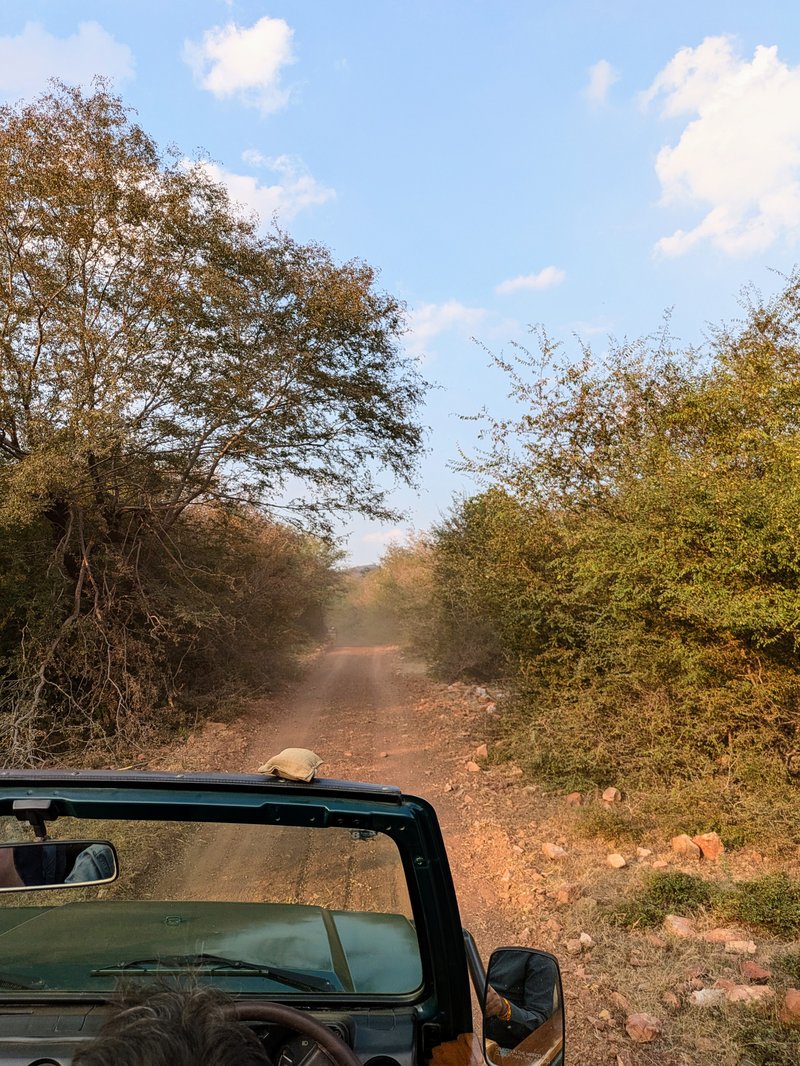
It felt huge and like there were about four jeeps in the whole zone. The quiet was part of the experience. We saw antelope, spotted deer, sambar, wild boar, langur monkeys, peacocks and a mongoose.
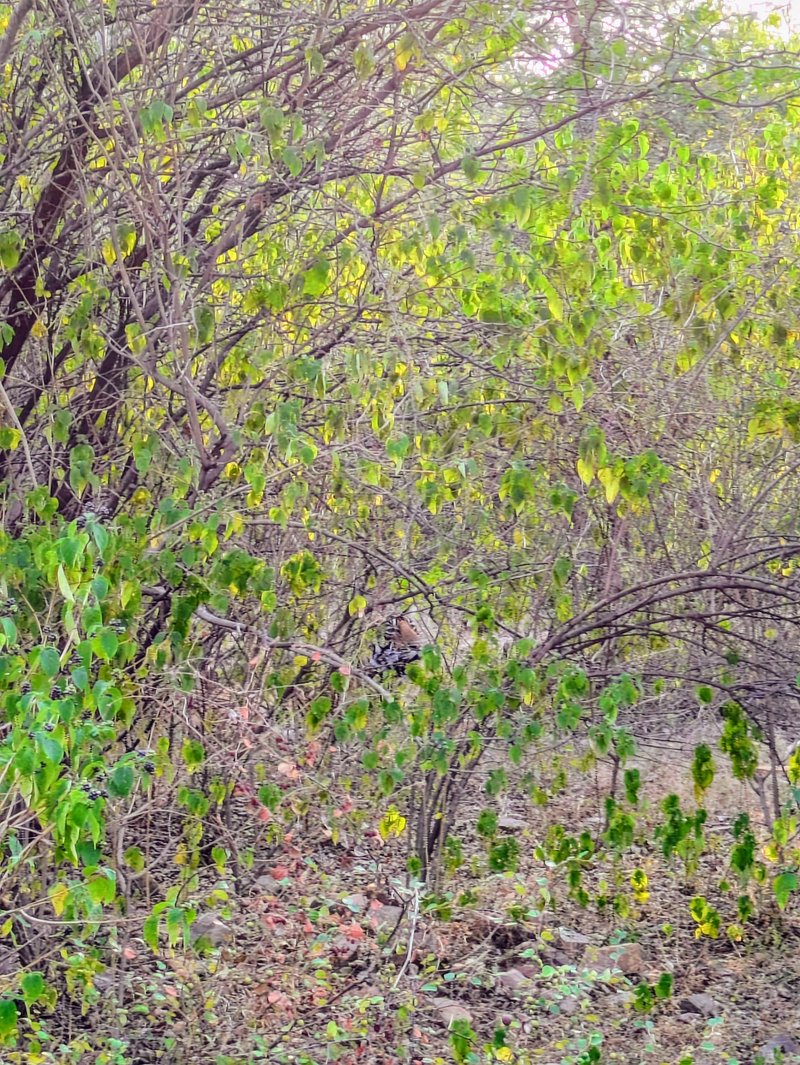
Then our guide heard a warning call from the deer. We waited for ten minutes and nothing happened. His phone rang: another jeep had found tigers. We bombed it across the zone, holding on tight, and got there in time to see a big male and a female lying in the bushes together. They are enormous.
Zone 3: The Most Beautiful Zone
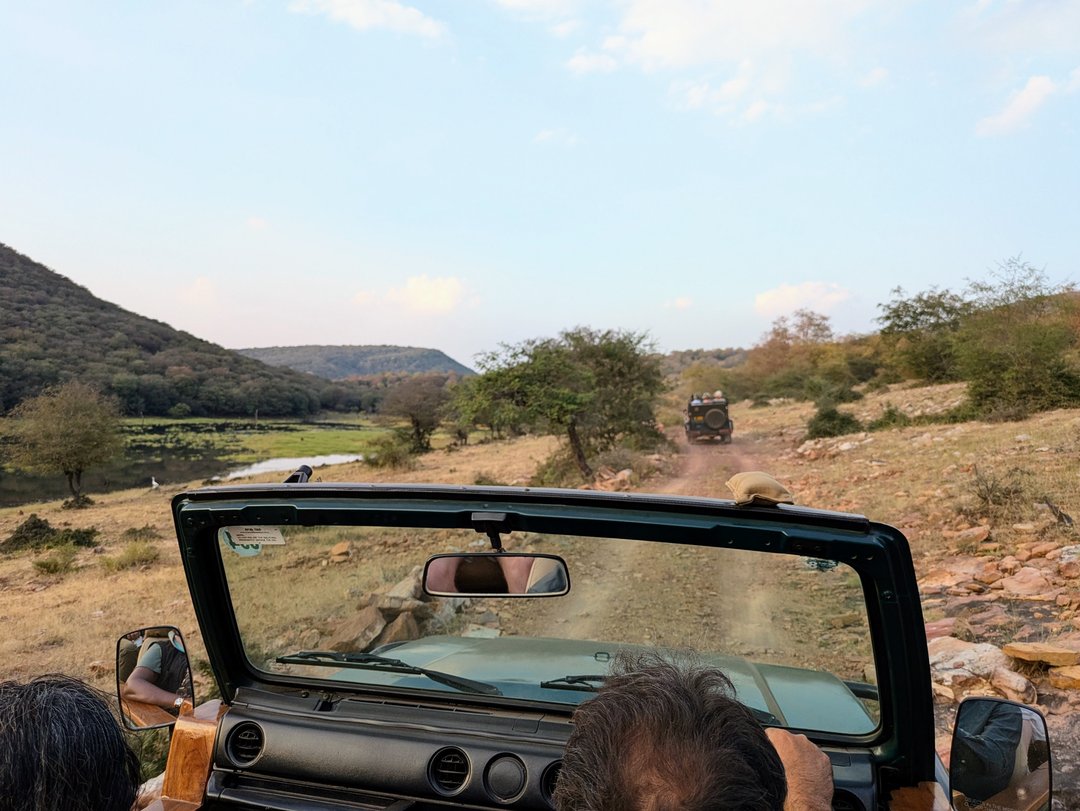
Zone 3 has three lakes, which open up the skyline so you can see Ranthambore Fort on the hill above you and the ruins of old hunting lodges dotted around the water. It was misty and a little chilly at 7am and very beautiful.
We saw lots of spotted deer and sambar, crocodiles, a turtle, kingfishers, herons, egrets and eagles. No tiger. Our friend did Zone 3 the following morning and saw both a tiger and a sloth bear, so that’s just luck.
Zone 2: A Tiger With a Kill
Zone 2 is next to Zone 3 and you can see the fort from there as well. It’s greener and more forested than Zone 10, with bigger rocky outcrops. We were told it had five known tigers when we visited at the start of November 2026.
On our afternoon drive we saw one of them out in the open. It had just killed a spotted deer and was carrying the whole carcass along a dry riverbed. We don’t have a single photo of it, but I’ll remember it for a long time.
We went back to Zone 2 the next morning and it was our quietest drive. We saw a few deer, kingfishers and crocodiles, and not much else. The one exciting moment was an alarm call. The deer bunched into a circle, staring into the trees, and a startled peacock took off. There was almost certainly a tiger in there, just out of sight. Zone 2 also felt quite small, so once you’ve covered it there isn’t much else to do.
What Is the Best Zone in Ranthambore?
For tigers, the best zones in Ranthambore are the prime zones, 1 to 5. Of the ones we did, Zone 3 was the most scenic and Zone 2 gave us our best sighting.
I’d still book one buffer zone if you have time for several safaris. You get to ride in a gypsy and have the place almost to yourself. If I had to choose between a canter in a prime zone and a gypsy in a buffer zone I hadn’t seen, I might take the gypsy.
Gypsy or Canter?
Take a gypsy if you can get one. A gypsy is an open jeep with six seats. A canter is an open truck. Ours had about 16 people on it, including, one morning, 14 schoolgirls on a trip. They were very well behaved.
The gypsy is quieter, more comfortable and faster. It’s also more nimble. A gypsy can go back and forth along the same stretch of track when a tiger is nearby. A canter is so big that it blocks the road, so the drivers don’t like to wait. On our quiet morning in Zone 2, two gypsies did see a tiger.
Gypsies cost about a quarter more and sell out extremely fast. We got one out of four. The only reasons I can think of to choose a canter are the price, a group of more than six, or being nervous about the wildlife, as a canter keeps you a little further away.
How to Book a Ranthambore Safari
We booked all four safaris ourselves on the Rajasthan Forest Department’s official booking website. It’s a hassle, I’ll admit, but it saved quite a lot of money compared with booking through a hotel or agency.
Book as early as you can. Seats are released up to 90 days ahead and the good ones go almost immediately, because hotels and tour agencies are booking at the same time as you. We booked more than two months before our trip and still couldn’t get a prime zone for our first afternoon.
You choose the date, morning or afternoon, the zone, and gypsy or canter. You’ll need your passport details.
The Boarding Pass
You must have a printout of your boarding pass, which is the paperwork showing you’ve paid for that zone at that time. The catch is that it only fills in with your driver’s name about an hour before the safari, and you can’t print it until it does.
This is where a good hotel earns its keep. Ours kept track of all four bookings, printed each pass as it came through and arranged our transport to the gates.
Getting to the Gate
Your safari ticket doesn’t include transport to the zone gate. For the prime zones, we took a tuk-tuk to the main park entrance and waited there for our canter. Zone 10 is much further out. A jeep there and back cost 700 rupees between three of us.
There’s nothing at the gates. We found a portable toilet, a guard and a man selling caps.
Ranthambore Safari Cost
- Gypsy Safari: 6,675 rupees for two people, about £53.
- Canter Safari: 5,300 rupees for two people, about £42.
- Transport to Zone 10: 700 rupees return for three people.
- Tips: Bring a couple of hundred rupees to tip the guide and driver. They work hard.
Each safari includes a driver and a naturalist guide.
Safari Timings and What a Day Looks Like
There are two safaris a day, each about three hours long. On our main day we did both.
We left the hotel at 6am and were inside Zone 3 by about 7am. It’s cold in an open vehicle at that hour, so wrap up. We were back at half ten, desperate for breakfast and coffee. The afternoon safari left at 1:30pm, so there’s only about a three-hour gap. You won’t fit in lunch. We had a late breakfast and a croissant.
If you aren’t doing two safaris in a day, the fort and a nature walk are worth your time, and I’ve covered both below.
The Ranthambore Phone Ban
You can’t use a smartphone on safari in Ranthambore. India’s Supreme Court ruled in late 2025 that phones were causing bad behaviour in tiger reserves, with people leaning out of vehicles and crowding the animals for photos.
How strictly it’s enforced depends on who’s watching. On one drive, an inspector was at the gate, and our phones were collected in a box at the front of the canter. On that same drive our passports were checked too, so do carry yours.
I agree with the rule. There was far less leaning out of jeeps than we saw in the Serengeti. It does mean you won’t get a photo unless you bring a proper camera from home. The guides don’t carry them and there’s nowhere to hire one.
What to Pack for a Ranthambore Safari
- Your passport and printed boarding pass
- A camera, if photos matter to you
- A hat, sunglasses and something to cover your neck
- A light long-sleeved shirt and long trousers, so you don’t burn
- A warm layer for the morning drive
- Bug spray and water
- A few hundred rupees in cash for tips
The Best Time to Visit Ranthambore
The prime zones are open from October to the end of June and close for the monsoon. We visited in the first week of November. The park was green, mornings were misty and cold, and afternoons were hot and dry.
Ranthambore Fort
Ranthambore Fort sits on a hill inside the park, overlooking Zones 2 and 3. It’s said to be around a thousand years old and it’s part of a UNESCO World Heritage listing for the hill forts of Rajasthan. It’s free to enter and you can walk up on your own.
We ran out of time for it. If you only have one safari booked in a day, do Zone 2 or 3 in the morning and walk up to the fort in the afternoon. Watch out for the monkeys, which we were told can be aggressive.
Where to Stay in Ranthambore
Don’t expect to be staying in the jungle. The Ranthambore hotels line one long road on the outskirts of the park, and they’re really a staging post for the safaris.
Tiger Machan: Where We Stayed
We paid 14,000 rupees for two nights at Tiger Machan, about £53 a night. A machan is a lookout tower, the kind once used for watching wildlife in the jungle.
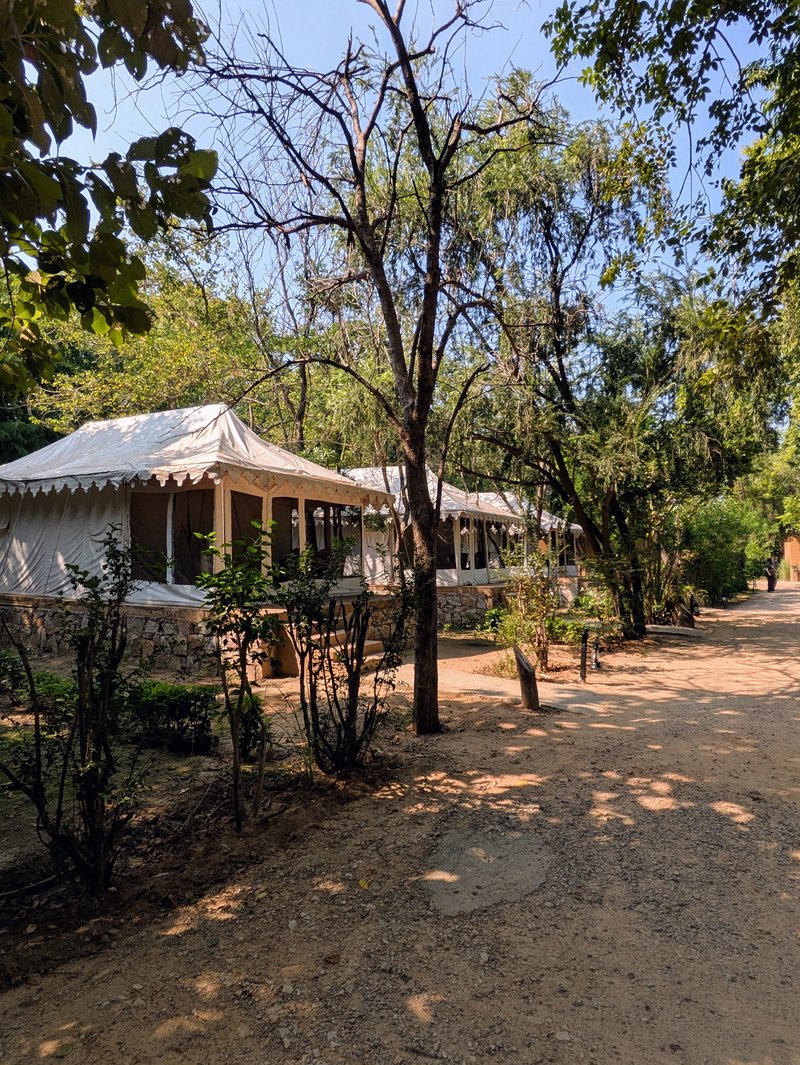
We had a semi-detached cottage with air conditioning and a fan. There are also tents on raised platforms, which are cottages with canvas sides. There’s a pool and a restaurant, and it’s close to the main park entrance, which makes the early starts easier.
What makes it exceptional is the staff. They asked about our safari bookings as soon as we arrived and then organised everything. The food is simple and good. Lunch of Maggi noodles and a boiled egg was about £1.50. Breakfast is an Indian buffet with poha, idli, curry, boiled eggs and omelettes, and for dinner we had dal fry, chana masala and matar paneer.
There’s a free nature walk at 5pm each day, and other guests saw striped hyenas on it. We also tried the pottery session for 500 rupees and came away with a pot, though the potter did most of the work. The only thing missing is good coffee. It’s instant only.
Book here: Tiger Machan, Ranthambore
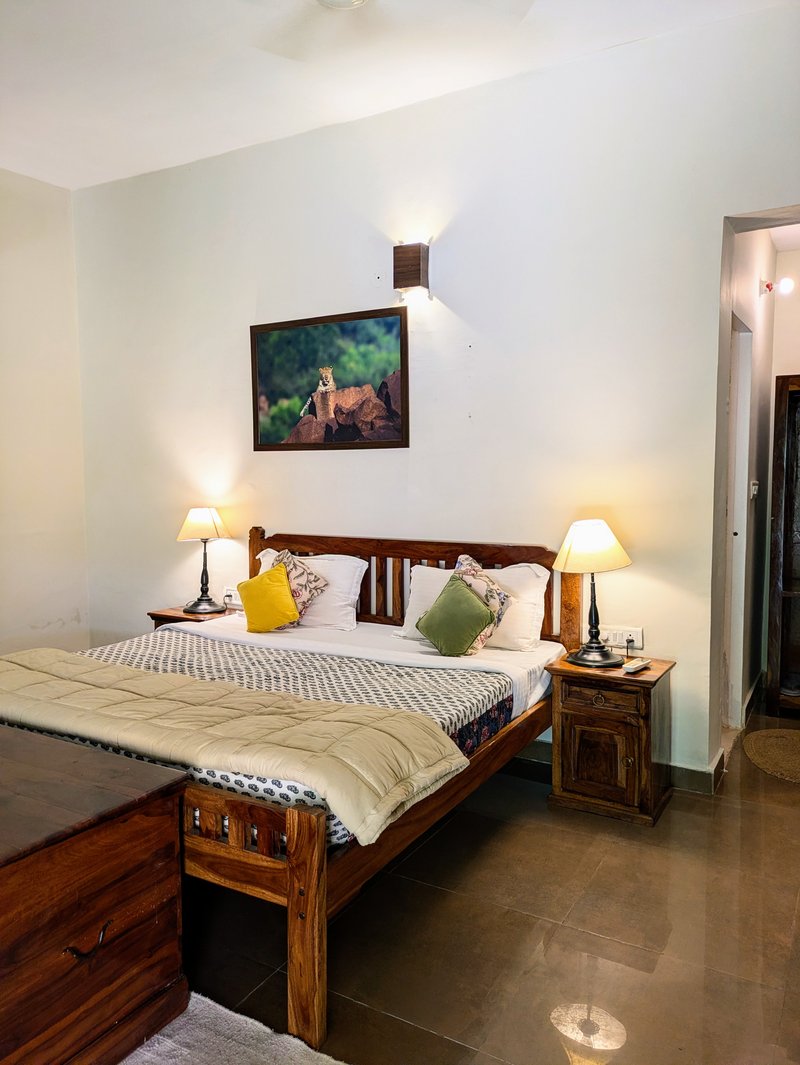
Fateh’s Retreat: The One We Nearly Booked
Fateh’s Retreat is the hotel I really wanted to stay at. It has exceptional reviews, with a 9.6 on Booking.com, more modern rooms, a pool and green views out the back. When I looked more than two months ahead, it was £200 a night, which was over our budget. On the day we visited, last-minute rooms were showing at £100.
It’s nicer than where we stayed. I’d say double-the-price nicer, not four-times-the-price nicer. If you can get it for around £100, go for it.
Book here: Fateh’s Retreat, Ranthambore
Where to Get Good Coffee in Ranthambore
Fateh’s Cafe, next to Fateh’s Retreat, is the place. It’s more of a restaurant than a coffee shop, with a chequerboard floor and monkeys in the trees outside. You can get an AeroPress or an iced coffee made with beans from Half Light, a roaster from Jaipur. It took us about 25 minutes by tuk-tuk from Tiger Machan once we’d waited for one to come past.
Right next door is Nothing Before Coffee, where we grabbed a takeaway on our way out of town. It wasn’t as good, and it was a building site when we visited.
How to Get from Jaipur to Ranthambore
We took an Uber from Jaipur to Ranthambore, booked the day before using the app’s advance booking feature. It cost 4,000 rupees plus about 1,000 rupees in tolls, so roughly £40 in total.
Uber estimated three to five hours. We left Jaipur at ten past eight in the morning and arrived at half eleven, in time for lunch and an afternoon safari. Allow three and a half to four hours, and more if you’re leaving the centre of Jaipur at rush hour.
Where to Go After Ranthambore
From Ranthambore we took a taxi to Agra, arranged by Tiger Machan, for 8,500 rupees. Our guide to the Taj Mahal at sunrise picks up from there. If you’re starting in Jaipur, read our guides to the best things to do in Jaipur and where to stay in Jaipur.
Ranthambore Safari FAQ
Ranthambore National Park is in the Sawai Madhopur district of Rajasthan, in northern India. The nearest town and railway station is Sawai Madhopur, and the hotels are strung along Ranthambore Road between the town and the park.
The tigers in Ranthambore are Bengal tigers. They are wild, and the park is one of the best-known places in India to see them.
A Ranthambore safari is too far for a comfortable day trip from Jaipur. The drive took us about three and a half hours each way, and the safaris run early in the morning and in the afternoon, so you need to stay at least one night.