
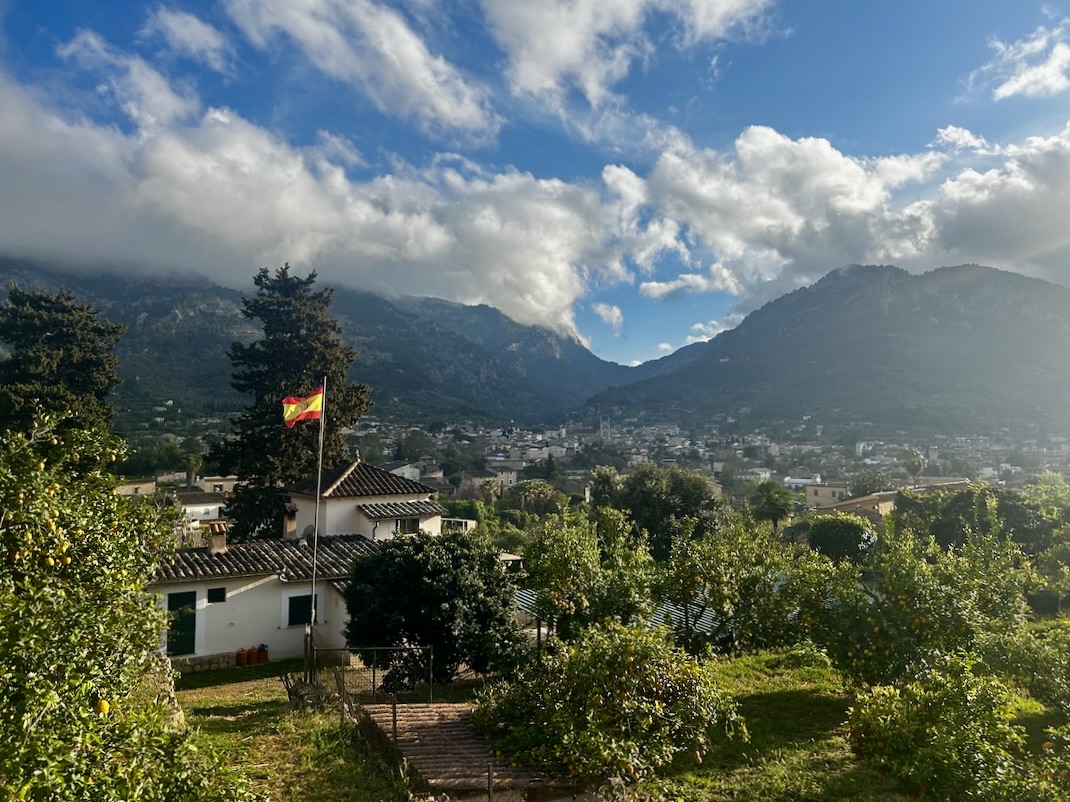

Most people who visit Mallorca fly into Palma and stay on the beaches either side of it. Sóller, north over the Serra de Tramuntana mountains, is a different kind of base: a honey-coloured town of grand houses and orange groves, ringed by peaks, with a vintage tram rattling down to a horseshoe bay.
Sóller is popular and well loved rather than undiscovered, and the town centre can be touristy during peak seasons, though not as busy as Palma. For us, the real find was staying a short walk outside the centre, where the crowds thin out quickly and the valley feels like it is yours.
We spent a week in Soller over Easter, staying in a villa in the valley, playing padel, walking over to the neighbouring villages, and riding the old tram down to the port. This guide covers where to stay, how Sóller and Port de Sóller differ, the walks we loved, and when to visit.
Where to Stay in Sóller
Sóller splits into two bases: Sóller town in the valley (orange groves, the main square, the train and tram) and Port de Sóller on the coast (the beach, the seafront restaurants, the sunset). They are linked by a ten-minute tram, so you are never far from either.
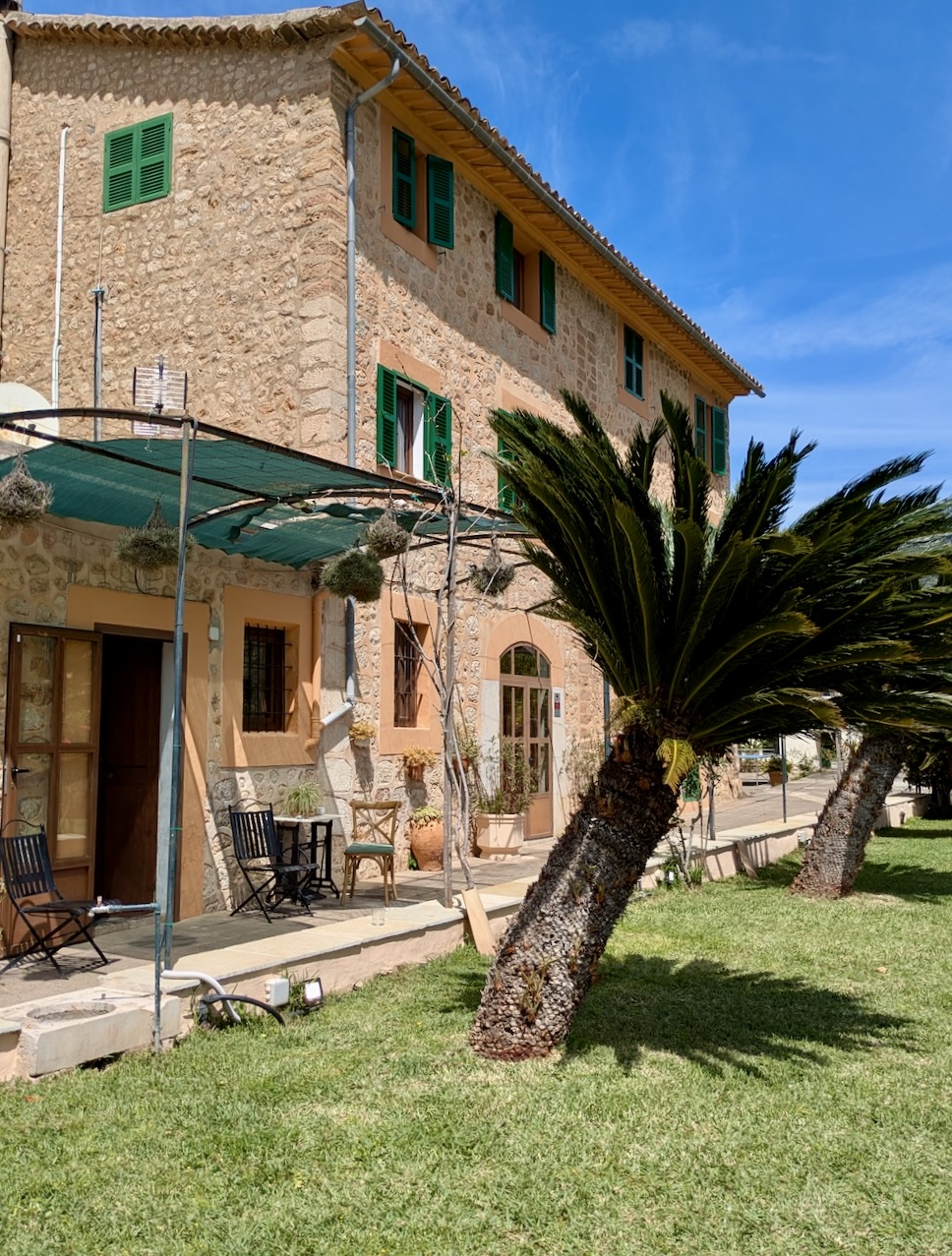
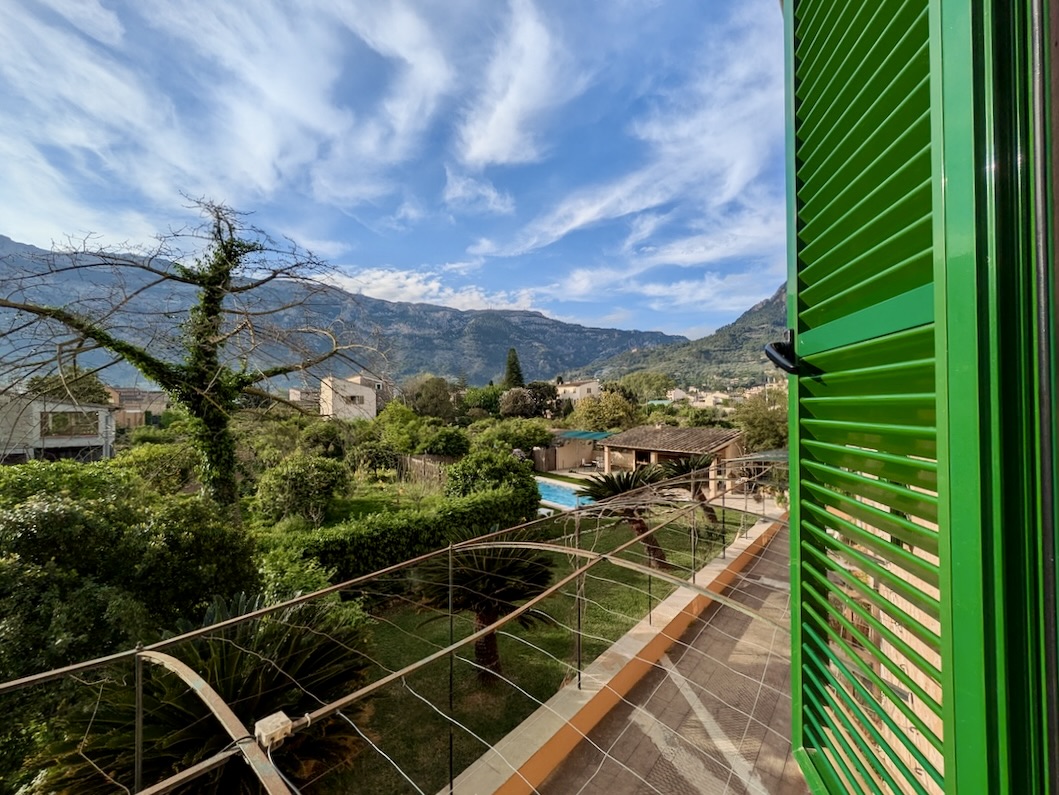
We stayed at Villa Rae, a four-bedroom villa just outside Sóller town with a private pool, a terrace and mountain views on every side. For a week with family or friends it was ideal: space to spread out, a proper kitchen for lazy breakfasts of local oranges, and the pool to come back to after a hot walk.
It’s a traditional, authentic Mallorcan farmhouse, and this made it special. Though just a pleasant 15-minute walk into town, stating at Villa Rae felt like we were in the Mallorcan countryside, surrounded by mountain views, chirping birds and with no other tourists in this part of town.
Sóller Town or Port de Sóller: Which to Base Yourself In
- Sóller town is our pick for a first visit: it feels like a real working Mallorcan town rather than a resort, with the best of the restaurants, the Saturday market, and the train and tram on your doorstep. You are surrounded by mountains and orange groves.
- Port de Sóller is the one for a beach-first trip: a sheltered bay with calm swimming, a curved promenade of seafood restaurants, and the Cap Gros lighthouse walk for sunset. It is a little more touristy than the town.
- Can’t decide? Stay in the town and take the tram down to the port whenever you fancy the beach. That is what we did, and it worked out great.
The Best Hotels in Sóller and Port de Sóller
Ecocirer Healthy Stay
A beautifully restored eco-friendly boutique hotel with organic breakfasts, stylish rooms and a peaceful garden in the heart of Sóller. The wellness boutique pick.
Check ratesAlcázar Hotel Sóller
A charming boutique hotel with elegant rooms, a swimming pool and a fantastic location close to Sóller’s main square. The best value stay.
Check ratesHotel Can Roses
A stylish adults-only boutique hotel featuring contemporary rooms, a tranquil pool and stunning views of the Tramuntana mountains. The luxury boutique pick.
Check ratesHotel Finca Ca N’ai
A peaceful adults-only finca surrounded by citrus groves, with beautiful gardens, two pools and breathtaking mountain views between Sóller and Port de Sóller. The romantic countryside pick.
Check ratesGetting to Sóller (and the Vintage Train and Tram)
Sóller is about a 30-minute drive from Palma through the mountain tunnel, or a scenic hour on the famous wooden Sóller train from Palma, which winds up through the orange groves and mountains and is an experience in itself. Once you are in Sóller, the open-sided tram trundles down to Port de Sóller in about ten minutes — the nicest way to get between the town and the beach.
The Best Walks from Sóller
The Sóller valley sits in the Serra de Tramuntana, a UNESCO-listed range criss-crossed with old stone paths, so the walking is the reason to come.
Walk from Sóller to Fornalutx
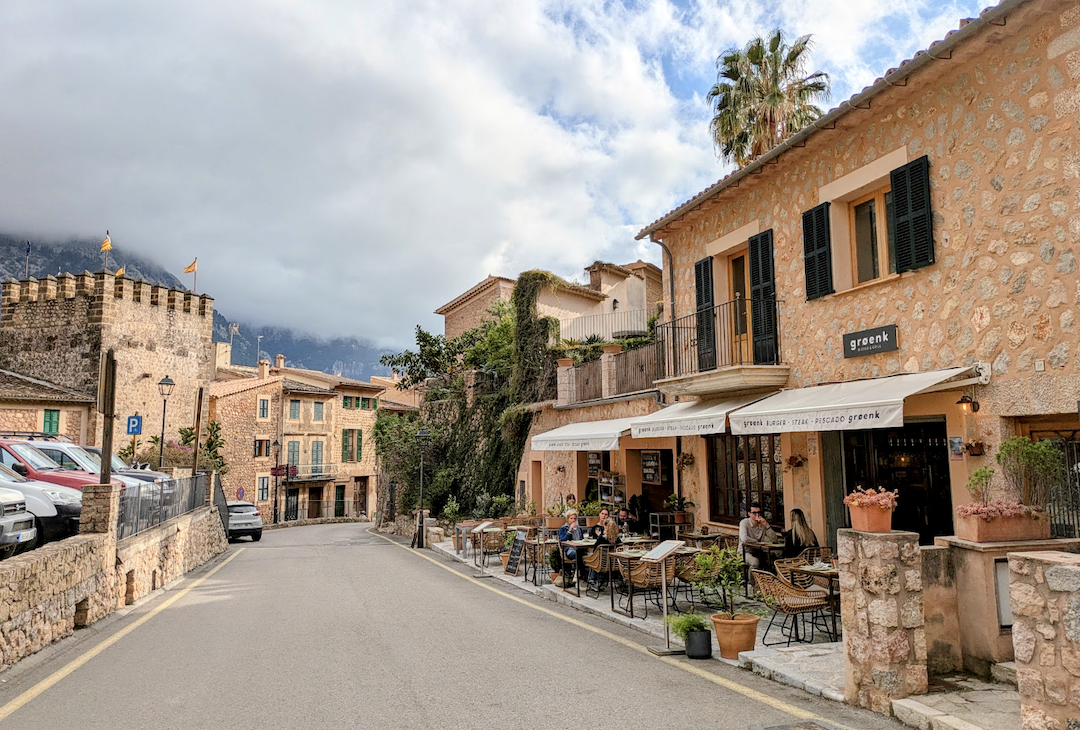
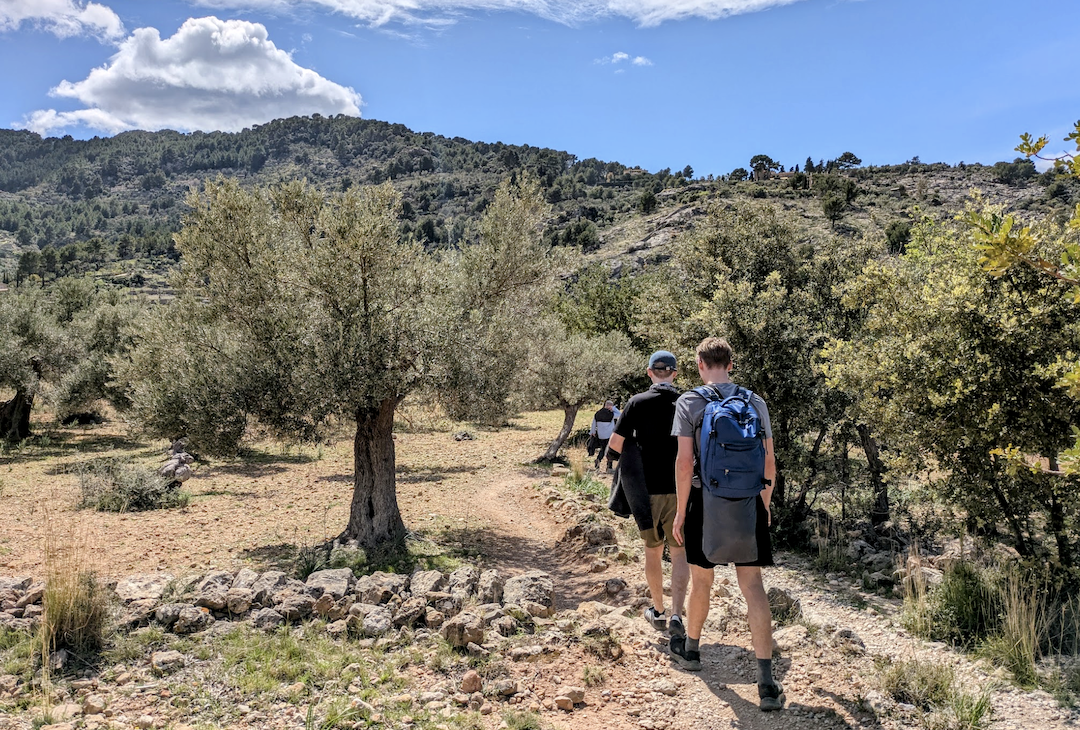
Fornalutx, just up the valley, is regularly called one of the prettiest villages in Spain, and it earns it: steep stone streets, green shutters, and mountains straight out of the back of the village. You can walk there from Sóller in well under an hour, much of it through the orange and lemon terraces around Biniaraix.
Our route took slightly longer, as we wound around the back of Sóller, stopping at Bodega Biniarix for a wine, before heading up along the river. At Fornalutx, we headed directly to Pruna Gelateria Artesana to cool down with a refreshing sorbet, before exploring the cobbled stone streets.
Walk from Sóller to Deià
Deià is the famous artists’ and writers’ village clinging to the coast west of Sóller, all terracotta roofs and olive terraces dropping to the sea. The walk over is a proper mountain half-day on the old Drystone Route (GR221), with big coastal views the whole way.
The Sóller–Deià walk took us 6+ hours to complete, as we included a stop by Port de Sóller for a morning coffee. It was a hot and hilly walk during Spring weather, and you’ll need to pack plenty of water and snacks as there are limited places to stop.
From Deià, we took a shared Uber back to Sóller. Unfortunately Deià was incredibly busy to the point of being gridlocked, with buses crammed full and even more tourists left waiting at the bus stop for another hour. Though Deià is beautiful, we’d recommend avoiding the main town in peak seasons.
Best Things To Do in Sóller
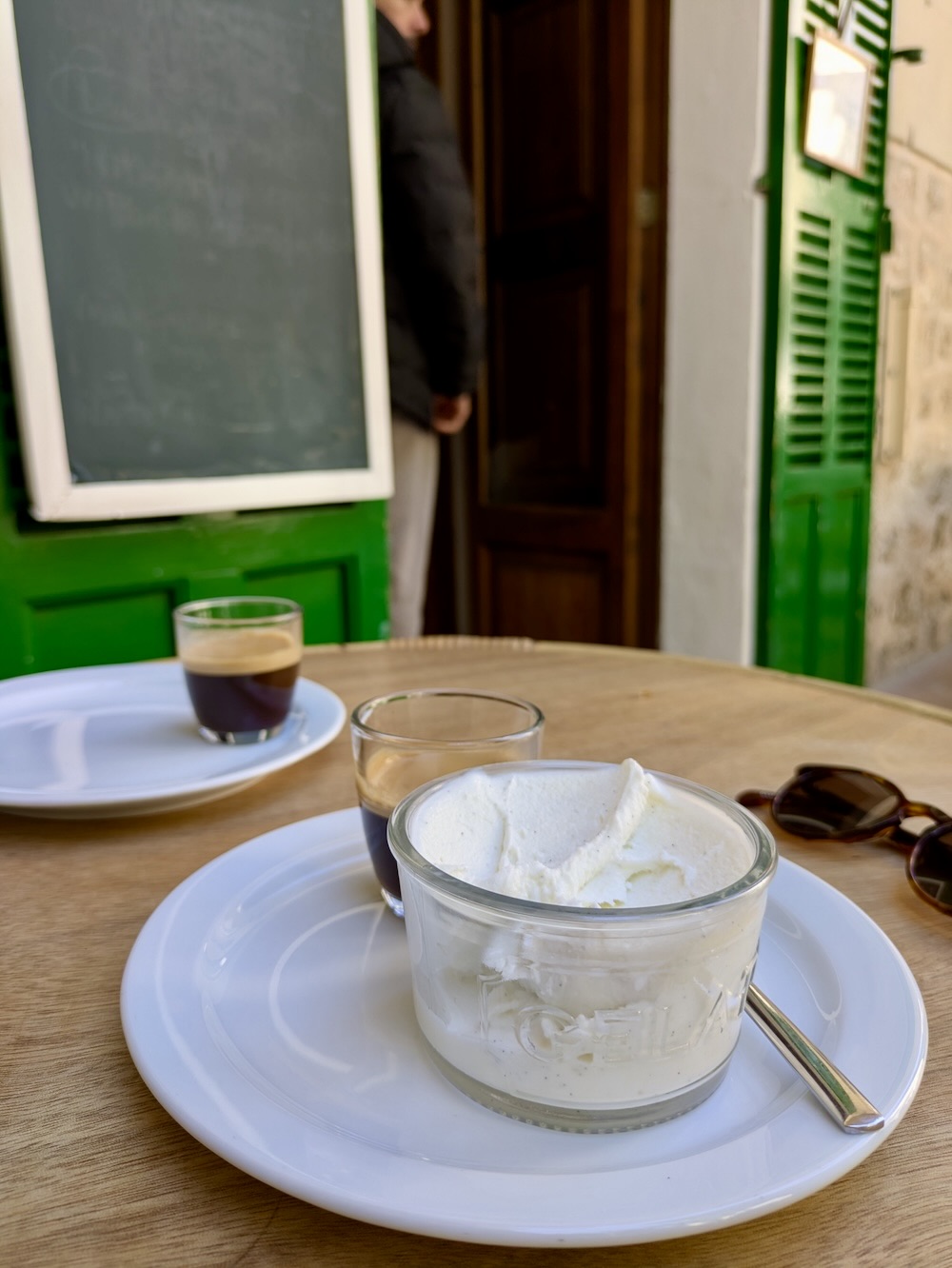
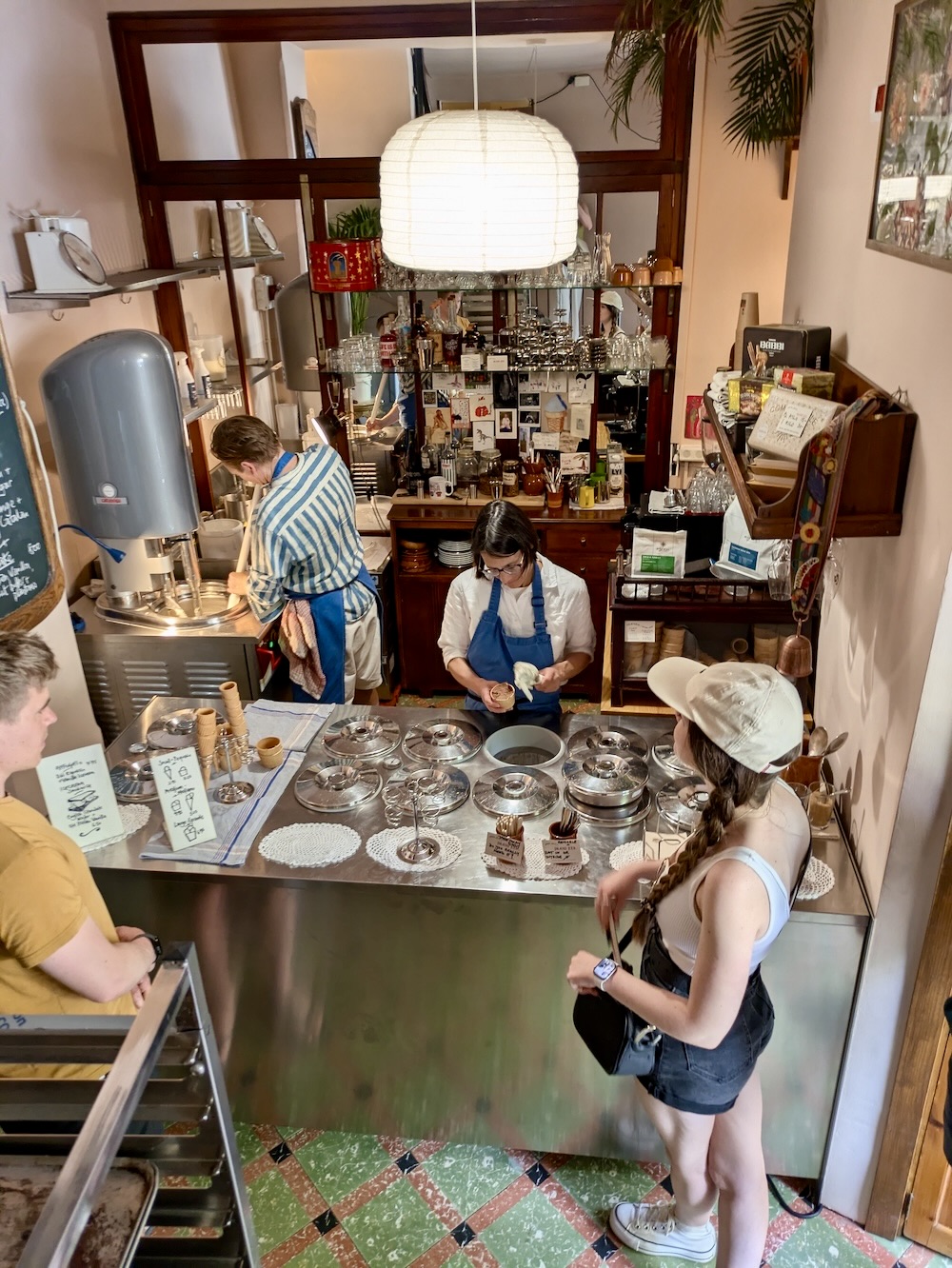
Sóller is a wonderful historic town well-worth exploring. It’s windy streets are filled with little cafes, gelato stops and shops selling local salt and pottery. You mustn’t miss the homemade ice cream at Mister McCoy’s Island Ices — it’s some of the most delicious ice cream we’ve ever had!
Port de Sóller and the Bay
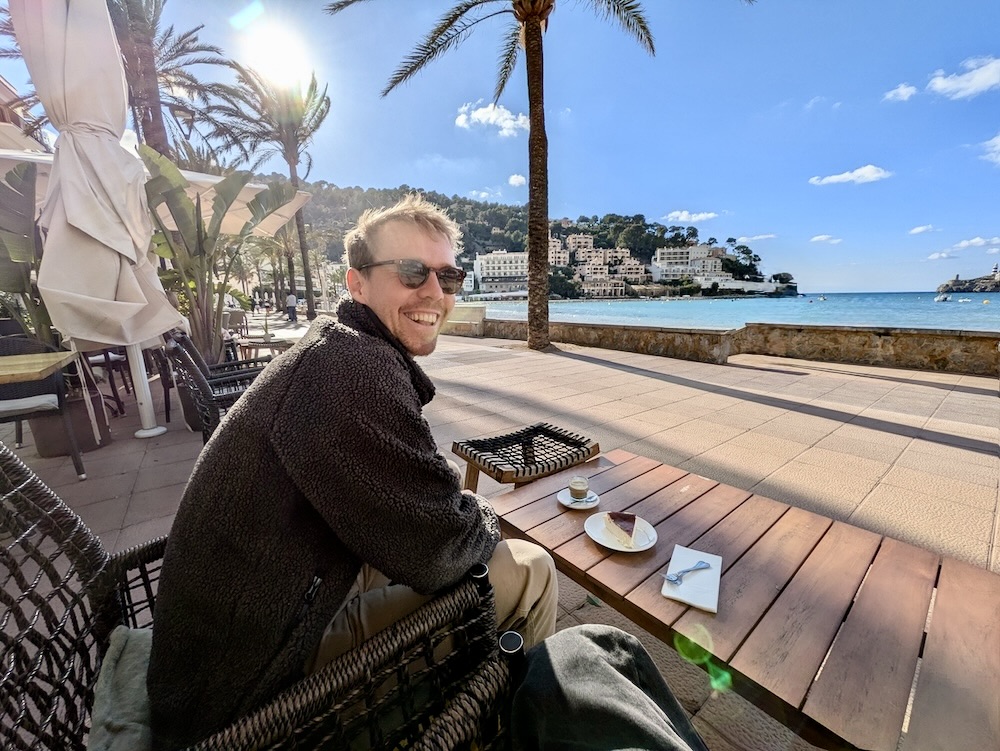
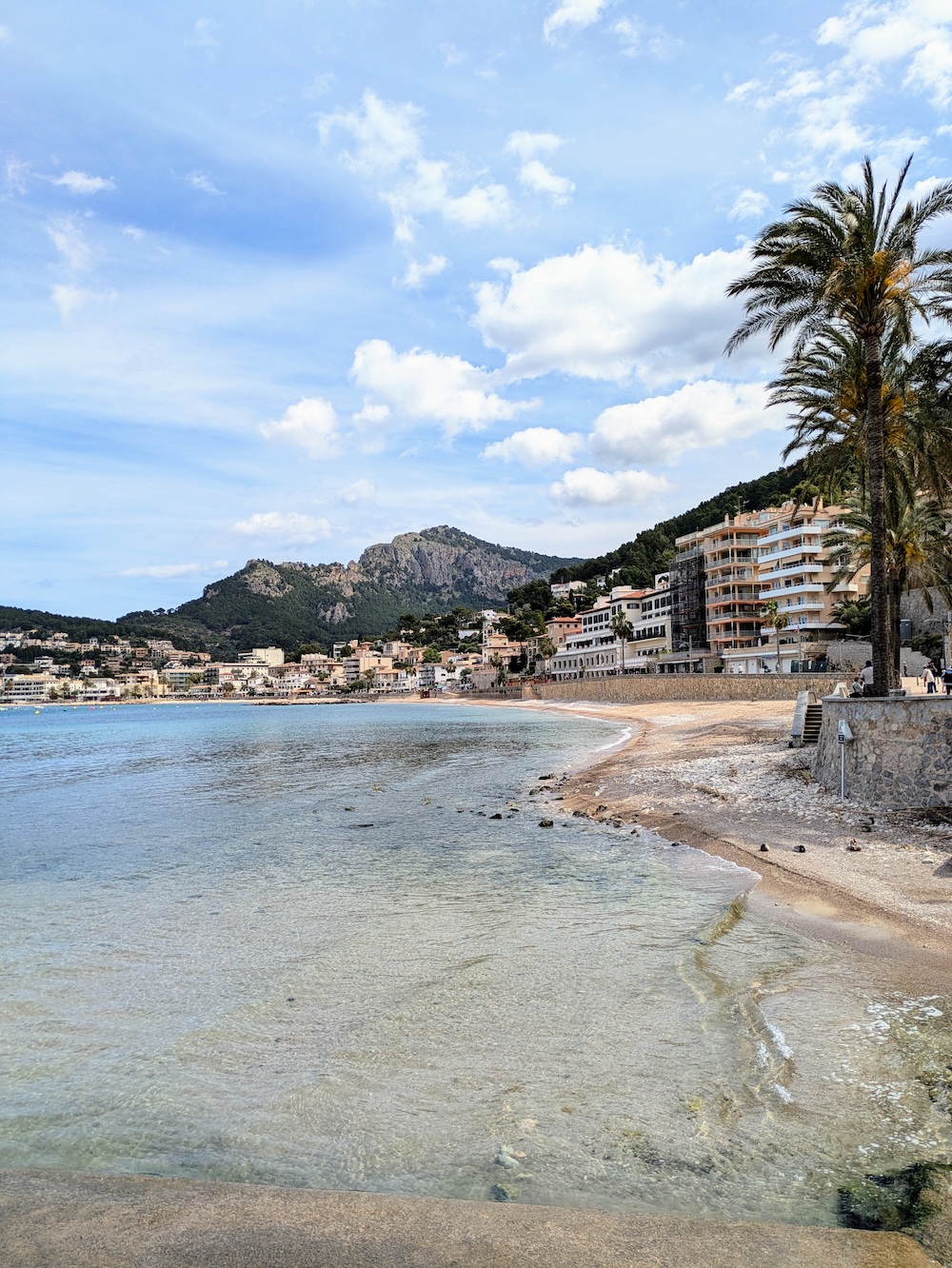
Down at Port de Sóller we swam in the calm bay, read on the beach, walked the promenade, and followed the path out to the Cap Gros lighthouse for the view back over the harbour. In the late afternoon, we sat our front at George’s with a sea view to enjoy a slice of Basque cheesecake and some cocktails.
Padel
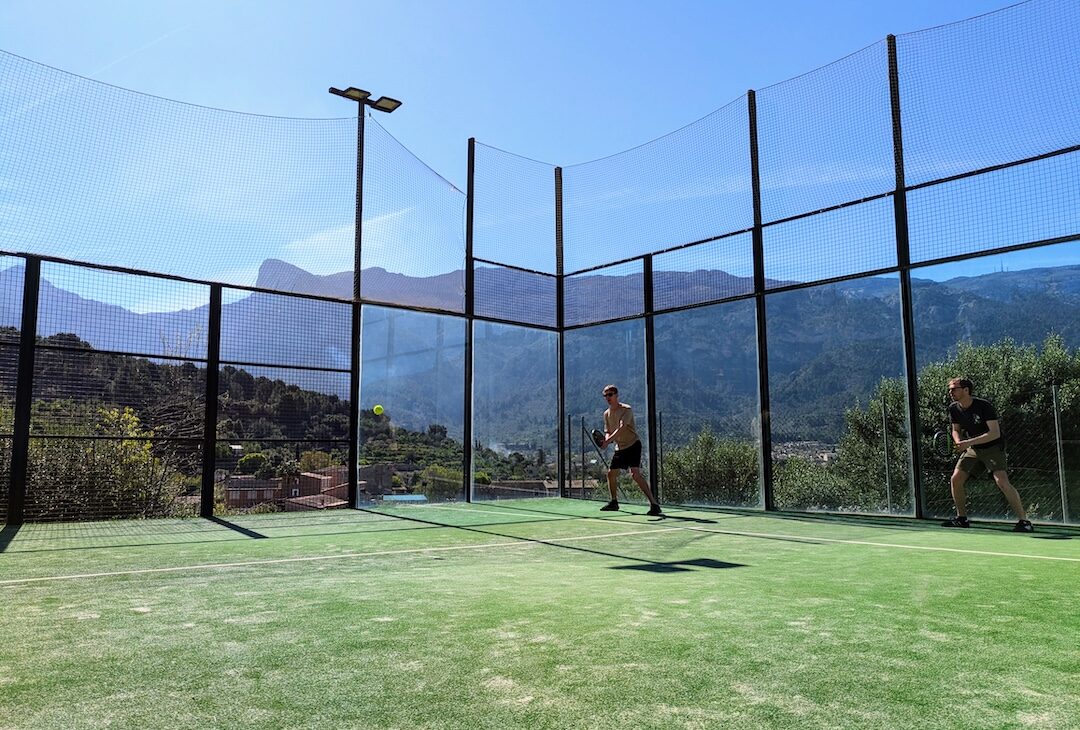
We played a fair bit of padel during the week, which is huge in Spain and a fun way to spend a morning before the heat. We played at the stunning Tennis i Pàdel Sóller Club, surrounded by mountains and hands down the most beautiful place we’ve ever played padel.
Seeing the Semana Santa (Holy Week) Procession
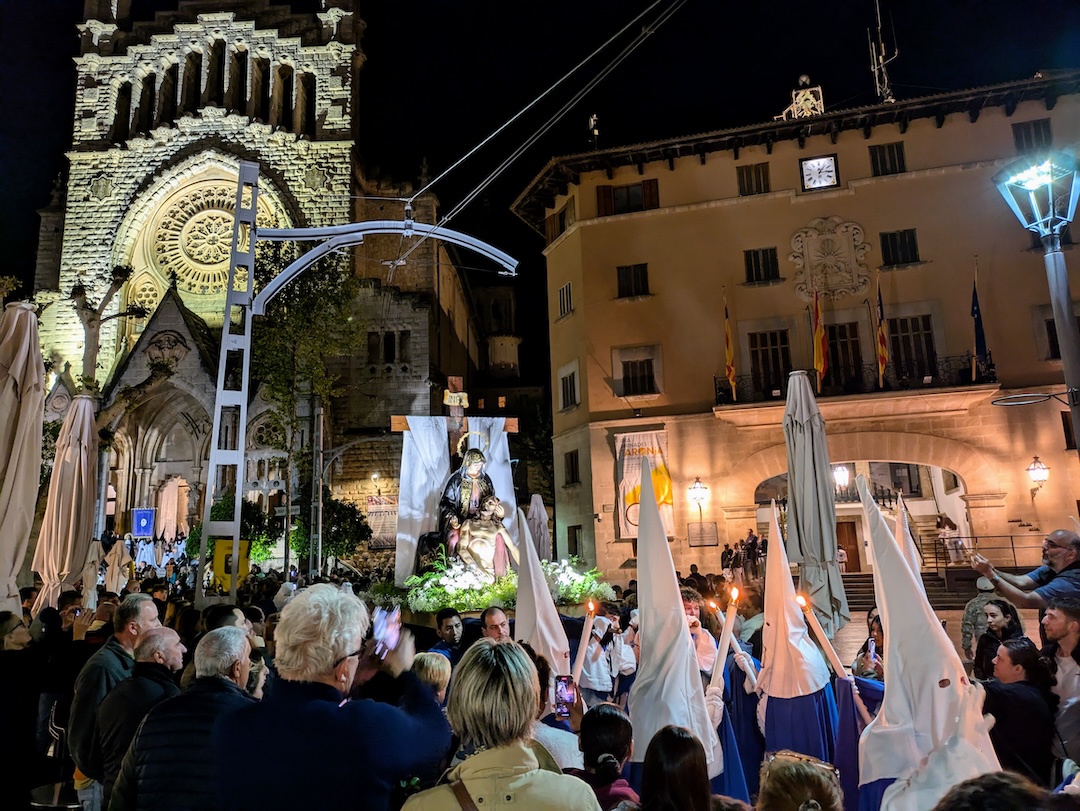
We visited at Easter and caught one of Sóller’s Semana Santa processions through the old town. If you have never seen one, it is a striking, solemn sight: hooded penitents (nazarenos) in tall pointed capirotes carrying candles and religious floats through the streets at night.
It can be startling the first time, especially for anyone who only associates pointed hoods with something very different, but this is a centuries-old Catholic Holy Week tradition with no connection to that, and it is deeply woven into Spanish culture. If your trip falls over Easter, it is well worth staying out to watch.
Best Time to Visit Sóller
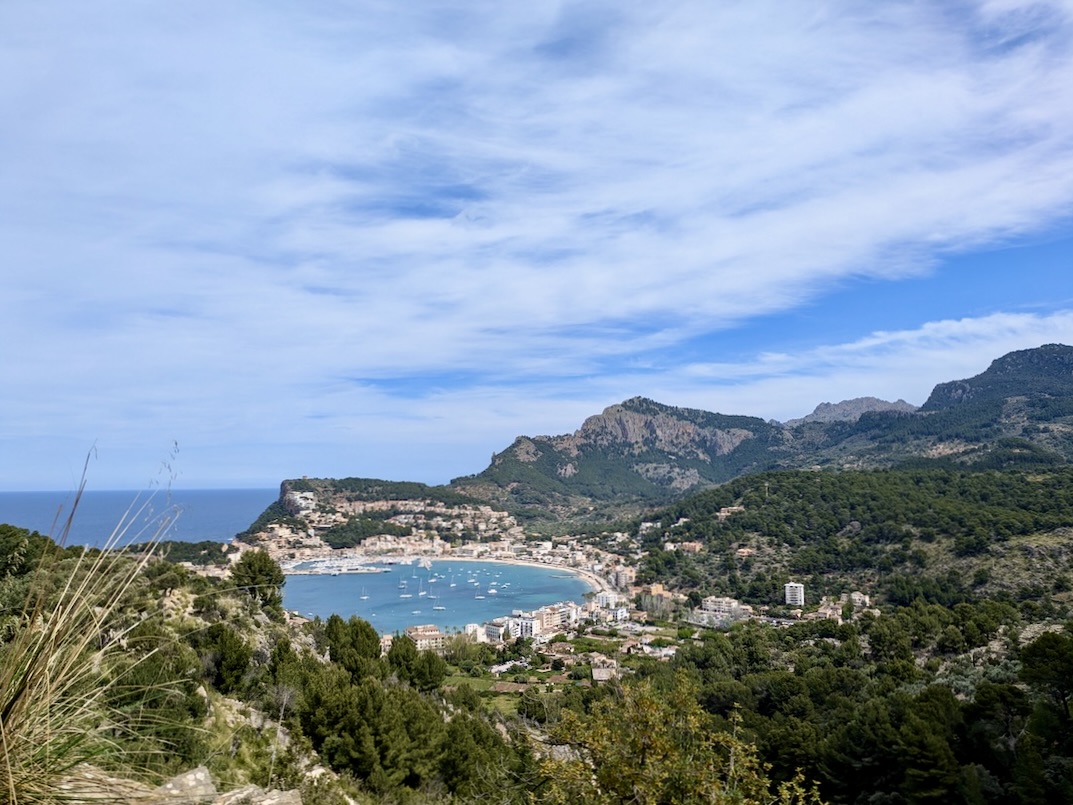
Spring (April to early June) is our favourite window and when we visited: the valley is green, the orange blossom is out, the walking weather is perfect, and, at Easter, you get the Semana Santa processions.
September and October are the other sweet spot, warm and quieter after the summer crowds. July and August are hot and busy, though the mountain shade and the sea help.
Keep Planning Your Spain Trip
- Our Spain Travel Guides
- Best Places to Visit in Mallorca
- Exploring Ibiza Off-Season
- 3 Days in Barcelona
Sóller FAQ
Yes. Sóller is one of the most beautiful parts of Mallorca: a mountain-ringed town of orange groves with a vintage tram to a pretty bay, superb walking to villages like Deià and Fornalutx, and far more character than the big resorts. It is our pick for a walking-and-food trip on the island.
About 30 minutes by car through the tunnel, or an hour on the historic wooden Sóller train through the mountains, which is a lovely trip in its own right.
Sóller town for character, restaurants and the market; Port de Sóller for the beach and seafront. They’re linked by a ten-minute tram, so staying in the town and tramming down to the port gives you the best of both.
Yes. Fornalutx is an easy walk of under an hour up the valley; Deià is a longer half-day mountain walk along the old Drystone Route (GR221) with beautiful coastal views.
Sóller town if you want the square, the market and the walks up to Fornalutx and Deià from your door. Port de Sóller if you want the bay, the swimming and dinner by the water. The vintage tram runs between the two in about fifteen minutes, so you are not cut off either way. We rented Villa Rae.
Port de Sóller is where most of the seafront rooms are, so it is the easier of the two to book, especially in high season. The picks above cover both the port and the town with live prices. If you are coming for the walks rather than the swimming, the town side is quieter and usually cheaper.
This guide contains affiliate links. If you book through them we may earn a small commission at no extra cost to you. We only ever recommend places we have stayed or would happily book ourselves.