
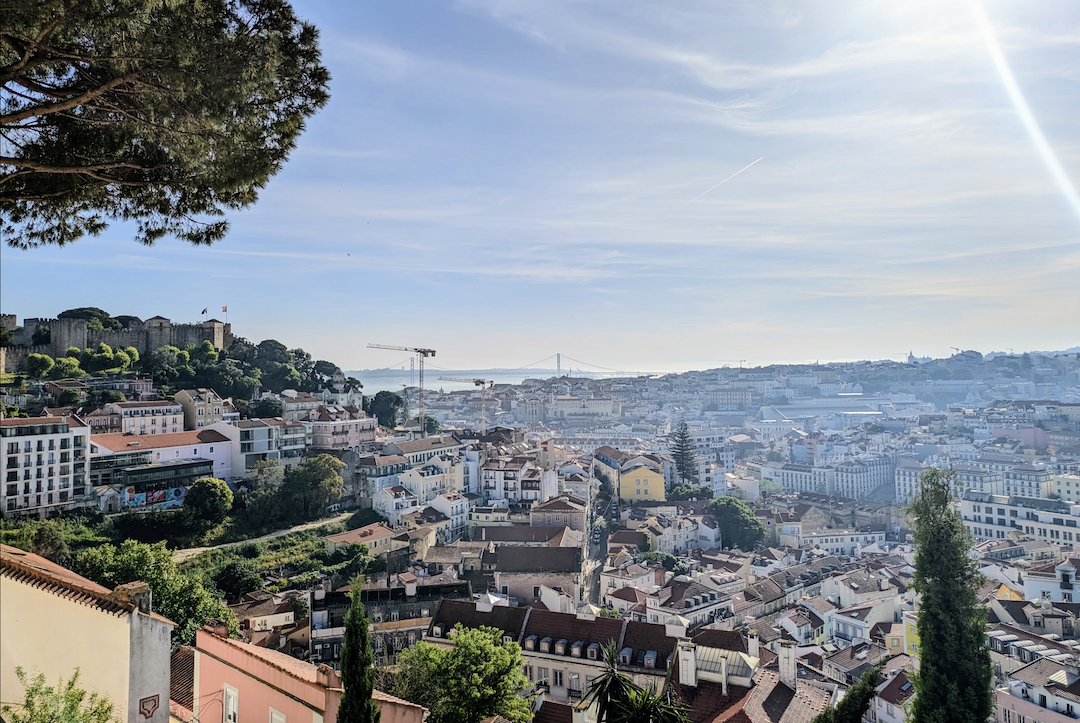

Deciding where to stay in Lisbon shapes your whole trip: the city’s neighbourhoods are so distinct that the same holiday can feel completely different from one hill to the next.
We have stayed in Lisbon three times, twice in Alfama and once further from the city centre. This guide covers the two neighbourhoods we know best, Alfama and Graça, plus our take on the rest of the city.
In a Rush? Our Favourite Lisbon Hotels
Browns Avenue Hotel
A stylish adults-only stay just off Avenida da Liberdade, with mid-century rooms, a library honesty bar and a rooftop pool above the city.
Check ratessamesame Co-living & Co-working
Lisbon’s first creative co-living space, near Baixa and Chiado, with private rooms and apartments, two co-working studios and a community Sunday brunch — ideal for stays of a week or more.
Check ratesSolar do Castelo
The only hotel inside the walls of São Jorge Castle: an 18th-century palace with 20 characterful rooms, garden breakfasts and resident peacocks strutting the courtyard.
Check ratesH10 Duque de Loulé ⭐⭐⭐⭐
A boutique four-star near Marquês de Pombal with hand-painted azulejos in the rooms and the 10th-floor Limão rooftop bar looking out over the Tagus.
Check ratesWhere to Stay in Lisbon at a Glance
| Neighbourhood | Best For | Worth Knowing |
|---|---|---|
| Alfama | Atmosphere, views, fado | Steep and stepped; pack light |
| Graça | Staying local, sunset viewpoints | Quieter and better value than Alfama, ten minutes above it |
| Baixa & Chiado | First-timers, flat streets, convenience | The least “local” the city gets |
| Avenida da Liberdade | Comfort, space, bigger hotels | Flat pavements, metro on the doorstep |
First, The “More Neighbours, Less Tourists” Question
Walking Alfama‘s lanes on our return visit, we kept seeing the same signs hanging from balconies and taped in windows: “more neighbours, less tourists.”
It stops you in your tracks, because you are the tourist it is talking about.
Lisbon’s historic centre has lost a huge share of its residents as apartments have been converted into short-term holiday lets. Alfama has been hit hardest: the homes behind those tiled facades increasingly sit empty between guest check-ins, and the neighbours who hung laundry between the buildings and kept the fado houses are being priced out of the postcode.
The signs aren’t anti-tourist. They’re anti losing their neighbourhood. Most locals we spoke to were warm and welcoming; what they object to is their housing stock being turned into accommodation. If you visit, stay in hotels and guesthouses.
Ww made the mistake of staying in an Airbnb apartment, and learned from it. Next time, we’ll only book hotels and guesthouses. Our honest advice:
1. Book licensed hotels and guesthouses, not holiday apartments. They’re purpose-built for visitors, staffed by local workers, and they don’t remove a home from the market.
2. Locally owned is even better. Lisbon has wonderful Portuguese, family-run guesthouses and heritage hotels. Your money stays in the city.
3. If it looks like someone’s flat, it probably was.
Where to Stay in Lisbon: Alfama
Best for: atmosphere, romance, fado and views
Not for: anyone with heavy luggage or dodgy knees
We stayed in Alfama on both visits, and it’s still our first recommendation for where to base yourself in Lisbon. It’s the oldest neighbourhood in the city: cobbled streets climbing the hillside below São Jorge Castle, laundry strung between buildings, some of the best pastel de nata in the city, and stunning sunset viewpoints in Europe. There’s nowhere quite like it.
Alfama Costs: In April 2026, we paid around €90 per night for a private apartment. That’s doubled in five years, since our earlier visit in 202-0. February and the shoulder months are much kinder than summer, when a comparable room can reach €130 to €150. Our full cost breakdown is in Is Lisbon Expensive? How Much To Budget in 2026.
Alfama is beautiful but very hilly with narrow streets. Taxis and ride shares can’t always reach the narrowest lanes, and there are a lot of steps. Factor that in if you’re travelling with heavy luggage, buggies or limited mobility. The 28 tram rattles through the edge of the neighbourhood and the Santa Apolónia metro sits at the bottom of the hill.
If you’re staying in this neighbourhood, stop by the wonderful courtyard restaurant Cafe O Corvo. A good place for a bite to eat, and more reasonable wine prices than many of the bars in this area.
Our Alfama Hotel Pick: Solar do Castelo is the only hotel inside the walls of São Jorge Castle: an 18th-century palace with 20 characterful rooms, garden breakfasts and resident peacocks strutting the courtyard. It’s part of the Portuguese-owned Lisbon Heritage collection and holds an Ecostars sustainability rating, which ticks both our boxes: licensed and local.
Where to Stay in Lisbon: Graça
Best for: staying local, viewpoints and tram 28 without the crush
Not for: being in the thick of the nightlife
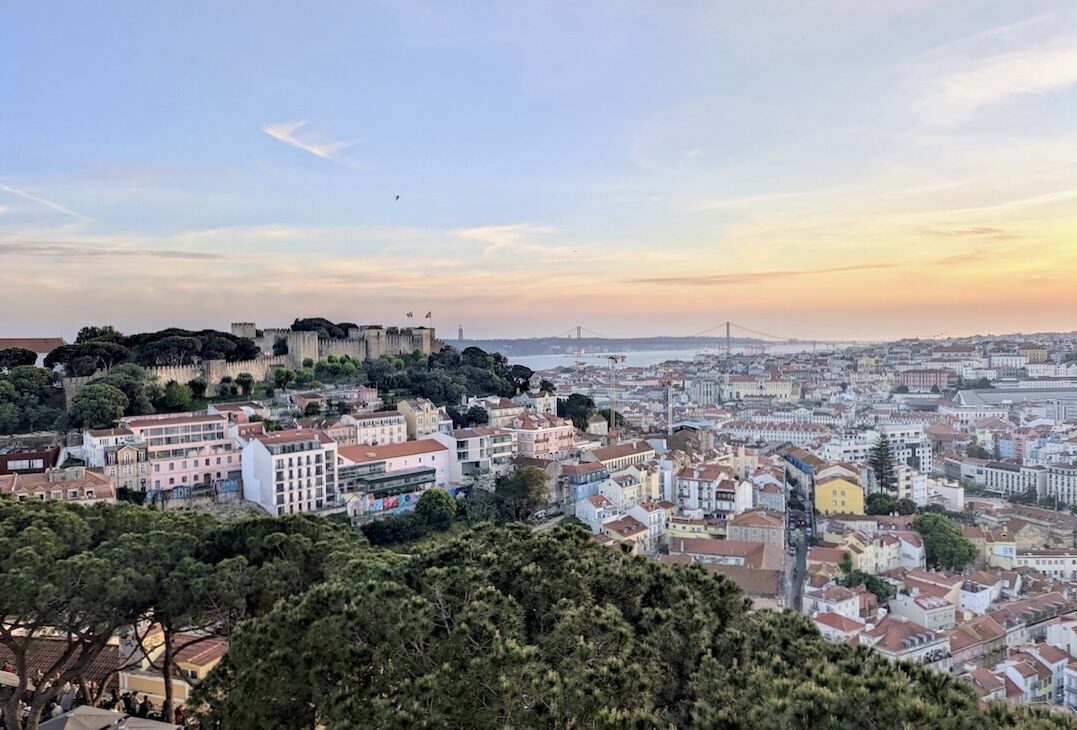
Climb past the castle and you reach Graça, Alfama’s higher, quieter, more lived-in neighbour, and the neighbourhood we’d point you to if those balcony signs made you think twice about Alfama itself. Graça still functions as a working Lisbon barrio: pastelarias full of residents, grocers, tascas where the menu is handwritten and lunch costs single digits.
It also happens to have two of the finest viewpoints in the city. The Miradouro da Graça (officially Miradouro Sophia de Mello Breyner Andresen) looks across the castle and the rooftops to the river, and the Miradouro da Senhora do Monte, the highest point in Lisbon, is the one to save for sunset. The famous 28 tram terminates up here too, which means you can board it at the quiet end rather than fighting the queues in Baixa.
Staying in Graça puts you ten minutes’ walk above Alfama’s sights with none of the bottleneck crowds, and accommodation runs slightly cheaper for equivalent rooms. The trade-off is the hill: you’ll earn your pastel de nata daily, though the tram and the Graça funicular do the climbing for you when your legs give out.
Our apartment was on the edge of Graça, which we loved due to the proximity to the wonderful Fora Artisan Pastry, Neighbourhood Cafe Lisbon and Vino Vero.
Other Lisbon Neighbourhoods at a Glance
Baixa & Chiado — best for first-timers who want flat and central
The downtown grid: big squares, shopping streets, every tram and metro line. Convenient and handsome, though the least “local” the city gets. This is also where samesame sits on the edge of Baixa: Lisbon’s first creative co-living space, locally founded, ideal if you’re staying a week or more and want a remote working community.
Personally, Baixa and Chiado are too ‘in the thick of it’ for us. Great for dinner or a night out, but too busy to unwind. Chiado in particular is home to many trendy restaurants and bars, including our favourite Fabric (Middle Eastern with street side eating) and the over-crowded rave pizza place, Lupita.
Bairro Alto — best for nightlife
Sleepy by day, loud by night. Brilliant fun if you plan to be part of the noise; bring earplugs if you don’t.
Avenida da Liberdade & Marquês de Pombal — best for comfort and space
Lisbon’s grand boulevard is where the serious hotels live, with flat pavements and metro access. Two picks from the Portuguese-owned Browns group and one Spanish chain done well: Browns Avenue Hotel, a stylish adults-only stay with a rooftop pool, and H10 Duque de Loulé, a boutique four-star with hand-painted azulejos and the 10th-floor Limão rooftop bar.
Belém — best for museums, not for basing
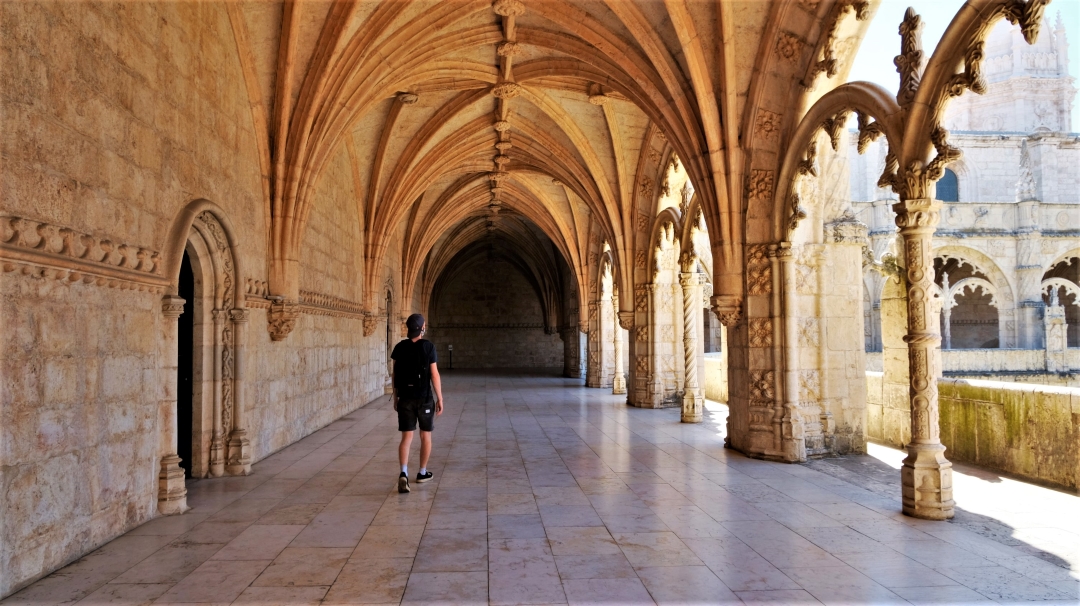
The monuments and custard tarts deserve a day; the distance from everything else means we wouldn’t sleep there on a first visit.
Our Lisbon Hotel Picks
All four picks are licensed hotels or guesthouses. Solar do Castelo and Browns Avenue are Portuguese-owned, samesame is locally founded, and the H10 is the one (well-run) chain exception.
Browns Avenue Hotel
A stylish adults-only stay just off Avenida da Liberdade, with mid-century rooms, a library honesty bar and a rooftop pool above the city.
Check ratessamesame Co-living & Co-working
Lisbon’s first creative co-living space, near Baixa and Chiado, with private rooms and apartments, two co-working studios and a community Sunday brunch — ideal for stays of a week or more.
Check ratesSolar do Castelo
The only hotel inside the walls of São Jorge Castle: an 18th-century palace with 20 characterful rooms, garden breakfasts and resident peacocks strutting the courtyard.
Check ratesH10 Duque de Loulé ⭐⭐⭐⭐
A boutique four-star near Marquês de Pombal with hand-painted azulejos in the rooms and the 10th-floor Limão rooftop bar looking out over the Tagus.
Check ratesMore Portugal Travel Guides
- Is Lisbon Expensive? How Much To Budget in 2026
- Lisbon or Porto: Which To Choose?
- Sintra Coastal Hike
- Porto Travel Guide
- All Portugal Guides
Where to Stay in Lisbon FAQ
Yes, Alfama is our favourite: the most atmospheric neighbourhood in the city, with fado, viewpoints and the castle on your doorstep. Just know it’s steep, stepped and narrow, so pack light, and book a licensed guesthouse or hotel rather than a holiday apartment.
Alfama for full immersion in old Lisbon and proximity to the big sights; Graça for a quieter, more residential feel, better-value rooms and the city’s best sunset viewpoint. They’re ten minutes’ walk apart, so you’ll spend time in both wherever you sleep.
Legally, licensed short-term rentals exist. But Lisbon’s historic neighbourhoods have lost thousands of homes to holiday lets, and residents, particularly in Alfama, are asking visitors to choose hotels and guesthouses instead. We think it’s a fair ask, and this guide only recommends licensed, staffed accommodation.
Baixa & Chiado if you want flat, central and easy. Alfama or Graça if you’d trade convenience for character. Around Avenida da Liberdade if comfort and space matter most.