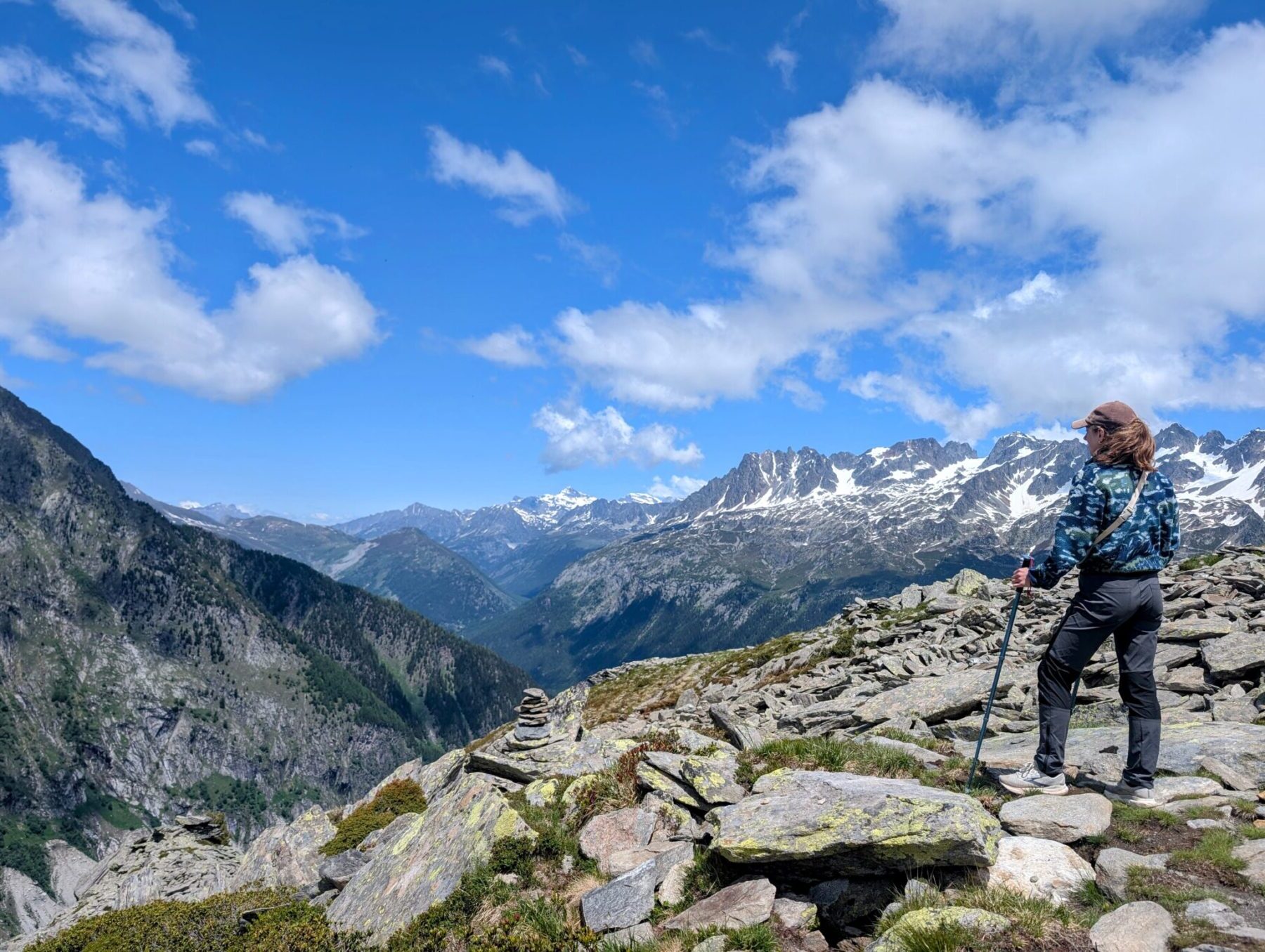

Chamonix in summer far exceeded our expectations. After first visiting Chamonix in ski season, we were excited to hike, climb and bike the towering limestone peaks, trail-laced valleys and Alpine ridges.
This Chamonix in summer travel guide covers everything you need to plan a week in Chamonix in summer, structured as a day-by-day itinerary you can follow exactly or adapt to you.
In a Rush? Our Favourite Hotels in Chamonix
Hameau Albert 1er
5-star Relais & Châteaux with Michelin-starred dining, a mountain pool and breathtaking Mont Blanc views. The finest hotel in Chamonix.
Check ratesHôtel Mont-Blanc
A classic 4-star landmark right in the heart of Chamonix, with elegant rooms, a pool and consistently top ratings.
Check ratesLes Grands Montets Hotel & Spa
A 4-star spa hotel at the foot of the Grands Montets glacier, with a pool, wellness facilities and direct access to some of the valley’s best trails.
Check ratesWhy Visit Chamonix in Summer?
Most people associate Chamonix with skiing, but Chamonix in summer is stunning and is a significantly better option than winter for anyone who doesn’t ski. The Mont Blanc massif stays snow-capped all year, wildflowers fill the meadows from late May, and the full network of hiking trails, cable cars and mountain activities open up between June and September.
If you love an active holiday, then Chamonix during summer season is the perfect place. Via ferratas, alpine hikes, mountain biking, paragliding, glacier visits, cable car rides and a surprisingly lively food and drinks scene in town. Summer is also quieter than the ski season for many activities, so trails feel peaceful, cable cars have manageable queues, and you can secure tables at good restaurants without booking weeks in advance.
When is the Best Time to Visit Chamonix in Summer?
Early June is the shoulder season, sitting between the April ski wind-down and the July school holiday rush. Trails are quieter, accommodation is cheaper and the weather — though variable — is pleasantly cool for days out hiking or climbing. Temperatures at valley level typically sit between 15°C and 22°C in June; though above 2,000 metres it can be cold and snowy.
July and August offer the full range of summer activities and more reliable sunshine, but they are significantly busier and hotter. The cable car queues lengthen, the trails on the mountain fill up, and accommodation prices rise. If you can be flexible, June or September offer a better experience for your money.
The trick to making any summer visit work is not to plan too rigidly. We checked the official Chamonix app each evening to see where the cloud cover was sitting on the mountain, then built the next day’s plans around what the forecast showed. The 24-hour forecast was reliably accurate; planning more than two days out was largely guesswork. Keep outdoor, sunshine-dependent activities flexible and have a couple of all-weather options ready.
Where to Stay for Chamonix in Summer
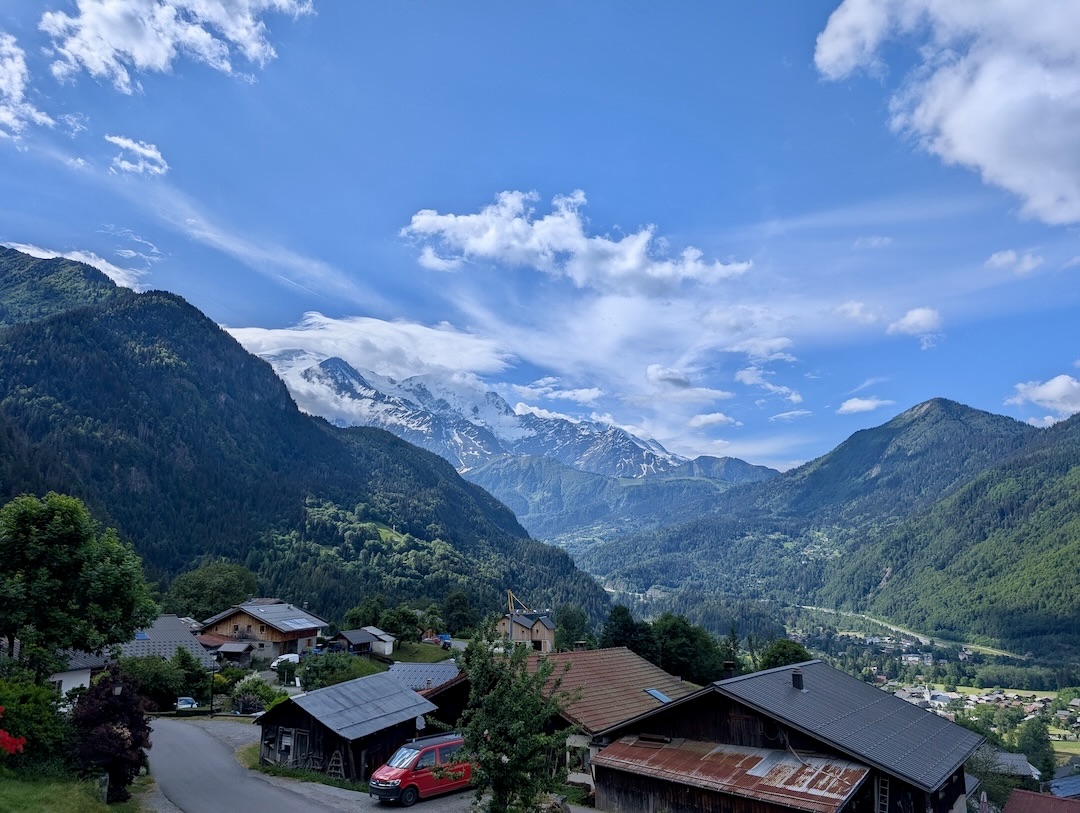
Chamonix town is convenient and lively, but the surrounding villages offer a quieter base at lower prices. We stayed in Servoz, a small village in the valley about 15 minutes’ drive from Chamonix and an hour and 15 minutes from Geneva airport. It sits directly beneath the Fiz mountain range and has some excellent hiking straight from the doorstep.
A hire car is strongly recommended for exploring Chamonix in summer. We rented a car at Geneva airport for six days at around £200 including insurance. Most of the best activities are spread across the wider valley — Le Buet, Passy, Les Houches — and are awkward to reach without your own transport. Note that there is a cross-border fee for driving from Switzerland into France, so check this is covered in your rental agreement before you leave the airport.
Top Rated Hotels in Chamonix
Hameau Albert 1er
5-star Relais & Châteaux with Michelin-starred dining, a mountain pool and breathtaking Mont Blanc views. The finest hotel in Chamonix.
Check ratesHôtel Mont-Blanc
A classic 4-star landmark right in the heart of Chamonix, with elegant rooms, a pool and consistently top ratings.
Check ratesLes Grands Montets Hotel & Spa
A 4-star spa hotel at the foot of the Grands Montets glacier, with a pool, wellness facilities and direct access to some of the valley’s best trails.
Check ratesDay-by-Day Itinerary: A Week in Chamonix in Summer
Day 1: Lac de Pormenaz — Alpine Lake with Fiz Mountain Views
We started our holiday with a gentle hike. From Servoz, we hiked up to Lac de Pormenaz, a beautiful green lake tucked into the Fiz mountain range with sweeping views back across the Chamonix valley. The ascent takes around an hour at a comfortable pace and is accessible to most walkers with a reasonable level of fitness.
The payoff at the top is lovely: green-hued water contrasting against the pale limestone peaks behind. There is a restaurant and café near the lake, and parking at the trailhead for those who want to drive part of the way up.
If you want to extend the hike, trails continue from the lake up towards a mountain refuge and further into the Fiz range. It can easily become a full-day walk. We kept it to a half-day.
Day 2: Via Ferrata at Le Buet and the Cascade du Bérard
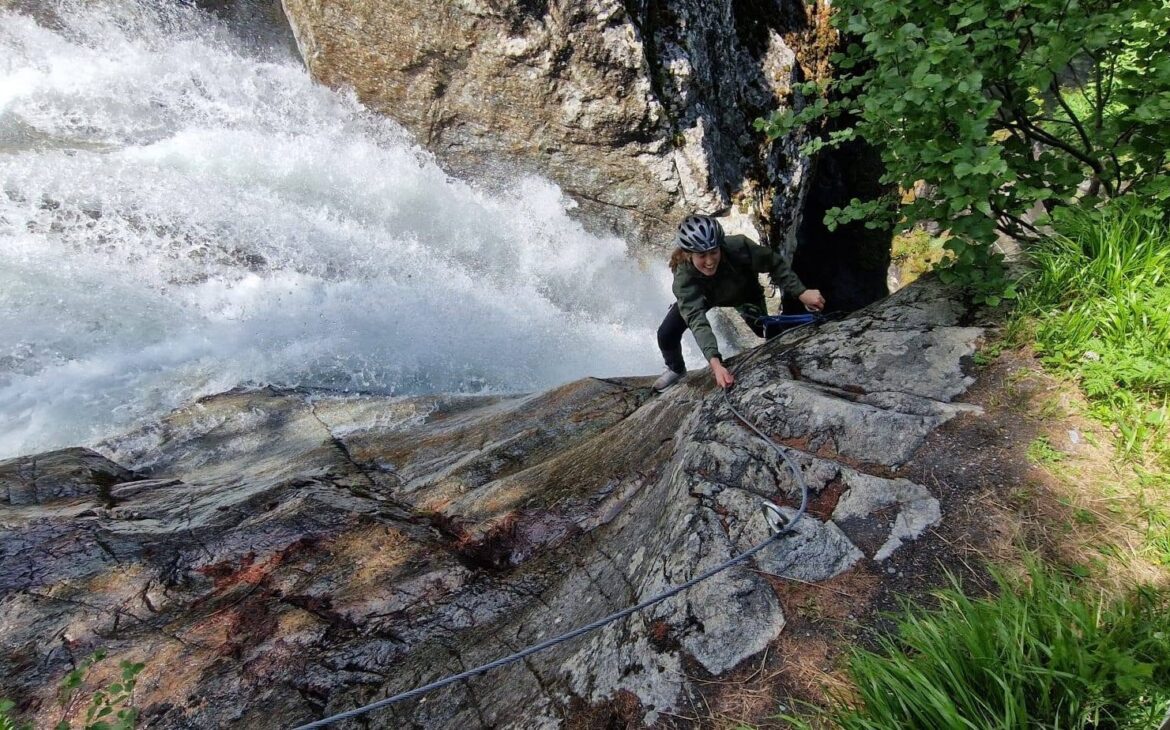
This was the standout day of the trip. Le Buet is a tiny village near the Swiss border, sitting beneath Mont Buet, and it is home to one of the most enjoyable and accessible via ferratas in the area: the Via Ferrata de la Cascade du Bérard.
The route is rated AD+ (beginner to intermediate), which makes it a strong choice for a first self-guided via ferrata. We had done one previously in Spain with a guide and are experienced boulderers, so the AD+ grade felt manageable. The climb follows the rock face alongside the Cascade du Bérard waterfall, a thundering white cascade that runs hard in June when snowmelt is at its peak. The route takes around 45 minutes for experienced climbers, or an hour for beginners.
What makes it especially good for mixed-ability groups is that non-climbers are well catered for. There is a viewing platform where they can watch the action. The café, Vivet de la Cascade, is directly next to the finish and serves simple omelettes, cold beer and coffee with a view of the falls.
After the via ferrata we walked up the valley trail as far as the snow line, which was still present in early June. Even if you have no interest in the climbing, this valley is worth visiting just for the scenery: rolling green hillsides, wildflowers and the constant sound of rushing water.
Day 3: E-Mountain Biking and the Deep Nature Spa
The weather forecast on day three pointed to cloud and rain, so we planned around it rather than fighting it. We started the morning with e-mountain bikes along the river near Servoz. Electric mountain biking is hugely popular across the Chamonix valley in summer and it is easy to see why: you cover far more ground than on foot, the valley scenery is beautiful even under grey skies, and the electric assist means you can push as hard or as gently as you like on the many hills in the region.
In the afternoon, as the rain arrived on schedule, we drove to the Deep Nature spa at Les Granges d’en Haut in Les Houches. As it was the shoulder season, we had the spa almost entirely to ourselves. The setup is simple but perfectly suited to the setting: a swimming pool, a wet sauna, a dry sauna, and two outdoor hot tubs positioned to face the mountains. When the cloud cleared briefly it was breathtaking; even when it didn’t, a hot tub in the rain in the Alps is far from a hardship.
Day 4: Gorges de la Diosaz and the Via Ferrata de la Curalla
We started at the Gorges de la Diosaz, a gorge near Servoz where a series of wooden walkways and viewing platforms has been built into the cliff face. It is a short, easy walk and suitable for almost everyone regardless of fitness. The scenery is spectacular enough that experienced hikers won’t find it underwhelming. There is a small café at the entrance. This activity is probably the best option if you are travelling with older guests or people who prefer easy terrain.
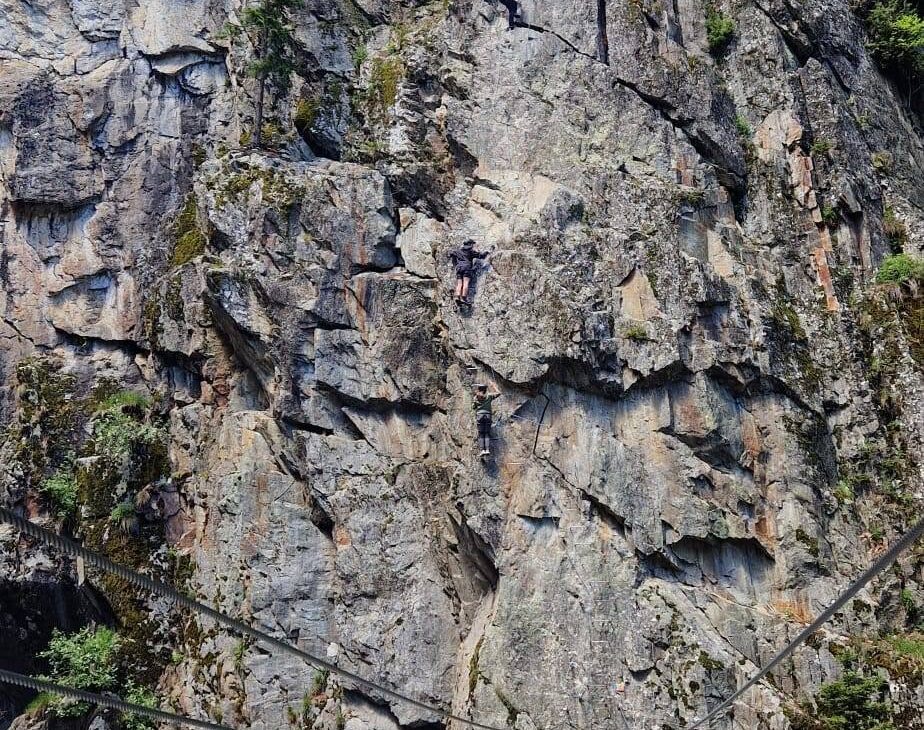
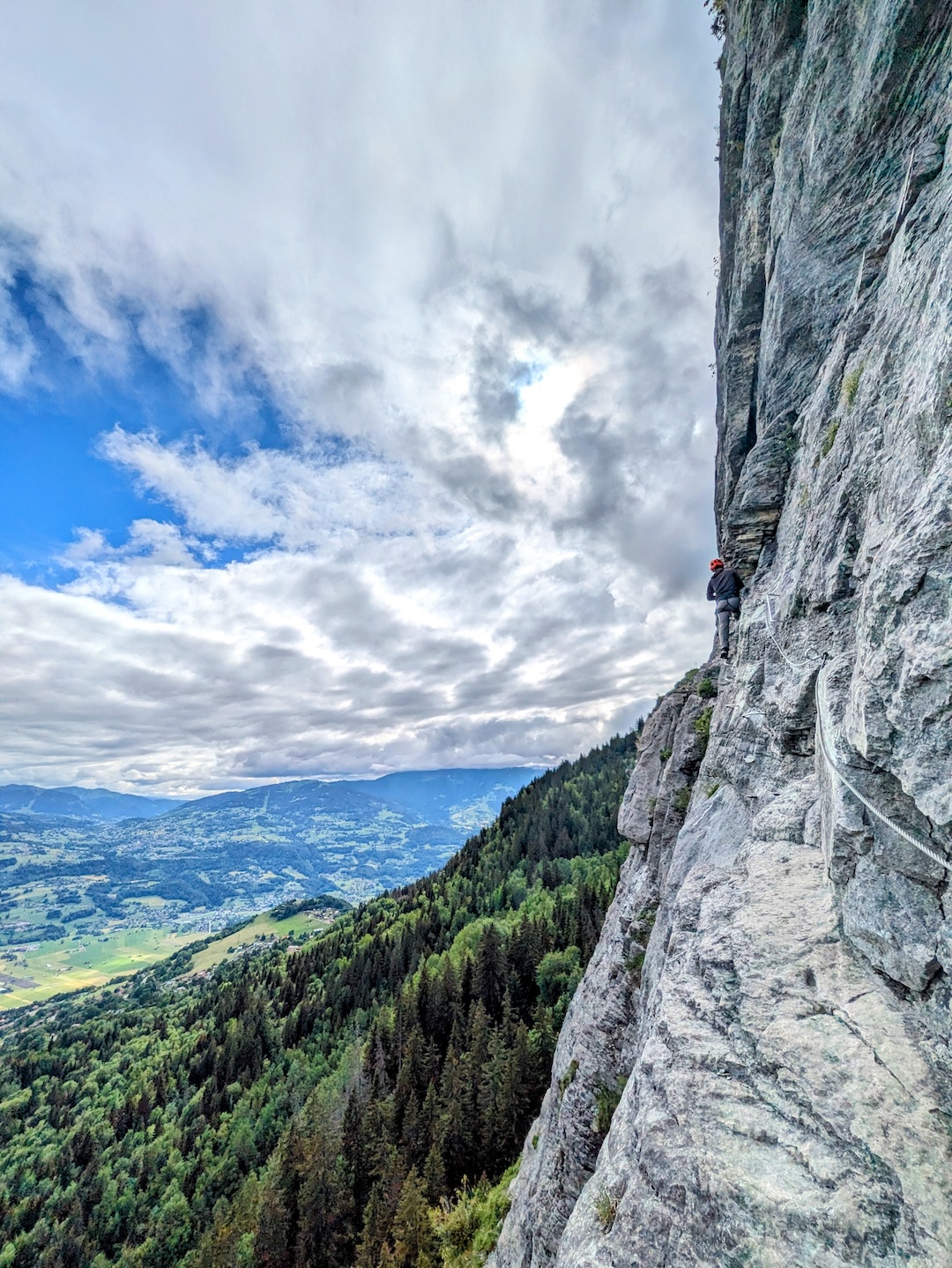
In the afternoon, the weather cleared and we drove to Passy to tackle the Via Ferrata de la Curalla. This is a different experience entirely from the via ferrata Bérard. The Curalla is long, highly exposed, and takes you diagonally across a near-vertical cliff face with open air on most sides and unobstructed views of Mont Blanc across the valley. For fit and experienced climbers it takes around an hour; allow an hour and a half to two hours if you are newer to via ferrata.
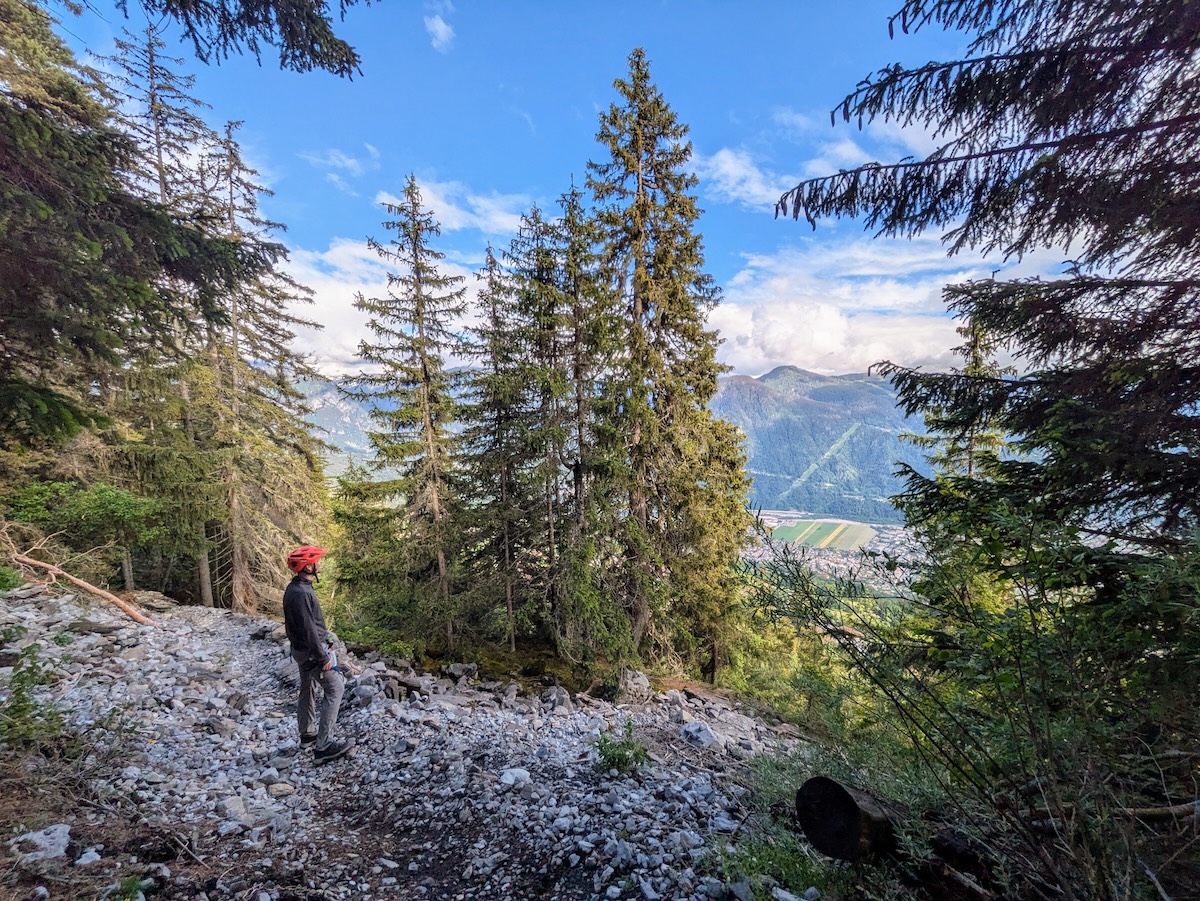
We would strongly recommend doing the Bérard before attempting Curalla. You need confidence with harnesses and exposure. This is not a route for beginners or anyone with a significant fear of heights. The approach from the car park involves a steep 20-minute walk up. The reward at the end is a lovely 45-minute walk down with Mont Blanc in full view.
Day 5: The Balcon Nord Walk — One of the Best Hikes in the Alps
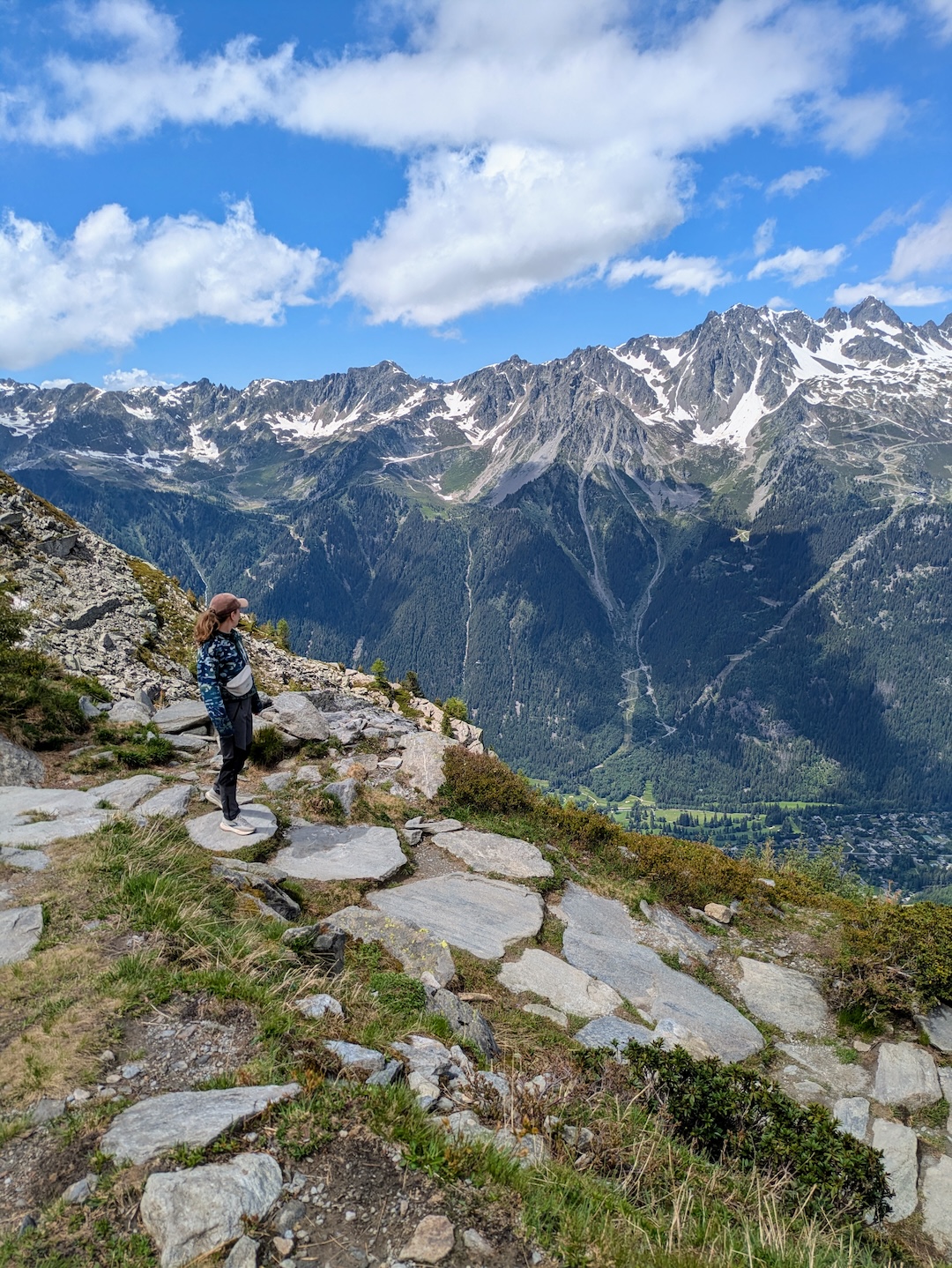
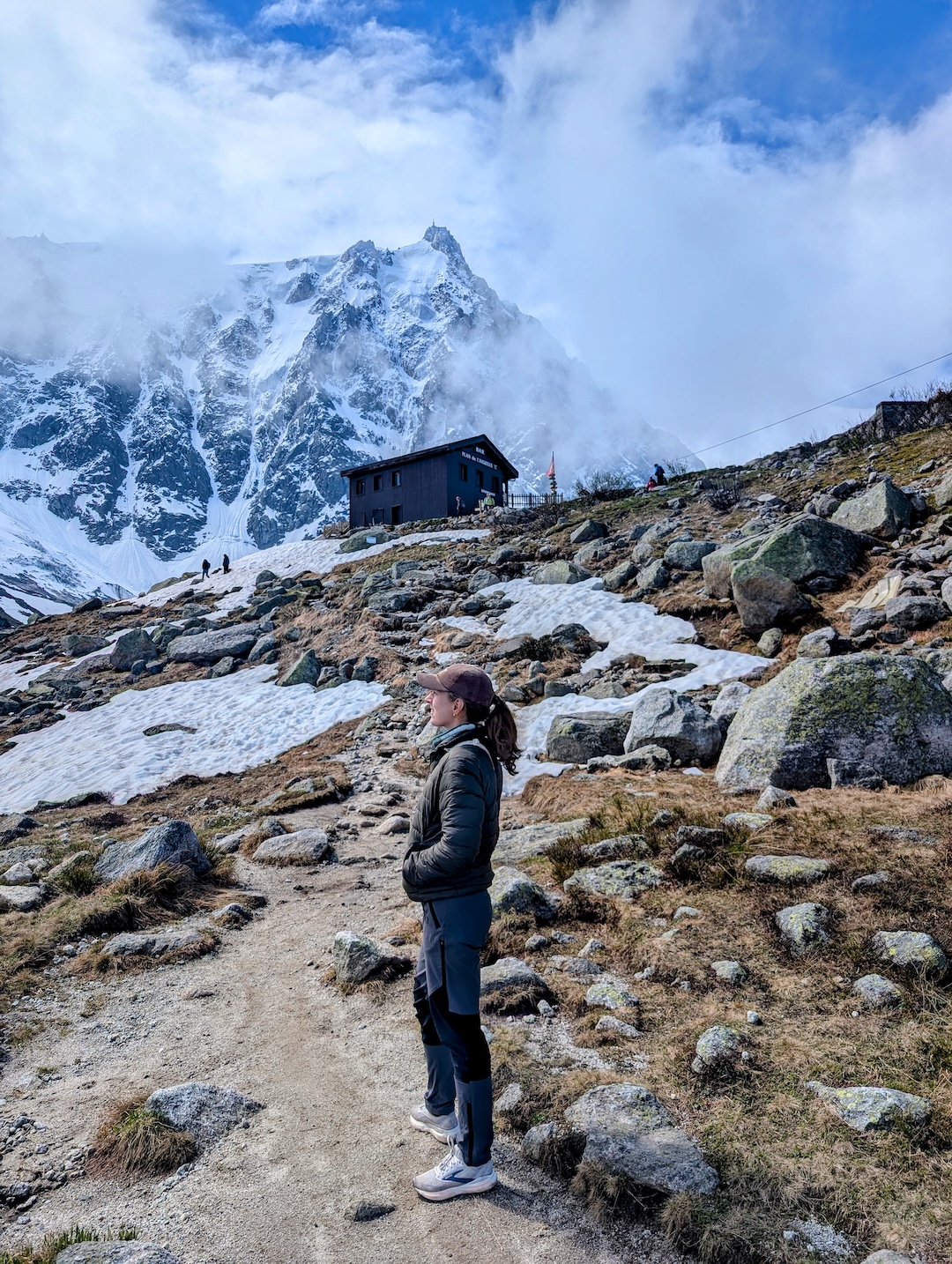
We saved the most iconic experience for last, and was insanely good. The Plan de l’Aiguille cable car, the Balcon Nord walk, and the Montenvers Railway back into Chamonix is, without question, one of the most spectacular hikes Luke and I have done in the mountains.
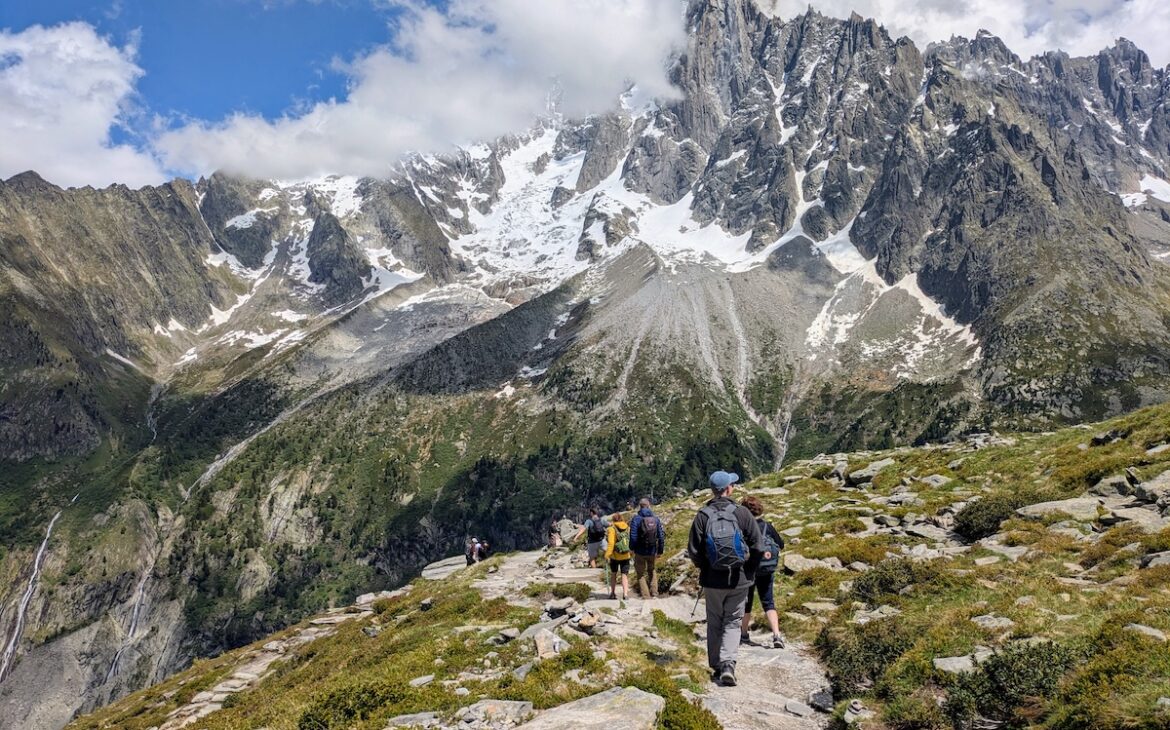
The téléphérique from Chamonix up to Plan de l’Aiguille costs around €30 per person. Plan de l’Aiguille is the midway station on the cable car to the Aiguille du Midi. We chose not to go all the way to the summit (€60+ per person) because the forecast showed cloud at the top. Using the Chamonix app to check where the cloud layer sits is crucial here: on a clear day the full Aiguille du Midi ride is extraordinary, but at 3,842 metres there is often cloud even when the valley is clear. The views from Plan de l’Aiguille at 2,317 metres were completely unobstructed.
From Plan de l’Aiguille we walked the Balcon Nord: a balcony-style hike that follows the mountain at a relatively consistent altitude, with views across the Mont Blanc massif on one side and the Chamonix valley on the other. It is moderate to challenging, as there are scrambling sections and patches of snow in June, but it is not technical climbing. We would rate it suitable for fit walkers who are comfortable on mountain terrain. Hiking poles are strongly recommended.
The full walk takes two and a half to three hours and ends at the Montenvers station, where you board the famous rack-and-pinion Montenvers Railway back down into Chamonix at around €26 per person.
At the bottom of the walk sits the Mer de Glace, France’s largest glacier. It is a sobering sight: the ice has retreated dramatically due to climate change, and in June there is far less to see than historical photographs suggest. Plaques on the trail mark where the ice reached in previous decades, giving a stark sense of how rapidly the glacier has diminished. If seeing the glacier is a particular priority, winter is now the better time to visit.
Back in Chamonix after the train, we walked around town, stopped at Moody Coffee for excellent espresso, and finished the trip at Big Mountain Brewing Co, a craft beer bar operating out of Chamonix with a good range of blondes and session IPAs.
Practical Tips for Chamonix in Summer
Getting There
- Geneva airport is the closest major hub — approximately 1 hour 15 minutes by car.
- We hired a car at Geneva airport for six days at around £200 including insurance. Check your rental covers cross-border travel from Switzerland into France.
- There is a direct coach (Ouibus/FlixBus) and train service from Geneva airport to Chamonix if you prefer not to drive, but a car makes accessing surrounding villages and activity sites considerably easier.
Weather and the Chamonix App
- Download the official Chamonix app. It shows real-time cloud cover on the mountain and is the single most important planning tool of the trip.
- Plan activities the evening before, not at the start of the week. The 24-hour forecast is reliable; anything beyond 48 hours shifts considerably.
- Build a mix of sunshine-dependent activities (hikes, cable car, via ferrata) and all-weather alternatives (spa, gorge walk, e-biking) into your schedule.
What to Pack for Chamonix in Summer
- A quality waterproof jacket is a non-negotiable in the Alps in any season.
- Sturdy hiking boots or comfortable trail shoes with good grip.
- Hiking poles — particularly useful for the Balcon Nord and any via ferrata approach trails.
- Harness and helmet for via ferratas (hire available in Chamonix town).
- Warm layers — temperatures at 2,000+ metres are significantly colder than the valley, and conditions change quickly.
Costs at a Glance
- Cable car (Chamonix to Plan de l’Aiguille): approx. €30 per person
- Aiguille du Midi (full summit): approx. €60+ per person
- Montenvers Railway (one way down to Chamonix): approx. €26 per person
- Car hire (6 days from Geneva airport): approx. £200 including insurance
- Via Ferrata de la Cascade du Bérard: Free to climb — bring or hire harness and helmet
- Deep Nature Spa, Les Houches: approx. €25-35 per person — check current pricing
FAQ: Chamonix in Summer
Yes, without question. Chamonix in summer is spectacular — for non-skiers, arguably more impressive than in winter. The mountains stay snow-capped year-round, the hiking and climbing are extraordinary, and the valley is far quieter than peak ski season. There is an impressive range of activities for all ability levels.
More than you can fit in a week. The best things to do in Chamonix in summer include hiking trails for all abilities, via ferratas at multiple difficulty grades, cable car rides to glacier viewpoints, e-mountain biking, paragliding, white water sports, and day trips to nearby gorges and villages. Chamonix town has good restaurants, cafés, a craft brewery, and excellent outdoor kit shops.
Chamonix town is the most convenient base, with direct access to the cable car and amenities. The surrounding villages — Servoz, Les Houches, Argentière — are quieter and cheaper, especially in the shoulder season. A hire car makes staying out of town easy and worthwhile. Browse where to stay in Chamonix to compare options across the valley.
Five full activity days is the sweet spot. That covers the iconic experiences (Balcon Nord, cable car, Mer de Glace) and some lesser-known gems (Bérard via ferrata, Gorges de la Diosaz). A week-long trip with travel days either side works perfectly.
It depends what you do. The cable car and Montenvers Railway together run to around €56 per person, and car hire from Geneva adds up. That said, many of the best activities — via ferratas, valley hikes, the Gorges de la Diosaz — are free. Visiting in June or September rather than July and August cuts accommodation costs noticeably.
Yes, above around 2,000 metres. We hit patches on the Balcon Nord walk in early June — manageable without crampons, but poles were useful. The valley itself is green and clear. Snow at altitude is part of what makes the scenery so dramatic.
Layers are essential. Valley temperatures in June sit around 16–22°C, but it can be 10°C colder or more at altitude and conditions change fast. Pack a waterproof jacket, sturdy hiking boots or trail shoes, warm mid-layers, and hiking poles if you plan to tackle anything above 2,000 metres.
By hire car in around 1 hour 15 minutes — the most flexible option if you plan to explore the wider valley. Direct coaches (Ouibus, FlixBus) and a train via Saint-Gervais are also available if you prefer not to drive.
This guide contains affiliate links. If you book through them we may earn a small commission at no extra cost to you. We only ever recommend places we have stayed or would happily book ourselves.