

These are our travel backpack recommendations for 2026. Whether you’re going carry-on only for a fortnight, backpacking for six months, or just want a bag that survives the easyJet sizer, we’ve got the low-down on the backpacks worth your money this year.
Is there a better feeling than slinging on your backpack and heading off to see the world? We don’t think so — but we also know how rubbish it is travelling with an uncomfortable bag. We’ve been travelling around the world for over a decade now, and we’ve tested a fair few backpacks in our time. We’ve been caught in the rain with canvas backpacks, grappled with uncomfortable straps and paid a few gate fees in our time.
In short: we’ve researched a bunch of backpacks so you don’t have to. Here are the ones we actually recommend.
Our Travel Backpack Recommendations at a Glance
- Best all-round: Osprey Farpoint 40 / Fairview 40 — £170, 1.48kg
- Best-looking, new for 2026: Osprey x Danner Farpoint 40 / Fairview 40 — £190, 1.43kg
- Best for easyJet cabin: Cabin Max Manhattan Backpack 30L — £29.95, 0.9kg
- Best for longer trips: Osprey Sojourn Porter 46L — £126, 1.57kg
- Best wheeled: Osprey Sojourn Wheeled 80L — £360, 3.95kg
- Best sustainable pick: Cotopaxi Allpa 35L — £220, 1.33kg
- Best value: Thule Landmark 40L — £144.99, 1.44kg
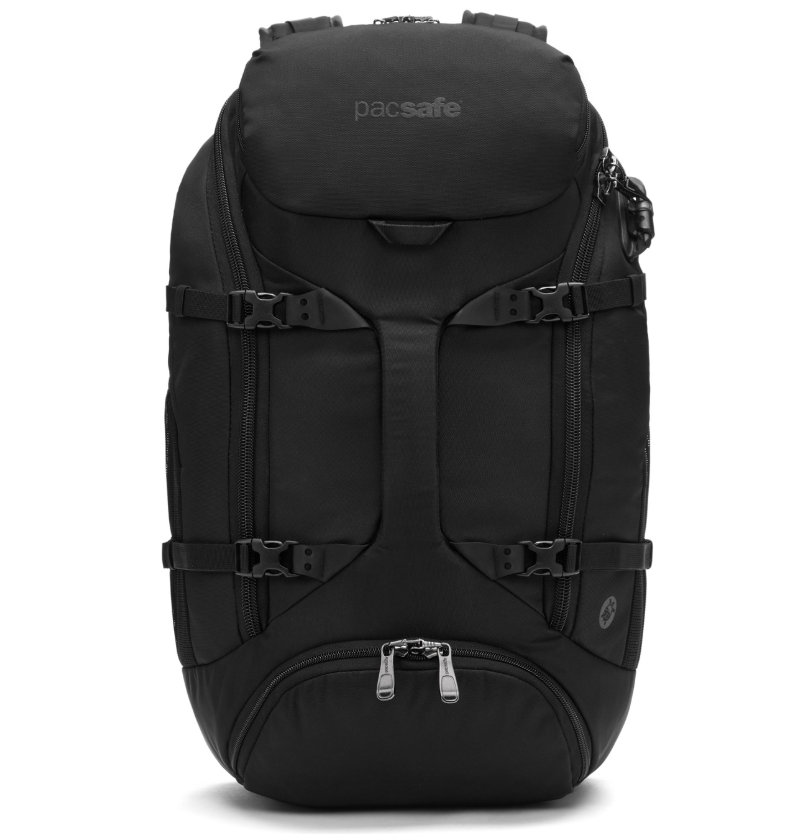
- Best for security: Pacsafe Venturesafe EXP35 — £249.90, 1.51kg
- Best for weekend trips: Fjällräven Splitpack 35L — £140, 1.1kg
- Best British-made: Stubble & Co Travel Backpack 40L — £210, 2.2kg
Comparison Table
| Pack | Cap. | Weight | H×W×D cm | Price | easyJet 45x36x20 | BA / Jet2 56×45×25 |
|---|---|---|---|---|---|---|
| Cabin Max Manhatten 30L | 30L | 0.9kg | 45×36×20 | £29.95 | ✓ | ✓ |
| Cotopaxi Allpa 35L | 35L | 1.33kg | 56×30×25 | £220 | ✗ | ✓ |
| Osprey x Danner 40 | 40L | 1.43kg | 55×35×23 | £190 | ✗ | ✓ |
| Thule Landmark 40L | 40L | 1.44kg | 55×33×25 | £144.99 | ✗ | ✓ |
| Osprey Fairview 40 | 40L | 1.47kg | 55×35×23 | £170 | ✗ | ✓ |
| Osprey Farpoint 40 | 40L | 1.48kg | 55×35×23 | £170 | ✗ | ✓ |
| Pacsafe Venturesafe EXP35 | 35L | 1.51kg | 52×31×20 | £249.90 | ✓ | ✓ |
| Osprey Sojourn Porter 46L | 46L | 1.57kg | 46×40×31 | £126 | ✗ | ✗ |
| Fjällräven Splitpack 35L | 35L | 1.1kg | 48×28×28 | £140 | ✗ | ✓ |
| Stubble & Co Travel Backpack 40L | 40L | 2.2kg | 55×38×24 | £210 | ✗ | ✓ |
| Osprey Sojourn Wheeled 80L | 80L | 3.95kg | 75×47×36 | £360 | ✗ | ✗ hold luggage |
Cabin Max Mahatten 30L — What We Fly easyJet With
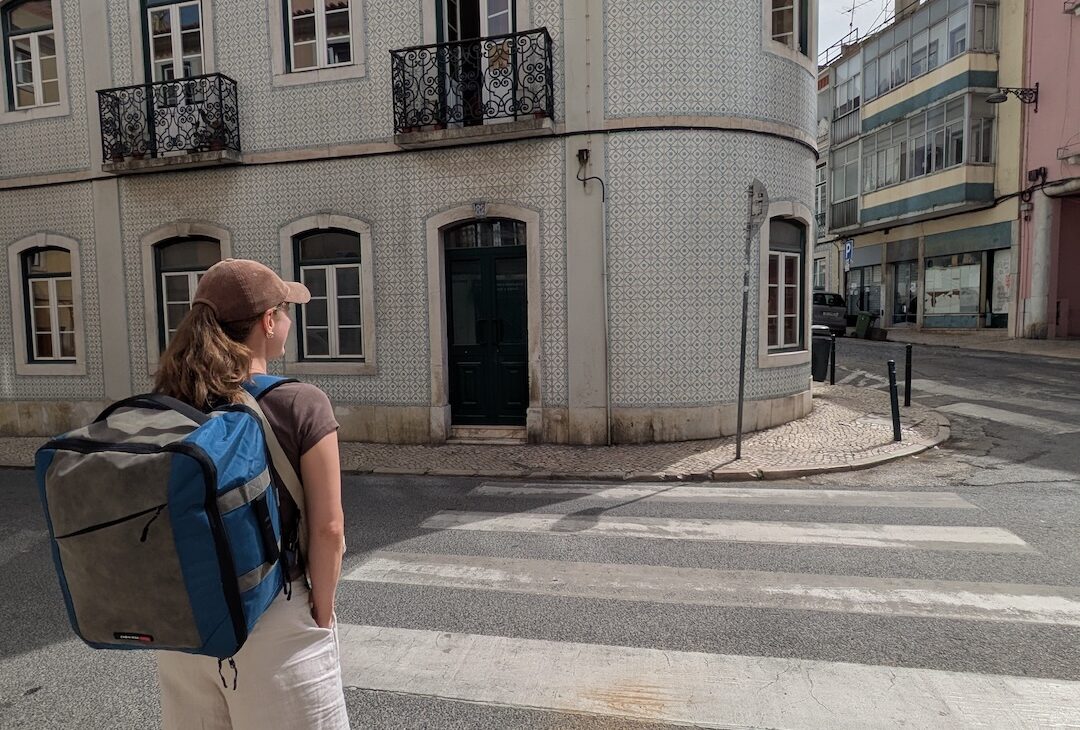
Here’s the honest bit that took us embarrassingly long to work out. For easyJet flights we don’t use a proper travel backpack at all — we both use Cabin Max bags, and it was a genuine game-changer.
The reason is shape. A travel backpack is built around your back, so it curves, it tapers, and the harness eats into the depth. A Cabin Max is built to the exact box the airline measures, so you get square corners and usable volume right to the edges. Same allowance on paper, noticeably more stuff in practice.
The Maths that Decided It For Us
easyJet gives everyone a free under-seat bag of 45 × 36 × 20cm, up to 15kg. Look back at our comparison table and you’ll notice something: not one proper travel backpack on this list fits that. The Farpoint 40 is 55 × 35 × 23cm. It’s a large cabin bag, which on easyJet is a paid add-on from £5.99 each way and it always costs more than that…
On easyJet routes the comparison isn’t just £170 versus £29.95. It’s that plus roughly £12 a return trip in add-ons you simply don’t pay with a 45 × 36 × 20cm bag. Ten return trips and that’s another £120 on top of a £140 price gap.
Which Cabin Max to Get
- Cabin Max Manhattan Backpack 30L — £29.95, 0.9kg. Exactly easyJet cabin size at 45×36×20. Padded 15.6″ laptop compartment. Luke and I both have this backpack in a different colour each.
- Memphis Switch 2-in-1 — £29.95. Shrinks from 45×36×20 down to 40×20×25, so it fits Ryanair’s free allowance too. Useful if you fly both.
- Anode 56L — £69.95, 3.0kg. The only Cabin Max built to easyJet’s exact 56×45×25 large allowance. Everything else in that tier is 55×40×20 and leaves about 12 litres unused. It’s a case rather than a backpack.
What You Give Up
- No hip belt on any model. The entire load hangs off your shoulders. Under 10kg that is not a small difference. Fine for short trips though.
- No frame. The lightness comes from having no structure at all — you need packing cubes to hold the shape.
- Shoulder fatigue over distance. Fine from gate to taxi. Not fine carrying it across a city in August looking for your apartment.
- Zips are the weak point. The most common long-term complaint, and overstuffing is what kills them. If you overstuff because they’re exact measurements, you will get caught out at the gate.
Cotopaxi Allpa 35L — Best Sustainable Travel Pack
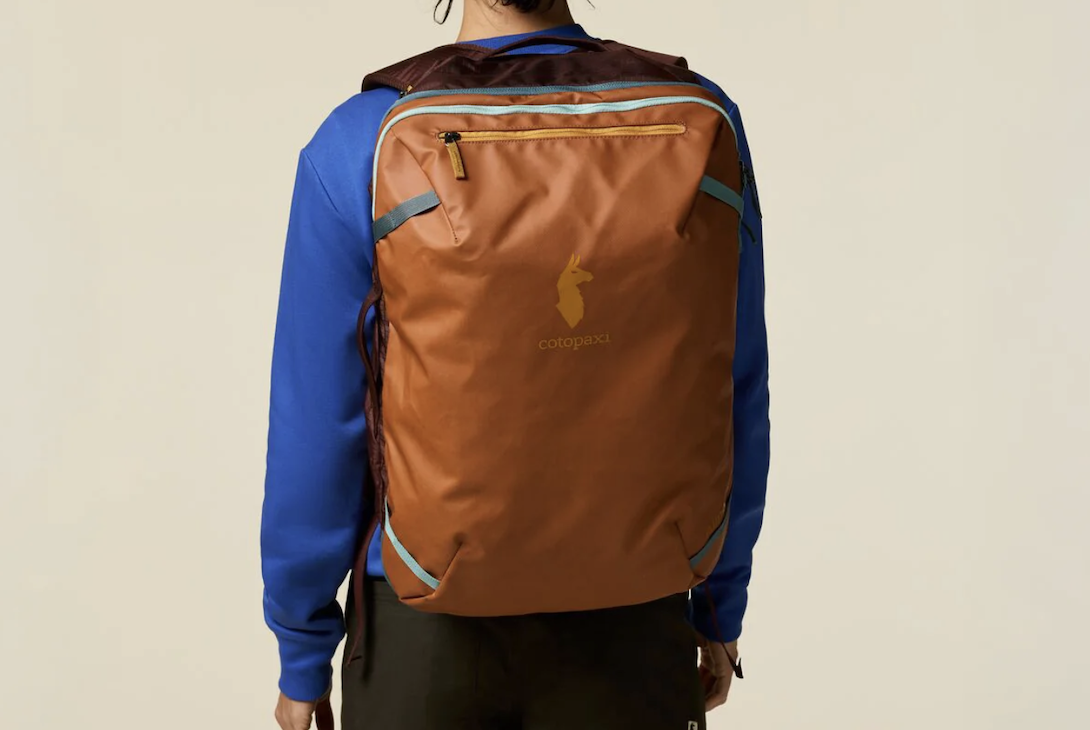
A new addition to our list for 2026. The Cotopaxi Allpa is a carry-on travel pack from B Corp-certified Cotopaxi, made from recycled materials and built to last. It opens fully like a suitcase (so much easier to pack than a top-loader), has clamshell organisation, and the brand puts a real chunk of revenue into grants for poverty alleviation. If you want a travel pack with values to match the trip, this is it.
Osprey x Danner Fairview / Farpoint 40 — Best Travel Backpack for 2026
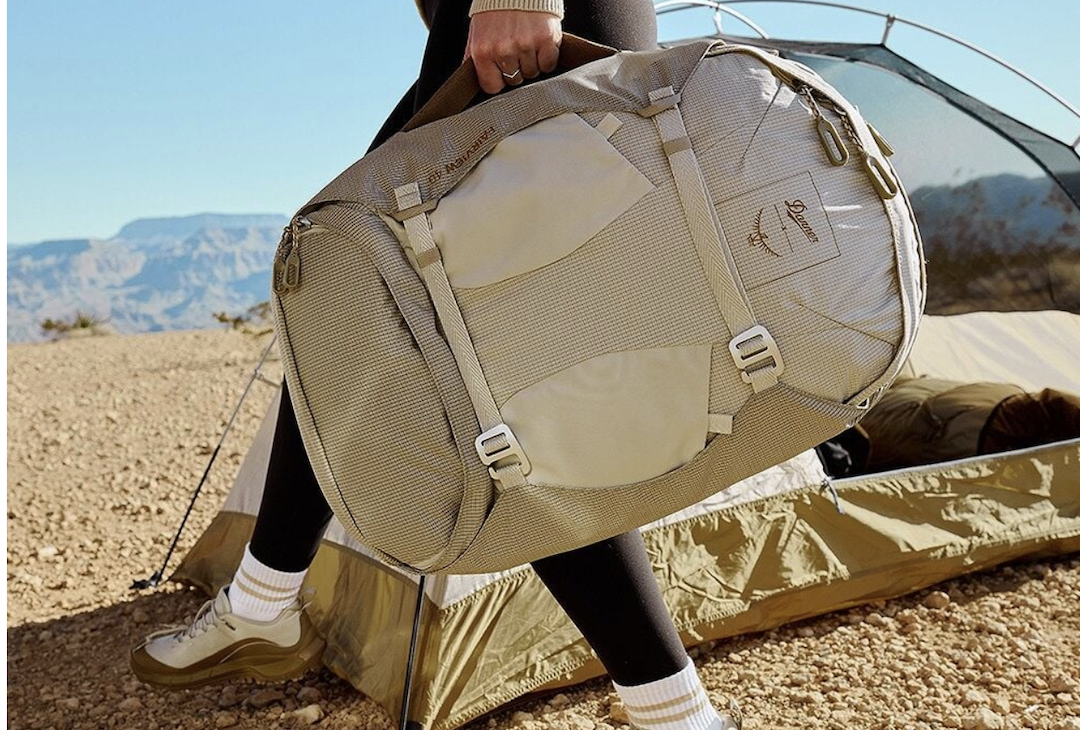
If you’re the kind of traveller who lands in a new country and wants to be out of the city by the end of the week, this is the pack of 2026. The Osprey x Danner Fairview 40 (women’s, Sandy Grey) and the Farpoint 40 (men’s, Sawdust) are a collaboration between two brands that know what they’re doing — Osprey for packs, Danner for boots.
It’s a 40L carry-on-friendly travel pack that elevates one of Osprey’s most trusted designs with advanced materials, premium trims and — our favourite bit — a dedicated footwear compartment built for adventure travel.
Key Features:
- State-of-the-art NanoFly™ main body fabric with UHMWPE ripstop for exceptional durability without added weight
- Gender-specific fit with torso-length adjustability
- A dedicated Boot Bin compartment for footwear storage
- Exclusive High Trail colourway and co-branded detailing
- Elevated hardware and trims
- All Might Guarantee™ warranty
Anyone who’s ever shoved muddy shoes inside a packing cube and prayed knows the problem the boot bin solves. It’s a separated compartment specifically sized for footwear, so your shoes stay away from your clean clothes and your pack stays organised.
Thule Landmark 40L — Best Adventure Travel Pack
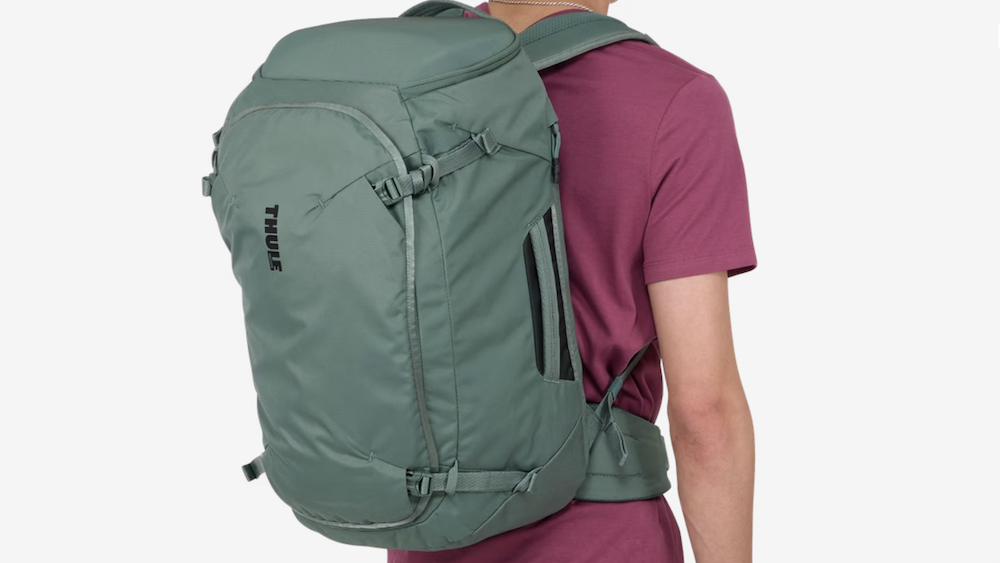
Luke has upgraded to the Thule Landmark 40L and it’s earned its place on this list. It makes for a great adventure backpack and fits as a carry-on for certain airlines (always check the dimensions with yours first).
It’s designed with a handy laptop compartment to keep tech safe whilst travelling. Always keep your laptop in your carry-on, never in checked luggage. It’s a sturdy pack and works perfectly for both short city breaks and longer adventures.
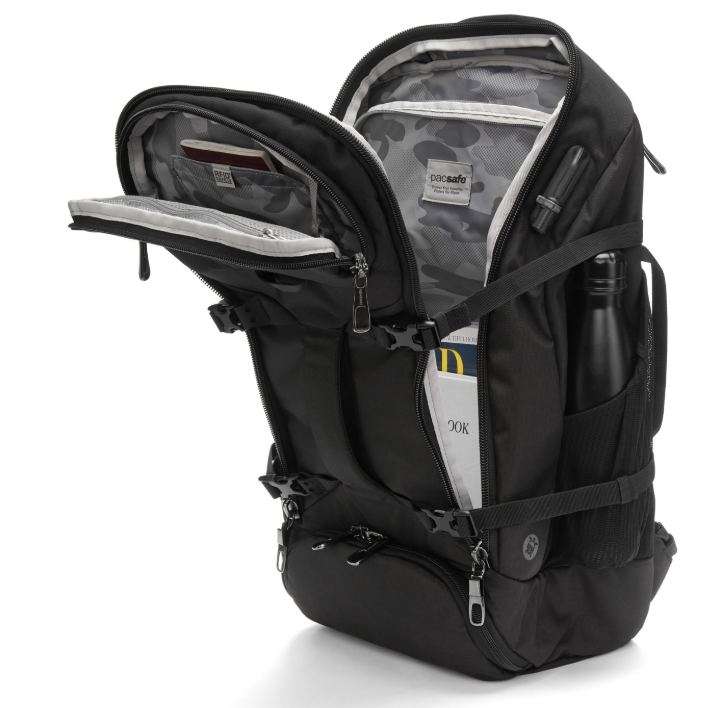
Pacsafe Venturesafe EXP35 — Best for Peace of Mind
Pacsafe Venturesafe EXP35 is one of only two packs here that fits Ryanair’s priority allowance without squashing — 52×31×20cm, sitting exactly on the 20cm depth limit.
Slash-resistant panels, locking zips and an anchor strap, which matters more on night buses and in hostel dorms than most people admit. Made from recycled rPET, PFC-free. The security hardware adds weight and daily faff, and it’s a five-year warranty rather than lifetime.
Osprey Sojourn Porter 46L — Best for Longer Backpacking Trips
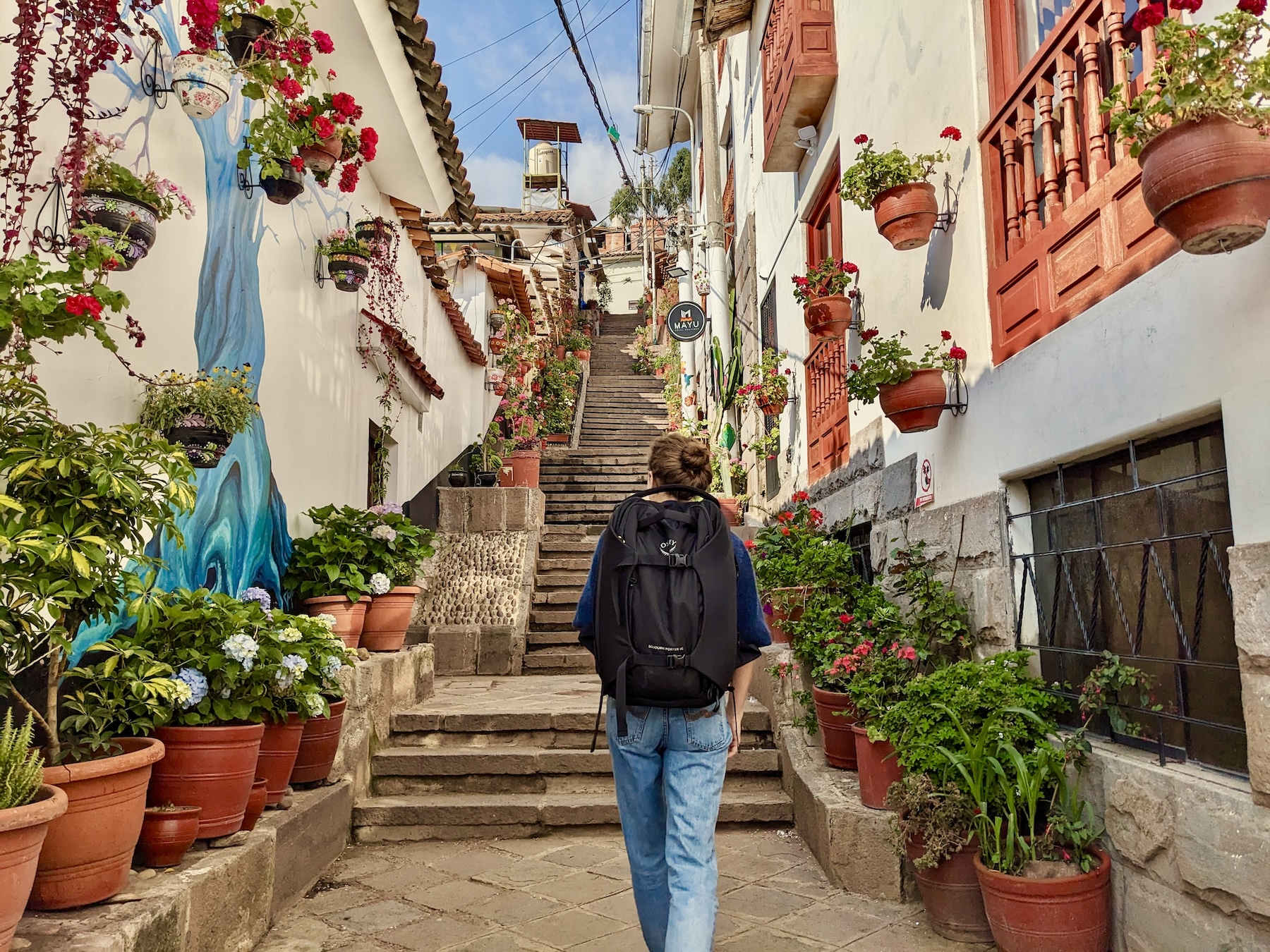
Osprey Sojourn Porter 46L is my personal favourite travel backpack and my most used pack. For trips where you need to carry more kit or longer backpacking adventures, it’s the one to take. The extra 6 litres over the standard 40L makes it ideal for when you need to pack a bit more.
It comes with great in-built compression straps which compress the bag down to a smaller size when it’s not fully loaded — useful when you’ve packed lighter on the way out and want it sleek for sightseeing. Made from 100% recycled fabric, too.
I’ve used this backpack for so many trips, including 5 weeks backpacking in Peru and 2 weeks in India.
Fjällräven Splitpack 35L — Best for Weekend Trips
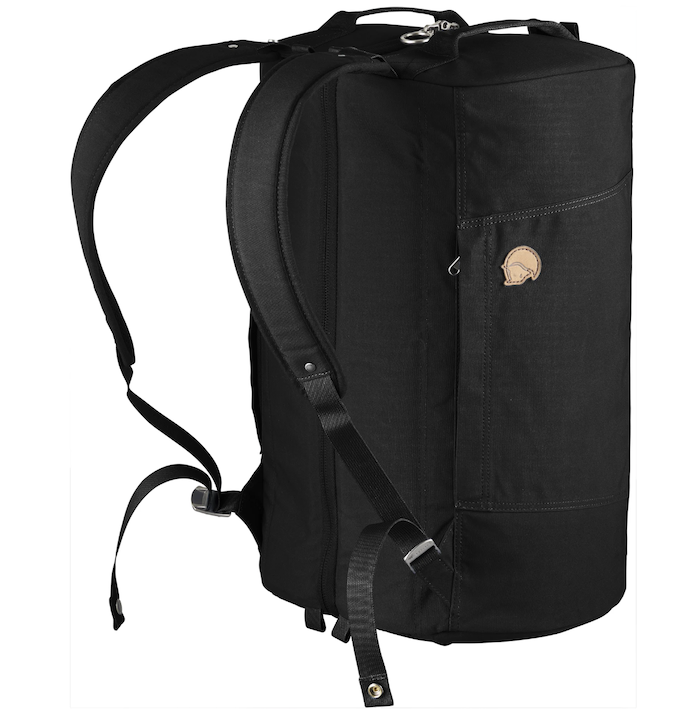
Fjällräven’s Splitpack 35L is the stylish weekender of the group. It unzips down the middle into two equal compartments, so you can keep clean and dirty kit (or two people’s things) properly separate, and the hard-wearing, water-resistant G-1000 Eco fabric is classic Fjällräven. The padded shoulder straps tuck away and there are grab handles on every side, so it works as a backpack or a holdall, and airport staff tend to wave it through as hand luggage. At 35L and around 1.1kg it’s best for long weekends and gym kit rather than a fortnight away, and there’s no hip belt or frame for walking far with it loaded. Around £140 on Amazon UK.
At 35L and around 1.1kg it’s best for long weekends and gym kit rather than a fortnight away, and there’s no hip belt or frame for walking far with it loaded.
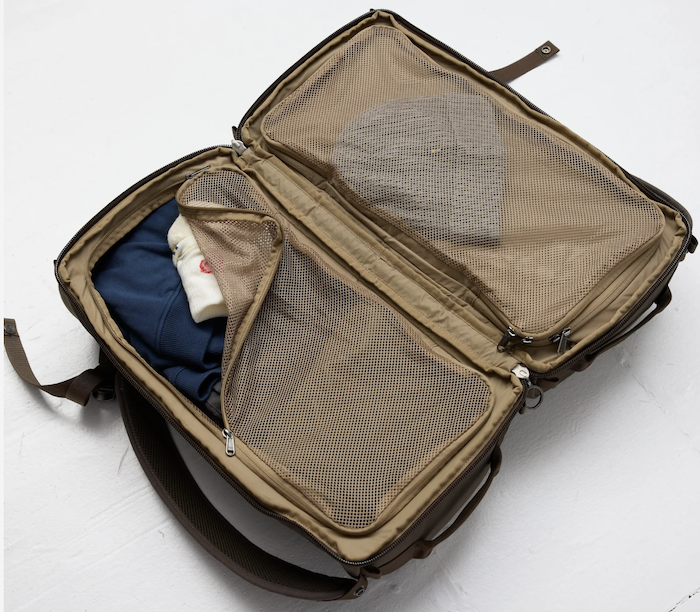
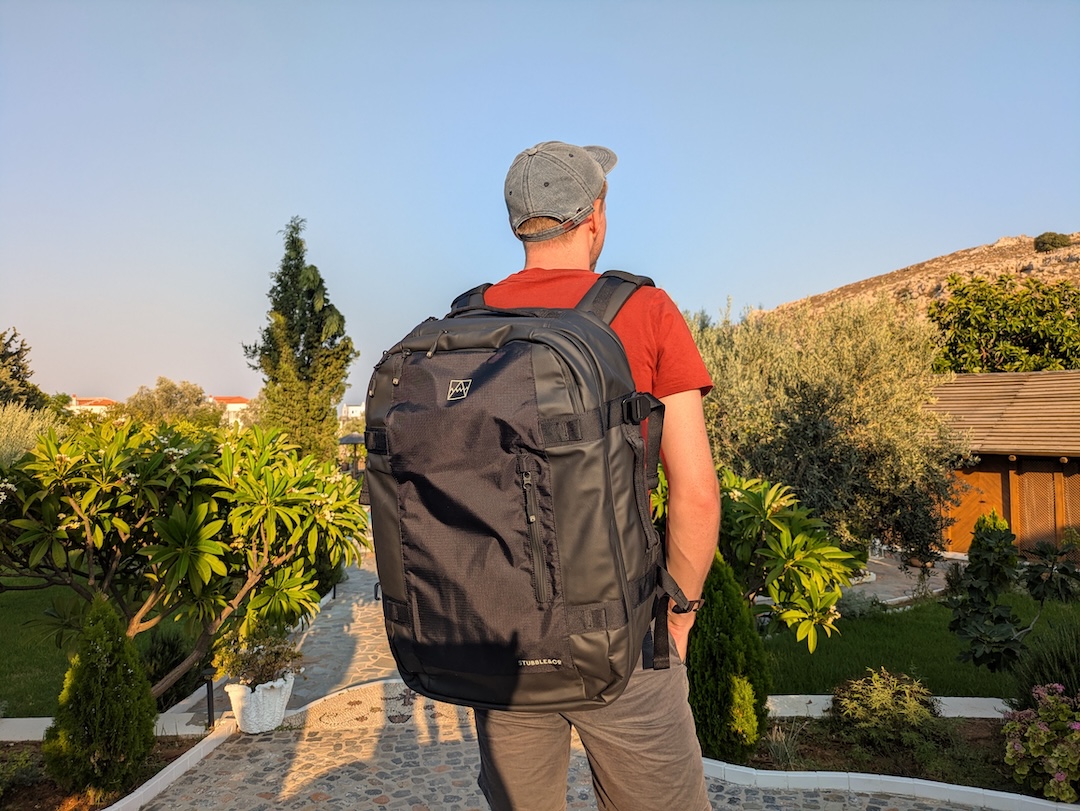
Stubble & Co Travel Backpack 40L — Best British-Made
Stubble & Co’s Travel Backpack 40L is a British favourite with a cult following, and the reviews back it up: 4.9 stars from more than 1,800 of them.
We took this backpack on our Rhodes trip. At 55×38×24cm it’s too big for easyJet’s free under-seat bag, but ideal for the larger BA and Jet2 cabin allowance, and meant we walked straight out the terminal without needing to wait for bags in Rhodes.
It opens flat like a suitcase, which makes packing and living out of it far easier than a top-loader. Luke rates the compartments as the most genius bit of the design: separate zones, a padded 16-inch laptop pocket and a hidden passport pocket. It’s his favourite bag he owns. The weatherproof recycled shell shrugs off British drizzle too.
Plus, we have a 15% off discount code with this link (discount code is applied automatically at checkout).
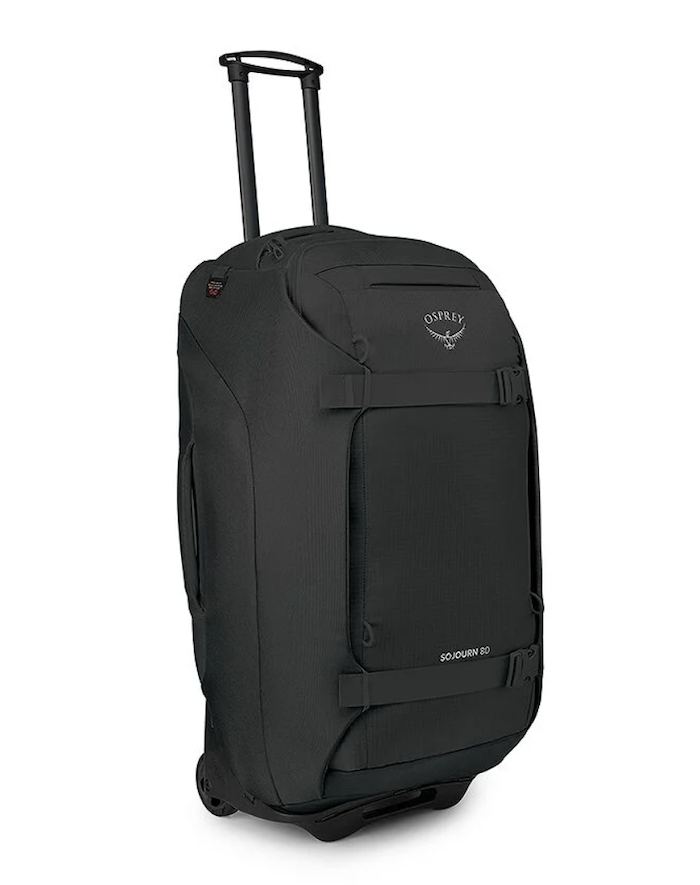
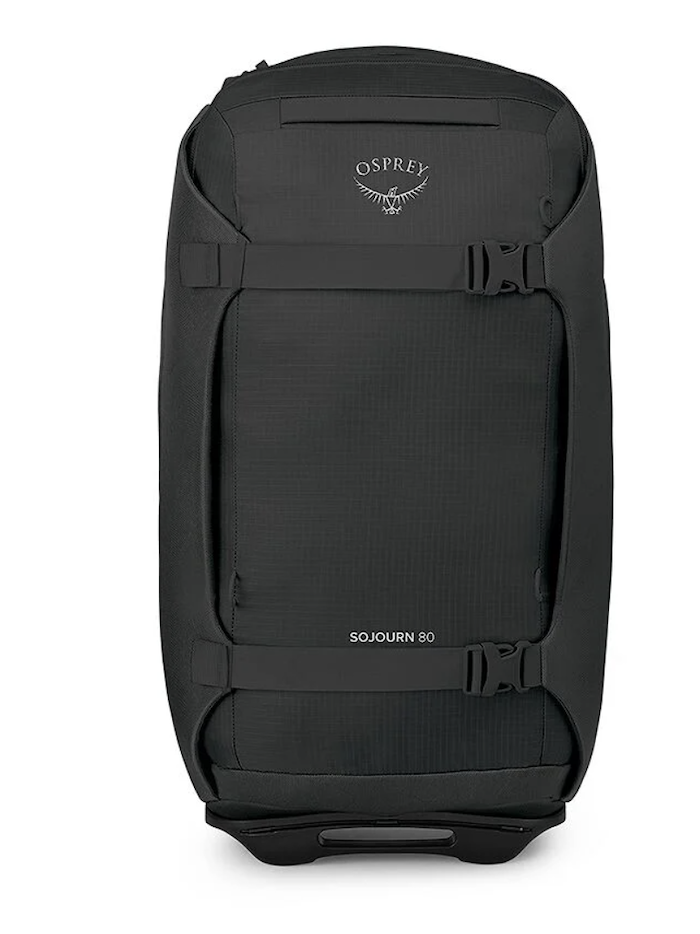
Osprey Sojourn Wheeled Suitcase 80L — Best Wheeled Option
We rarely travel with a suitcase, but when we do the Osprey Sojourn Wheeled Suitcase 80L is our pick. It’s durable, easy to manoeuvre and packs up perfectly when not in use.
The best option for ski trips and long-haul trips where you can’t avoid checking a bag. We took it for our 5-week trip to Peru because we needed the space for hiking boots and waterproofs for the Inca Trail, and always take it for a 3+ month adventure.
Travel Backpacks: Factors to Consider
There are a few things to weigh up before you invest in a backpack. Which one is best depends on what you need from it and what kind of trip you’re on. Here are the factors we always come back to.
Size
Backpack sizes are measured in litres — referring to the volume they hold. Here’s a breakdown so you know what to look for:
- 15–25L: Day bag only. Easily fits a rain jacket, lunch and water bottle. We usually take one 20-25L between the two of us for days out.
- 30–45L: The carry-on sweet spot. We did the three-day Quilotoa Loop hike in Ecuador with one 30L and one 15L between us (no camping gear). The Osprey x Danner Fairview/Farpoint 40, Thule Landmark 40L and Cotopaxi Allpa 35L all live in this range and are typically carry-on friendly.
- 45-60L: The best for longer trips that are more than 2 weeks and don’t require loads of gear. The Sojourn Porter 46L is the best option in this size range in my opinion.
- 60L+: Now you’re into checked-luggage territory. The wheeled Sojourn 80L is the best option for when you really need to pack a lot of kit.
Comfort
By far the most important factor after size. Trust us when we say an uncomfortable rucksack will ruin your trip (and your back). Look for proper shoulder padding, a structured hip belt that takes weight off your shoulders, and an internal frame that distributes load.
Weight
The lighter the pack itself, the better. Once you start packing, weight creeps up fast — and in 2026 there’s really no excuse for a heavy empty bag. Modern fabrics like Osprey’s NanoFly with UHMWPE ripstop are extremely light without sacrificing durability. Don’t grab a cheap ultralight pack though, as it will fall apart on you.
Durability
Backpacks take a beating. Our experience has been that more expensive backpacks last longer — and a lot of the brands we recommend (Osprey, Thule and Cotopaxi) come with strong warranties. Osprey’s All Mighty Guarantee covers any damage, ever, on any pack.
Water Resistant vs Waterproof
Water-resistant packs handle light rain. Waterproof packs handle full downpours. There’s nothing worse than arriving at your accommodation already drenched and finding your spare clothes are damp too. If you’re travelling somewhere with heavy rain, go waterproof. If it’s the odd light shower, water-resistant is fine. Rain covers help, but they’re fiddly and never get full coverage.
Internal Frame
An internal frame gives the pack a structured shape, distributes weight properly and usually allows airflow between your back and the bag. Non-negotiable on anything 30L and up. For a small daypack you can sacrifice the frame for the sake of style or packability if you need to fold the pack away.
Men’s vs Women’s Backpacks
This is something we’ve changed our position on. We used to recommend mostly unisex packs, but the truth is: when a brand has done the work on gender-specific fit, it’s noticeable. Women’s packs tend to have shorter back lengths, narrower shoulder straps and hip belts shaped for wider hips.
The Osprey x Danner pair (Fairview for women, Farpoint for men) is a perfect example. That said, there are shorter men and taller women, so check torso length rather than going by the label alone.
Style
Last on the list because the most comfortable and practical backpacks aren’t always the most stylish. We usually keep things simple by opting for darker colours that don’t show dirt. If your bag is going to end up on a roof rack, a coach hold or a hostel luggage pile, something distinctive is a lot easier to spot.
Which Backpacks Do We Use?
Our Travel Backpacks — I (Charlie) use my Osprey Sojourn Porter 46L as my main travel backpack, and my trusty Fjallraven Bergen 30L that I’ve had for many years. Luke uses Thule backpacks for most trips, but will bring our Osprey Sojourn Wheeled 80L for big trips.
Our Cabin Bags — If we’re flying around Europe on easyJet, which we do quite often, we both have a Cabin Max Manhattan 30L Backpacks that fit so much more than a standard rucksack. These were such a good buy.
Will It Fit as Hand Luggage? UK Cabin Bag Sizes
This is the bit most backpack guides skip, and it’s the one that costs you money at the gate. A 40L pack sounds reasonable until you’re stood at a Ryanair bag sizer at 6am. Here’s what the UK airlines allow for free.
| Airline | Free cabin bag (cm) | Weight | Paid larger bag |
|---|---|---|---|
| British Airways | 56 × 45 × 25 | 23kg | Included, plus a handbag or laptop bag |
| Jet2 | 56 × 45 × 25 | 10kg | Included, plus a 40 × 30 × 15cm personal item |
| easyJet | 45 × 36 × 20 | 15kg | Larger bag from £5.99, varies by route |
| Ryanair | 40 × 30 × 20 | 10kg | Priority adds 55 × 40 × 20cm, £12–£60 |
| Wizz Air | 40 × 30 × 20 | 10kg | Wizz Priority adds 55 × 40 × 23cm |
Airlines change these often, so check before you book. We haven’t included TUI here because we couldn’t verify their current figure from a source we trust.
What this means in practice: a 40L travel pack is not a free Ryanair or Wizz Air bag. It will fit their paid priority allowance and it’s fine on BA and Jet2, but on a basic Ryanair fare you’re looking at a 40 × 30 × 20cm limit, which is daypack territory.
The other trap is weight. Most guides quote pack weights in pounds, which is useless when easyJet gives you 15kg and Ryanair gives you 10kg. Remember the pack’s own weight comes out of your allowance before you’ve put a single sock in it — on a 10kg limit, a 1.6kg pack has taken 16% of your allowance already.
Warranty, Repairs and Your UK Consumer Rights
Nobody writes about this, and it’s arguably more important than which pocket goes where. A backpack you can get repaired is a backpack you own for a decade instead of three years.
- Osprey runs the All Mighty Guarantee — they’ll repair any pack from any era, for any reason. Crucially for us, they have a European repair centre, so you’re not posting a bag to Utah at your own expense.
- Fjällräven sell spare parts and run a repair service, and their G-1000 fabric is designed to be re-waxed rather than replaced.
- Cotopaxi offer a 61-year warranty (a nod to their founder’s life expectancy) covering manufacturing defects.
- Thule offer a 25-year warranty on most packs, though repairs are typically handled as replacements.
Under the Consumer Rights Act 2015, you have up to six years in England and Wales (five in Scotland) to bring a claim against the retailer for goods that weren’t of satisfactory quality. That’s independent of whatever the brand’s warranty says. The brands on this list are great though, so hopefully you won’t need to know this.
How Sustainable Are These Brands, Really?
“Sustainable” gets used loosely in travel gear, so here’s what’s verifiable rather than what’s on the swing tag.
| Brand | What’s Verifiable | Watch Out For |
|---|---|---|
| Cotopaxi | Certified B Corp since 2015, one of the higher impact scores in travel gear. Allpa uses TPU-coated recycled polyester. | Made in the Philippines; they publish factory standards, but verify current claims yourself. |
| Osprey | Recycled and bluesign-approved fabrics across much of the range, and PFAS-free DWR coatings on newer packs. | “Recycled content” percentages vary a lot by model — check the specific pack. |
| Fjällräven | Fair Labor Association member. G-1000 is designed for repair and re-waxing rather than replacement. | Traditional Greenland Wax is petroleum-and-beeswax based, so not vegan. |
| Thüle | Long warranty periods, which is a genuine sustainability lever. | Less published on materials sourcing than the others here. |
A note for vegan travellers: Most technical packs are entirely synthetic and therefore vegan by default. The things to check are leather trim on heritage-styled packs, wool blends in back panels, and beeswax-based proofing products like Fjällräven’s Greenland Wax. If it matters to you, the Osprey and Cotopaxi packs on this list are the safest bets.
The most sustainable backpack is the one you already own. If yours still works, keep it. This guide is for when it doesn’t.
How to Measure Your Torso (and Why It Matters More Than the Label)
Every guide tells you to consider fit and then never explains how. Here’s the actual method, which takes two minutes and a friend.
- Tilt your head forward and find the bony bump at the base of your neck — that’s your C7 vertebra, the top of the measurement.
- Put your hands on your hips with thumbs pointing backwards. The imaginary line between your thumbs is the bottom of the measurement.
- Have someone measure between those two points along your spine. That’s your torso length — and it has nothing to do with your height.
- Under about 43cm you generally want a small, 43–48cm a medium, above that a large. Check each brand’s own chart, as they differ.
This is why we’ve stopped recommending unisex packs by default. Women’s packs like the Osprey Fairview and Tempest have shorter back panels, narrower shoulder straps and hip belts shaped differently — but there are short men and tall women, so measure rather than going by the label. A men’s pack in a small may fit you better than a women’s in a medium.
How We Chose These Packs
Being straight with you about what we have and haven’t used, because plenty of gear guides aren’t.
Packs we’ve actually lived with: Charlie’s Fjällräven Bergen 30L (five-plus years, including the Quilotoa Loop in Ecuador), the Osprey Sojourn Porter 46L, the Osprey Sojourn Wheeled Suitcase 80L, and Luke’s Thule Capstone 40L. Those are the ones where we can tell you how the fabric wears, where the stitching goes first and whether the straps hold their padding.
Everything else on this list is researched, not tested. We’ve gone on published specs, materials, warranty terms, brand track record and a lot of reading. We think they’re the right recommendations — but we’re not going to pretend we’ve carried all eleven of them across a continent.
We’d rather tell you that than claim a fortnight’s testing counts as long-term experience.
My Personal Backpack Opinion
- Cabin Max wins for easyJet flight where you need maximum cabin bag space. For three or four short European breaks a year, Cabin Max is the backpack to buy.
- Osprey wins for longer trips, comfort and durability. For longer multi-week or multi-month trips, Osprey is the brand to buy.
Frequently Asked Questions
For carry-on-only trips, 35–40L is the sweet spot — big enough for a couple of weeks if you pack properly, small enough to fit most paid cabin allowances. Go to 46L or above only if you’re checking a bag anyway. Under 30L and you’re into daypack territory.
It depends entirely on the airline. A 40L pack fits BA and Jet2’s free allowance and Ryanair or Wizz Air’s paid priority allowance, but not their free under-seat allowance. See the table above.
You can, but top-loading hiking packs are a faff when you’re living out of a bag — you end up unpacking everything to reach the bottom. Travel packs open like a suitcase, which is far better for hostels and hotels. If you’re doing both on one trip, look for a travel-to-trail pack like the Farpoint or Fairview.
Water-resistant handles drizzle and light showers; waterproof means roll-top closures and welded seams that keep your kit dry in a genuine downpour. Most packs are the former. If you’re heading somewhere with a proper rainy season, either go waterproof or carry a rain cover and a dry bag for electronics.
Yes, when the brand has done the work — shorter back length, narrower shoulder straps, differently shaped hip belt. Measure your torso rather than assuming, though, because the label matters less than the fit.
With reasonable care, a decade or more. Charlie’s Bergen is five years in and still going. Buy something repairable from a brand with a real warranty and it becomes the cheapest option over time, even if it isn’t on the day you buy it.
Backpack if you’re on public transport, cobbles, or anywhere with steps. Wheeled if you’re mostly airports and pavements and carrying weight hurts your back. The Osprey Sojourn Wheeled 80L is our compromise for longer trips where we know we won’t be carrying it far.