
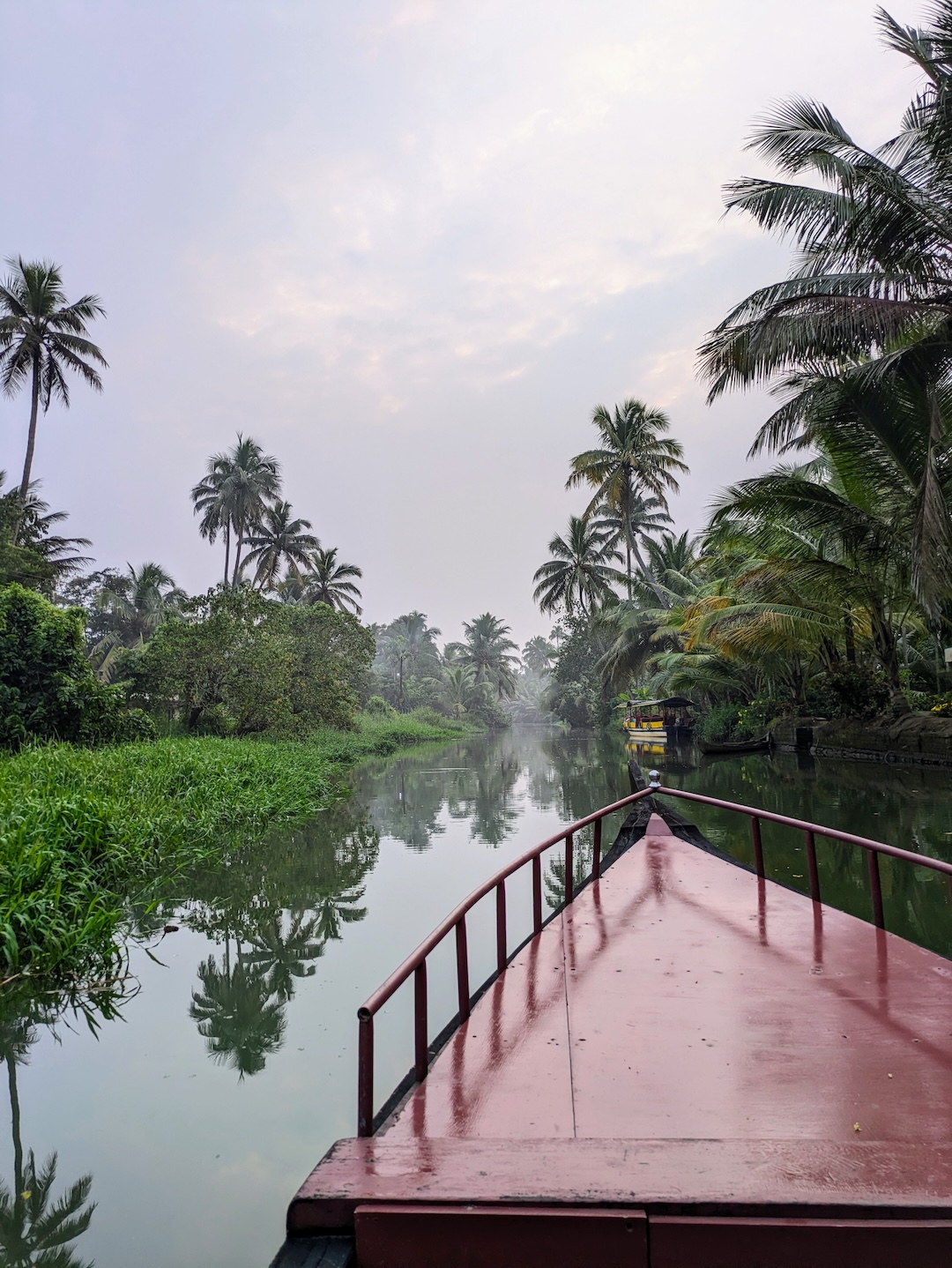

We chose Kumarakom over Alleppey on purpose. Alleppey is the houseboat capital, with the biggest fleet and the biggest crowds. Kumarakom, across Vembanad Lake, is quieter, more villagey and the reason our backwater days felt peaceful rather than processional.
We spent two nights on the Kerala backwaters in November. This guide covers where we stayed, what it was like, and the resorts and homestays we’d book if we went back with a different budget.
One thing to know upfront: Kumarakom isn’t a town you wander. It’s a long, thin stretch of lakeshore, paddy fields and canals, and your accommodation is your base for everything. Get the stay right and the backwaters do the rest.
Kumarakom at a Glance: Our Top Picks
- Best for a community stay (where we stayed): Little Chembaka
- Best eco resort: Coconut Lagoon
- Best luxury resort: Kumarakom Lake Resort
- Best heritage hotel: Taj Kumarakom Resort & Spa
- Best for food: Philipkutty’s Farm
- Best for a wellness break: Niraamaya Retreats Backwaters & Beyond
- Best for families: Rhythm Kumarakom
- Best on a budget: KTDC Waterscapes
- Best for birdwatchers: KTDC Waterscapes
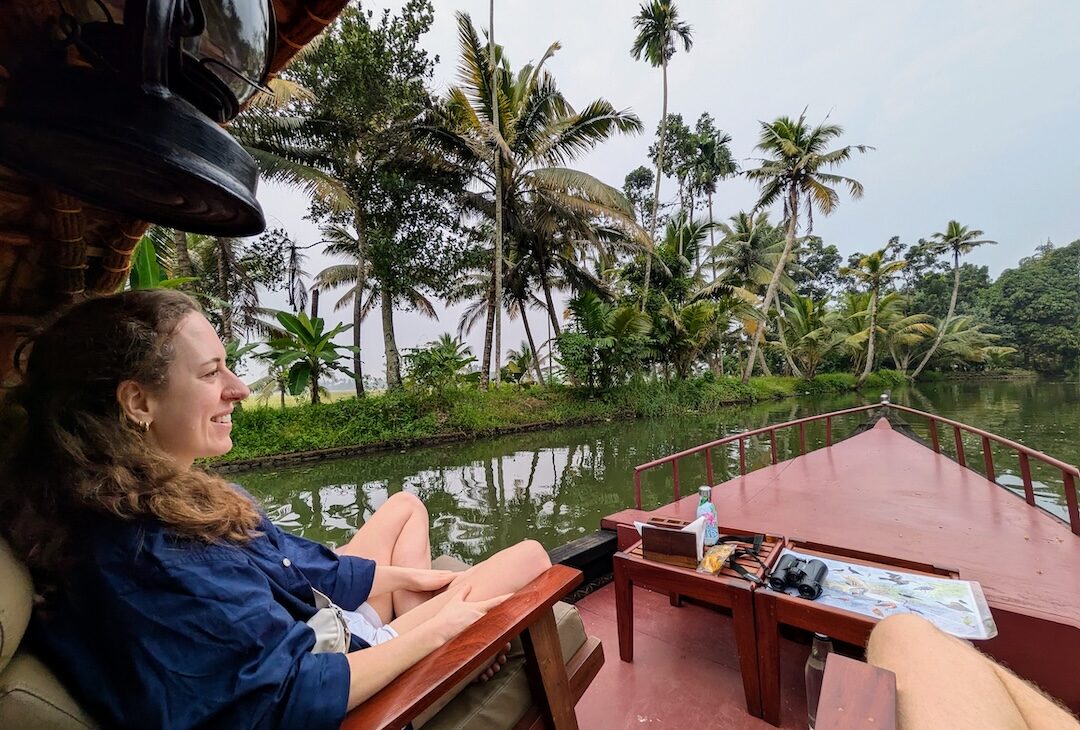
Kumarakom or Alleppey?
Kumarakom, for us. Both places sit on the same lake and both get you onto the backwaters. What makes the difference is how busy or quiet it is.
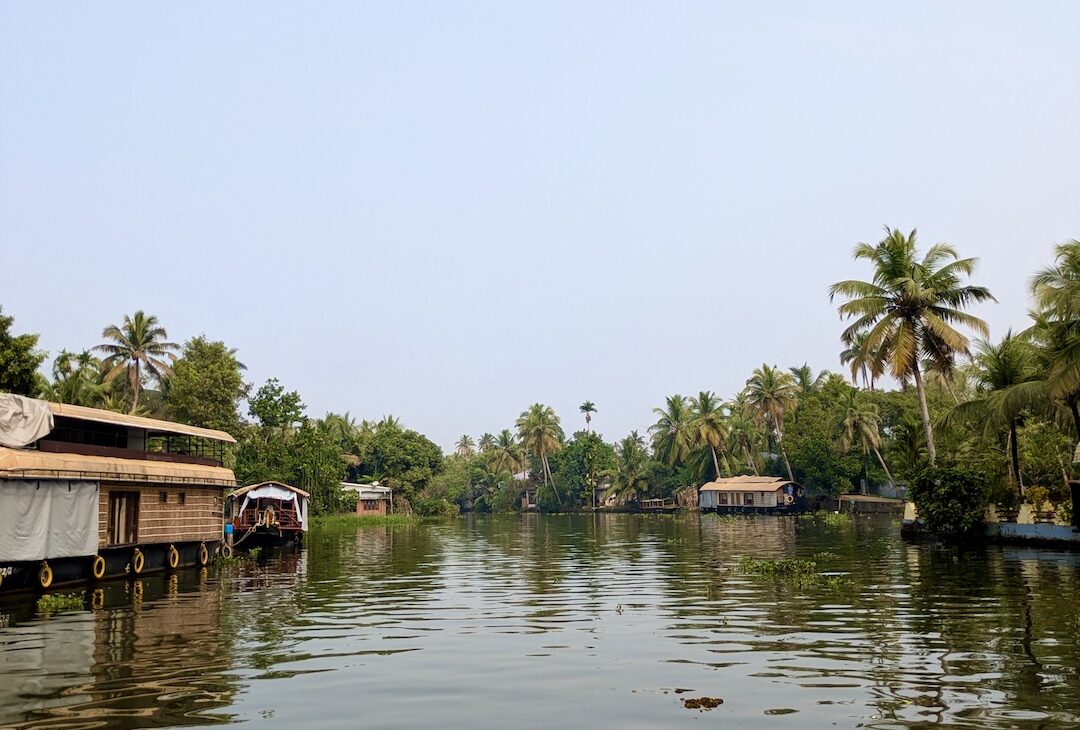
In Alleppey the water is overcrowded by a fleet of houseboats. Alleppey is the main hub where day-trippers and those staying overnight on houseboats depart from. Even in the backwaters, we saw well over a hundred boats tied up hull to hull in the moorings ready to depart from Alleppey. We read plenty of blogs and reviews saying it was busy, crowded and unpleasant.
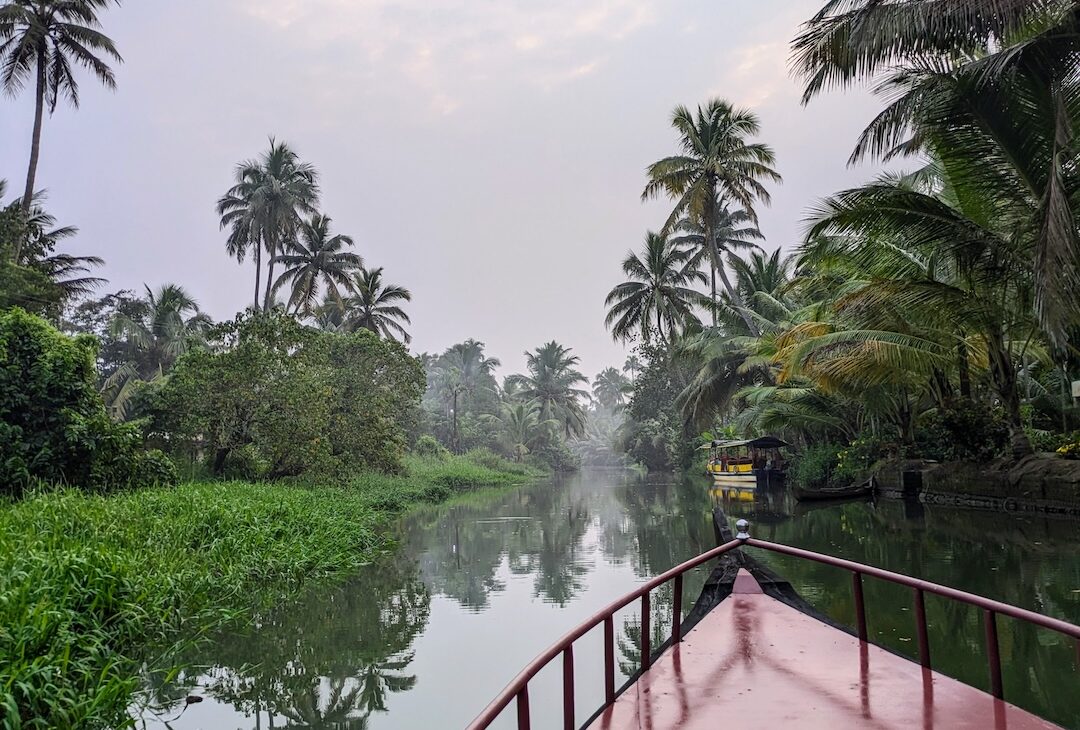
In Kumarakom, the canals are narrow enough that houseboats physically can’t get in, so a sunrise canoe from your homestay means you have the waterways almost to yourself. We saw no other boats for the first 30 minutes of our sunrise boat trip on the backwaters, and it made the experience magical.
Alleppey does have a proper town with more restaurants and its own railway station, so it wins on logistics. But if you’re coming for the backwaters rather than the town, Kumarakom is the calmer base. We’ve written up the full houseboat question, and what we did instead, in our Kerala houseboat post.
Where We Stayed: Little Chembaka
Little Chembaka is a one-bedroom villa on the water, and it’s not a homestay in the traditional sense because you’re not in someone’s house. It’s owned by a local cooperative who all contribute to running it and staying there supports 15 local families. A kitchen is attached to the villa where the team cook for your meals and the food was some of the best we ate in Kerala.
Jes, the host, is brilliant. He’s chatty, keen to share stories about local life and Kerala more widely, and his English is excellent. We loved arriving in the evening to the whole team cooking to music in the kitchen, and breakfast had the same easy, welcoming feel. It’s less a place to sleep than an experience, and after two nights it felt like we’d been let in on something special.
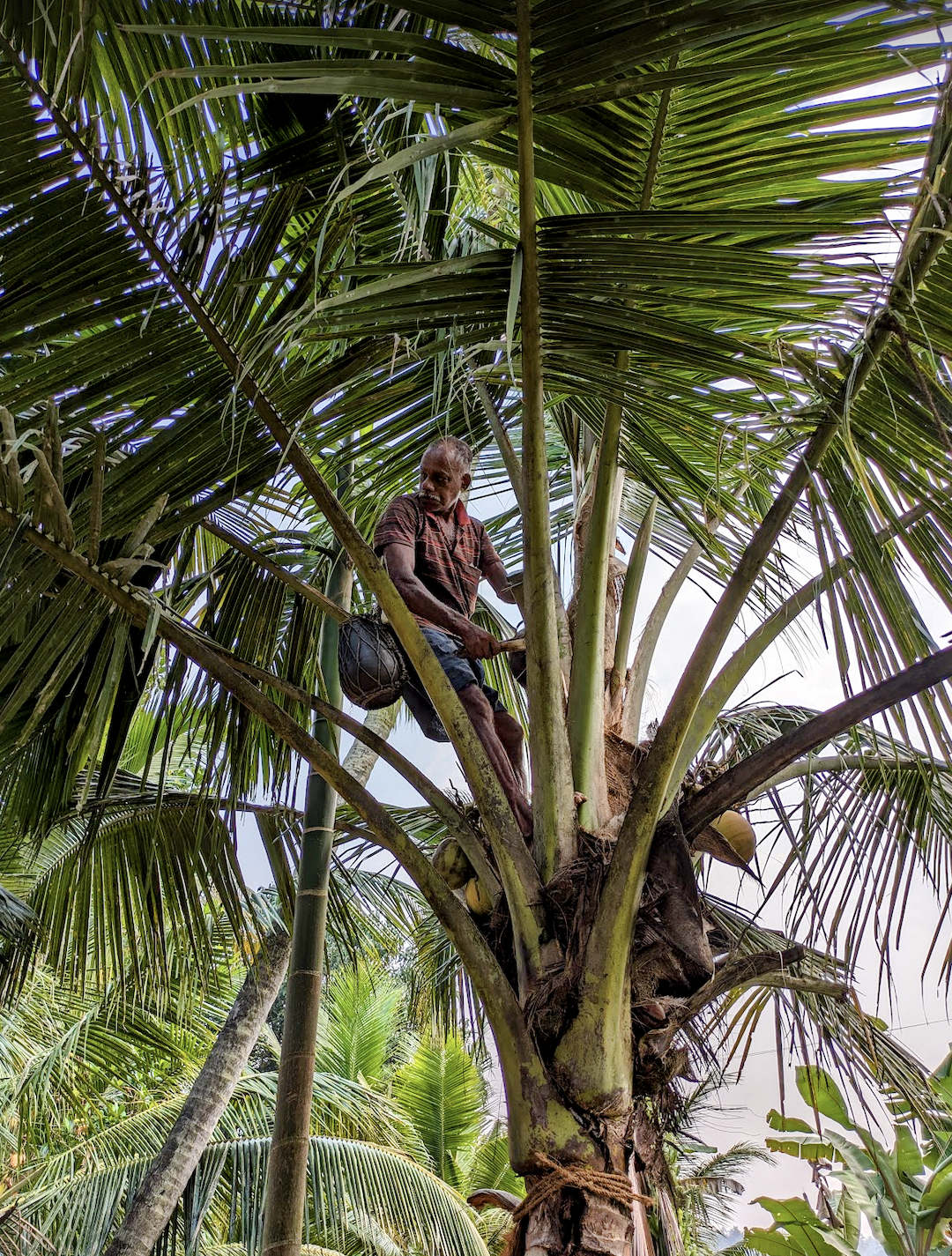
The sunrise canoe trip leaves from right outside, five steps from your room. At 6am this stretch of the backwaters was glassy, misty and silent, and the trip had a real community-tourism focus: we stopped at a rope maker working coconut fibre, watched toddy being tapped from a palm, and pulled in at the local tea shop for a chai with the men putting the world to rights. The private canoe was ₹4,500 per person (around £38), which is roughly a tenth of a houseboat night.
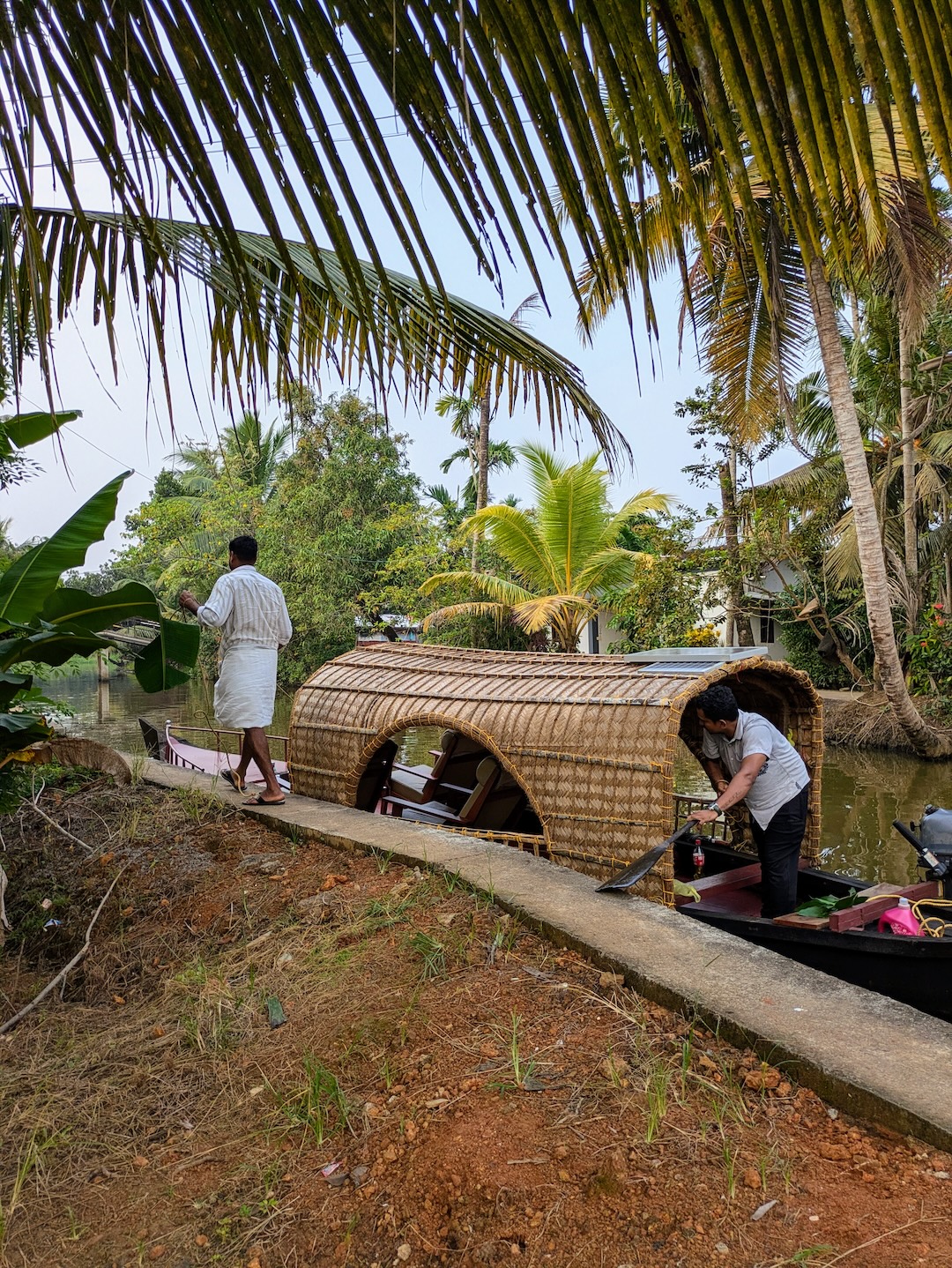
We also did a cooking class with Jes, and it was far bigger than we expected. It started with shopping for vegetables in the village, watching coconut oil being pressed and picking up spices at the spice shop, then a walk along a back route to see spices and fruit growing. The cooking itself was what Jes calls “teppanyaki style”: we mostly watched and chatted while he cooked and talked through each recipe, though we did cook a curry ourselves. The kitchen is a lovely space to spend an afternoon in. The one caveat is that the class cost more than we’d assumed, so check the price before you commit.
The honest downside is that Little Chembaka sits right next to a road, and there’s traffic noise during the day and at night. It didn’t spoil the stay for us, but if you’re a light sleeper it’s worth knowing. If you don’t mind that and you like community-style tourism, we’d recommend it without hesitation for a night or two.
Book here: Little Chembaka


The Best Resorts in Kumarakom
We only stayed at Little Chembaka, but we spent a fair amount of time on the water looking at the alternatives, and did a lot of research before choosing. These are the ones we’d consider for a return trip, roughly in order of price. All of them are on or beside Vembanad Lake unless we say otherwise.
Coconut Lagoon: The Eco Resort We’d Pick Next
Coconut Lagoon is CGH Earth’s backwater resort on the lake, and there’s no road in, so you arrive by boat. The cottages are antique tharavad homes that were dismantled elsewhere in Kerala and reassembled here, which means carved wooden doors, deep verandas and rooms that feel a hundred years old because they are.
What we liked about it, beyond the setting, is that the days are built around the backwaters rather than a pool bar. There’s sunset kayaking, a resident naturalist who leads dawn bird walks, a butterfly garden and a small Ayurveda centre. If the appeal of a houseboat was always waking up on the backwaters in comfort, this does it better and you can get out onto the water every day. Expect rates from around £100 to £180 a night depending on the season and cottage.
Book here: Coconut Lagoon
Kumarakom Lake Resort: The Big Luxury One
Kumarakom Lake Resort is the name that comes up first when anyone talks about staying here. It’s a 25-acre heritage resort with around 50 villas built from the timber of century-old ancestral homes, an infinity pool that runs along the lakeshore, a meandering pool that some villas open straight onto, two restaurants and a serious Ayurveda spa. It’s also where the King, then Prince Charles, spent his 65th birthday in 2013.
It’s the most complete resort on the lake, and if you want everything on site with a lot of polish, this is it. It’s also the priciest of the mainstream options, typically £200 to £350 a night, and on our budget of around £100 a night it was a look-but-don’t-book. If it’s a honeymoon or a big-birthday trip, it’s the obvious choice.
Book here: Kumarakom Lake Resort
Taj Kumarakom Resort & Spa: Colonial Heritage by the Bird Sanctuary
The Taj is built around Baker’s Bungalow, an 1880s house that belonged to a British missionary family, and it sits at the northern end of Kumarakom right beside the bird sanctuary. The grounds are lush and full of birds, the rooms are in cottages spread through the gardens, and it has the quiet, slightly old-fashioned feel that the newer resorts don’t.
We’d pick it over Kumarakom Lake Resort if you care more about heritage and gardens than infinity pools. Rates are usually a step below KLR, from around £180 a night, though it varies a lot by date.
Book here: Taj Kumarakom Resort & Spa
Niraamaya Retreats Backwaters & Beyond: For a Wellness Stay
Niraamaya is the wellness option, a small resort of lakefront villas and cottages built around an Ayurveda and yoga programme. It’s calm, adults-oriented in feel, and the kind of place people go for three or four nights of treatments rather than a stopover. Reviews consistently praise the spa and the quiet. From around £180 a night.
Book here: Niraamaya Retreats Backwaters & Beyond
Rhythm Kumarakom: Newer, Sleeker, With a Pool
Rhythm is one of the newer resorts on the lake and its main selling point is a 156-metre pool, said to be the longest in India, running along the waterfront. The villas and suites are modern rather than heritage, and it sits in the mid-luxury bracket, often from around £120 a night. Good if you want lake views, plenty of space to swim and a place to play table tennis with kids.
Book here: Rhythm Kumarakom
Abad Whispering Palms: The Best Value Lakeside Resort
If you want a resort on the lake without resort prices, Whispering Palms is the one we’d look at. It has cottages and a few pool villas, a pool, a small spa and a lakeside lawn, and it regularly comes in from around £60 to £90 a night. It’s not fancy, but the setting is the same water everyone else is paying for.
Book here: Abad Whispering Palms
KTDC Waterscapes: Inside the Bird Sanctuary
Waterscapes is run by Kerala Tourism and sits inside the Kumarakom Bird Sanctuary itself, with cottages on stilts over the water and connected by walkways. It’s simpler and quaint compared to the private resorts, but if you’re here for the birds, waking up inside the sanctuary is hard to beat, and it’s one of the cheapest lakeside stays at around £40 to £70 a night. For value, this is pretty unbeatable and we’d probably choose it for a return backpacking trip.
Book here: KTDC Waterscapes
Where to Stay Near Kumarakom: Philipkutty’s Farm
Half an hour north at Vechoor, Philipkutty’s Farm is the famous one: a working farm on an island in the lake, run by the Mathew family, with six traditional villas, all meals from the farm and a cooking demonstration in the family kitchen. It’s direct-book only and roughly £300 a night full board for two, so it’s the splurge version of a homestay rather than a resort. You can also take cooking classes here.
Book here: Philipkutty’s Farm
Further south, Munroe Island near Kollam is the quieter, smaller-scale version of the backwaters with village homestays and canoe trips through the narrowest canals. We didn’t stay there ourselves, but it was the alternative we shortlisted.
How to Get to Kumarakom
Kumarakom doesn’t have its own railway station. The gateway is Kottayam, about 15km away, which has direct trains from Kochi (Ernakulam) taking around 1.5 hours, and from Varkala and Thiruvananthapuram heading north.
From Kottayam it’s a 30-minute taxi, and every stay we’ve listed can arrange a pickup if you ask.
By road it’s roughly 1.5 to 2 hours from Kochi and we travelled directly by taxi.
If you’re coming from Munnar, it is a long four-to-five-hour drive. We’d suggest breaking it with a night on the way rather than doing it in one go, and our Kerala itinerary shows how best to fit it together, and our things to know before you visit Kerala post covers visas, safety, alcohol rules and the other practical questions.
Once you’re there, you won’t need a car. Everything happens from your jetty.
How Many Nights Do You Need in Kumarakom?
Two nights is best for Kumarakom. That gives you one sunrise canoe, one lazy afternoon on the water or by the pool, and enough evenings to enjoy the local cuisine. We had two nights at Little Chembaka and it was the perfect amount. Three would suit a resort stay where you want to use the spa and do a bird walk as well, but more than that and you’ll start to feel the lack of a town.
Best Time to Stay in Kumarakom
We visited Kumarakom in November, just before peak season. It was ideal weather: misty dawns, warm mornings and glassy water, with only the odd rainy spell. December to February is the driest and most reliable window, but also the busiest and priciest for the resorts, so book the lake-view rooms early. June to September is monsoon, when the backwaters are at their greenest and rates drop noticeably, if you don’t mind the daily downpours.
Kumarakom surprised us. We’d braced ourselves for the backwaters being a bit of a brochure cliché and instead found quiet canals, a host who spent hours talking with us about Kerala, and a sunrise that ranks among the best mornings of the whole trip. Pick a place on the water, whether that’s a community villa like Little Chembaka or a boat-only eco resort like Coconut Lagoon, book the canoe for 6am, and let the lake set the pace.
Kumarakom FAQ
Kumarakom Lake Resort is the better choice if you want the full luxury resort experience with infinity pools, two restaurants and a big spa. Taj Kumarakom is the better choice if you’d rather have colonial heritage, quiet gardens and the bird sanctuary on your doorstep, usually for a little less money.
Swimming in Vembanad Lake is not something the resorts encourage, as the water is brackish and busy with boats, so every resort here has its own pool instead. Kayaking and canoeing are the ways to get onto the water.
Kumarakom is on a lake rather than the coast, so there is no beach. The nearest sea is at Marari Beach near Alleppey, about an hour and a half away, and many people pair a backwater stay with a couple of nights there.
Most resorts offer houseboat day cruises or sunset cruises as a paid extra rather than including them, and Kumarakom Lake Resort has its own private houseboats. A homestay-arranged canoe trip is cheaper and gets into channels the houseboats can’t reach.