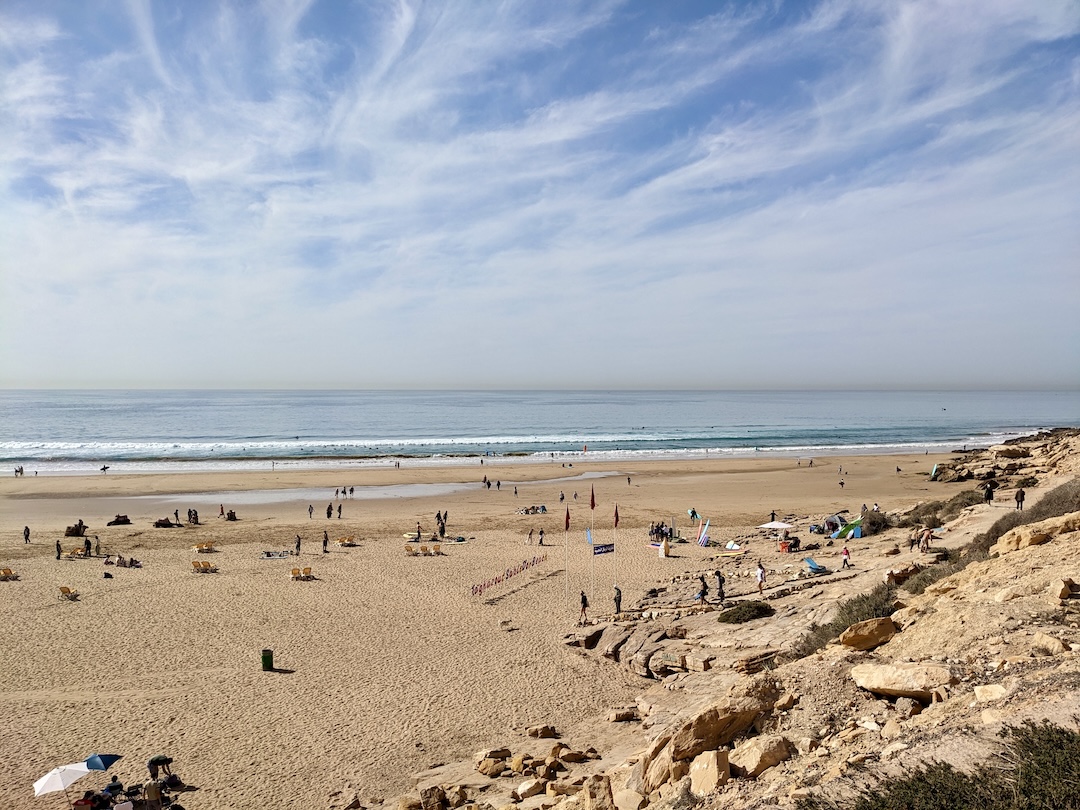

Taghazout is where I learned to surf. Before our first trip in 2017 I’d never stood on a board, and after a few lessons we were confident enough to hire our own kit and paddle out on our own. That’s the thing about surfing here — the waves are patient with beginners in a way most surf towns aren’t.
Luke and I are beginners. We surf at Panorama Beach and we’re happy there. This guide is honest about which breaks we’ve actually surfed and which ones we’re only passing on. For everything else about the village, start with our Taghazout travel guide.
In a Rush? Best Hotels in Taghazout
Garden Taghazout Bay
Modern beach resort on Taghazout Bay with a big pool and easy access to surf schools. The comfortable family/couple pick.
Check ratesDar Imim Surf House
Laid-back surf house steps from the break, with board storage, a sociable rooftop and easy access to lessons.
Check ratesMunga Guesthouse
Small, friendly guesthouse in the village with simple, comfortable rooms — the homely budget choice.
Check ratesTaghazout surf breaks by ability
Taghazout’s coast is dotted with famous breaks and they are genuinely different from each other. Picking the right one for your level matters more here than picking the prettiest beach.
Best breaks for beginners
Panorama Beach — The mellow beach break on the village doorstep, less than a 5-minute walk out of Taghazout. This is our break. It’s where we learned, and it’s where we still surf on every trip. I like to call it ‘soft surf’. If you’re an experienced surfer you’ll find it too tame.
Hash Point — Another forgiving beach break that suits beginners and improvers.
Banana Point, Tamraght — Next door in Tamraght, and the beginner break to head for if you’re based there. Tamraght is a 15-minute drive or an hour’s walk along the boardwalk, so it’s easy to reach either way.
The advanced breaks (which we haven’t surfed)
We’re not going to pretend otherwise: these are beyond us. We include them because they’re why serious surfers come here, and because you’ll hear the names constantly around the village.
Anchor Point — The region’s classic right-hander and the name everyone knows. Even if you’re not surfing it, it’s worth the 30-minute walk from the village along the beaches, with a bit of easy scrambling at the end. The rocky outcrop has uninterrupted sea views and it’s a lovely spot at sunset. We’ve watched better surfers than us from up there plenty of times.
Killer Point — The other serious break on this stretch of coast. We haven’t surfed it and won’t pretend to know how it handles. If you’re at that level, ask at your surf school rather than taking our word for anything.
What about Imsouane?
Honest answer: we haven’t been. We’ve planned to on more than one trip, and every time we’ve ended up staying put because we like being in Taghazout too much.
What we’ve heard from other travellers is mixed. The bay and the breaks are supposed to be brilliant, with famously long rides. The village itself gets less glowing reviews — people mention it being dirty, and there’s the same crop of very hipster cafes you find creeping along this coast. Take that as second-hand, because it is.
Board and wetsuit hire in Taghazout
You don’t need to bring kit. Hire is cheap and there are plenty of surf shops in town at a range of qualities and prices.
We rented a board and wetsuit for 80 dirhams per day from Ezequiel, who is right by the steps down from the village onto Panorama beach. That’s where we’d send a friend.
You’ll want a wetsuit year-round. Sea temperatures around here sit at roughly 17-21°C, so it’s comfortable in neoprene but never warm enough for boardshorts. See our Taghazout weather guide for month-by-month sea temperatures.
Surf lessons in Taghazout
We used Habo Surf. We had lessons with them first, then once we were confident in the water we switched to just renting boards and going out on our own. That progression worked well for us and it’s what we’d recommend rather than committing to a full week upfront.
Taghazout is awash with instructors, so you won’t struggle to find someone. Expect to pay upwards of €30 for a 2-hour beginner lesson, and more for private tuition.
If you’ve never surfed and you’re nervous about it, this is a forgiving place to start. I was exactly that person in 2017.
Are surf camps in Taghazout worth it?
Plenty of hotels in Taghazout and neighbouring Tamraght run week-long surf camps, usually bundling daily lessons, accommodation and full board. They look great, and they get pricey in high season.
Our take: a camp earns its money if you want to maximise time in the water with an instructor and you like the built-in social side. It’s unnecessary if you just want some casual surfing between beach days and cafe sitting. A couple of lessons with a school like Habo Surf, then board hire for the rest of the trip, cost us a fraction of a camp and gave us the same result.
Best time to surf in Taghazout
The season runs from October to April, when the Atlantic swells are at their peak and the right-hand point breaks come alive.
It’s surfable year-round in theory, but we’d actively steer you away from August. It’s too hot and the waves go flat. If you’re coming to surf, come in the season.
January has become our favourite month here: the waves are working, the days are still over 20°C, and it’s a proper escape from a British winter. One thing to plan around — the village gets busy over Christmas and New Year and we found it a bit too crowded. For more space in the water, come either side of the holidays.
Where to stay if you’re here to surf
Taghazout Bay puts you closest to the sand with the cafes and surf shops still on your doorstep, and it’s our pick. The village is cheaper and has more character but involves a walk. Panorama Beach is the upmarket resort end, right on the beach but a long way back to the restaurants.
We stay at SunDesk, the co-living and co-working space in the village, which works well if you’re combining surfing with remote work. Full breakdown in our where to stay in Taghazout guide.
Surfing in Taghazout FAQ
Taghazout is one of the best places we know to learn to surf, and it’s where we learned ourselves. The beach breaks at Panorama and Hash Point are consistent and forgiving, lessons are affordable, and board hire is cheap enough to practise every day without the cost adding up.
You don’t need to bring your own surfboard to Taghazout. Board and wetsuit hire is widely available at around 80 dirhams a day for both, so there is little reason to pay airline board fees unless you are particular about your equipment.
The surf season in Taghazout runs from October to April, when the Atlantic swells are at their peak. It is possible to surf year-round, but we would avoid August because it is too hot and the waves go flat.
The sea along this stretch of coast averages about 17°C in February and March, rising to around 21°C by late summer. You will want a wetsuit whenever you visit, and hire shops include one in the daily rate.
We used Habo Surf and were happy with them, though there are plenty of other schools in the village. Whichever you choose, we would suggest booking a couple of lessons to build your confidence and then renting a board yourself, rather than committing to a full week up front.
Disclaimer: This guide contains affiliate links. If you book through them we may earn a small commission at no extra cost to you. We only ever recommend places we have stayed or would happily book ourselves.