
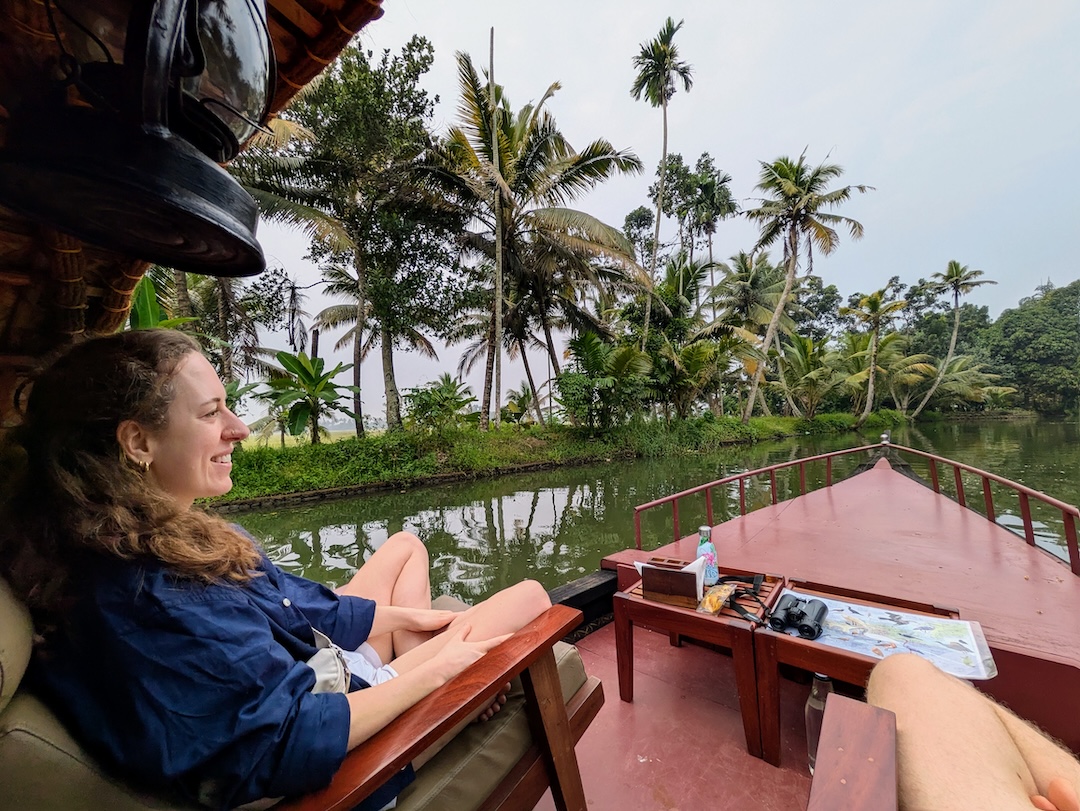

The Kerala houseboat is the image on every brochure for “God’s own country”: a wicker-and-wood kettuvallam drifting past palm trees while you recline on deck with a fresh coconut. It’s the reason many travellers put the backwaters on their itinerary at all.
We went to the Kerala backwaters in November and didn’t take a houseboat. This post explains why, what we saw on the water that changed our minds, what we did instead (a sunrise canoe trip that turned out to be one of the best mornings of our two weeks in Kerala), and what to book if you’re still set on the houseboat dream.
Should You Take a Kerala Houseboat? The Short Answer
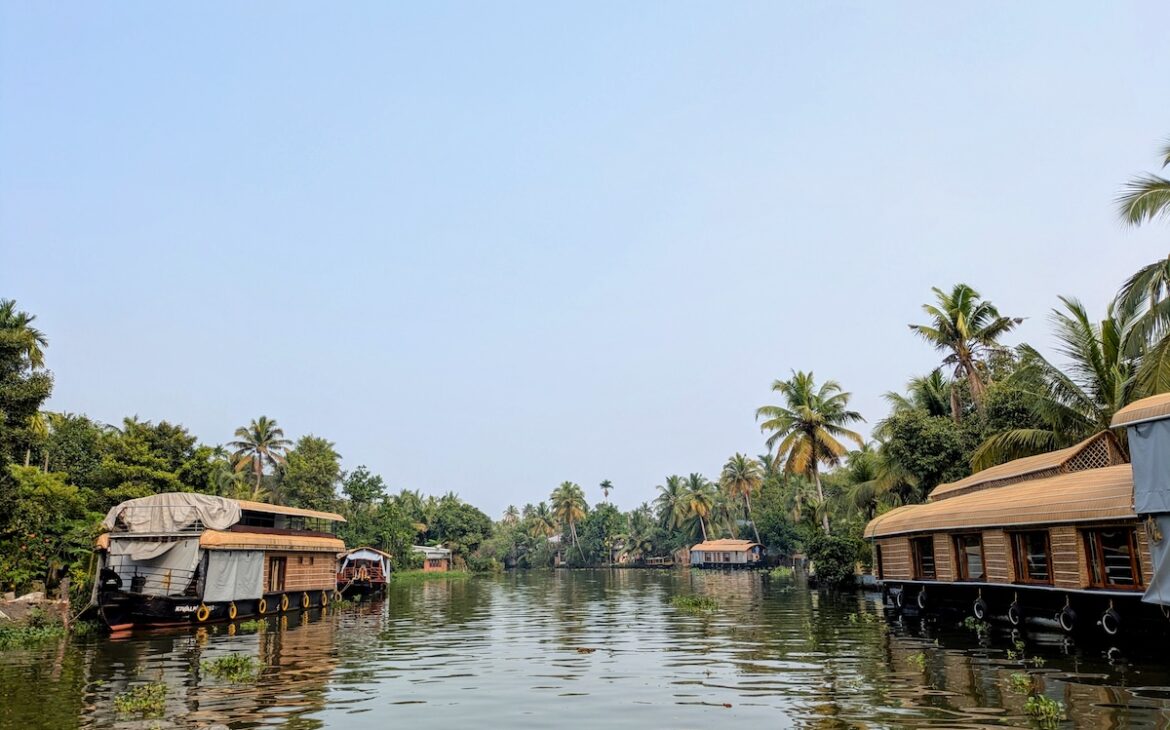
In our honest opinion: no. The industry is visibly struggling, the experience rarely matches the brochure, and a canoe or shikara trip from a backwater homestay gets you deeper into the waterways for a tenth of the price. We saw more than a hundred houseboats tied up at their moorings in Kumarakom and only two or three actually out on the water. That image stayed with us longer than any brochure.
What (and Where) Are the Kerala Backwaters?
The backwaters are a vast network of lagoons, lakes, rivers and canals running parallel to Kerala’s coast — over 900km of interconnected waterways, lined with coconut palms, rice paddies and villages that still live by the water. Life here happens on and beside the canals: children ferried to school, produce moved by boat, fishermen working the shallows.
The two main gateways are Alleppey (Alappuzha), the houseboat capital with the biggest fleet and the biggest crowds, and Kumarakom, across Vembanad Lake, which is quieter and more villagey.
Further south, Munroe Island near Kollam offers a smaller, less-visited version of the same landscape. We chose Kumarakom, and it’s the reason our backwater days felt peaceful rather than processional.
What’s Happened to Kerala’s Houseboat Industry
When we stayed on the backwaters, a local explained what we were looking at. A boom in houseboat demand led to overcrowded waterways and a race to the bottom on prices. Standards fell, visitor experiences suffered, and the decline accelerated. The result is a fleet that outgrew its lake: hundreds of boats, many idle, competing on price rather than quality.
You can see it from the shore. Rows of double-decker boats moored hull to hull, a handful of them out cruising with a couple of guests each. The overnight boats often moor up by 5:30pm, which means the “drifting through the backwaters at dusk” picture in your head is, for most operators, actually “parked in a line of other houseboats near a village”.
None of this makes the backwaters less magical. It makes the houseboat the wrong vehicle for experiencing them. This is a shame as the majority of houseboats are local operators, but alternatives equally are also run by local Indian operators too.
How Much Does a Kerala Houseboat Cost in 2026?
Based on current operator price lists for Alleppey:
| Category | Price per night (2 people) | What you get |
| Deluxe | ₹9,000–15,000 (~£80–135) | AC in bedroom 9pm–6am only, all meals |
| Premium | ₹15,000–25,000 (~£135–225) | Full-time AC bedroom, glass-covered deck |
| Luxury | ₹25,000+ (~£225+) | Full AC, upper deck, higher-end menu |
Prices roughly double on weekends and holidays, and drop 15–20% during the June-September monsoon. Meals are included, and on cheaper boats the food quality is the most common complaint you’ll read in reviews.
For comparison: Our private sunrise canoe trip for two cost ₹4,500 per person (£38), and two nights at a backwater homestay cost similar to or less than one deluxe houseboat night.
What We Did Instead: A Sunrise Canoe
We based ourselves in Kumarakom, deliberately choosing it over Alleppey after some research. Alleppey felt far more touristy, while Kumarakom offered the peace we hoped the backwaters would deliver.
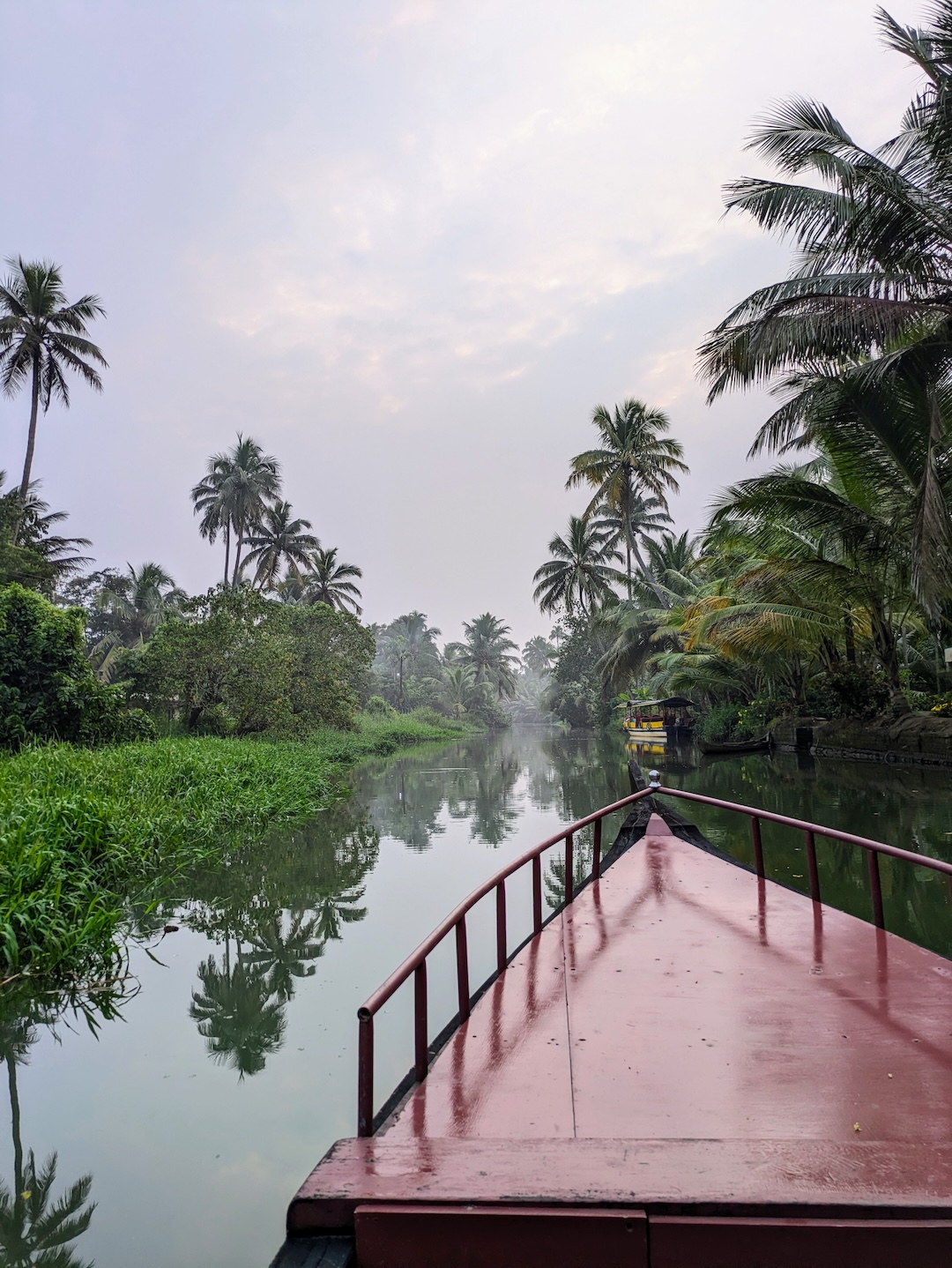
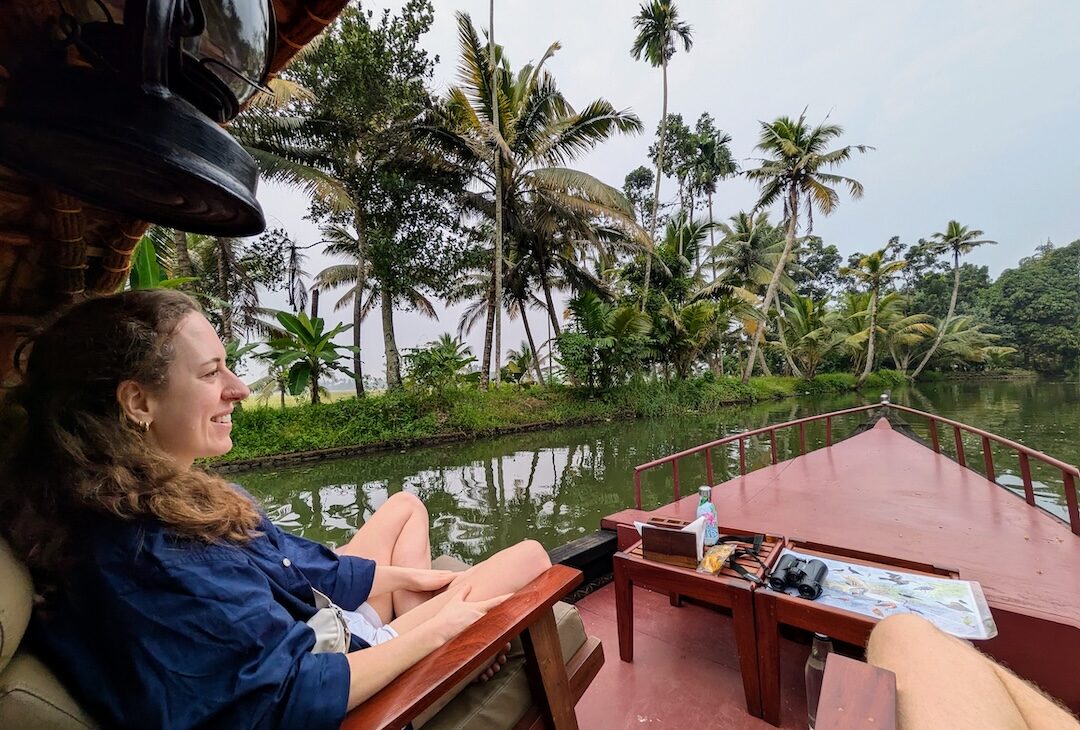
Our sunrise trip began at 6am, and our commute to the boat was exactly five steps out of our room at Little Chembaka homestay. The canoe was all ours, so we sat right up front as we slipped into the mist. At that hour the backwaters were glassy, silent and half-dreamt — the world before anyone had woken up — and only the birds witnessed our slow progress along the narrow channels a houseboat physically cannot enter.
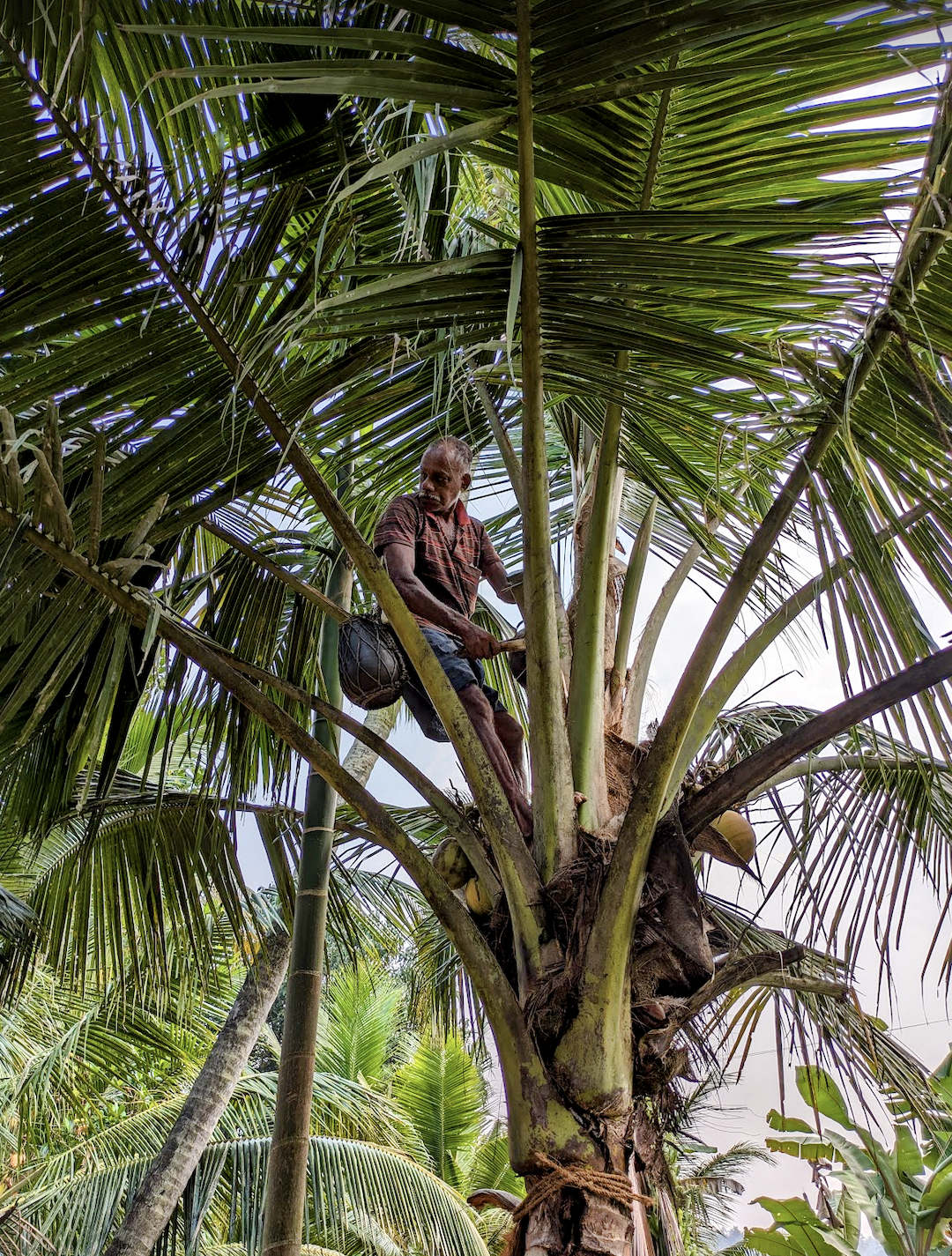
Then, gradually, the villages stirred to life around us: people cycling to work along the banks, scooters buzzing down waterside lanes, men cutting fruit down from the trees. After an hour or so the sun burned through the mist and the whole waterway turned gold. We pulled in at the local tea man’s stall for a chai — a spot the locals call the “gossip shop”, all men putting the world to rights. Later we watched rope being made from coconut fibre and palm wine tapped straight from the tree.
Some stretches showed more plastic than wildlife. We had suspected they might, as trash is a problem all over Kerala and India. Nevertheless, this magical boat ride was one of the best mornings of our two weeks in Kerala, and it cost a tenth of a houseboat night.
Check out our Kerala Instagram stories to get a full feel for the magical backwater boat ride.

How to Book a Backwater Canoe Trip
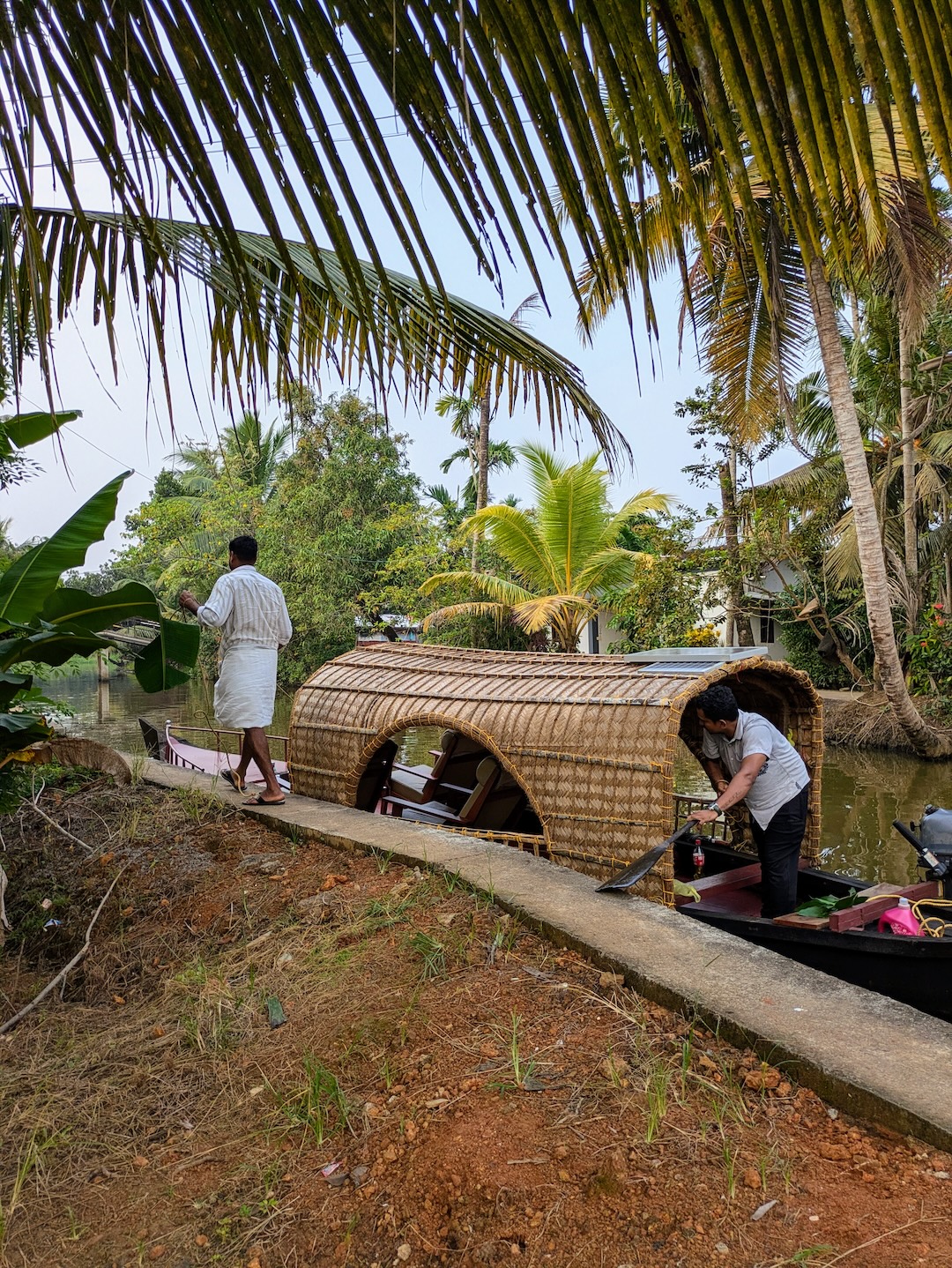
The simplest way is the way we did it: book through your accommodation. Backwater homestays almost all have a boatman in the family or the village, the price is agreed upfront, and you leave from your own jetty rather than a tour depot. Ours was arranged by Jes at Little Chembaka: ₹4,500 (£38) for a private motorised canoe per person. You can arrange a canoe ride directly with Little Chembaka, even if you’re not staying at their homestay.
A few things worth agreeing before you push off:
- Go at sunrise. The 6am start is the whole magic — mist, glassy water, villages waking up. Afternoon trips are hotter, busier and flatter in every sense.
- Confirm the duration and rough route. Ours wound through narrow village channels for the whole morning, with stops.
- Private vs shared. Shared shikara and canoe tours run from Alleppey and Kumarakom jetties for less, but the private boat is what makes it feel like your morning rather than a schedule.
- Cash, small notes. For the trip, the chai stop and anything you pick up along the way.
You Can Stay on the Backwaters Without a Houseboat
This is the bit most brochure itineraries miss: you don’t need to sleep on a boat to sleep on the backwaters. Waterside homestays give you the same views, better food, hosts who actually live there, and mornings that start five steps from the water.
Kumarakom — where we stayed. Little Chembaka is essentially a private cabin overlooking the river, and our stay was fantastic thanks largely to Jes, our host, who spent hours talking with us about Kerala, India and life in general — and who arranged both the canoe trip and a brilliant Keralan cooking class that sent me home with more than ten recipes. The only downside is its proximity to a road; the overall experience more than made up for it. Check availability at Little Chembaka →
Alternative upmarket option: Coconut Lagoon, the CGH Earth eco resort on Vembanad Lake, offers an upscale experience in Kumarakom. Arrival is by boat because there’s no road in, the cottages are reassembled antique tharavad homes, and instead of an early mooring you get sunset kayaking, a naturalist leading dawn bird walks and a garden fluttering with butterflies. If the appeal of a houseboat was always “waking up on the backwaters in comfort”, this does it better. Check availability at Coconut Lagoon →
Munroe Island — the quieter alternative. Near Kollam, further south, Munroe Island offers a smaller-scale, less-visited version of the backwaters with village homestays and canoe trips through the narrowest canals. We didn’t stay ourselves, but it was the alternative we’d shortlisted and where we’d look on a return trip.
Alleppey — if you want the town too. More restaurants and easier logistics, but you’re sharing the water with the houseboat fleet. If you stay here, pick a homestay on the quieter canals away from the main boat jetty.


Best Time to Visit the Kerala Backwaters
We visited in November, just before peak season, and it was close to ideal: misty dawns, warm mornings, glassy water and thin crowds. We had a few rainy spells, but nothing too bad. December to February is the driest, most reliable window, and the busiest and priciest. June to September is monsoon season — the waterways are at their greenest and rates drop, but daily downpours are part of the deal.
Getting to the Backwaters
Kumarakom is reached via Kottayam, around 1.5 to 2 hours from Kochi by train or car; your homestay can arrange a pickup from Kottayam.
Alleppey has its own railway station with direct trains from Kochi (roughly 1.5 hours).
We recommend travelling down from Munnar as part of a two-week route, breaking the journey along the way. See our full Kerala itinerary for how the pieces fit together.
What to Bring on a Backwater Trip
- Sun cream and a hat — the post-mist sun off the water is fierce by 8am.
- Mosquito repellent for evenings at the homestay.
- A light layer for the 6am start; it’s the only cool hour of the day.
- Small cash notes for chai stops and village purchases.
- Camera with a zoom if you have one — for birds, and for photographing people respectfully from a distance (more below).
- Water — your homestay will usually sort this, but check before a long morning out.
A Note on Photographing Village Life
The canoe takes you through people’s front gardens, in effect: their morning wash, their commute, their gossip shop. That’s exactly what makes it wonderful, and exactly why it deserves care. We’d suggest asking (a gesture and a smile does it) before photographing anyone up close, buying a chai where you stop, and keeping drones at home. The backwaters aren’t a set; they’re a neighbourhood that happens to be made of water. Read more things to know before you go to Kerala here.
Still Set on a Houseboat? Do It This Way
We get it — for some travellers the kettuvallam is the dream, and a well-run boat on a quiet route can still be lovely. If that’s you, our advice:
- Take a day cruise, not an overnight. You get the golden-hours cruising without paying for a night moored in a queue.
- Look for good reviews. If you are going for overnight, we recommend finding an option like this one which has good reviews and booking in advance.
- Book quality, not price. The race to the bottom is exactly why the cheap boats disappoint. A premium boat with recent reviews beats two nights on a bargain one.
- Ask where the boat moors overnight and how many hours you’ll actually be cruising.
- Look for newer, lower-impact boats — solar panels and proper waste tanks exist on the better operators.
Kerala Houseboat FAQ
In 2026, overnight rates for two people typically run ₹9,000–15,000 for deluxe boats, ₹15,000–25,000 for premium and ₹25,000+ for luxury, meals included. Weekends can double; monsoon season drops 15–20%.
Kumarakom, for us. Alleppey has the bigger houseboat fleet and the crowds that come with it; Kumarakom is calmer, and homestays like Little Chembaka put the quiet channels on your doorstep.
Usually, yes. Overnight boats often moor by late afternoon, so you pay a premium for a stationary night. A day cruise captures the actual cruising, and a homestay gives you a better night’s sleep for less.
We went in November, just before peak season: warm sun, glassy dawn water and thinner crowds. December to February is the driest, busiest, priciest window.